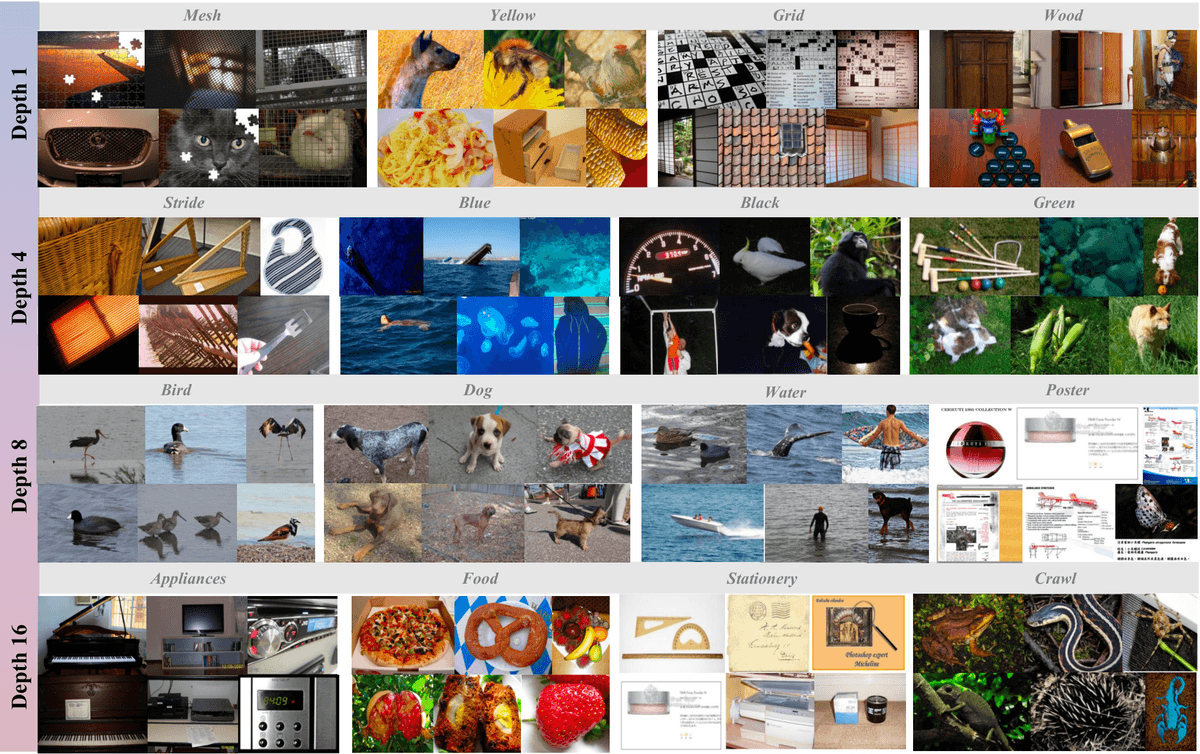
Researchers from Shanghai Jiao Tong University, USTC, and Microsoft propose EvoTok, a tokenizer that unifies image understanding and generation via residual latent evolution.
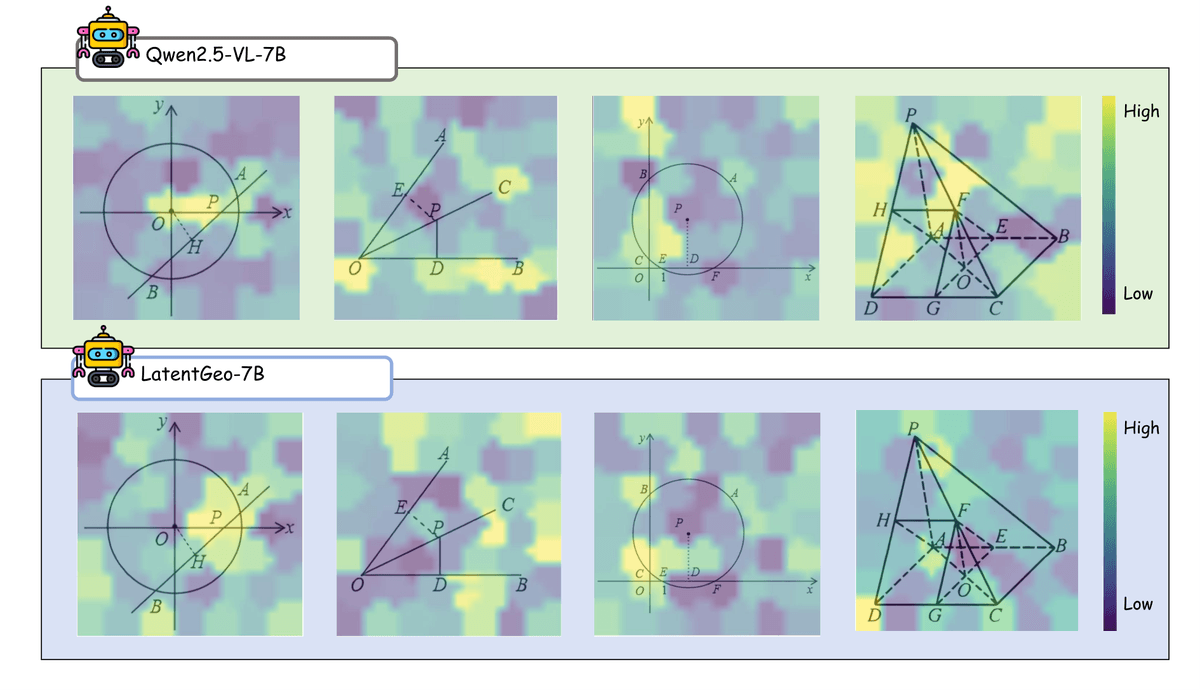
A new framework called LatentGeo teaches multimodal models to imagine auxiliary geometry constructions internally, without rendering pixels or calling external tools.
A learned meta-model scores frame-by-frame reliability across six pretrained trackers, producing cleaner pseudo-labels and state-of-the-art results on four real-world benchmarks.
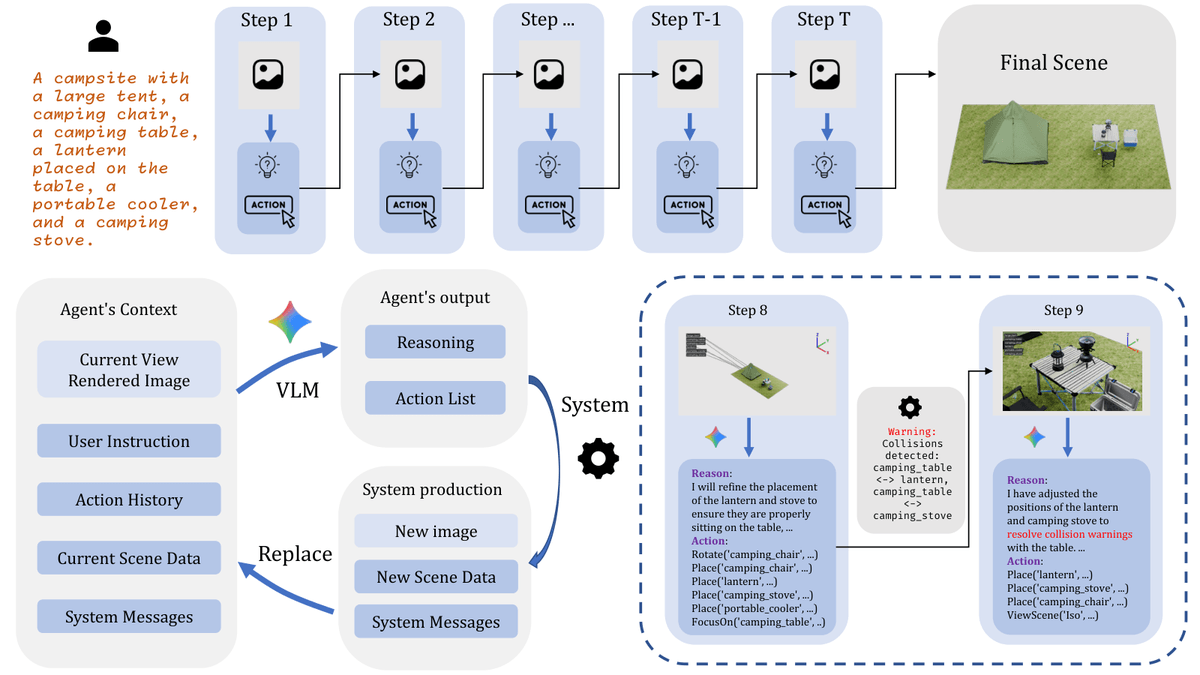
A visual-feedback agent uses vision-language models and a small set of action APIs to generate open-vocabulary 3D scenes from text without predefined spatial rules.
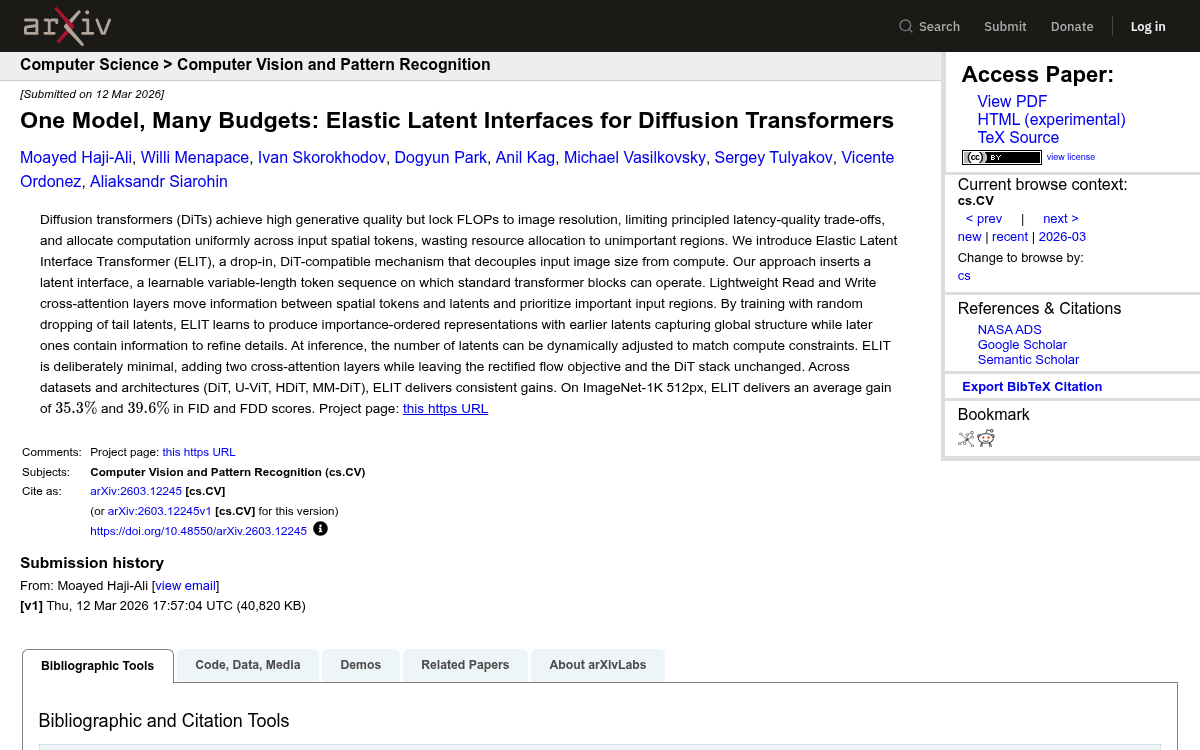
Snap and Rice researchers add two cross-attention layers to diffusion transformers, letting one trained model serve dozens of compute budgets while cutting FID by up to 53%.
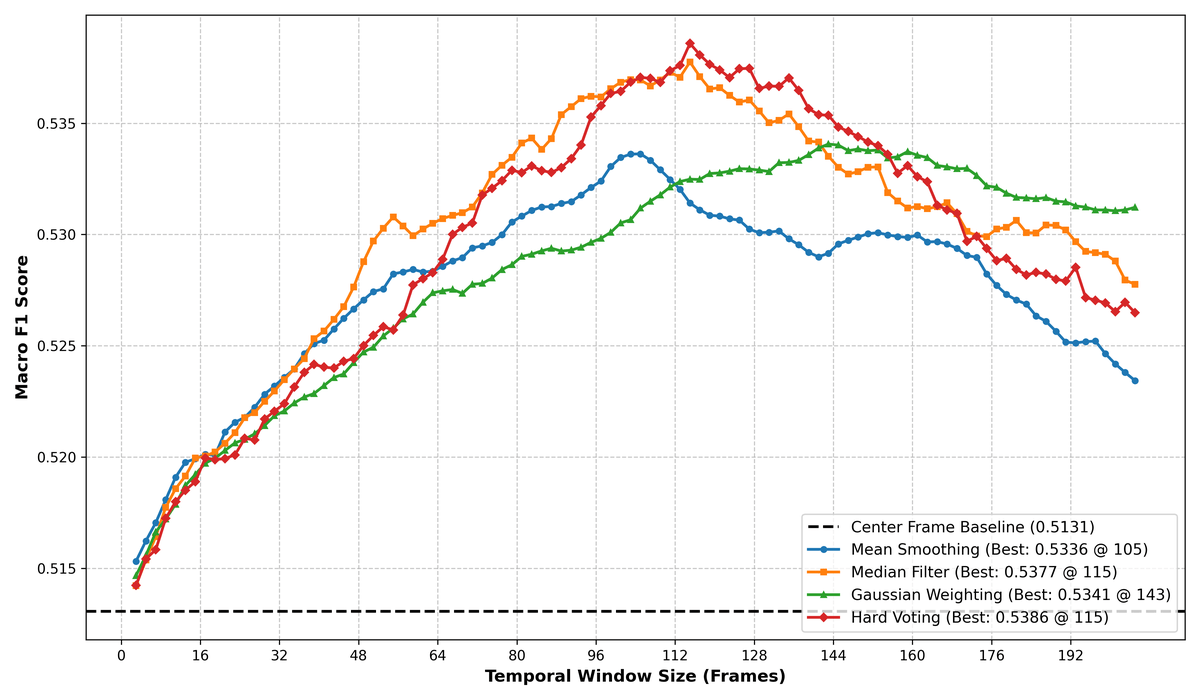
A Shanghai Normal University paper details a DINOv2 plus Wav2Vec 2.0 pipeline for frame-level facial expression recognition on Aff-Wild2, with temporal smoothing on top.
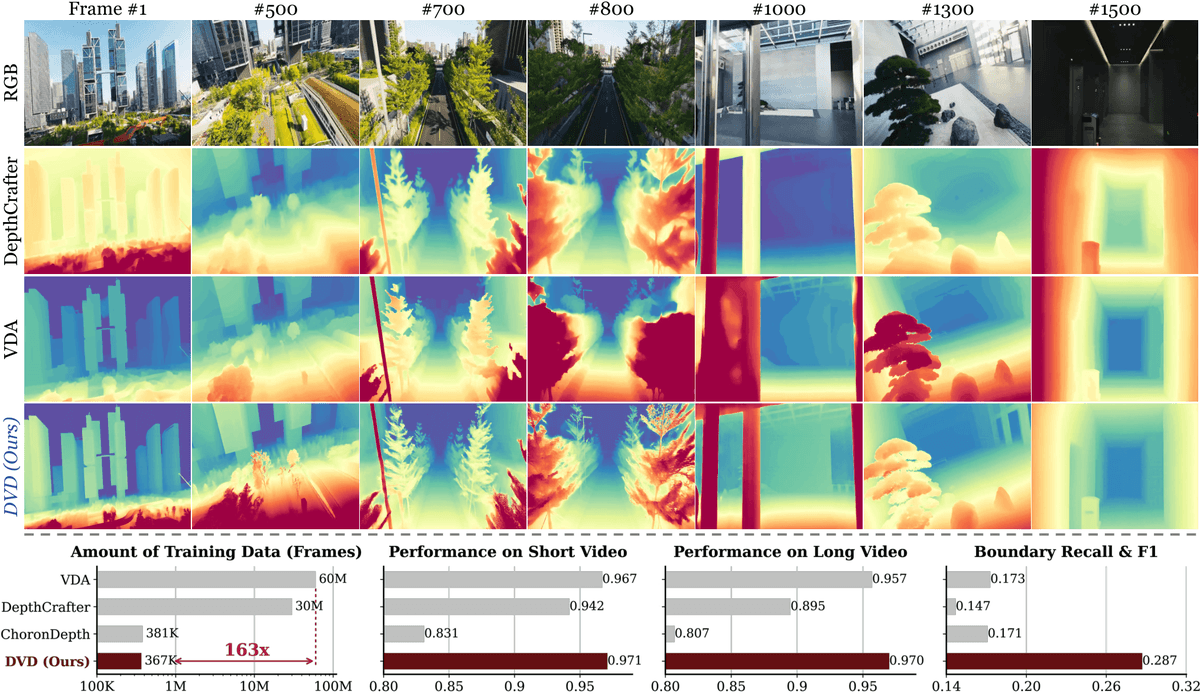
A new framework turns a pretrained video diffusion model into a single-pass depth regressor, matching state-of-the-art accuracy with 163x less training data.
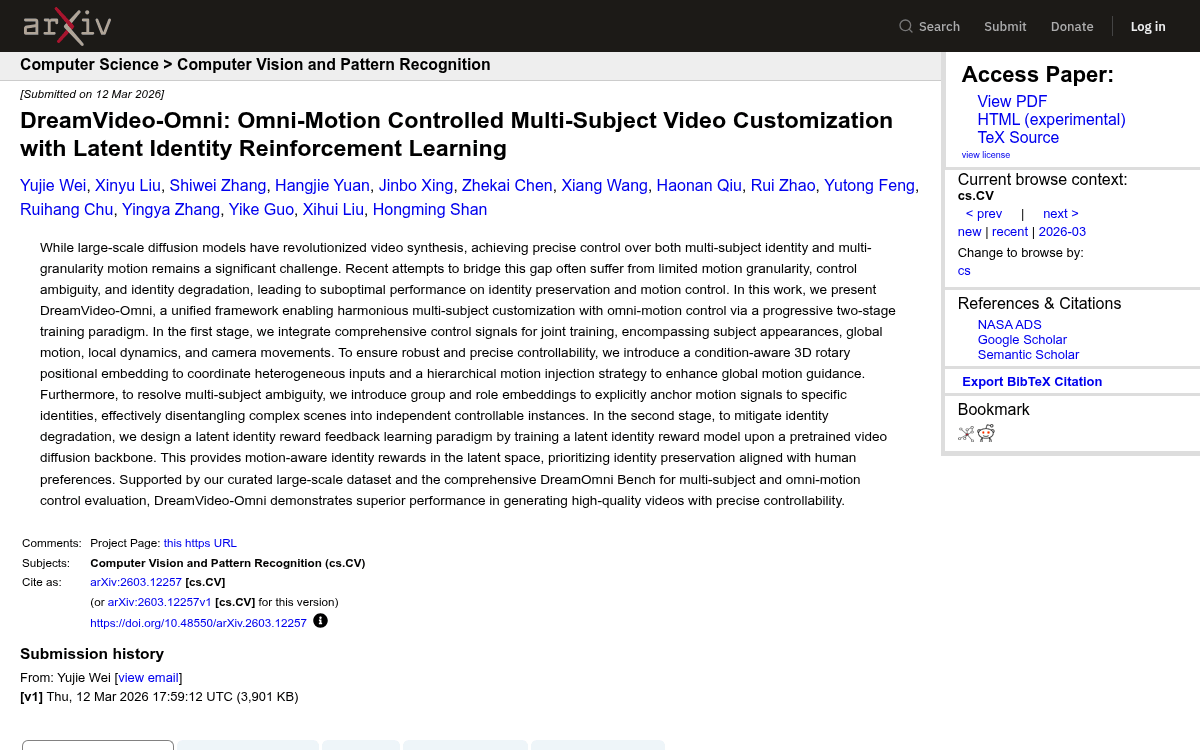
A 1.3B parameter framework from Alibaba and Fudan unifies multi-subject video customization with fine-grained motion and camera control, beating 14B baselines.
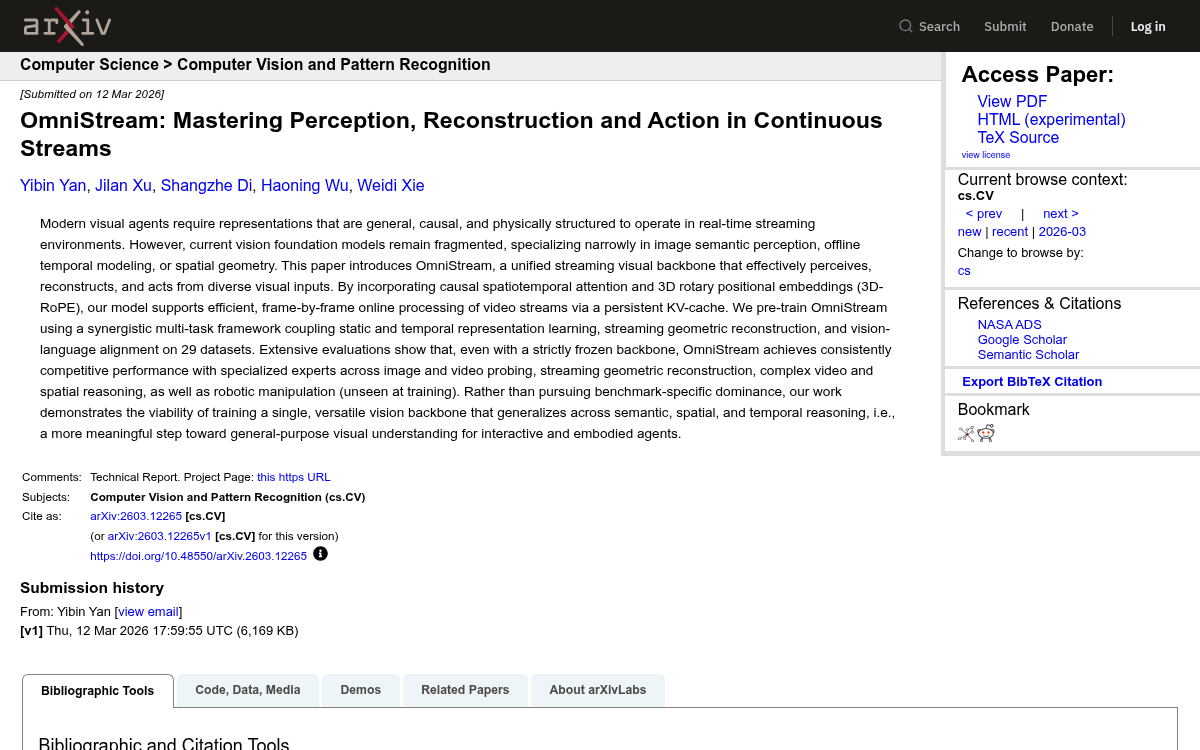
OmniStream turns a frozen DINOv3 backbone into a causal streaming model that handles perception, 3D reconstruction, VQA, and robot control from a single set of features.
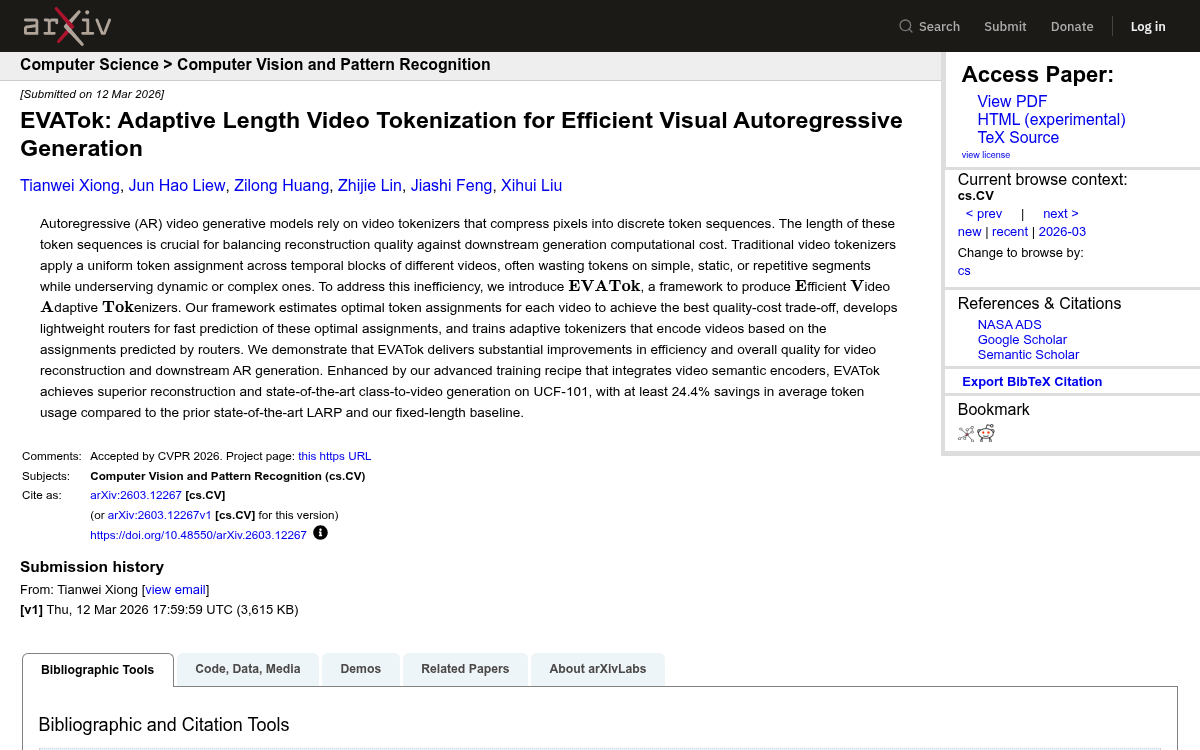
A four stage framework from HKU and ByteDance lets video tokenizers assign token budgets per clip, cutting sequence length by 24 percent while beating fixed length baselines.