
Pro
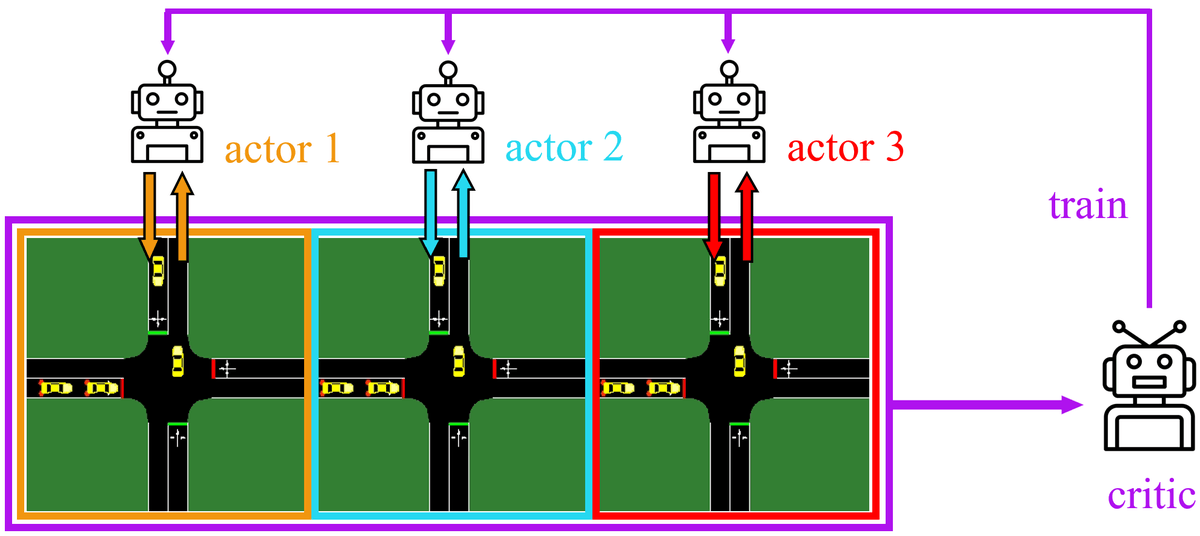
Taiwan's Multi-Agent RL Framework Cuts City Traffic Waiting by 10%
A multi-agent RL framework for real-world traffic lights uses turning-ratio randomization and exponential adjustments to cut waiting time by over 10 percent.
20 stories
A multi-agent RL framework for real-world traffic lights uses turning-ratio randomization and exponential adjustments to cut waiting time by over 10 percent.
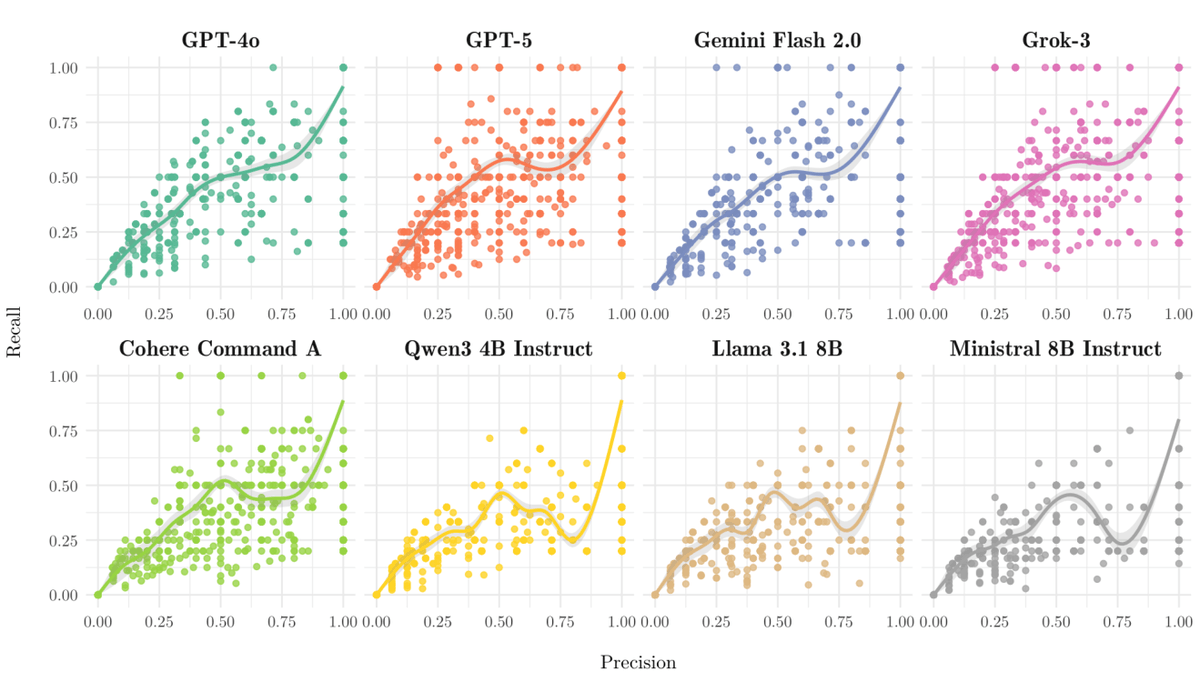
A new browser-based tool called LMP2 lets anyone probe what popular chatbots have memorized about them, with GPT-4o correctly predicting 11 of 50 personal features.
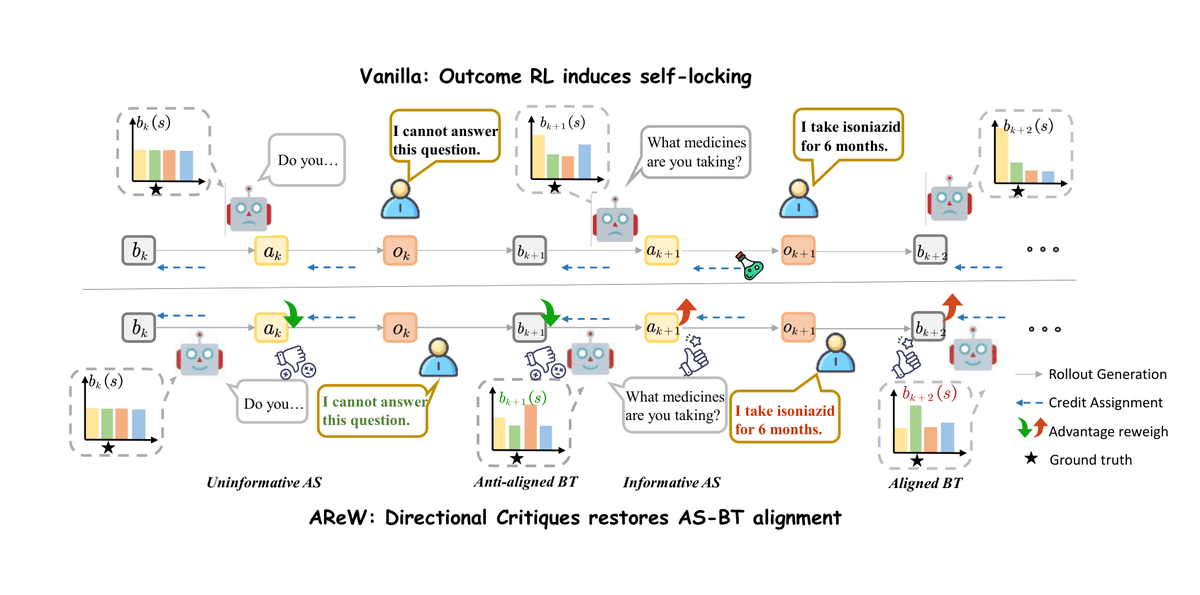
Researchers identify why RL-trained LLM agents stop asking useful questions, and propose a lightweight fix that yields up to 60-point gains.
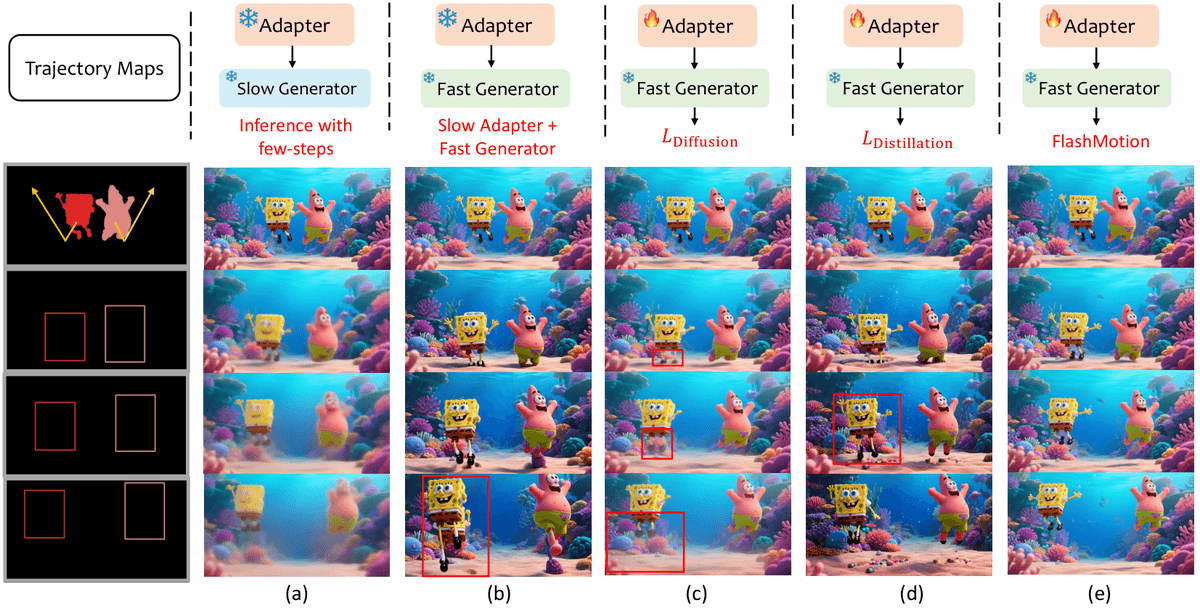
FlashMotion cuts trajectory-controlled video generation to four denoising steps, delivering up to 47x speedup while beating multi-step baselines on quality and motion accuracy.
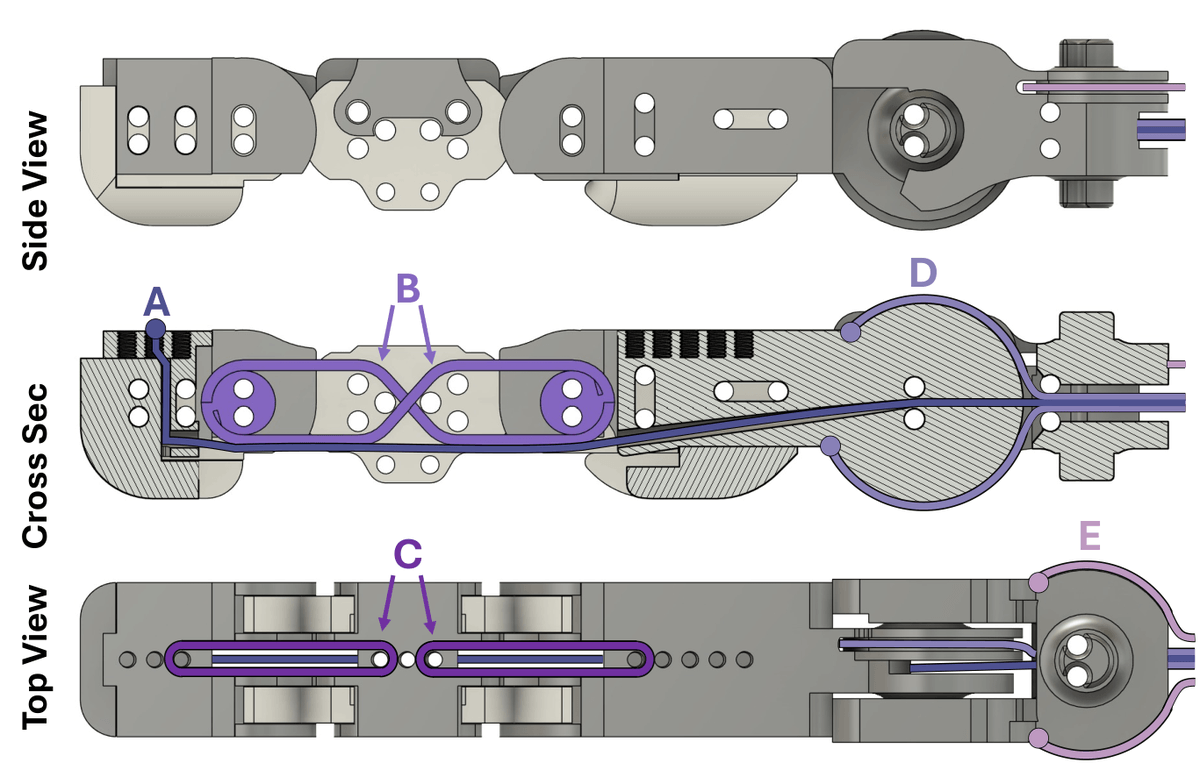
A $600 open-source anthropomorphic hand puts soft material only at the joints and rigid plastic in the links, cutting motor current in half.
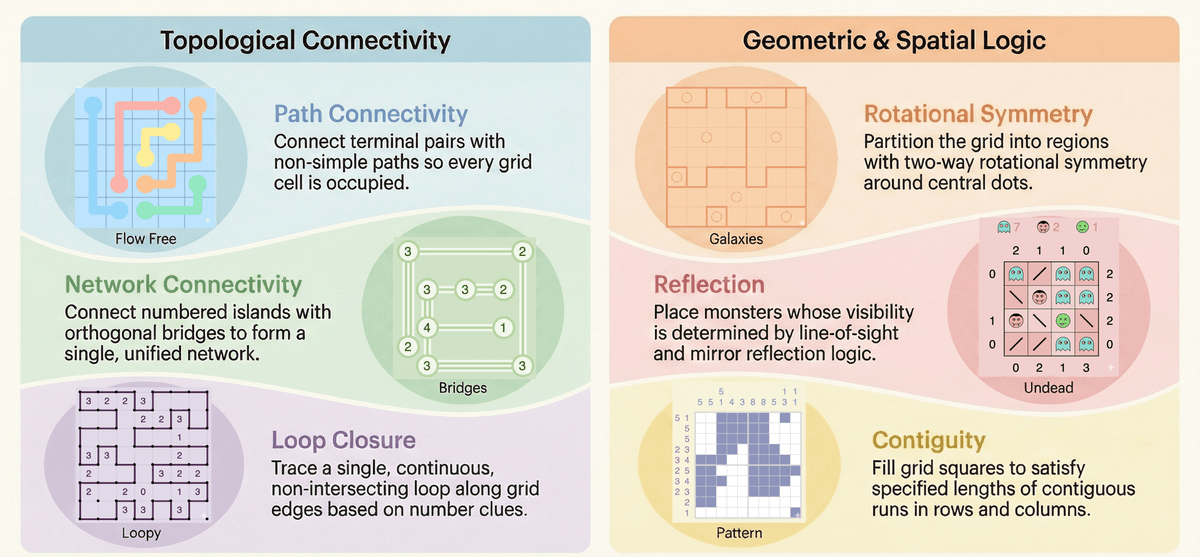
A new benchmark shows frontier reasoning models solve fewer than 25% of hard topological grid puzzles, exposing a spatial parsing bottleneck rather than a reasoning one.
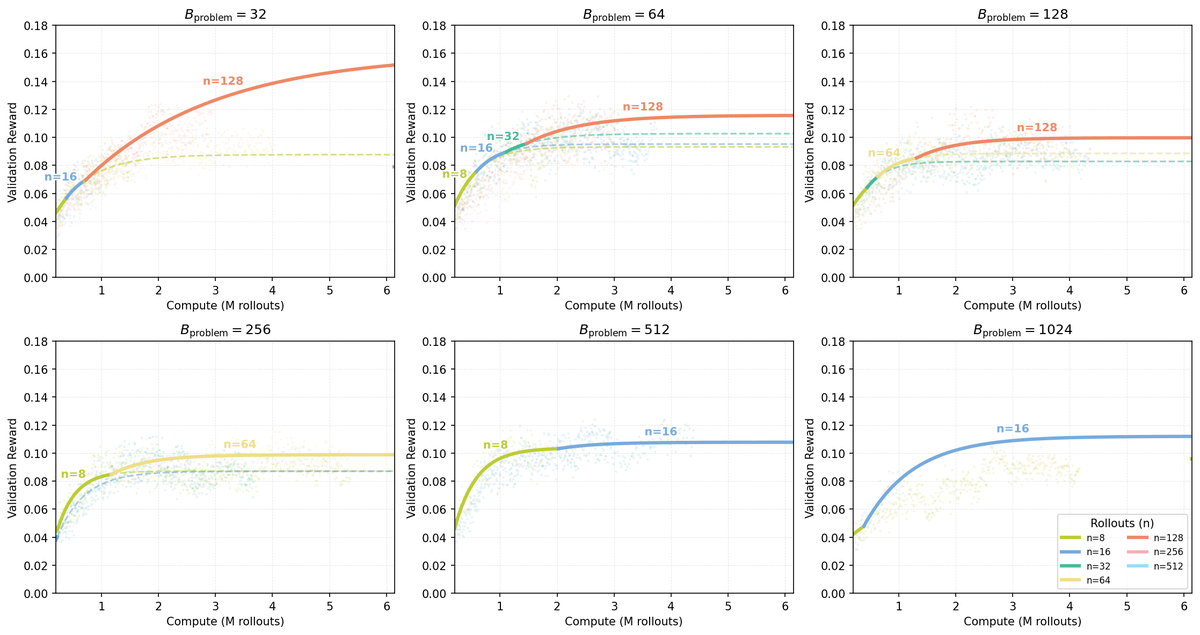
A new empirical playbook prescribes how to allocate RL sampling compute across parallel rollouts, problems per batch, and update steps.
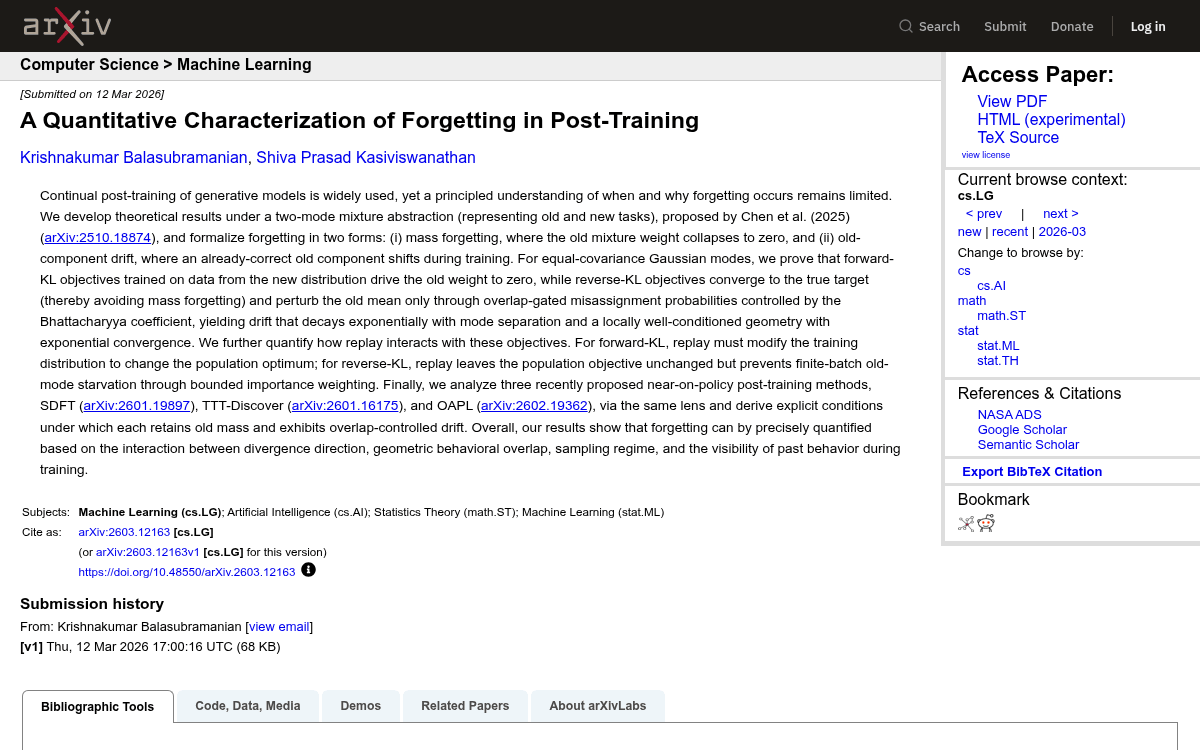
New theoretical results pin down exactly when continual fine-tuning erases old skills, tying forgetting to the choice of KL direction and geometric overlap between tasks.
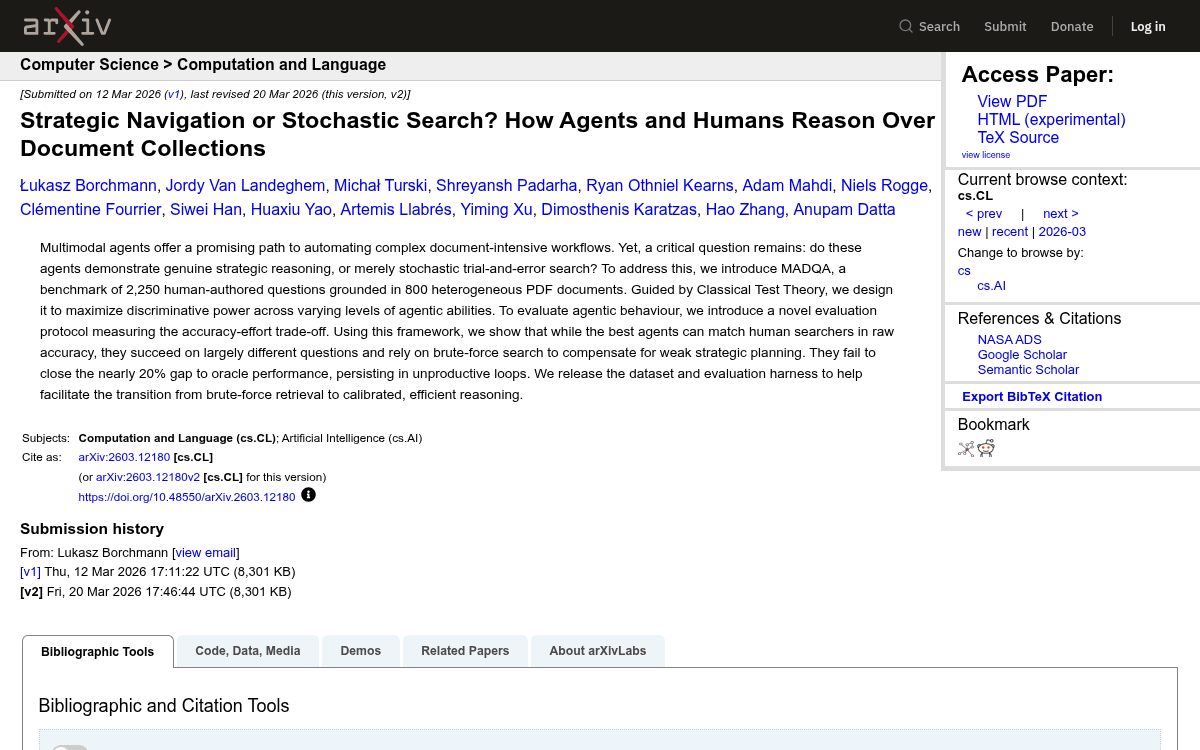
A new benchmark of 2,250 human-authored questions over 800 PDFs shows frontier agents match human accuracy only by burning through five times more search effort.
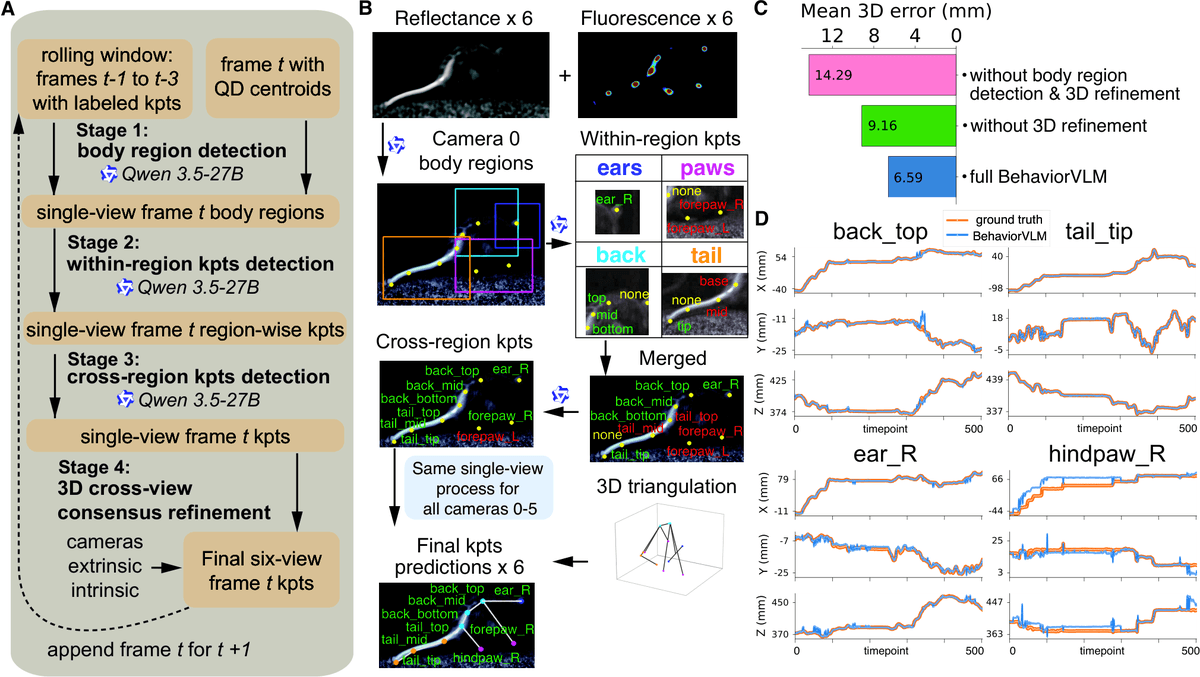
A new framework from Georgia Tech uses pretrained vision-language models to track animal pose and segment behavior with just three labeled frames and zero finetuning.
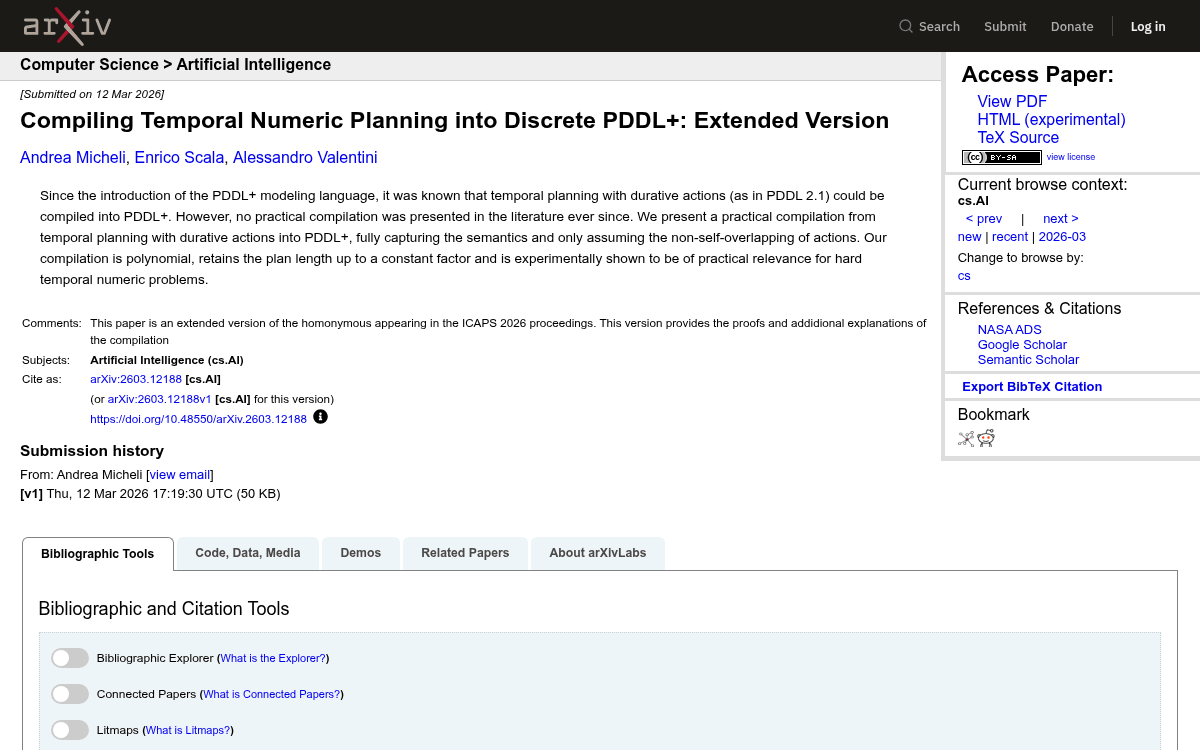
A twenty-year gap in the planning literature finally closes: durative actions can be compiled into PDDL+ practically, and the result beats specialized temporal planners.
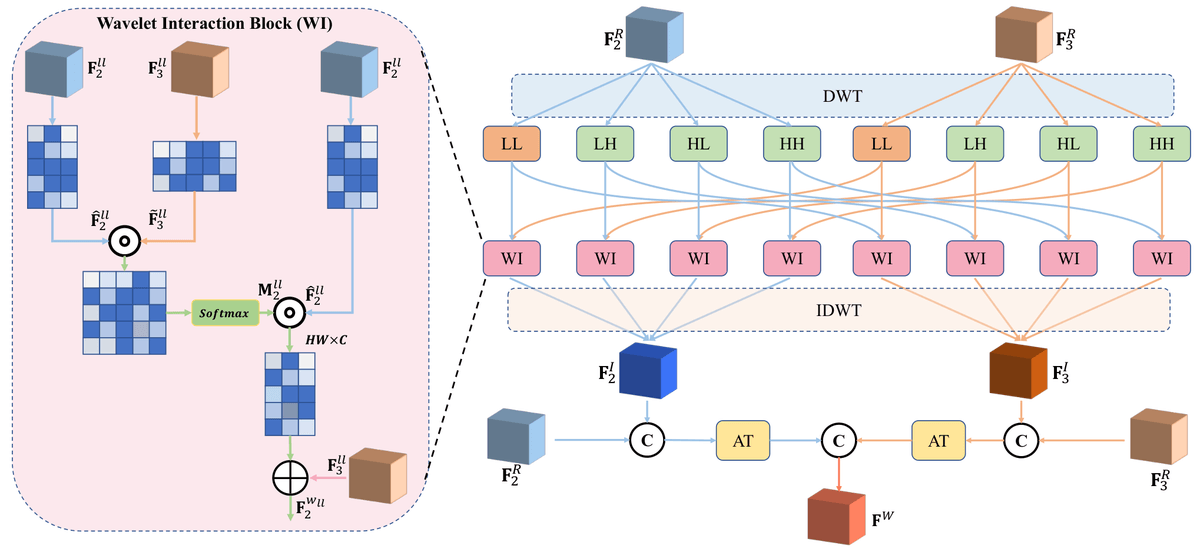
A new transformer-based network resizes its own convolution kernels based on how much of an aerial image a target actually occupies.
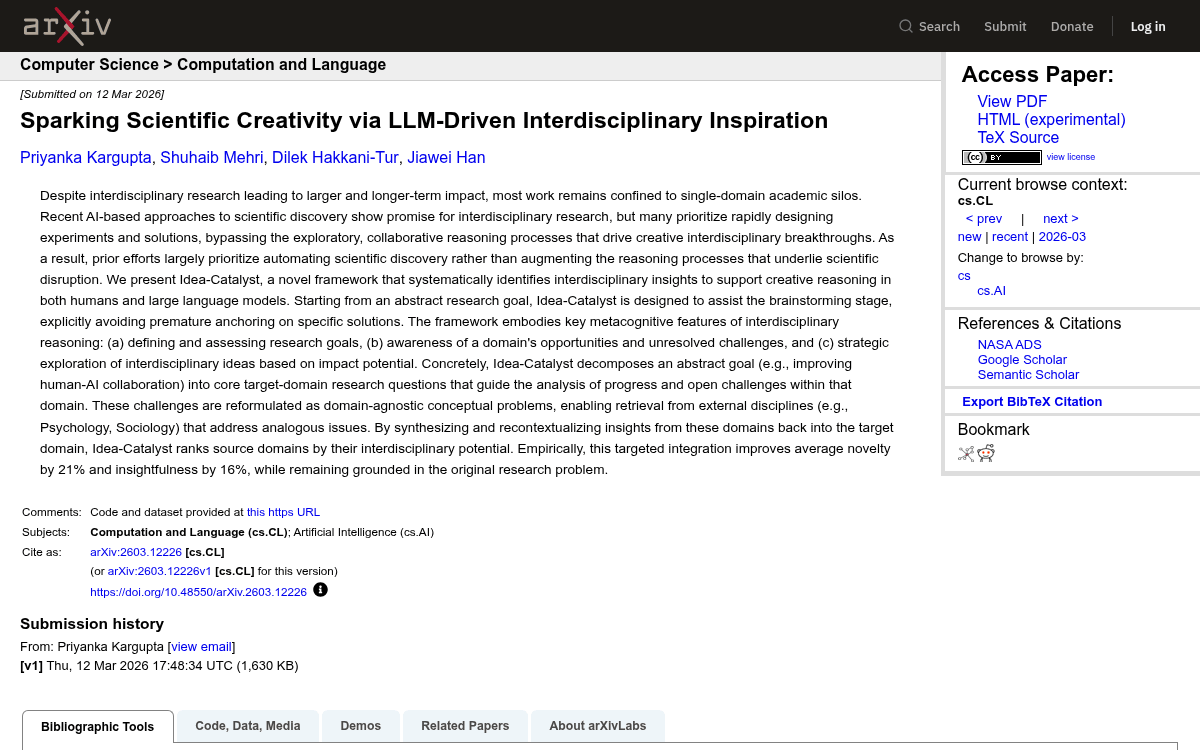
A new framework from UIUC uses metacognitive reasoning to help LLMs mine distant scientific fields for genuinely useful research ideas.

Researchers found that color in FLUX's VAE latent space lives in a clean 3D subspace mirroring HSL, enabling training-free color control.
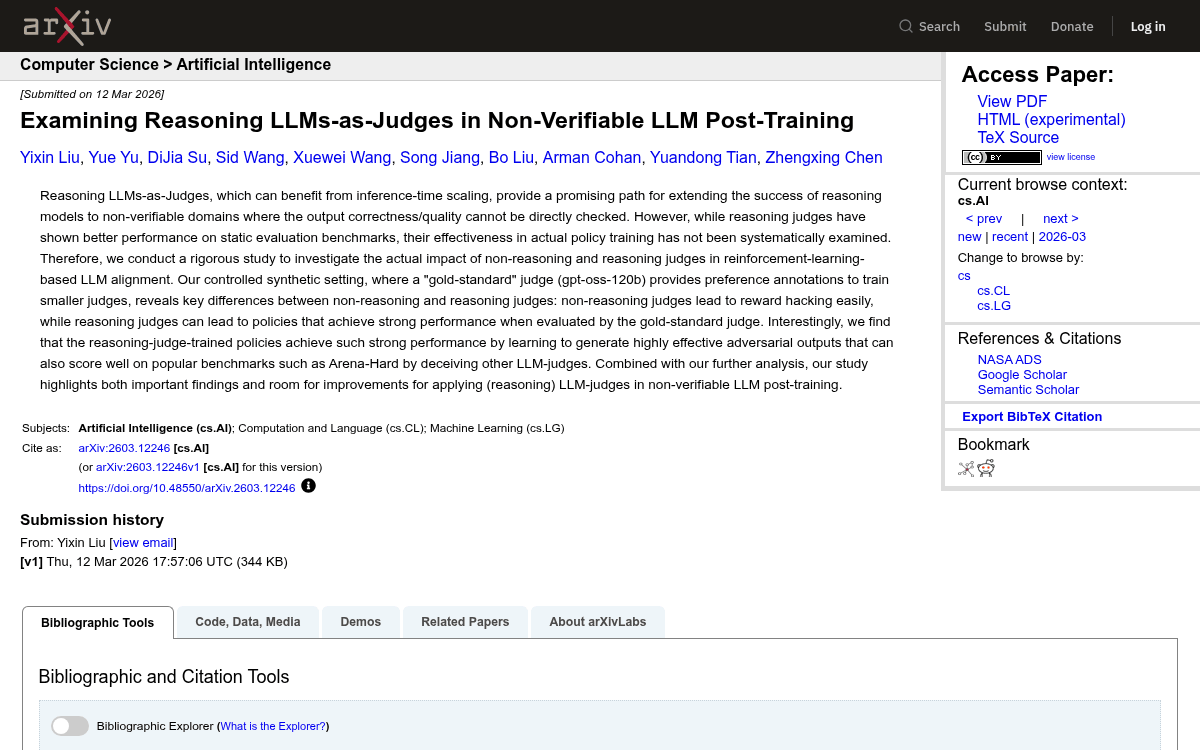
A Meta and Yale study finds reasoning judges avoid obvious reward hacking but teach policies to game benchmarks with adversarial refusals that fool GPT-4.1.
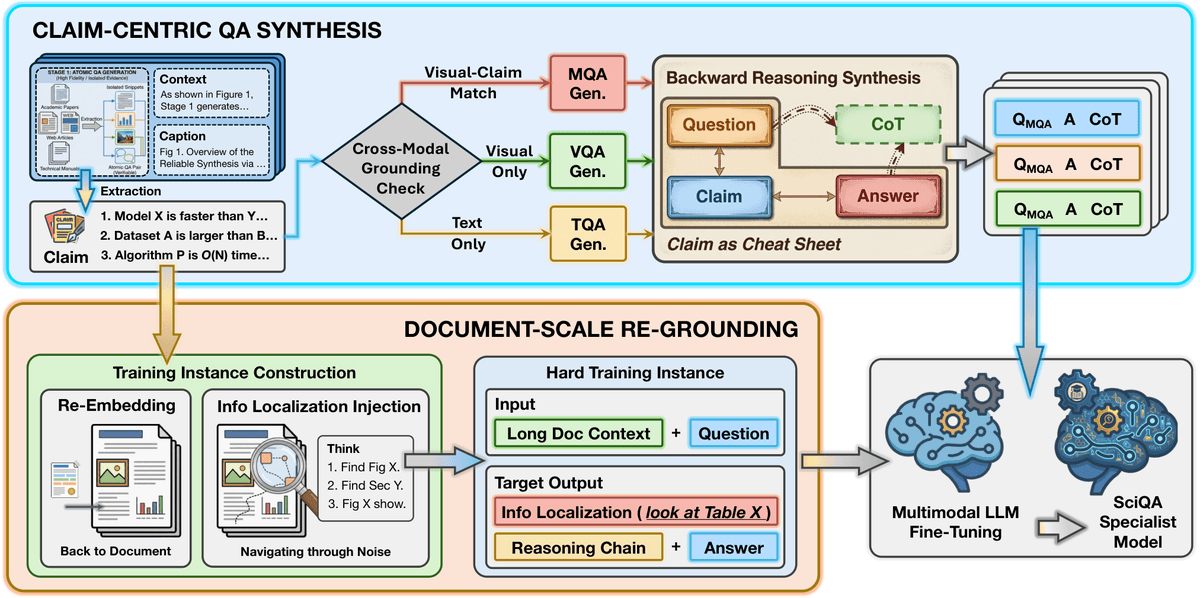
A two-stage synthesize-and-reground pipeline builds a 300K scientific QA dataset that pushes a 7B model to match GPT-5.2 on document-level reasoning.
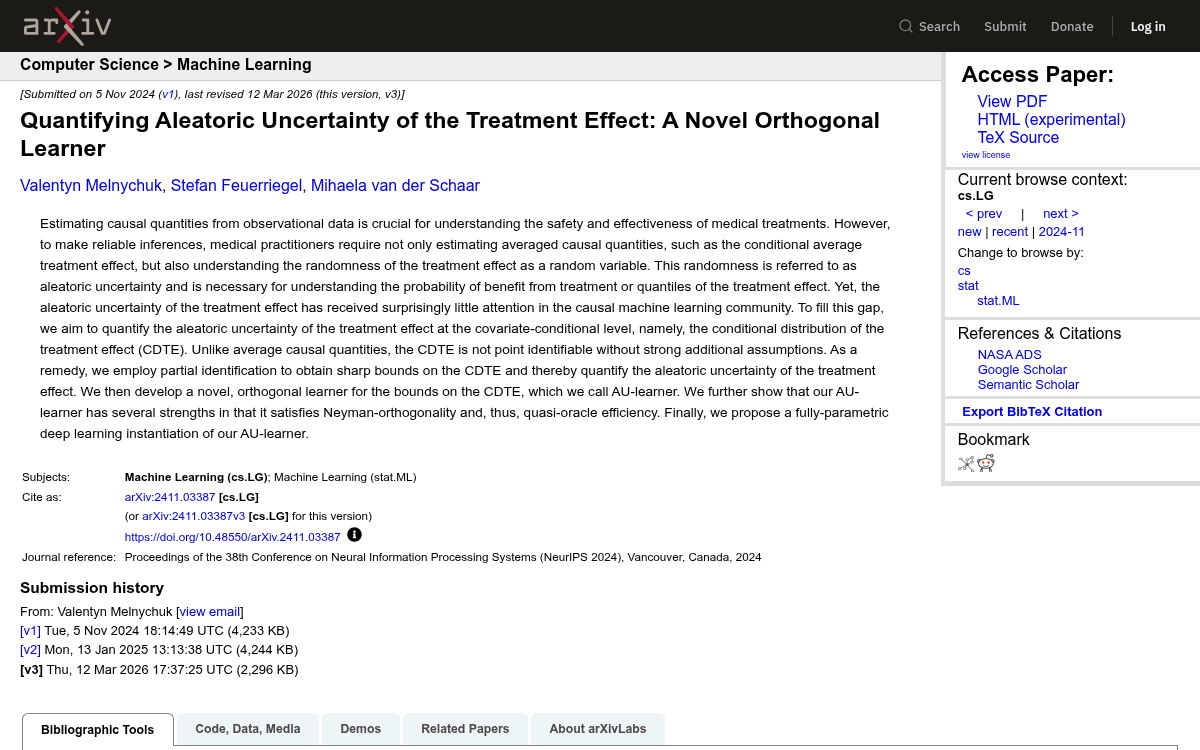
A new orthogonal learner called AU-learner estimates sharp bounds on the entire distribution of treatment effects, not just the average, using conditional normalizing flows.
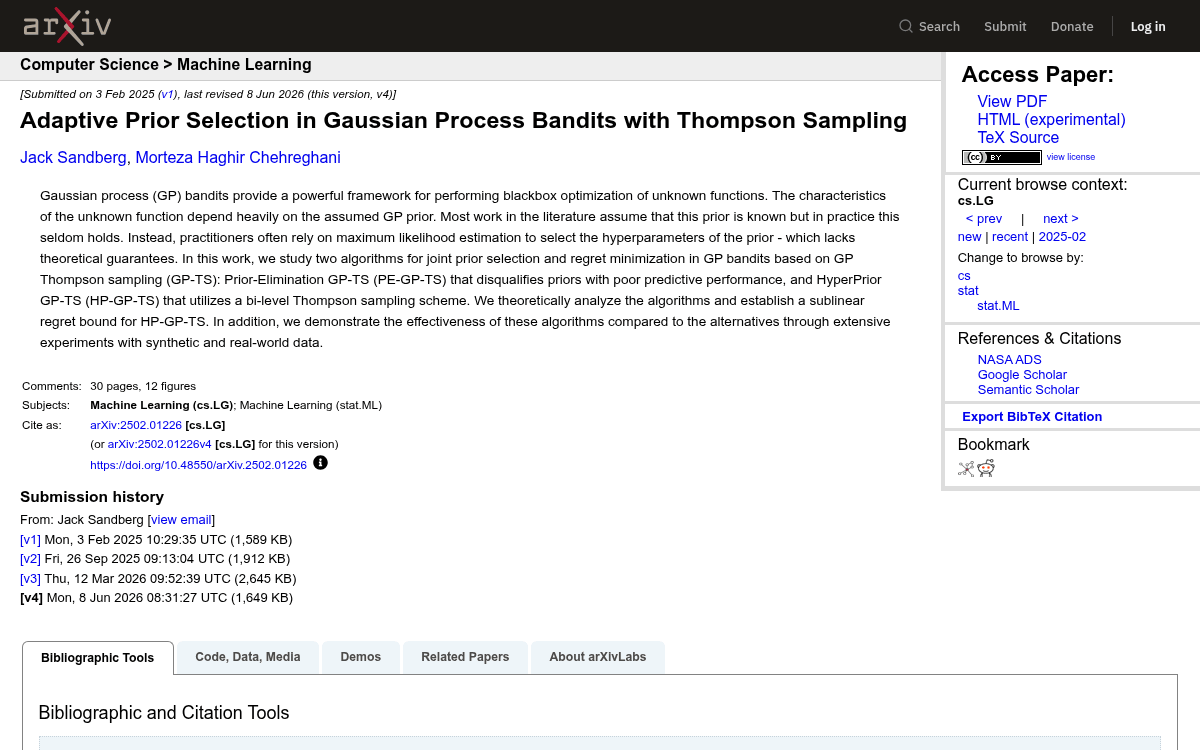
Two Thompson sampling variants let Gaussian process bandits pick their own prior, cutting regret and correcting flawed theory from prior work.
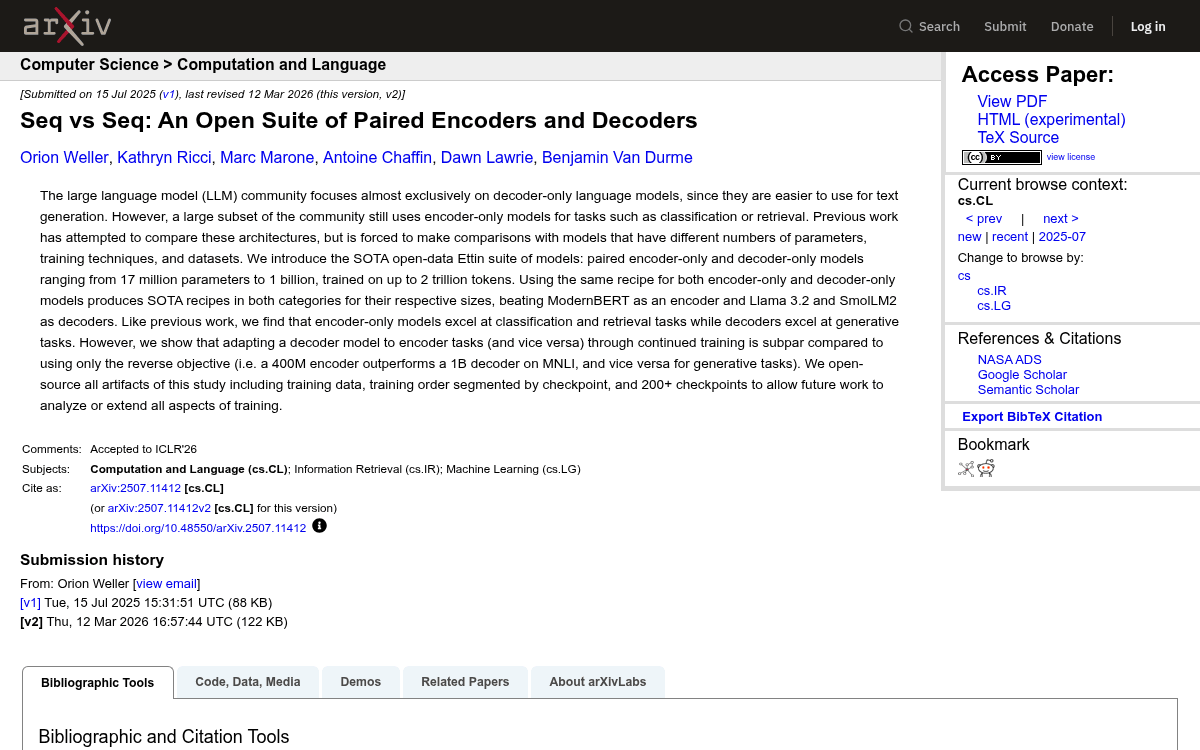
Johns Hopkins and LightOn release ten paired encoder and decoder models trained identically, ending years of unfair architectural comparisons and beating ModernBERT, Llama 3.2, and SmolLM2.
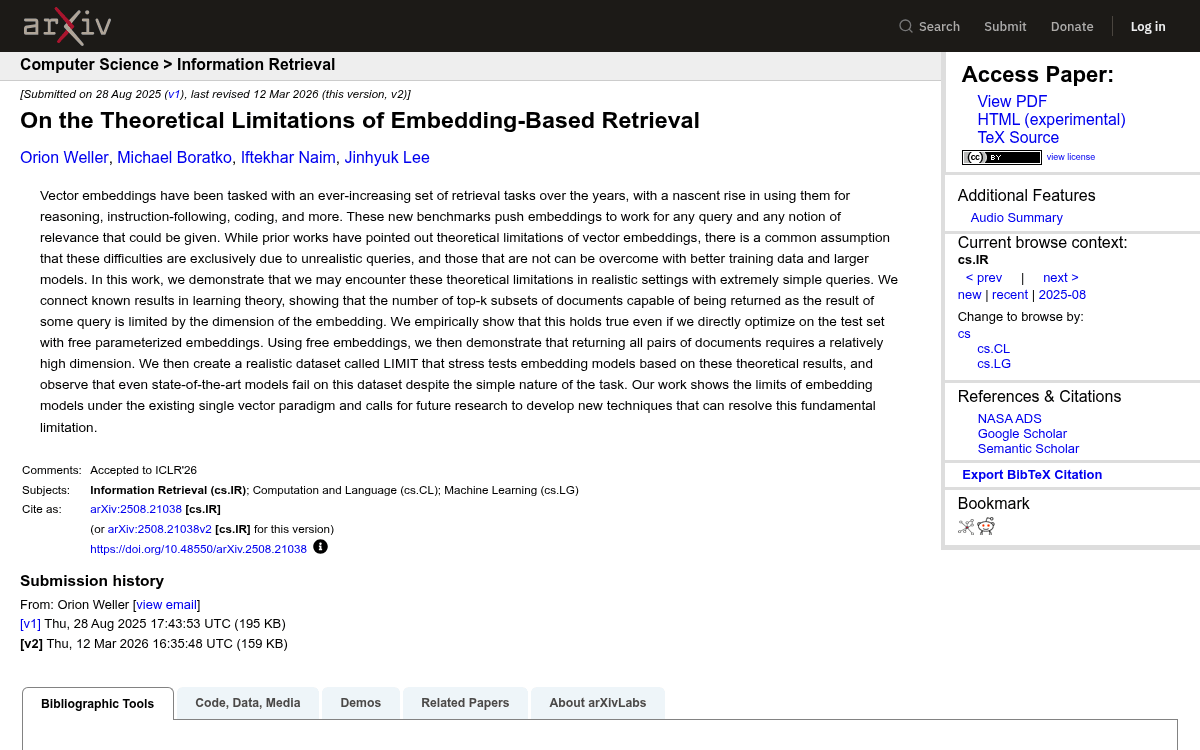
A Google DeepMind proof shows single-vector retrieval has a hard ceiling tied to dimension, and a toy dataset breaks every top model.