
RDNet Beats 21 Rivals Detecting Objects in Satellite Imagery at Every Scale
A new transformer-based network resizes its own convolution kernels based on how much of an aerial image a target actually occupies.
 Pro
Takeaways
- RDNet tops 21 baselines on EORSSD, ORSSD, and ORSI-4199 for aerial salient object detection.
- A Proportion Guidance block predicts what fraction of the image the target occupies, supervised with MSE.
- The DAD module then picks 3, 4, or 5 different convolution kernel sizes based on that proportion.
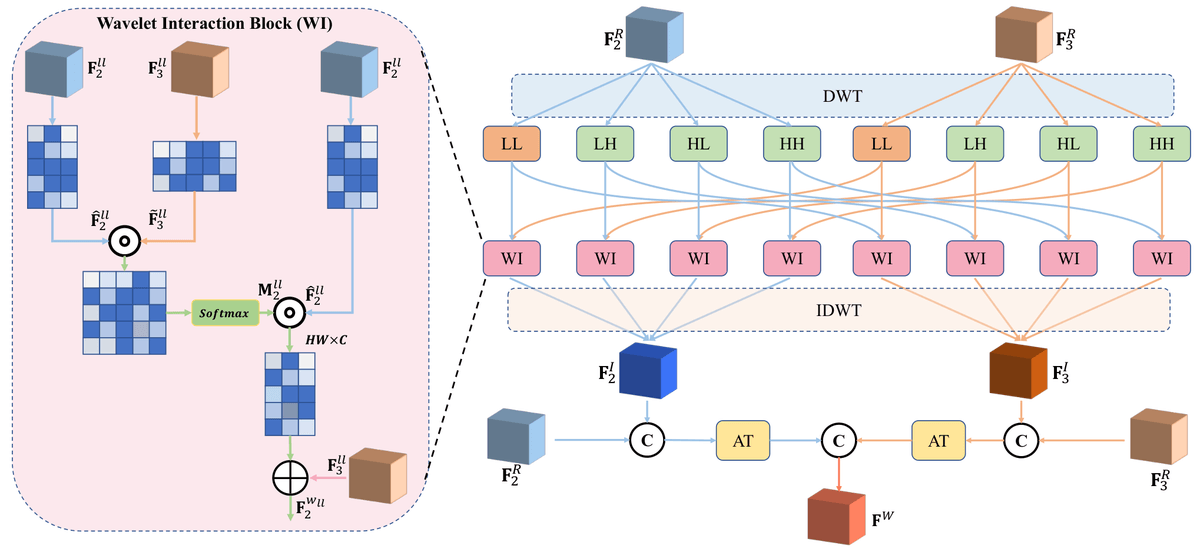
- FCE replaces full-resolution self-attention with wavelet-band interactions, cutting interaction compute by 4x.
- Backbone is Swin Transformer; ablations show it beats VGG, ResNet, ViT, and PVT alternatives.
- Runs at 13.6 FPS with 48.7 GFLOPs; struggles with tiny objects and background textures similar to targets.
Salient object detection in satellite and aerial imagery has a scale problem. A stadium can fill half the frame, a plane might be twenty pixels wide, and both can appear in the same scene. Fixed convolution kernels do not handle this gracefully, and self-attention at full resolution is expensive. A new paper introduces RDNet, a Swin Transformer-based detector that adapts its kernels to the actual region proportion of each object, and it sets new state-of-the-art numbers on three standard remote sensing saliency benchmarks.
Why fixed kernels break on aerial imagery
Salient object detection in remote sensing images faces significant challenges due to large variations in object sizes, the computational cost of self-attention mechanisms, and the limitations of CNN-based extractors in capturing global context and long-range dependencies. The core issue is mechanical: methods that rely on fixed convolution kernels often struggle to adapt to diverse object scales, leading to detail loss or irrelevant feature aggregation.
Concretely, when the salient object is tiny, a large kernel drags in background clutter. When the object is huge, a small kernel only sees a fragment of it. Most prior work also glues low-level and high-level features together with self-attention at full resolution, which mixes high and low frequency information indiscriminately and is compute-heavy.

The architecture in three modules
RDNet drops the CNN backbone entirely. The network uses SwinTransformer for global context modeling and introduces three key modules: the Dynamic Adaptive Detail-aware (DAD) module, which applies varied convolution kernels guided by object region proportions; the Frequency-matching Context Enhancement (FCE) module, which enriches contextual information through wavelet interactions and attention; and the Region Proportion-aware Localization (RPL) module, which employs cross-attention to highlight semantic details and integrates a Proportion Guidance (PG) block to assist the DAD module.
The Swin backbone produces five levels of features. The high-level features go into RPL for localization, the middle features go into FCE for context, and the low-level features go into DAD for fine detail. A bottom-up fusion combines all three streams into the final saliency map.

How the kernel selection actually works
The Proportion Guidance block is the trick that ties everything together. It takes the deepest feature map, runs global average pooling and two fully connected layers, and outputs a single scalar per image estimating what fraction of the scene the salient object occupies. That estimate is supervised directly with MSE against the ground truth region proportion.
DAD then branches its behavior into three bins:
- Object region < 25%: three convolutional operations, biased toward small kernels.
- 25% to 50%: four convolutional operations, mixed scales.
- Object region > 50%: five kernels ranging from 1x1 to 9x9. Larger kernels (7x7, 9x9) capture the whole region while 3x3 and 5x5 refine edges.
Each branch has a detail extractor path and a detail optimizer path using spatial attention, both routed by the same PG signal. Ablations show this bin design matters. When the bin ranges are too broad, large objects may be processed with small kernels, limiting attention to only a portion of the object. Conversely, when the bin ranges are too narrow, large kernels may be applied to small objects, causing the convolution to incorporate excessive background information.
Wavelets instead of full-resolution attention
The FCE module is where the compute savings come from. Rather than running self-attention over full-resolution mid-level features, FCE first applies a discrete wavelet transform to split each feature map into four frequency components (LL, LH, HL, HH). Matching frequency bands from adjacent layers then interact with each other through a lightweight matrix-multiply-and-softmax block, followed by an inverse wavelet transform to reassemble the feature map. The authors report that this reduces the computational complexity of the interaction by a factor of four while keeping high-frequency edge details from being drowned out by low-frequency semantics.
Benchmark results
RDNet was trained and evaluated on the three standard optical remote sensing SOD datasets: ORSSD (800 images), EORSSD (2,000 images) and ORSI-4199 (4,199 images). The backbone is a pretrained Swin Transformer with 384x384 input, trained with RMSprop at a learning rate of 1e-5 on a single RTX 3090. The supervision combines binary cross-entropy, IoU, and F-measure losses on the saliency map plus MSE on the region proportion prediction.
Against 21 prior methods, RDNet takes the top spot on all three datasets across mean absolute error (M), F-measure, and E-measure:
| Dataset | M | F-beta | E-xi |
|---|---|---|---|
| EORSSD | 0.0049 | 0.8563 | 0.9718 |
| ORSSD | 0.0066 | 0.9080 | 0.9852 |
| ORSI-4199 | 0.0254 | 0.8781 | 0.9506 |
On EORSSD the MAE beats the previous best (HFCNet) by around 4%, and F-beta improves by more than 9% on average across compared methods. The model runs at 13.6 FPS with 48.7 GFLOPs, which is heavier than the fastest baselines like CorrNet (100 FPS, 21.1G) but far lighter than models like PA-KRN (617.7G) or EMFINet (480.9G).

Where it still falls over
The failure modes are honest and instructive. When salient objects are extremely small or fine, the network can miss them and instead latch onto surrounding structures. In one example, RDNet flags the runway around an airplane as part of the salient region. When background texture closely matches the target (a runway blending into a playground surface), the model over-extends the saliency mask.
Where this fits
Salient object detection in aerial imagery feeds downstream tasks like ship detection, infrastructure mapping, building extraction, land use analysis, and change detection. The specific contribution here is not a new benchmark or a huge parameter count. It is the idea that region proportion should be an explicit, learned, supervised signal that routes the network's own convolutional behavior. The authors did not publish a public code repository alongside the paper, but the training setup and hyperparameters are fully specified, and the modules are straightforward to reimplement on top of a stock Swin backbone.