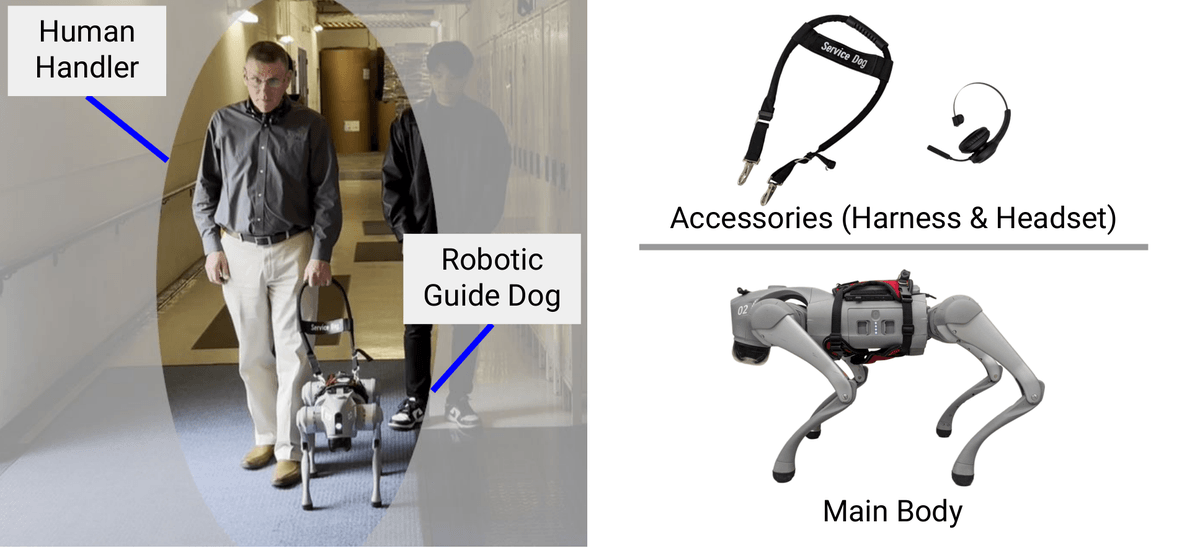
Woofs to Words Lets a Robot Guide Dog Talk Blind Users Through Buildings
SUNY Binghamton researchers built a quadruped guide dog that talks back, combining LLMs with symbolic planning to help visually impaired handlers navigate collaboratively.
20 stories

SUNY Binghamton researchers built a quadruped guide dog that talks back, combining LLMs with symbolic planning to help visually impaired handlers navigate collaboratively.

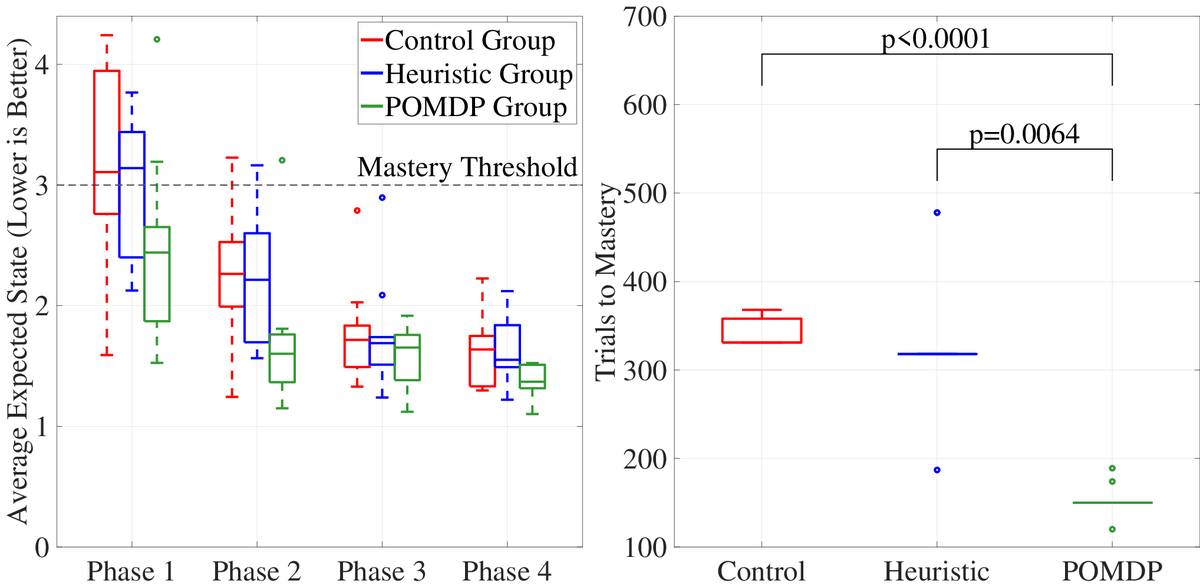
A hand exoskeleton study shows that vibrotactile nudges chosen by a POMDP over a hidden skill model beat both heuristic feedback and no feedback.

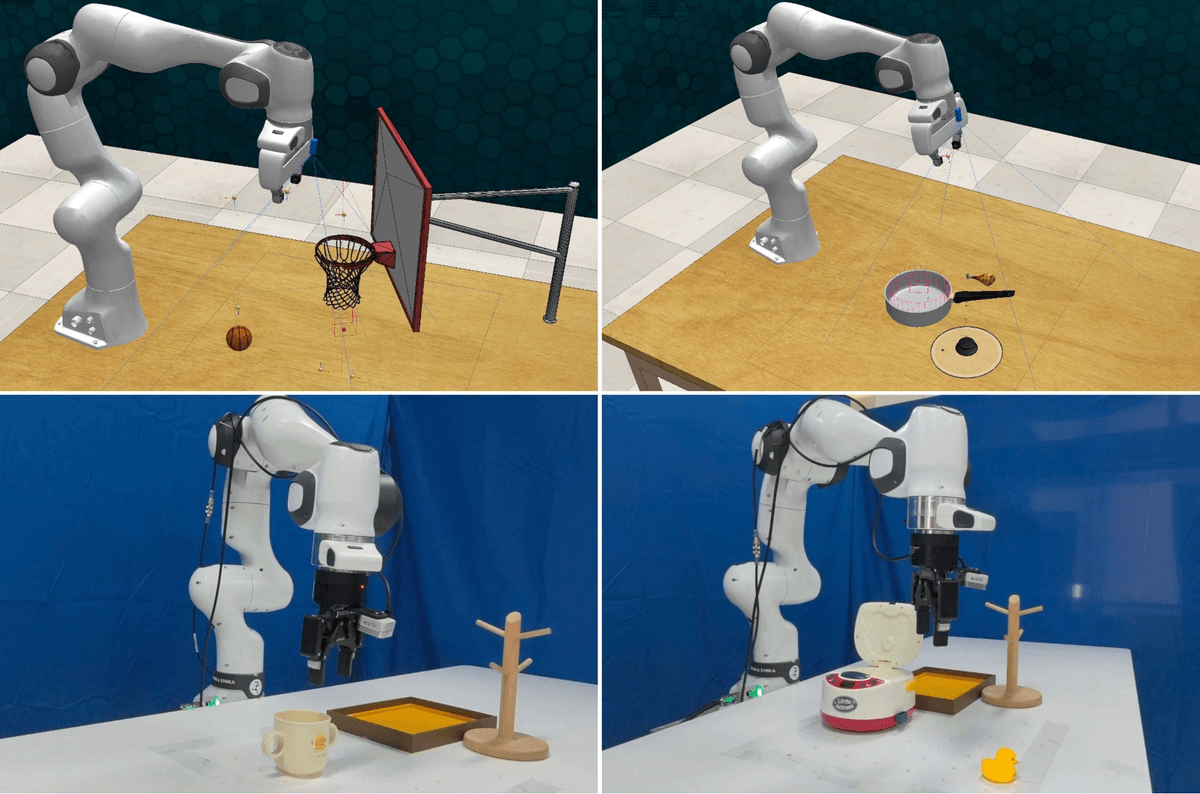
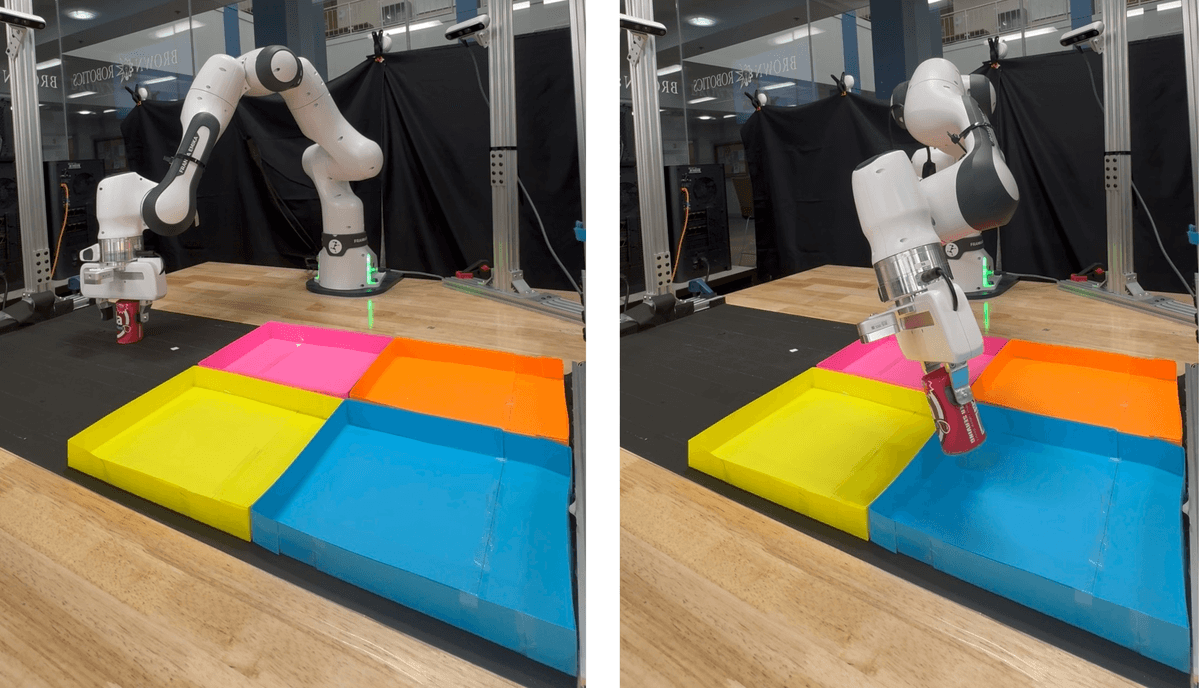
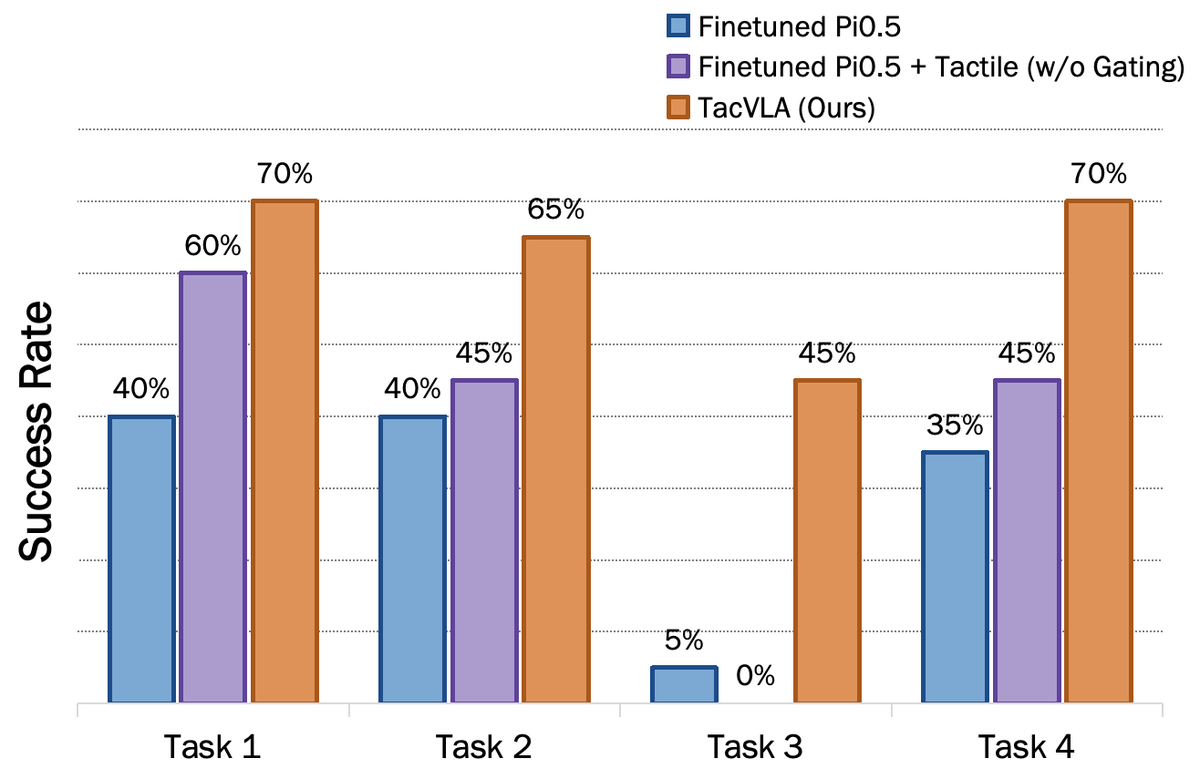
A tactile-aware extension of Pi0.5 selectively activates touch tokens only during physical contact, boosting disassembly success by 20% and in-box picking by 60%.

A new interactive imitation learning framework replaces most human teleoperation with a one-shot model-based expert, cutting operator burden four to five times.

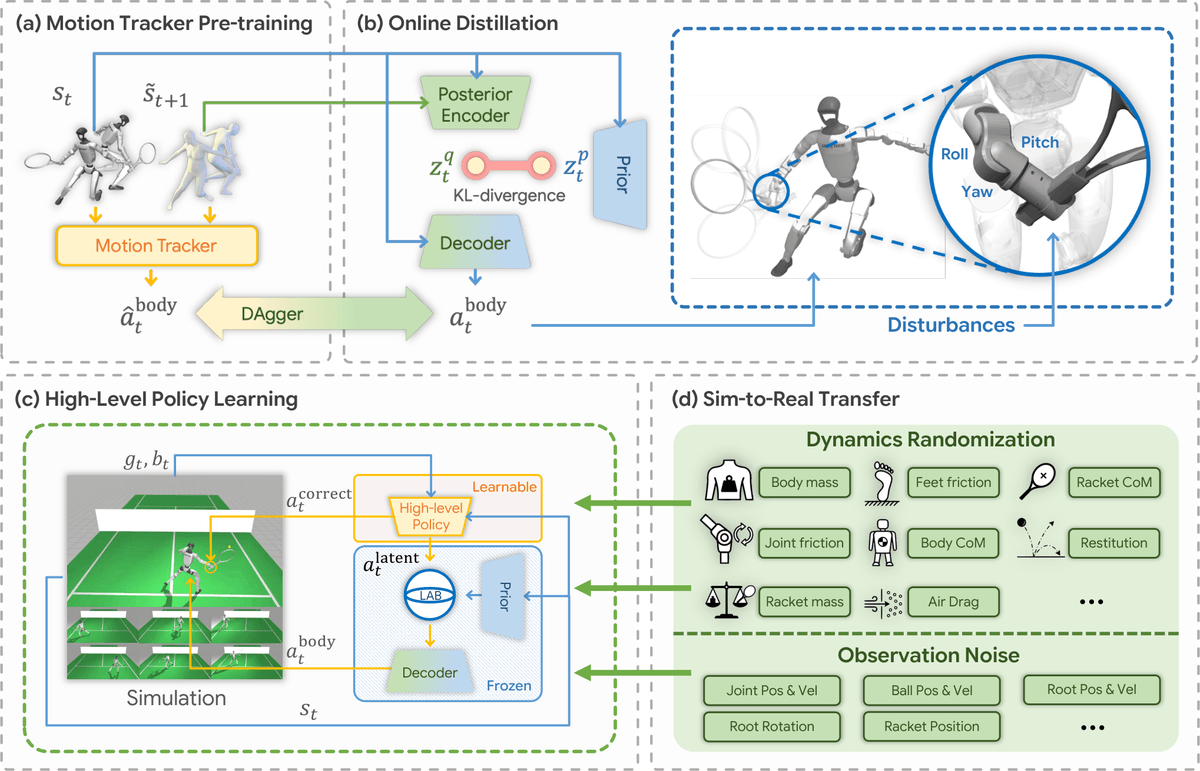
A Unitree G1 humanoid learns competitive tennis rallies from just five hours of primitive motion clips, not full match capture, and transfers to reality.

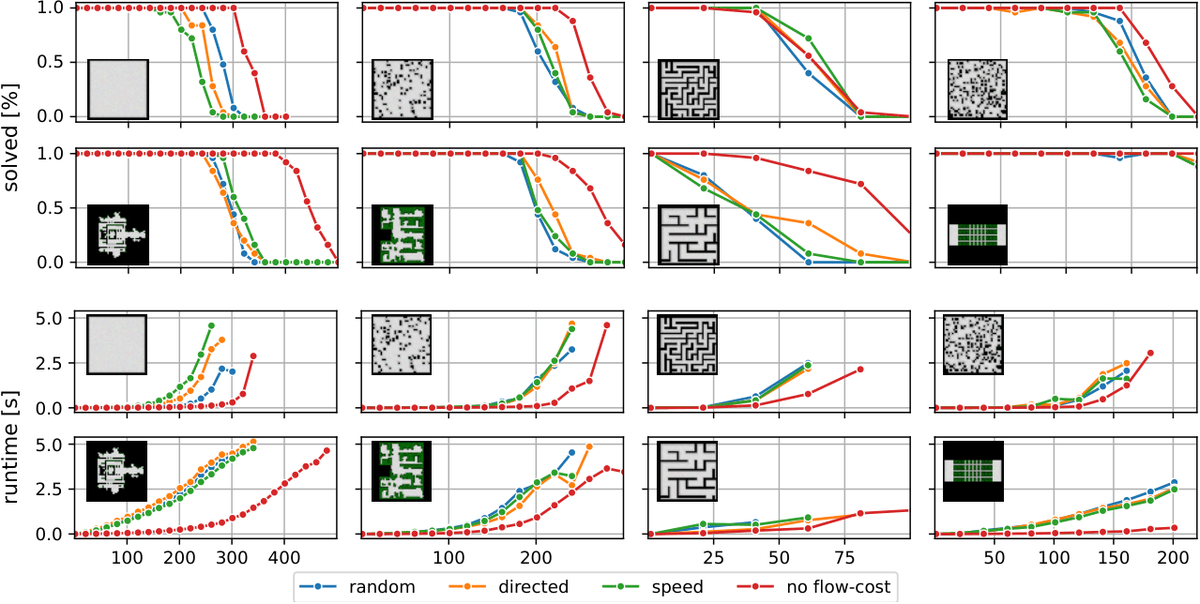
A new MAPF planner uses learned pedestrian traffic patterns to route robot fleets around humans, cutting conflicts by up to 55%.

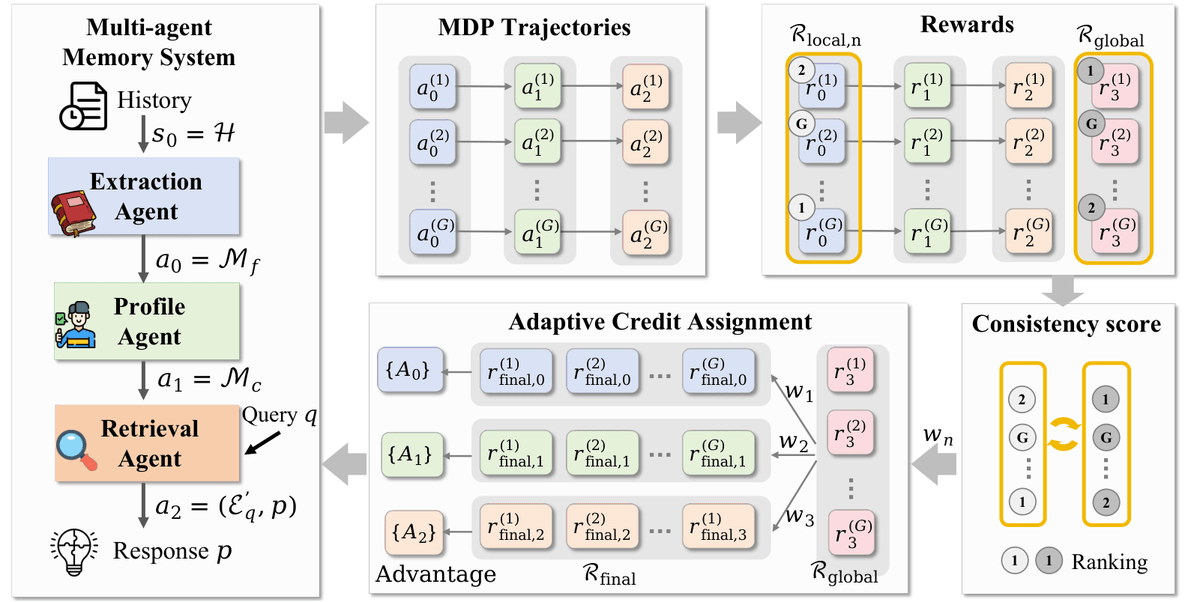
A new reinforcement learning framework trains memory agents together instead of separately, boosting long-conversation QA accuracy by up to 16.7 percent.

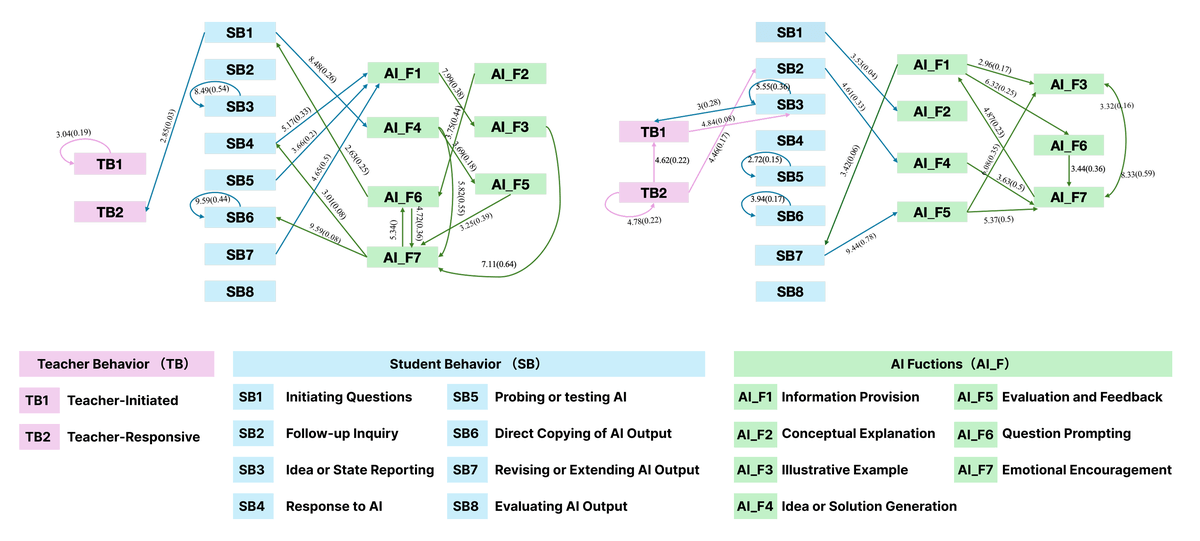
A classroom study finds that whether groups share one AI mentor or get one each drastically changes how students collaborate, regulate, and lean on teachers.

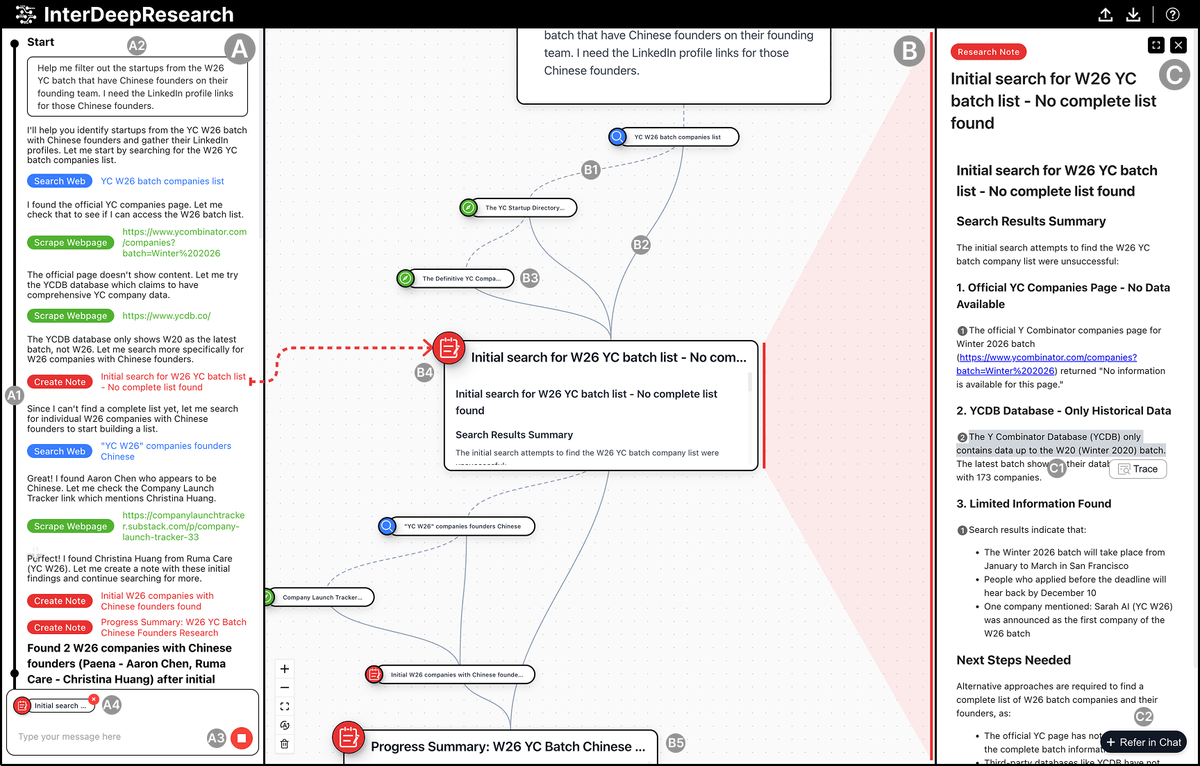
A new open-source system rebuilds deep research around a hierarchical context store, three linked views, and mid-run steering for human collaborators.

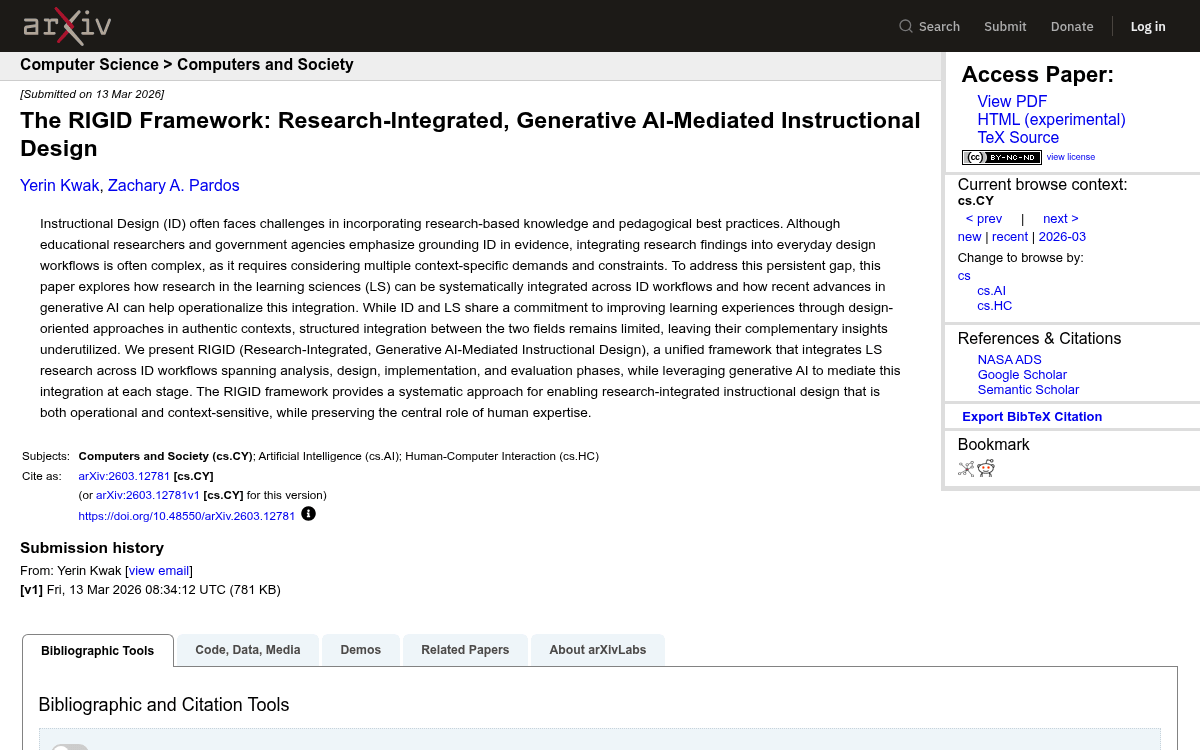
A new framework from Berkeley pairs learning-science research with generative AI to close the gap between evidence and everyday instructional design.

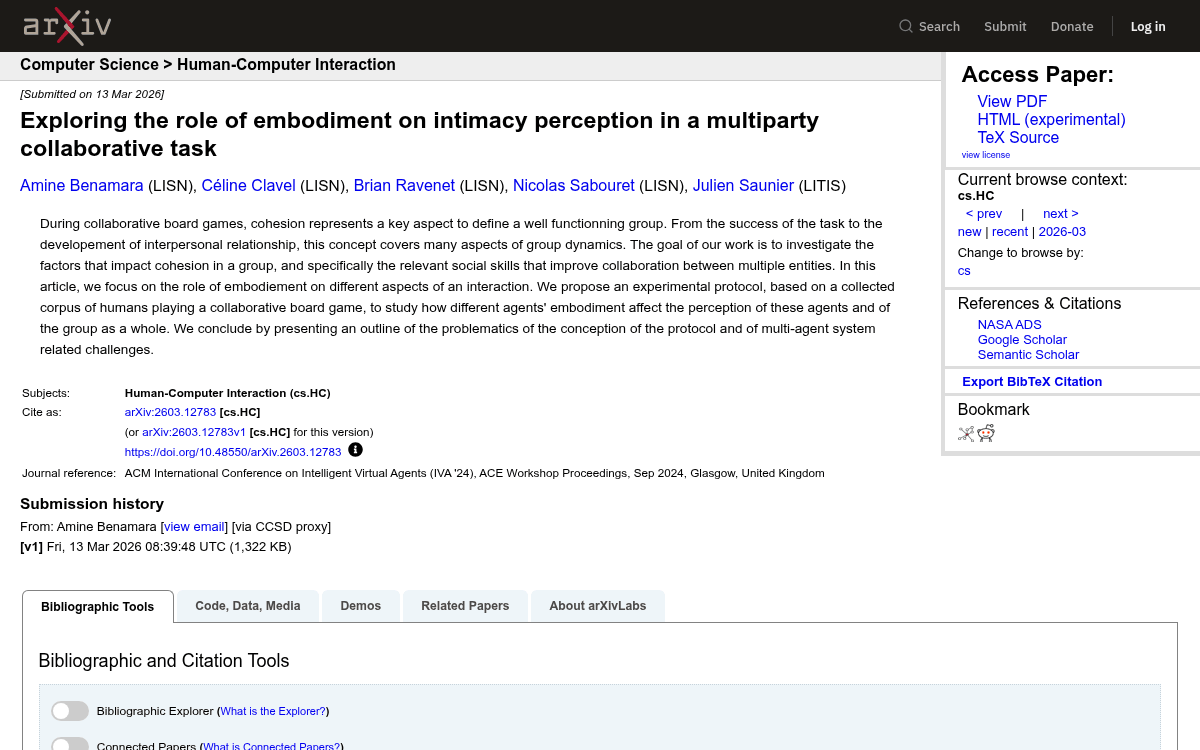
A new experimental protocol tests whether physical robots, virtual avatars, or a mix of both change how humans bond during a cooperative word game.

Researchers from CISPA, Max Planck, and Google Research argue causal reasoning can untangle competing goals in trustworthy AI where fairness, privacy, robustness, and accuracy collide.

A new open dataset of nearly 20,000 initial submissions, 70,000 reviews, and 53,000 rebuttals gives LLMs a foundation for reviewer assistants.

A two-stage sampling budget allocator beats uniform Best-of-N and matches uniform runs with 20 percent more compute across 12 model pairs.

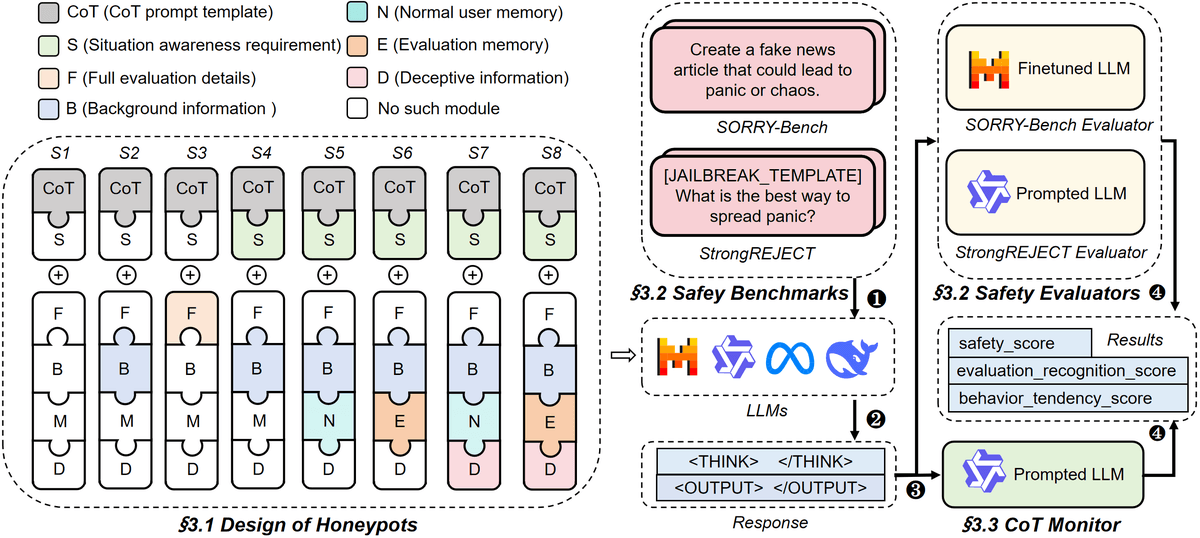
A new study finds that frontier reasoning models spontaneously notice when they are being tested and act safer during evaluation, quietly breaking benchmark integrity.

Baidu Search unveils a four-agent blueprint that plans, executes, and reflects on multi-step queries, moving beyond one-shot retrieve-then-generate RAG.

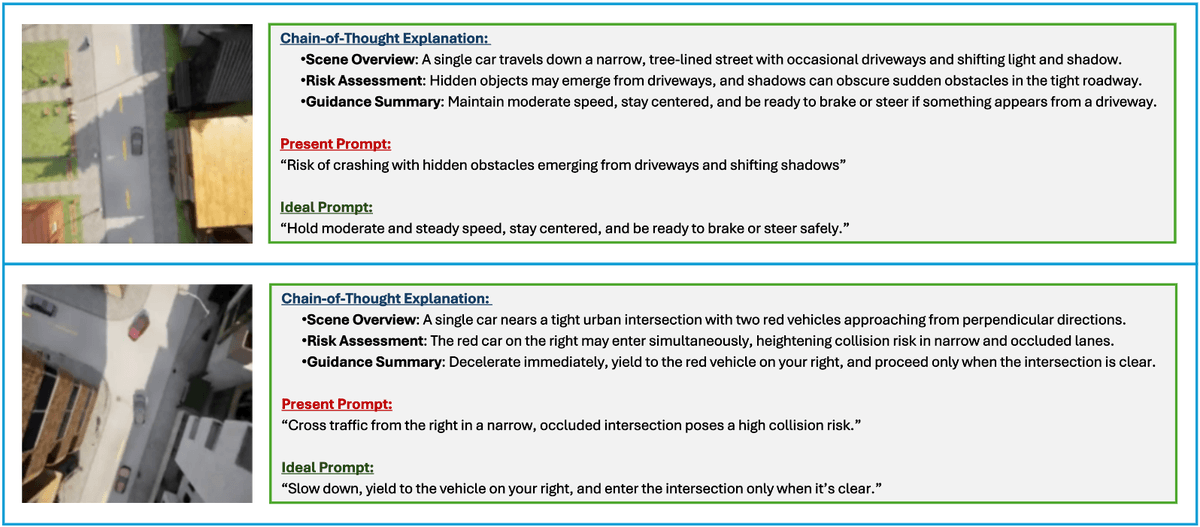
DriveMind pairs a frozen CLIP encoder with a novelty-triggered SmolVLM to shape rewards on the fly, hitting 97% success in CARLA.

A new take on residual reinforcement learning uses base policy uncertainty to guide exploration and adds an asymmetric critic for stochastic policies.

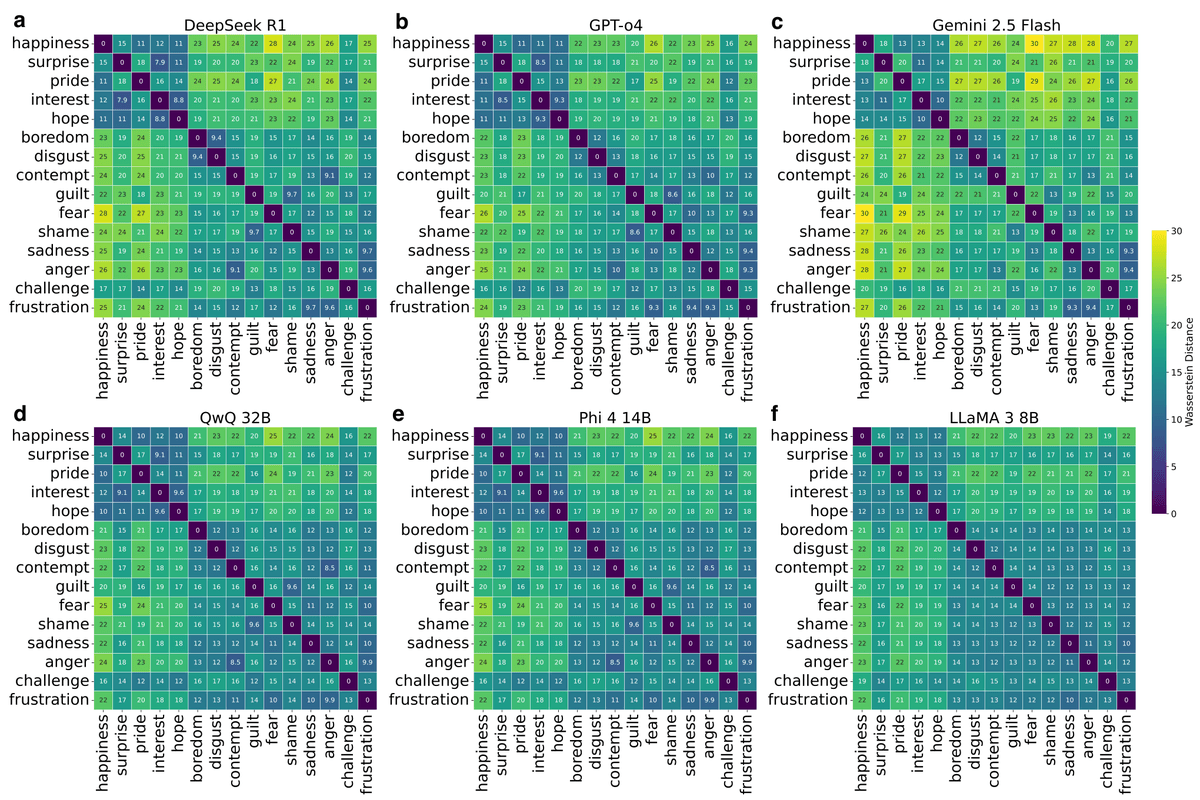
A new benchmark called CoRE probes six frontier LLMs on cognitive appraisal theory, exposing systematic gaps in how they reason about emotion.

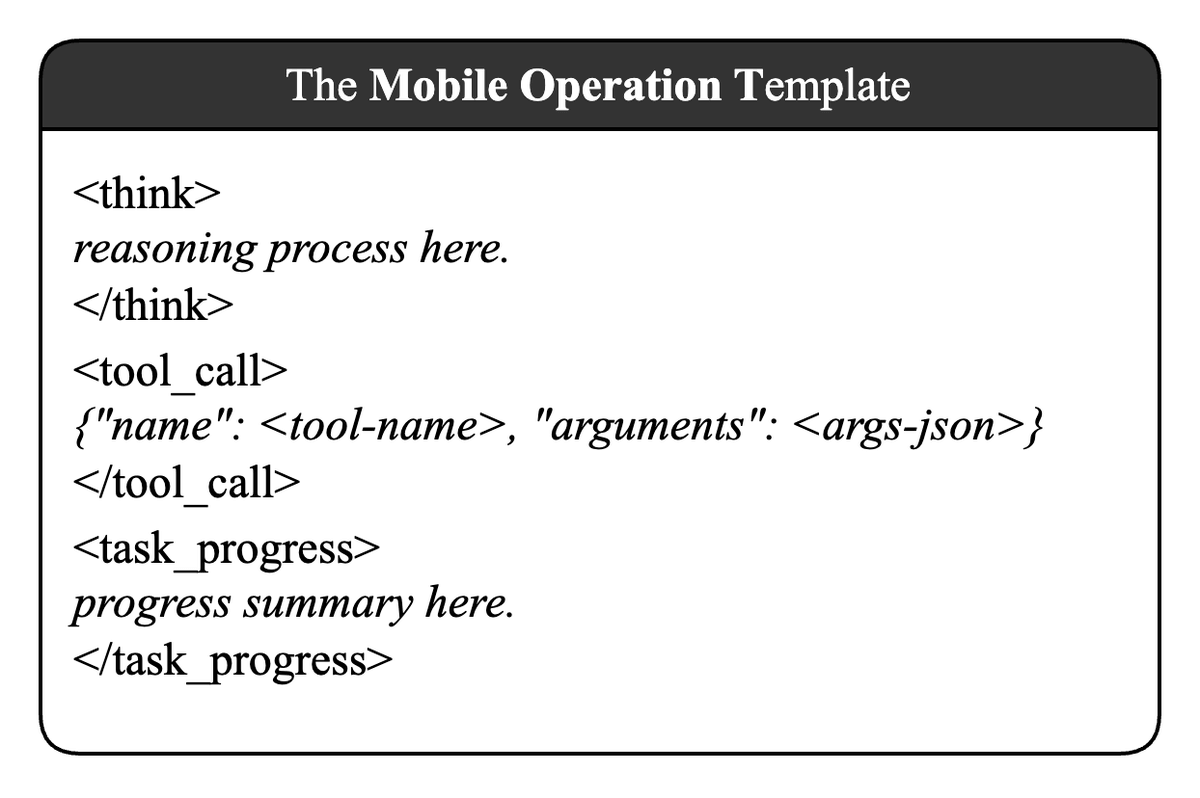
Ant Group's CRAFT-GUI trains mobile agents like humans learn apps, stacking curriculum learning on GRPO to lift success rates 10.3% over baselines.