
Pro
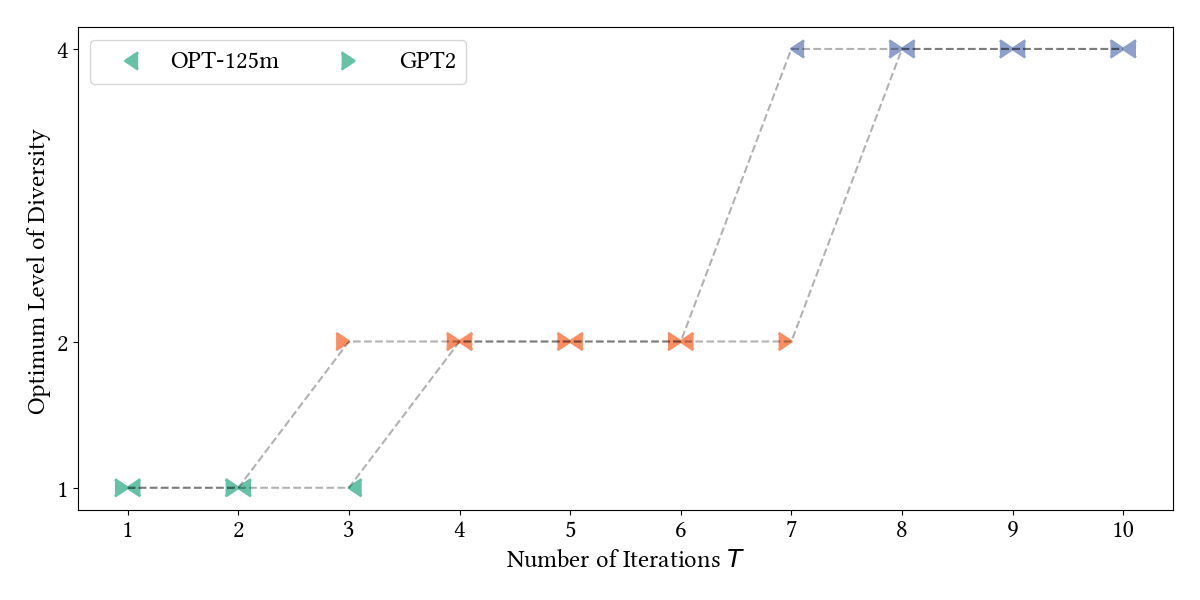
UW Study Warns AI Monoculture Collapses Knowledge Faster as Models Scale
New research shows that segmenting training data across multiple models beats one giant model when synthetic outputs recycle through the pipeline.
20 stories
New research shows that segmenting training data across multiple models beats one giant model when synthetic outputs recycle through the pipeline.
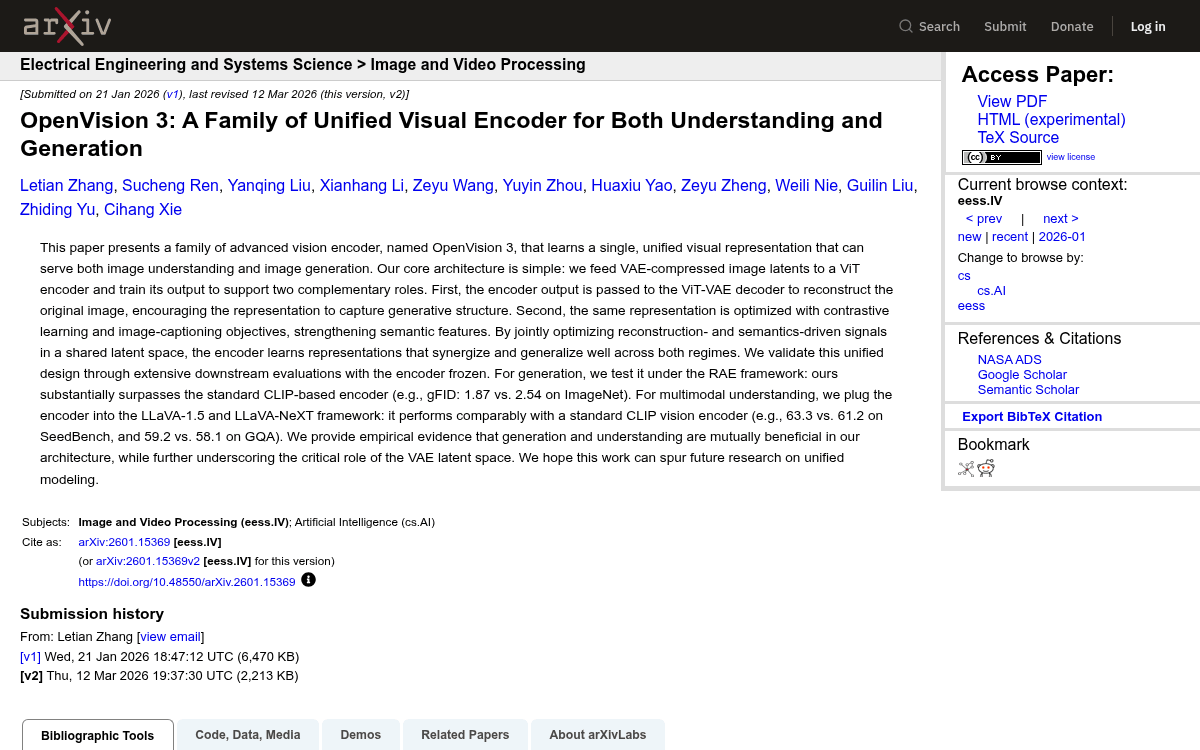
A joint team from UC Santa Cruz, JHU, and NVIDIA built a single vision encoder that handles both image understanding and generation, beating CLIP at both.
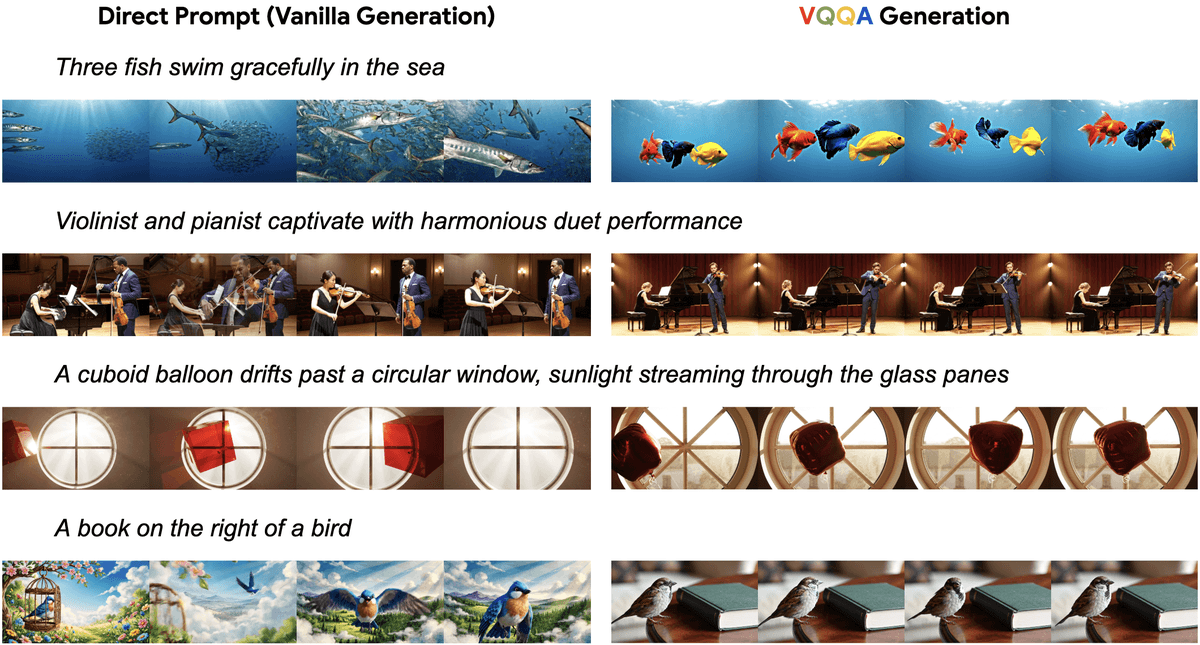
Google researchers turn vision-language critiques into semantic gradients, iteratively rewriting prompts to fix video artifacts without touching model weights.
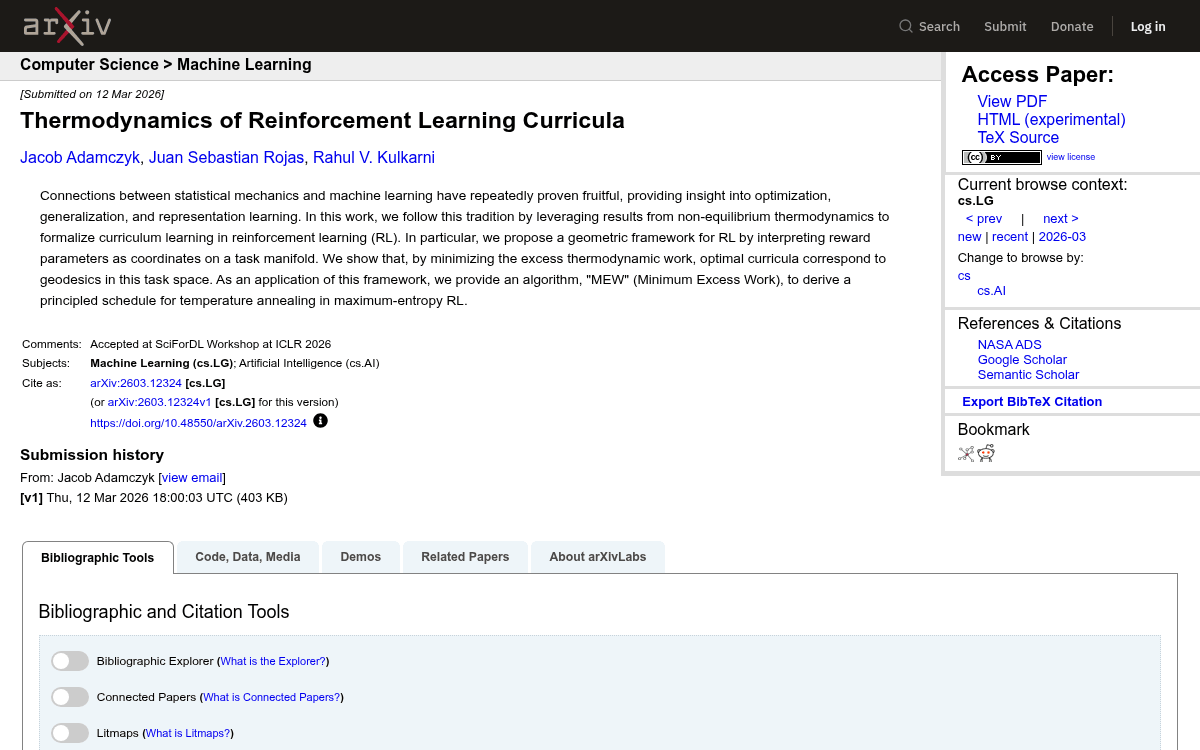
A new framework borrows tools from non-equilibrium thermodynamics to schedule reward and temperature changes in RL, treating curricula as geodesics on a task manifold.
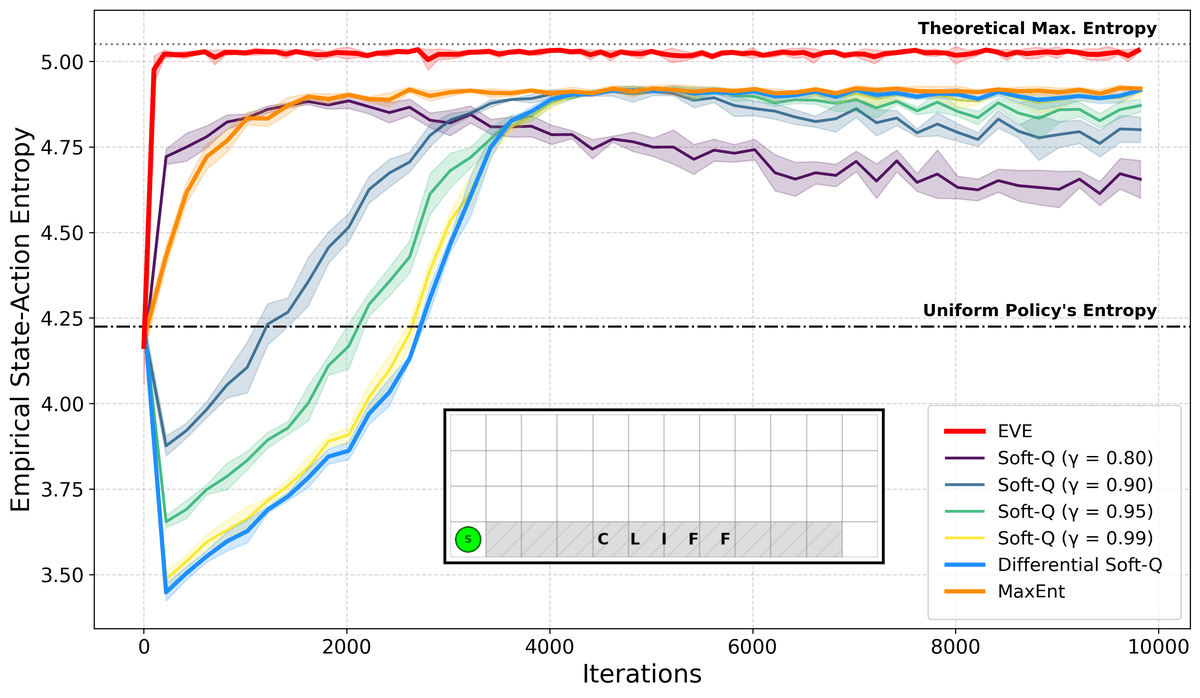
A new spectral algorithm called EVE finds maximum-entropy exploration policies from transition dynamics alone, skipping expensive on-policy rollouts entirely.
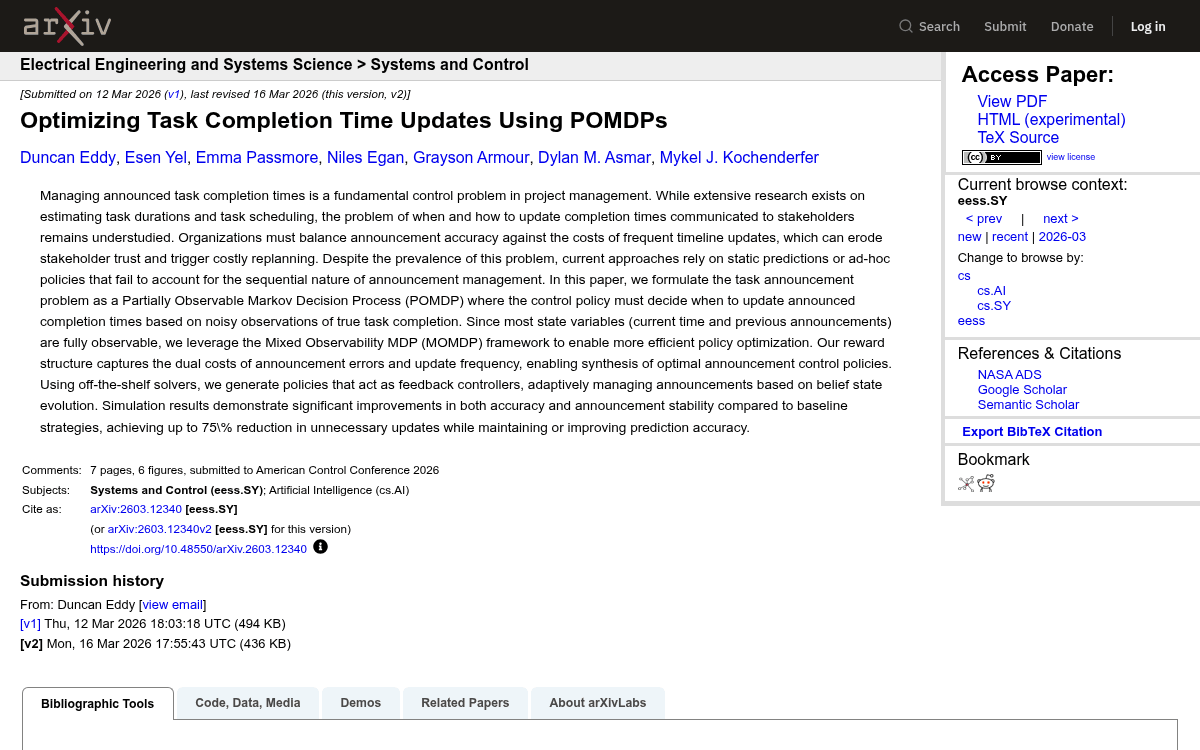
A Stanford team reframes deadline updates as a control problem, cutting unnecessary revisions by up to 75 percent while preserving accuracy.
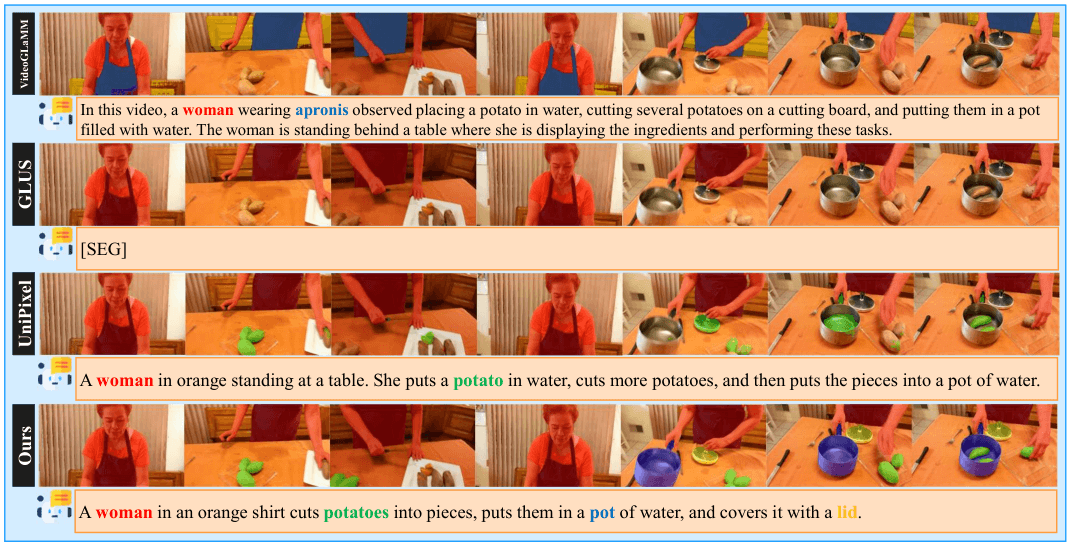
A plug-and-play module fixes temporal drift and identity switches in video segmentation MLLMs, boosting three baselines across six benchmarks.
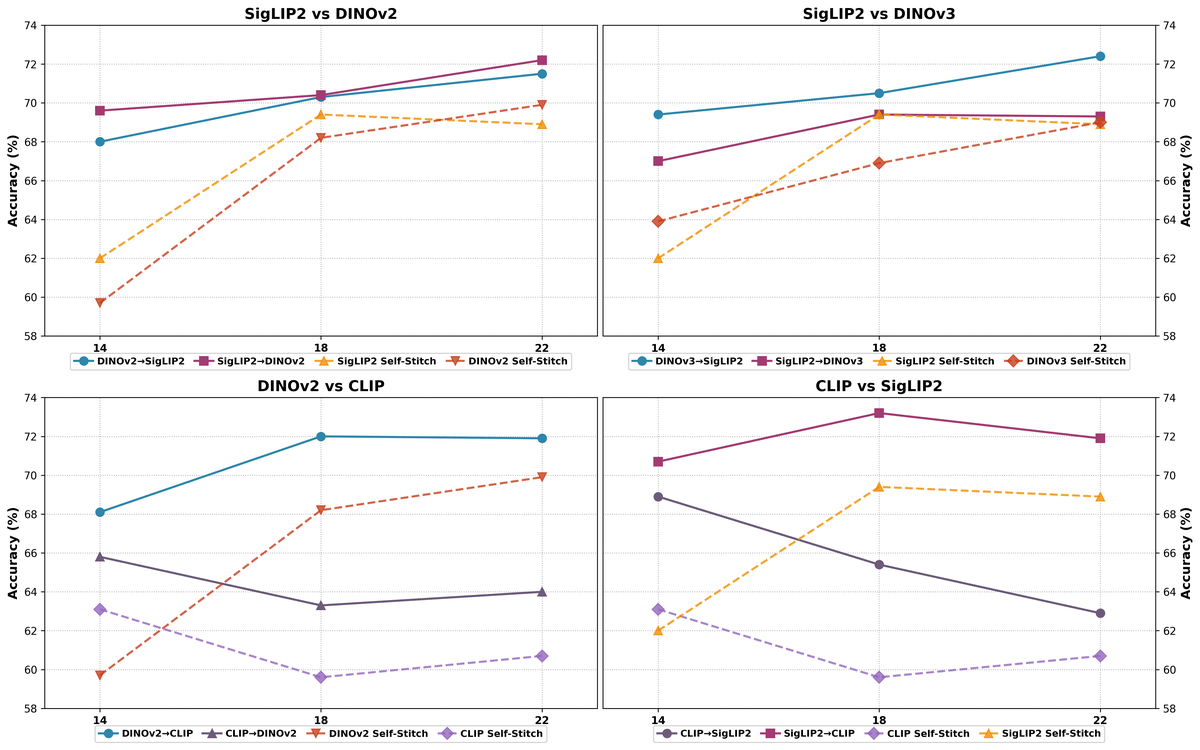
New research shows heterogeneous vision foundation models like CLIP, DINOv2, and SigLIP 2 can be stitched together to fuse complementary strengths at low cost.
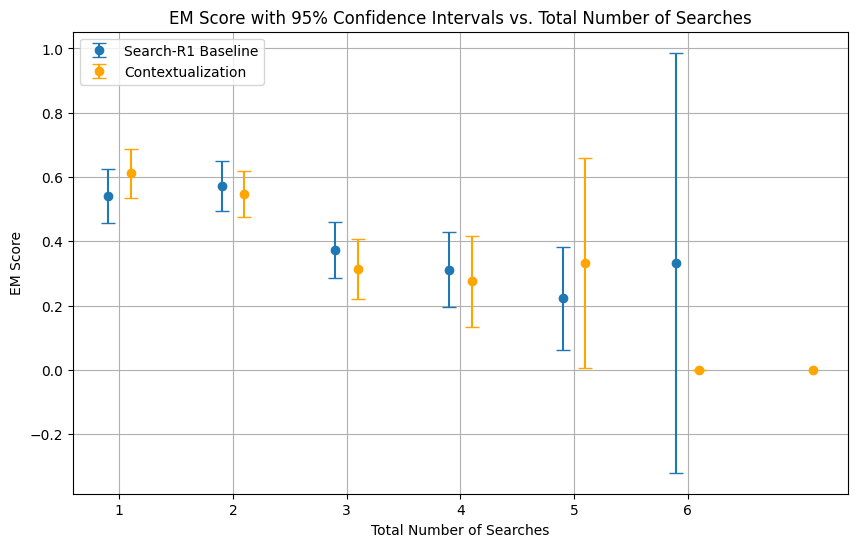
A test-time patch for the Search-R1 agentic RAG pipeline lifts exact match by 5.6% while cutting retrieval turns by 10.5%.
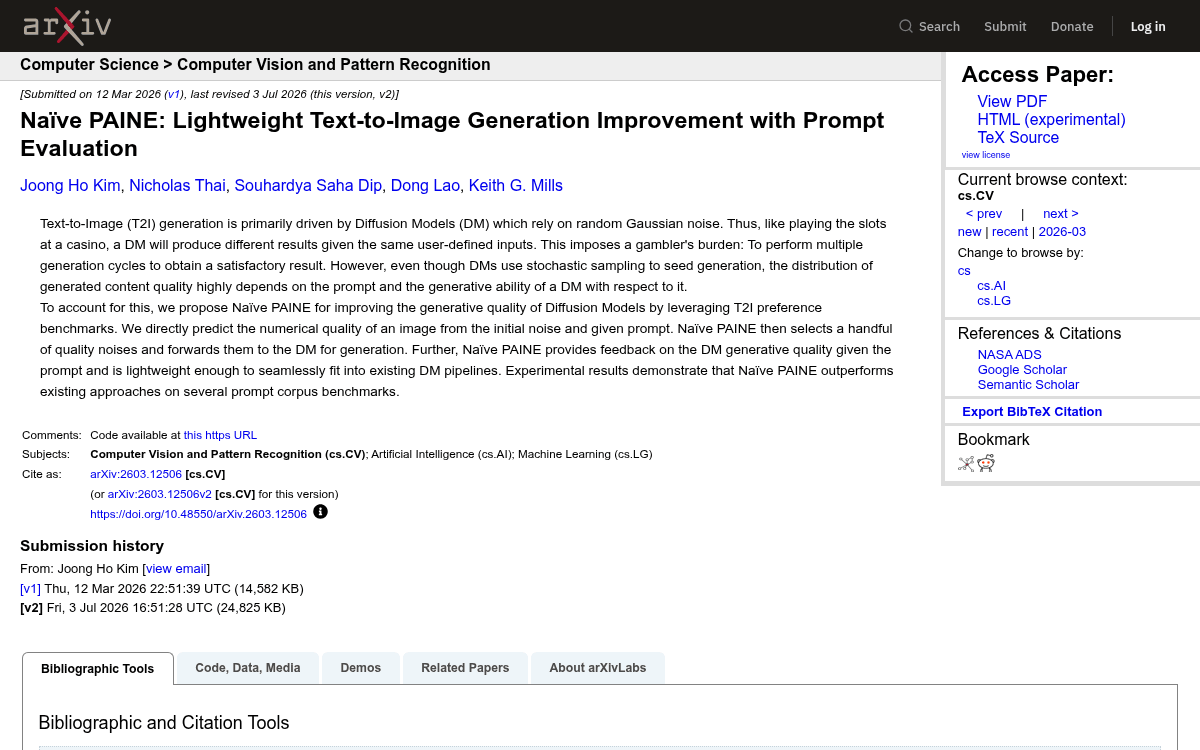
A lightweight predictor scores random noise before diffusion runs, picking winning seeds and flagging prompts a model cannot handle.
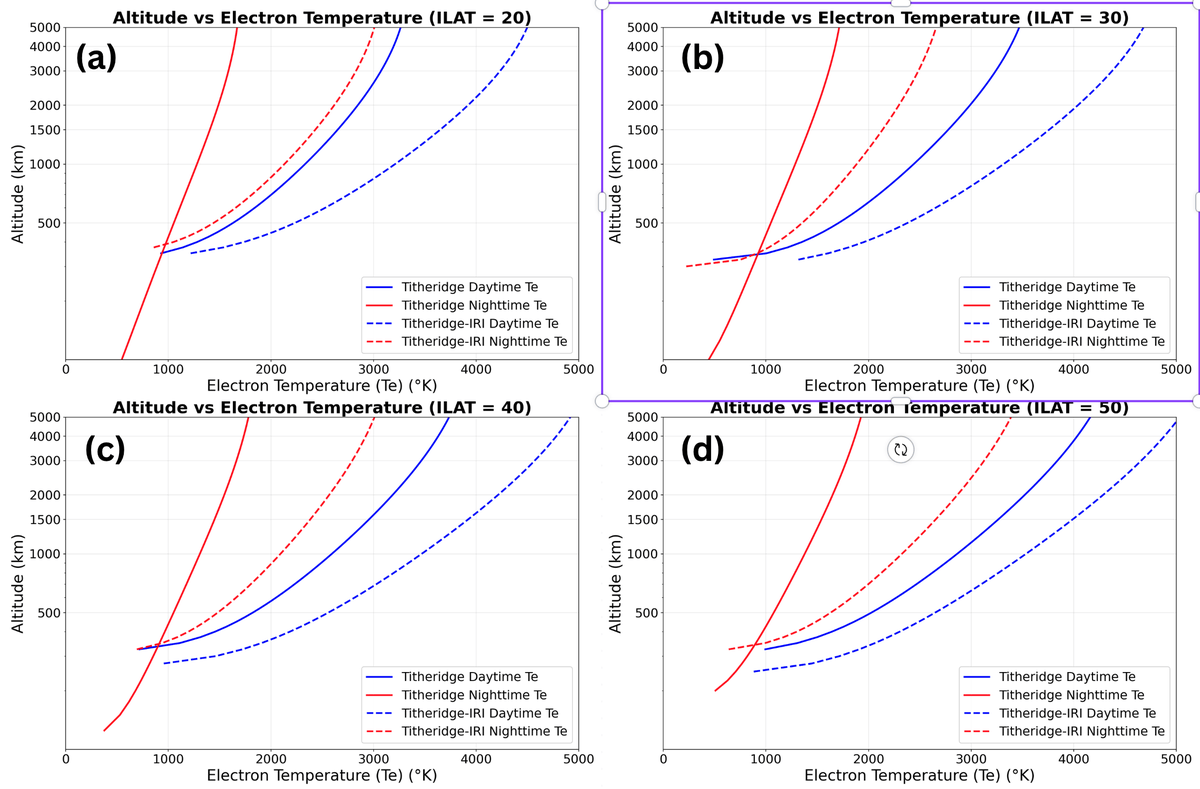
A team from CU Boulder and JAXA turned a continuous regression problem into a 150-bin classification task, boosting plasmasphere temperature accuracy from 13% to nearly 70%.
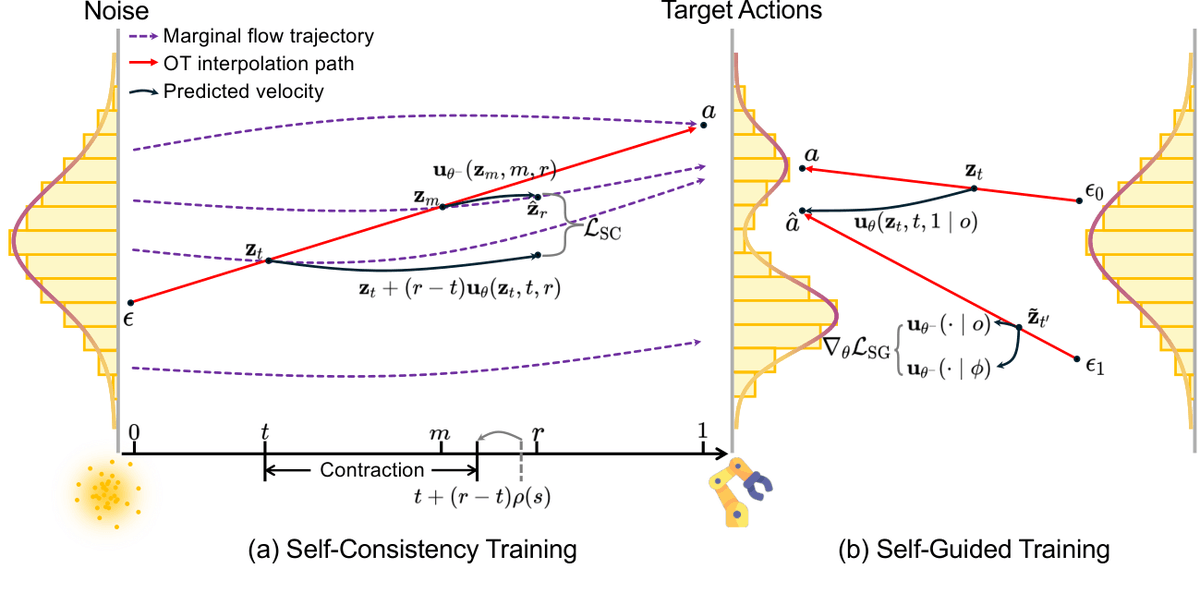
A new self-distillation framework compresses flow-based robot policies to a single sampling step while beating 100-step baselines across 56 manipulation tasks.
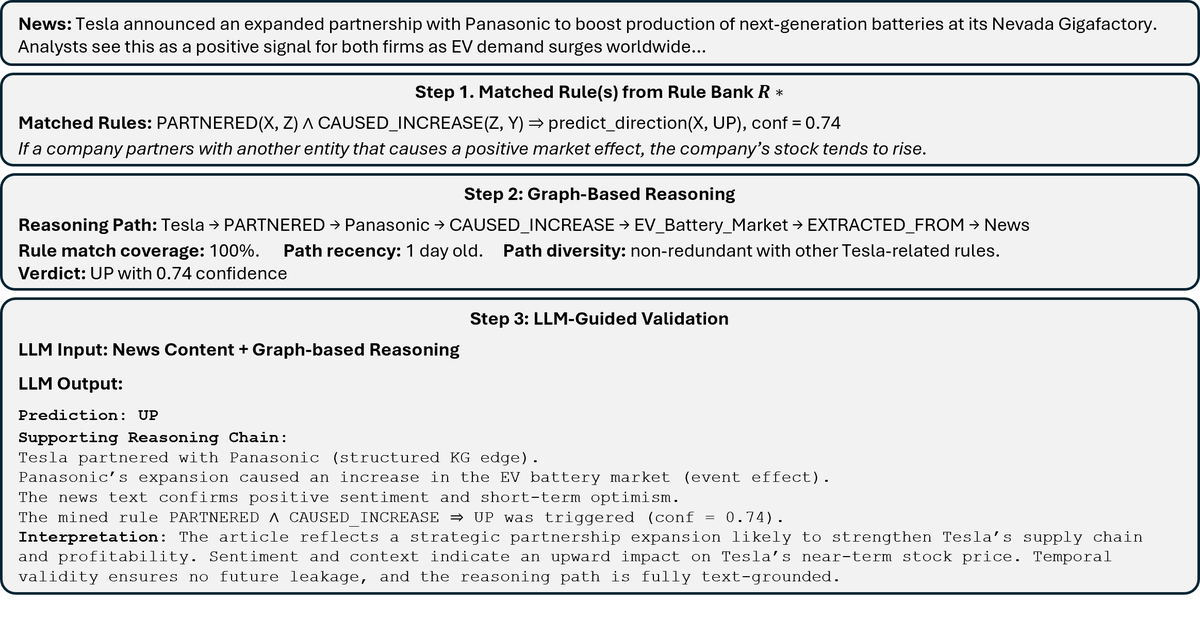
Researchers from Université de Montréal, Mila, and Aily Labs propose TRACE, a knowledge graph reasoning method that predicts stock moves with auditable evidence chains.
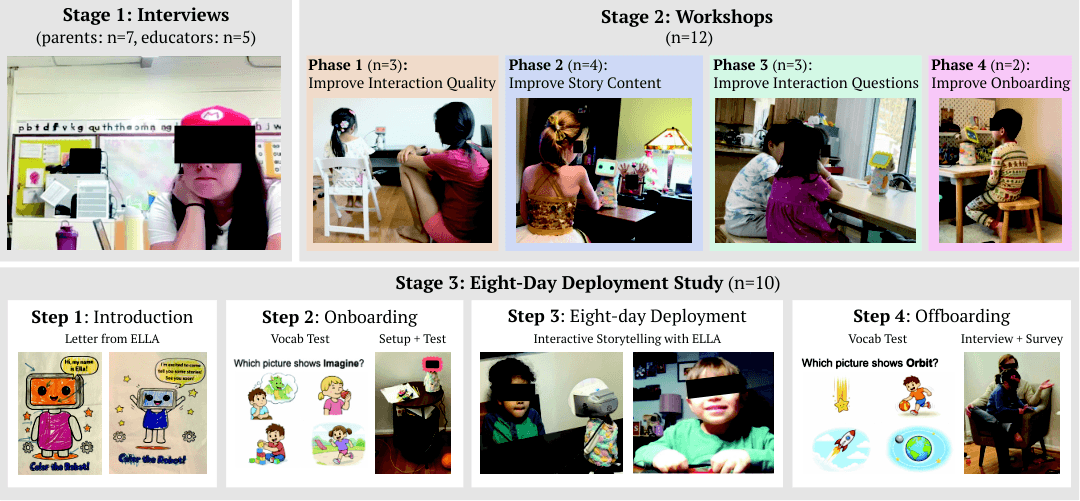
Johns Hopkins researchers built an autonomous LLM-driven storytelling robot, put it in ten homes for eight days, and measured what preschoolers actually learned.
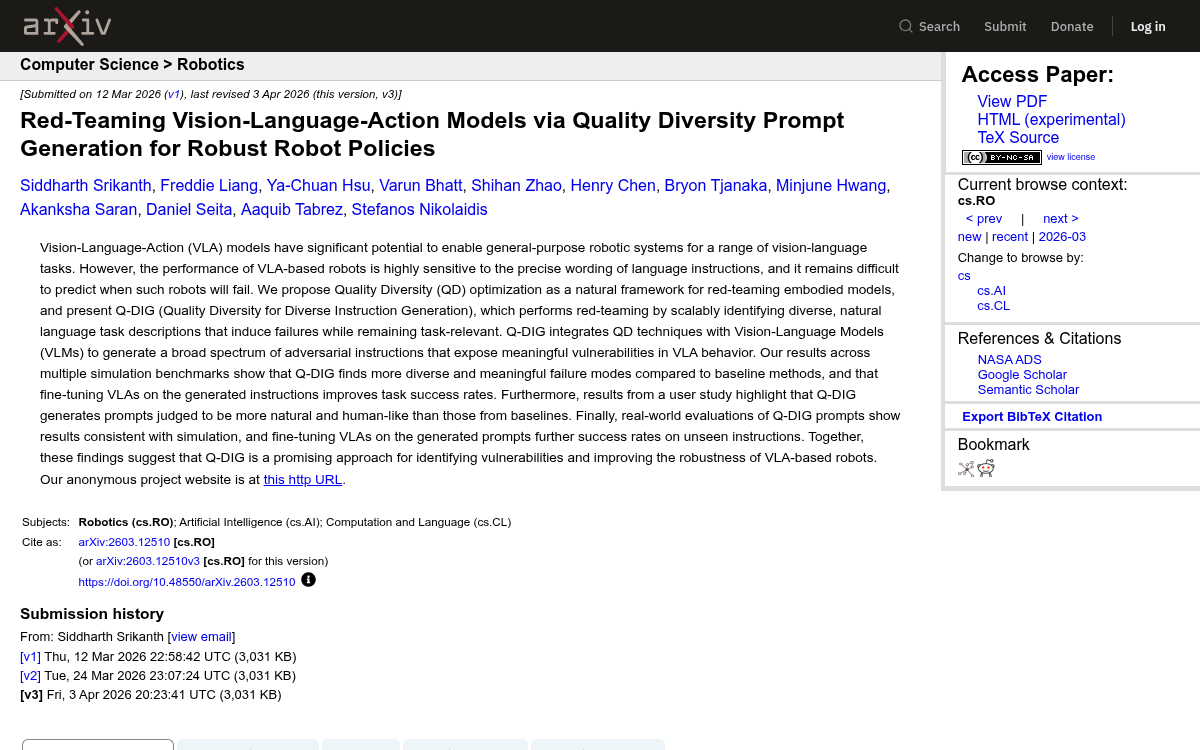
Q-DIG uses quality diversity search plus a VLM mutator to hunt for phrasings that break vision-language-action robot policies, then patches them.
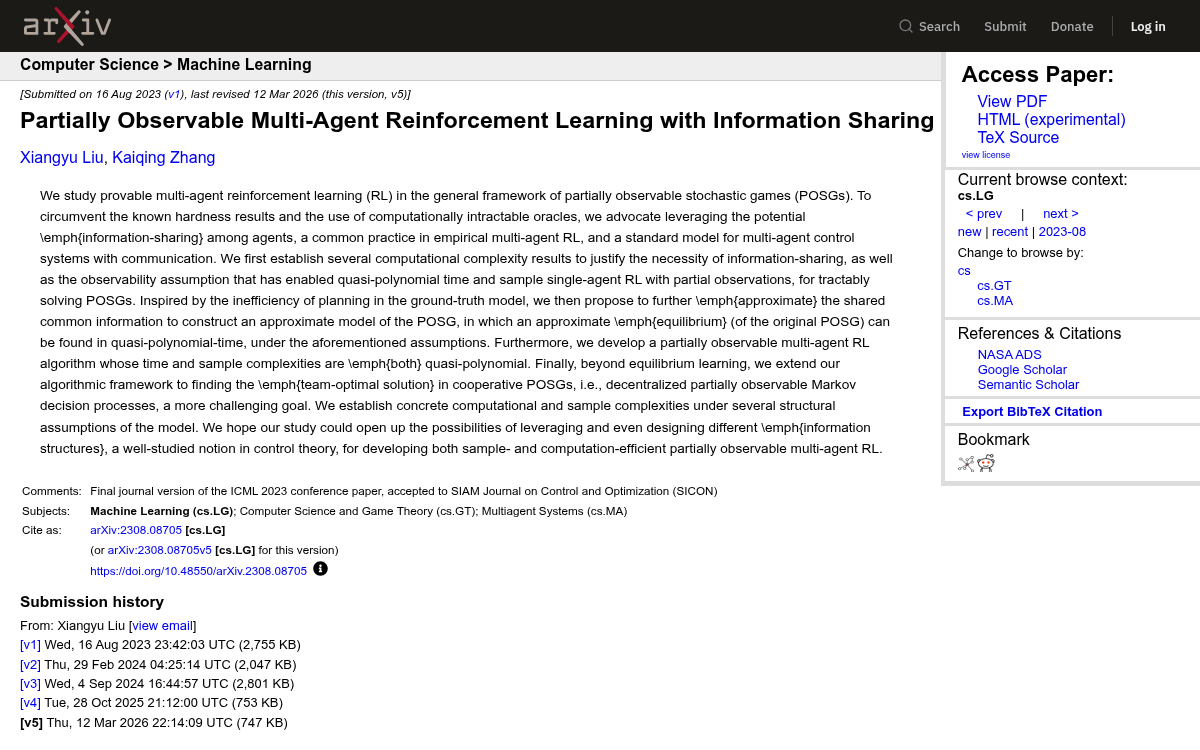
A new framework proves that partially observable multi-agent reinforcement learning can be made both statistically and computationally tractable through information sharing.
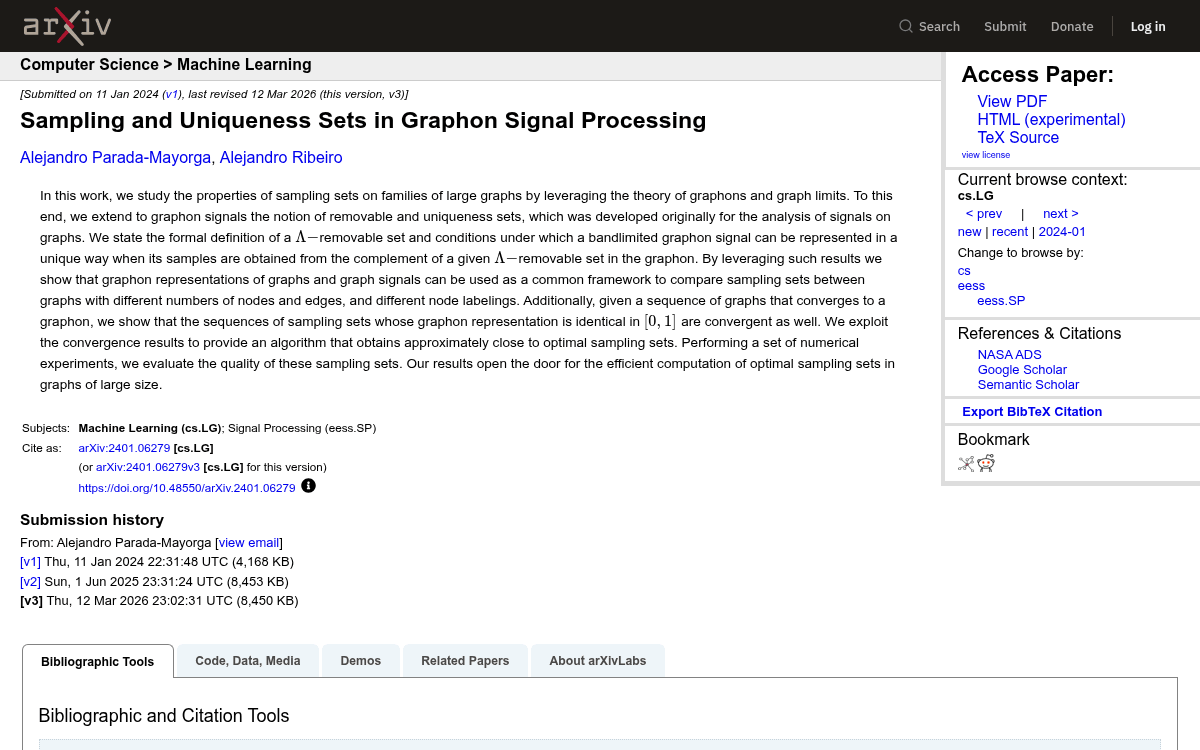
A new framework uses graphon theory to transfer near-optimal sampling sets from small graphs to massive ones where traditional selection is intractable.
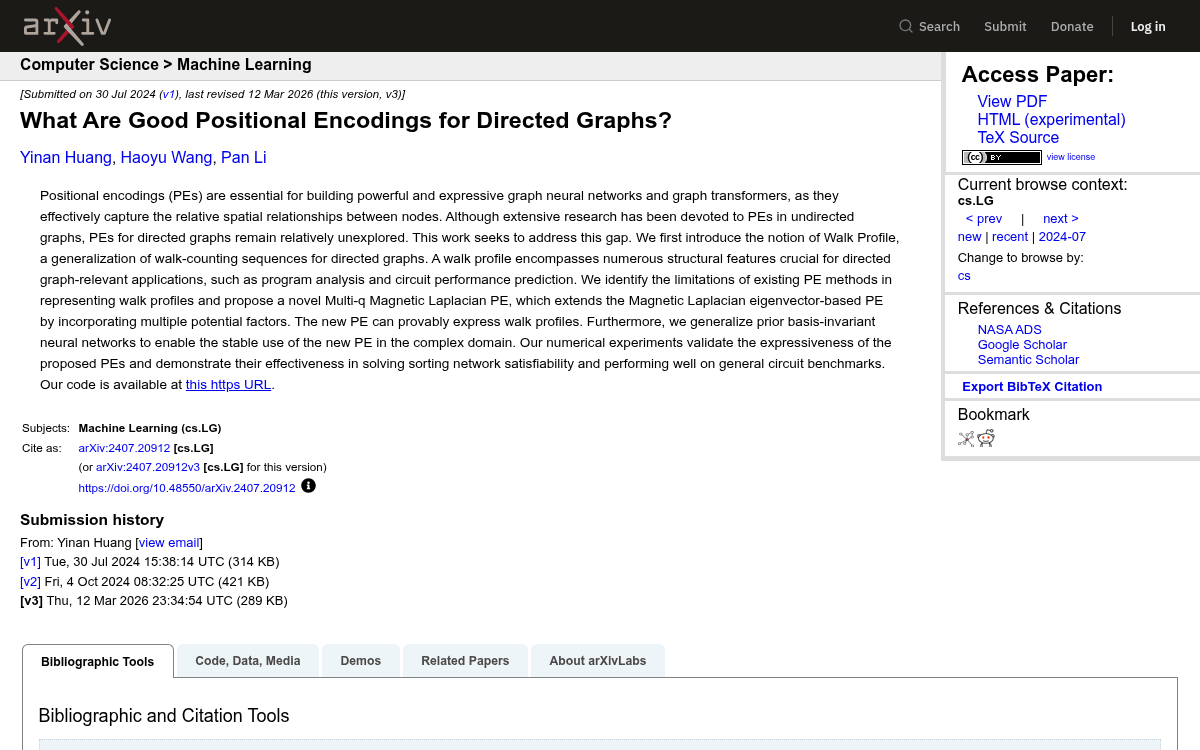
A new positional encoding for directed graphs uses multiple magnetic Laplacians to provably capture bidirectional walk structure that prior methods miss.
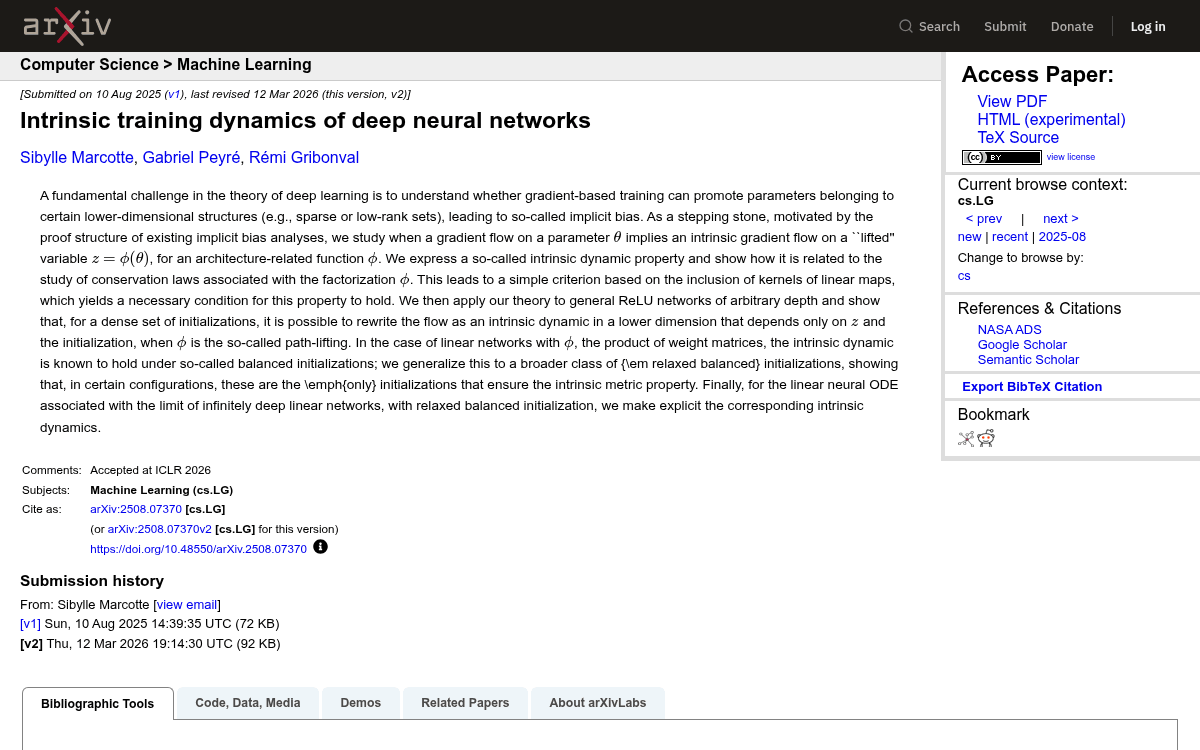
A new theoretical framework identifies when high dimensional gradient flow can be compressed into a lower dimensional Riemannian flow, extending implicit bias analysis to deep ReLU networks and infinitely deep linear networks.
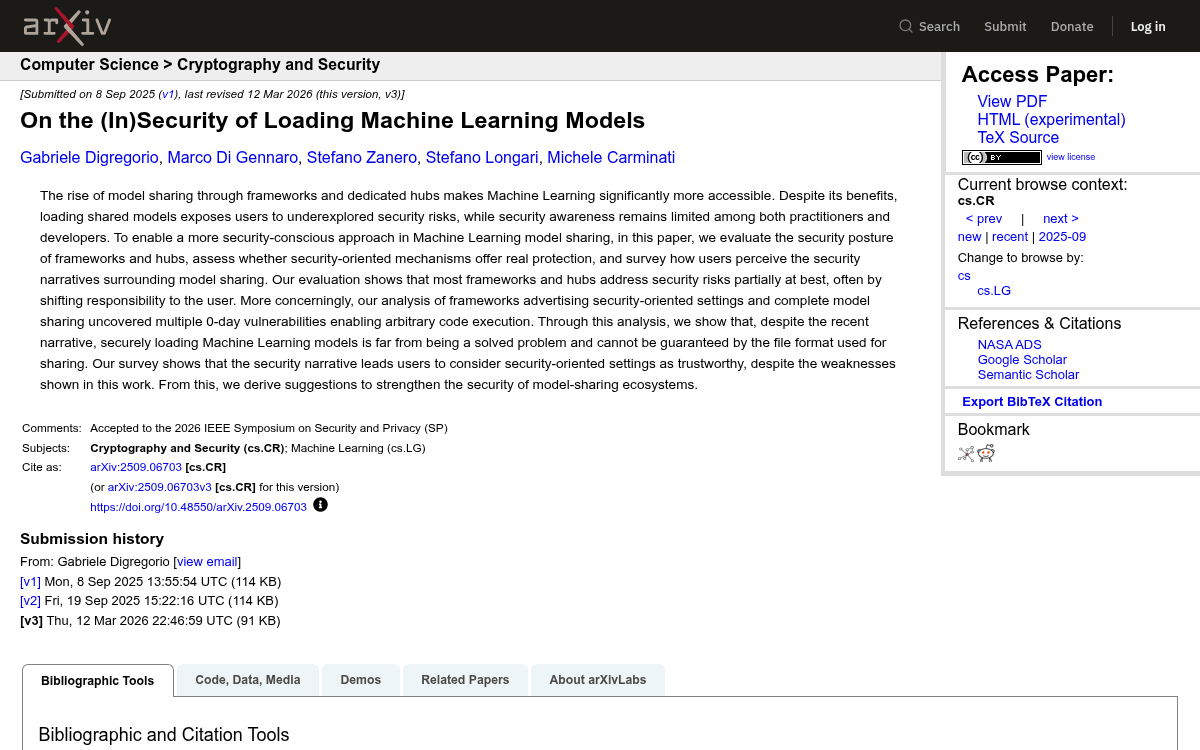
Researchers found six zero-day vulnerabilities in Keras and Skops that let attackers run arbitrary code even when 'safe mode' loaders are enabled.