
Pro
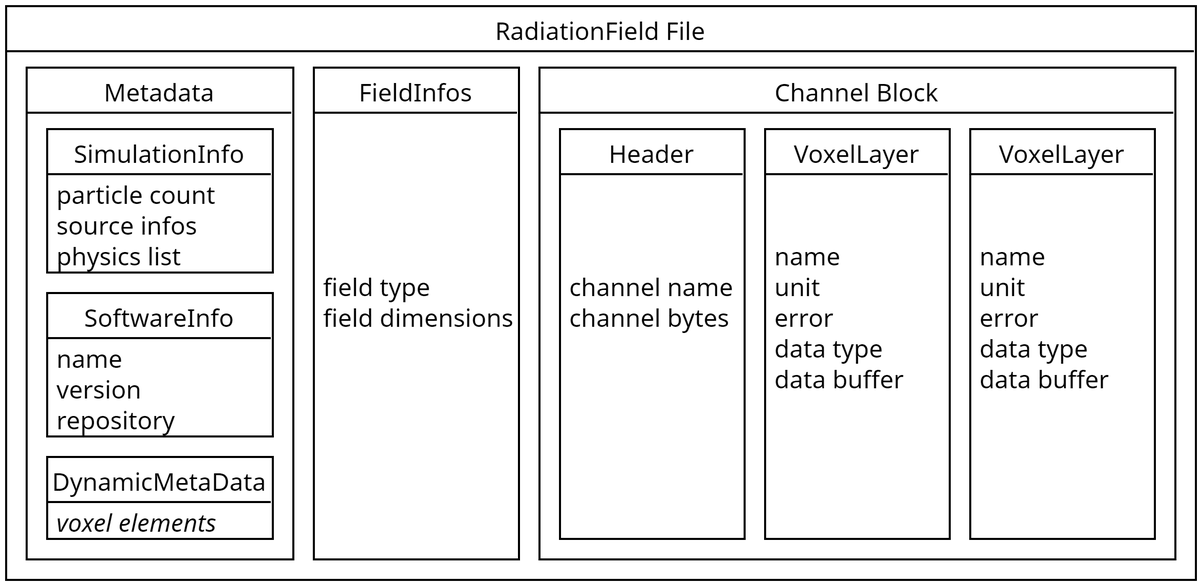
TU Braunschweig's RadField3D Lets Neural Networks Replace Slow Radiation Simulations
An open-source Geant4 simulator plus a PyTorch-ready binary format aim to let neural networks replace slow Monte-Carlo dose calculations.
20 stories
An open-source Geant4 simulator plus a PyTorch-ready binary format aim to let neural networks replace slow Monte-Carlo dose calculations.
A new algorithm delivers the first computationally efficient, rate-optimal regret bound for infinite-horizon linear MDPs, closing a longstanding gap in RL theory.
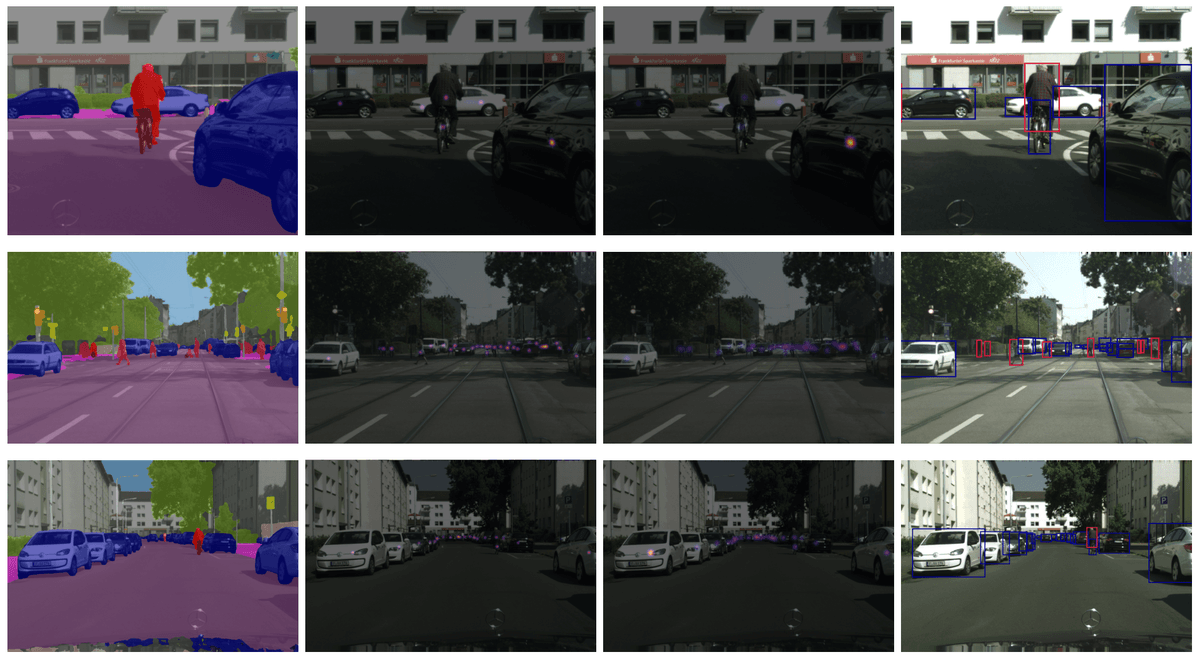
A new detector built on spatial statistics gives autonomous systems a calibrated probability that a region truly contains no obstacles.
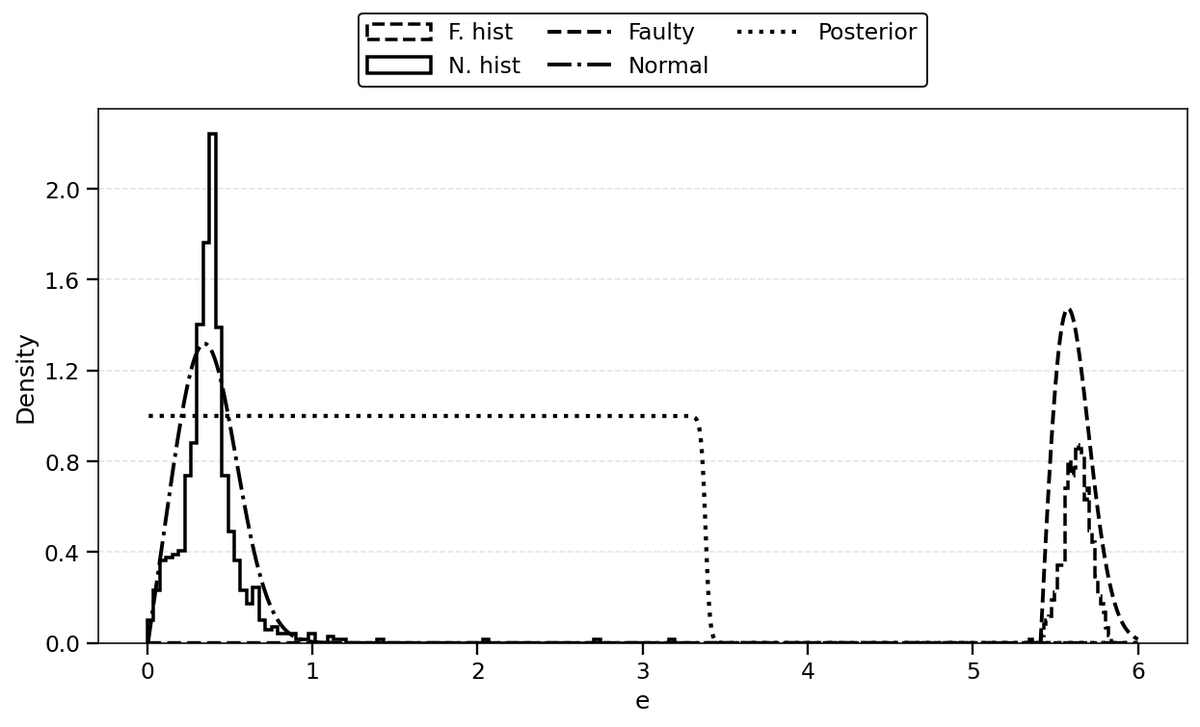
A convolutional autoencoder trained on just 100 unlabeled diffraction patterns filters out corrupted electron beam shots with a false positive rate near 0.3%.
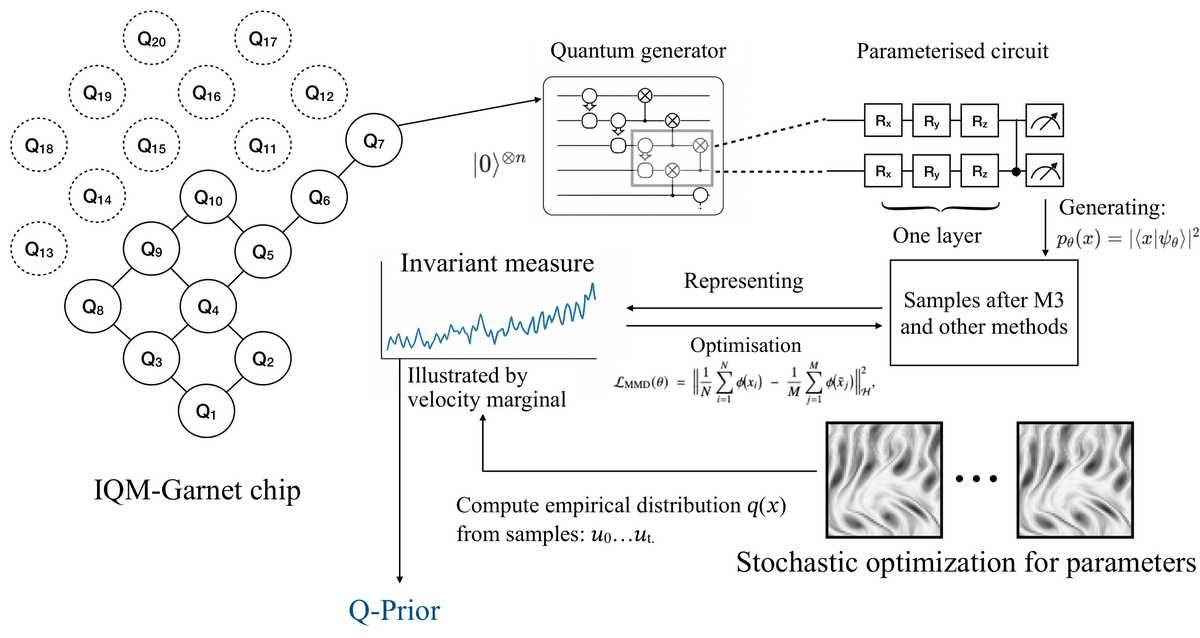
A hybrid framework trains a tiny quantum circuit as a statistical prior that stabilizes long-horizon turbulence forecasts while shrinking datasets by 200x.
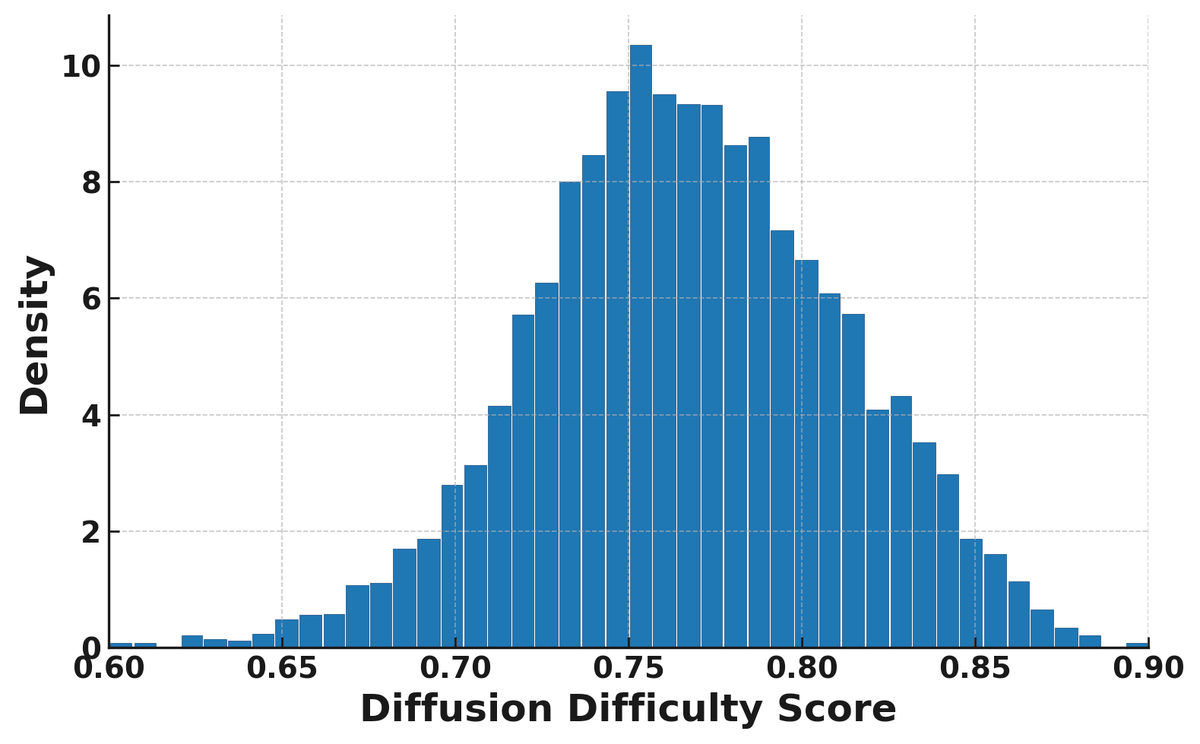
A two-phase Select-and-Attach framework trains SiT-XL/2 to FID 4.3 using just 10K ImageNet images and 40K steps.
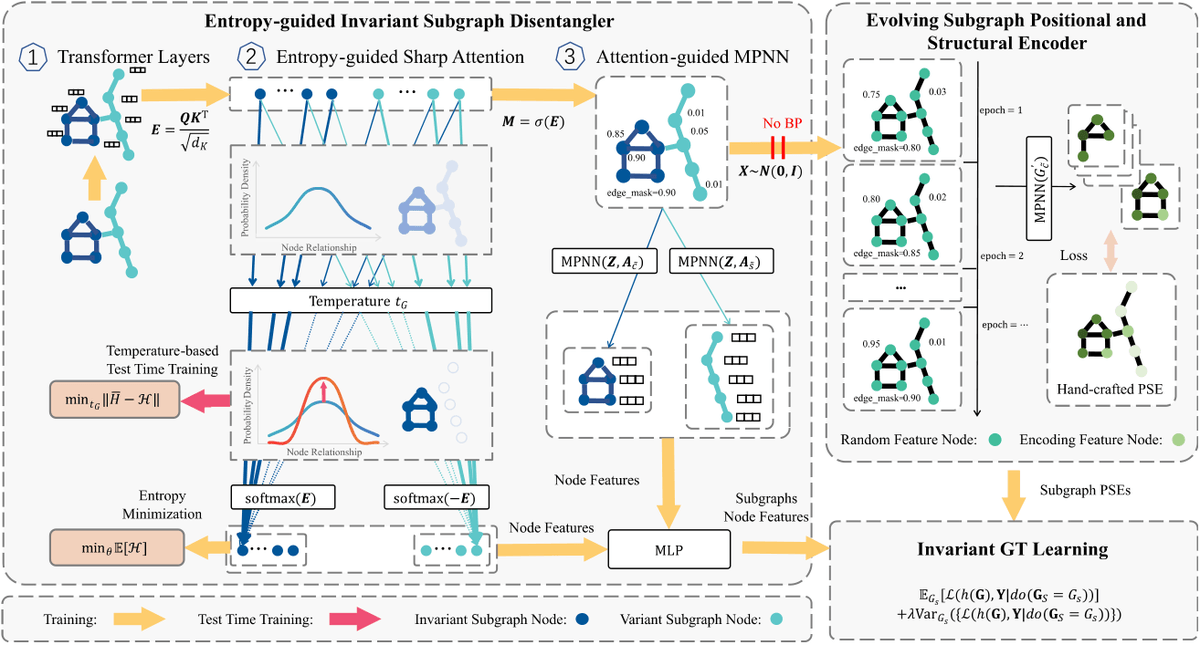
GOODFormer teaches graph transformers to separate causal structure from spurious patterns, delivering double-digit accuracy gains when test graphs differ from training data.
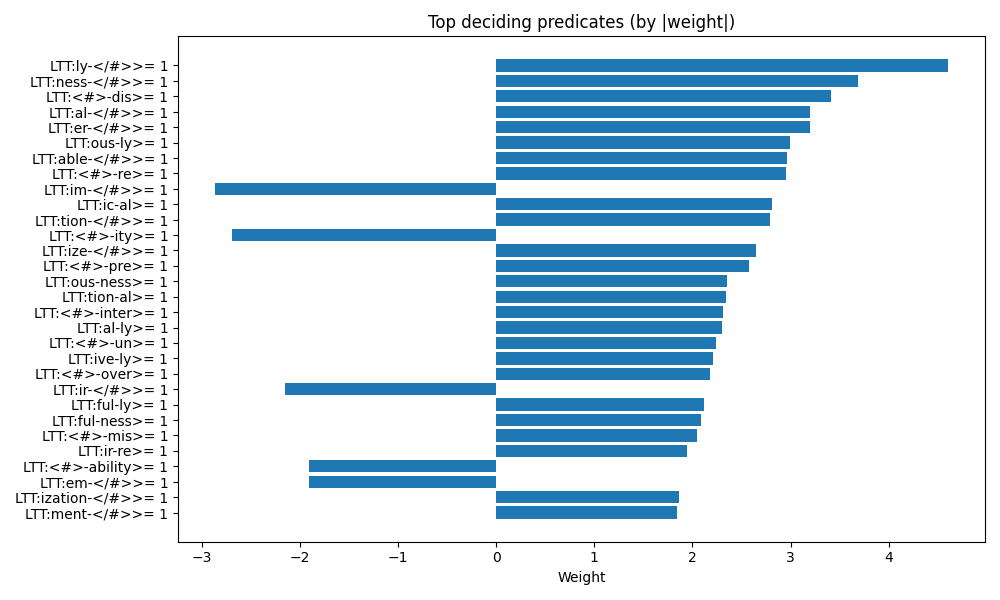
A new proof shows that the language patterns behind phonology and morphology can be learned exactly by plain logistic regression over interpretable features.
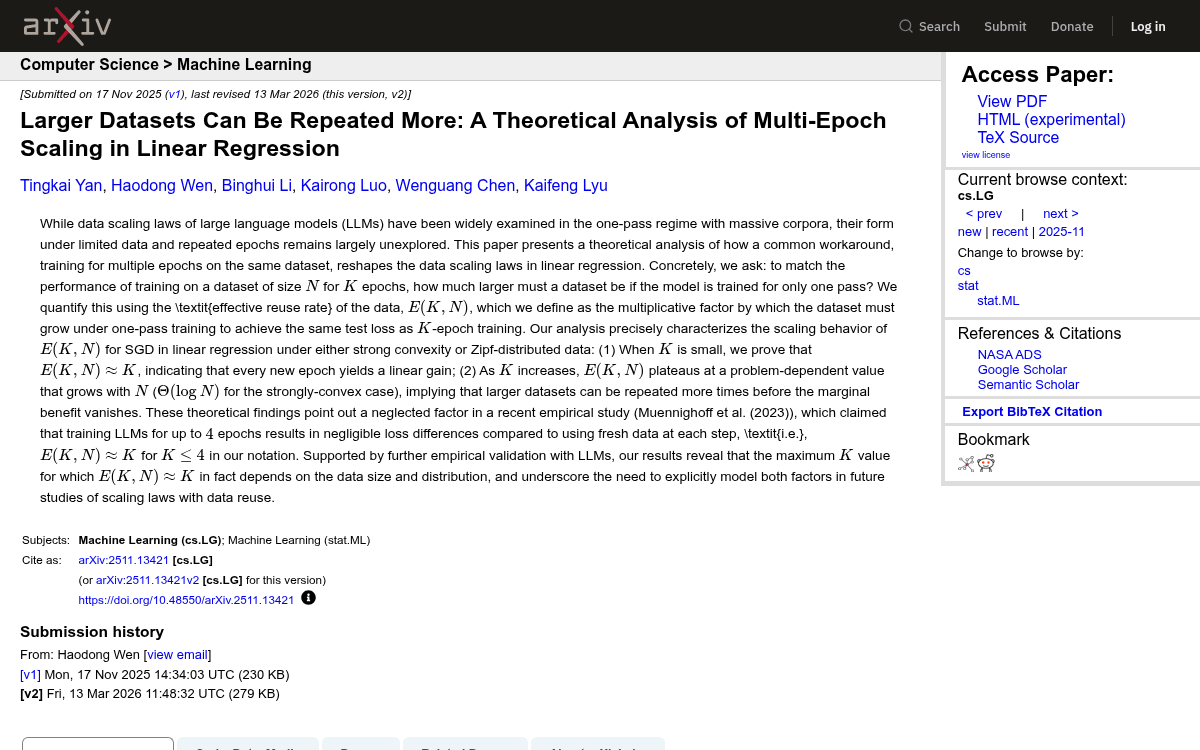
New theoretical analysis shows the popular 4-epoch data reuse rule ignores dataset size, with LLM experiments confirming larger datasets tolerate more repetition.
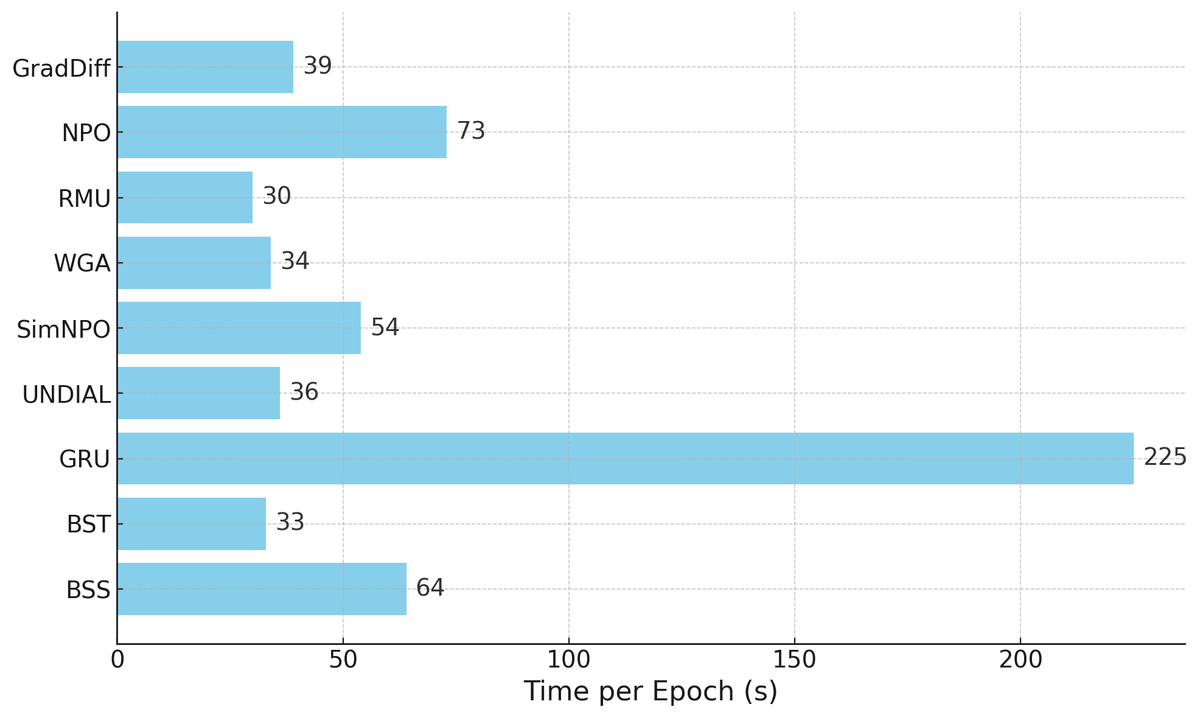
New research shows popular LLM unlearning methods only appear to erase knowledge, secretly relocating it into paraphrased responses that evade standard metrics.
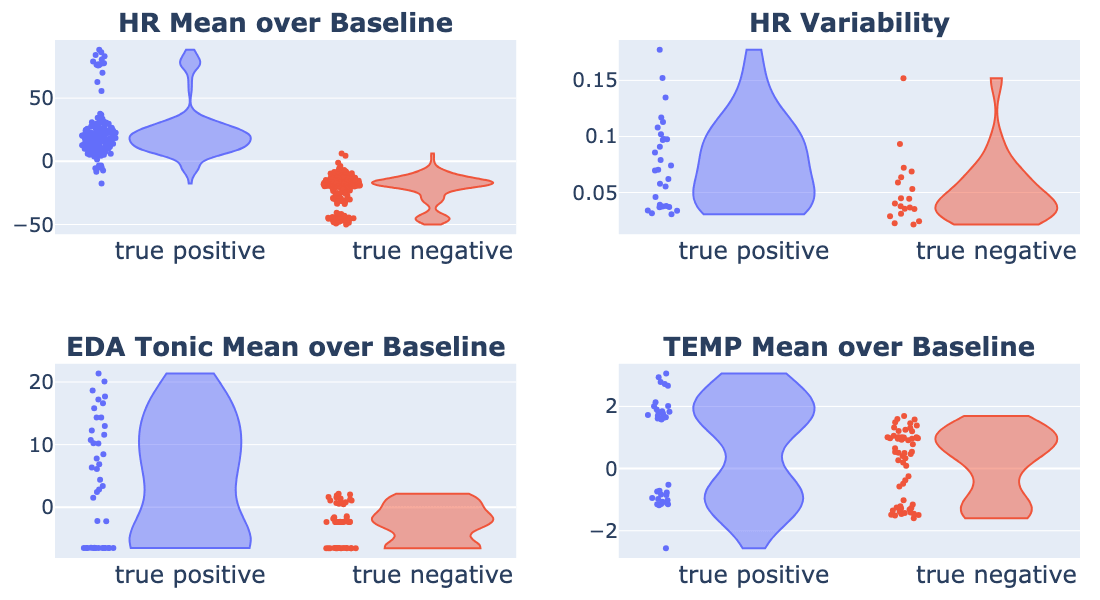
A new explainable AI approach decomposes wearable signals into interpretable pieces, keeping raw time-series accuracy while telling clinicians which physiological patterns drove each prediction.
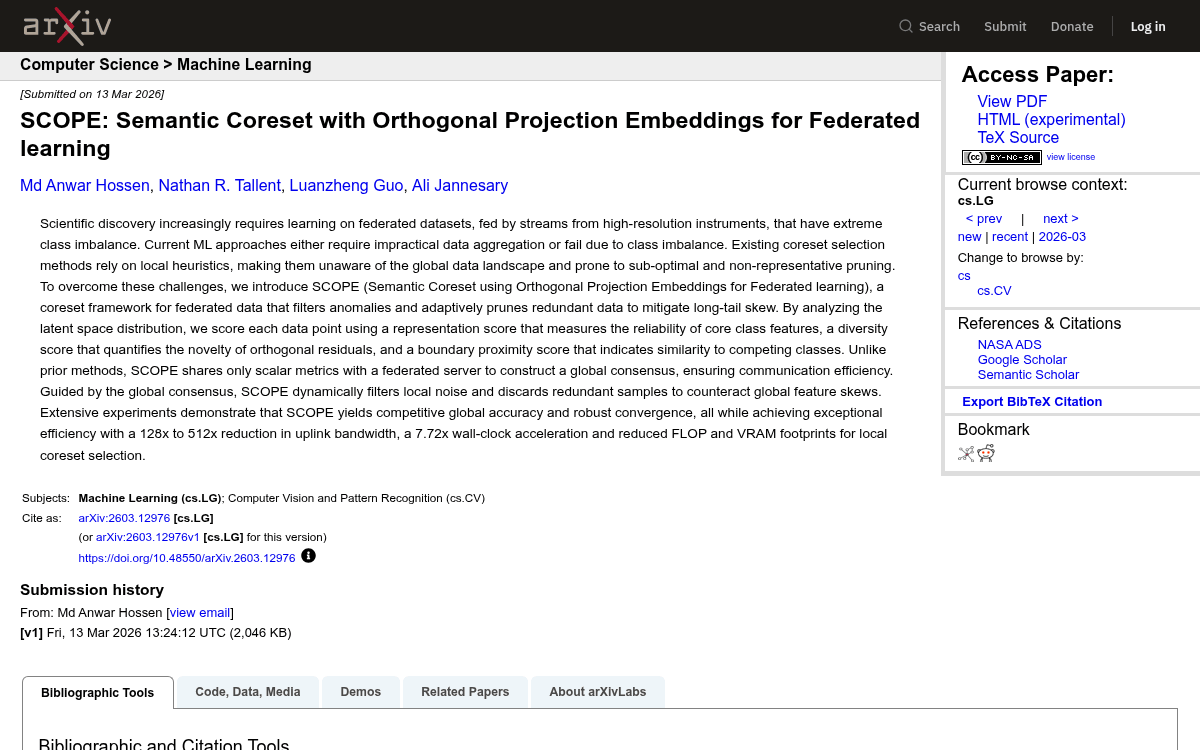
SCOPE uses vision-language embeddings to prune federated scientific datasets, cutting uplink bandwidth up to 512x and accelerating coreset selection 7.72x.
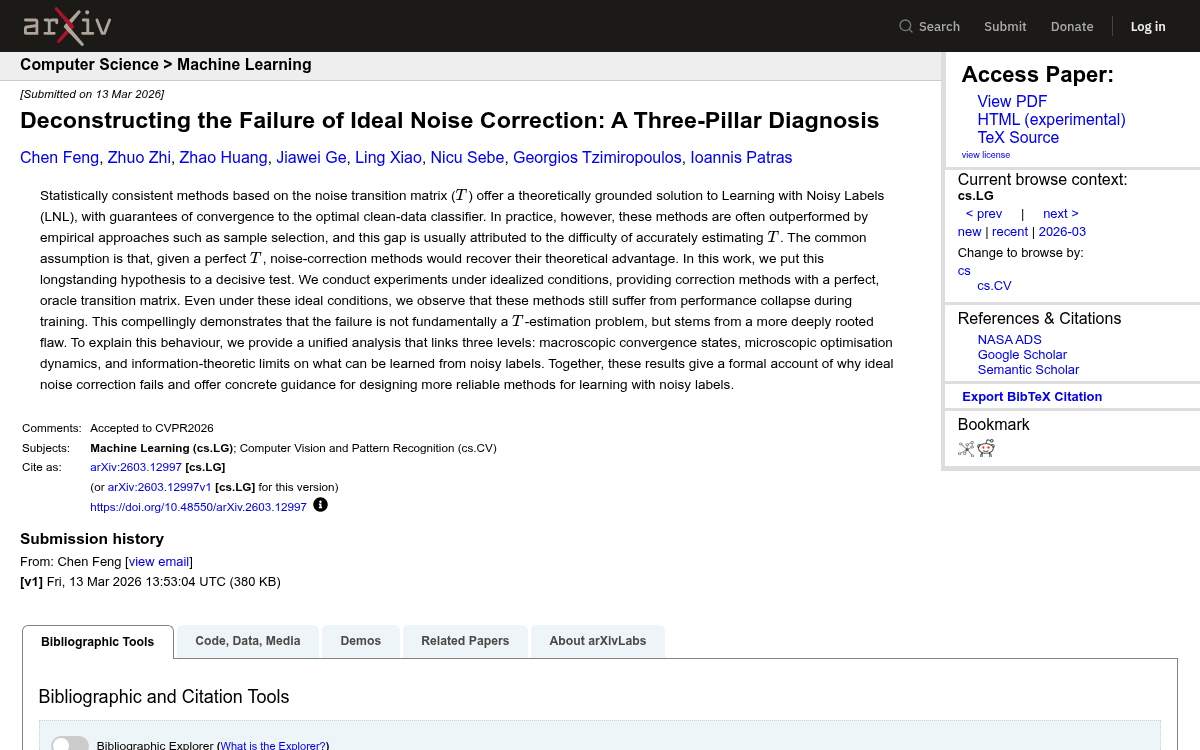
A new paper shows Forward Correction collapses even with a perfect noise transition matrix, redirecting how researchers should approach noisy labels.
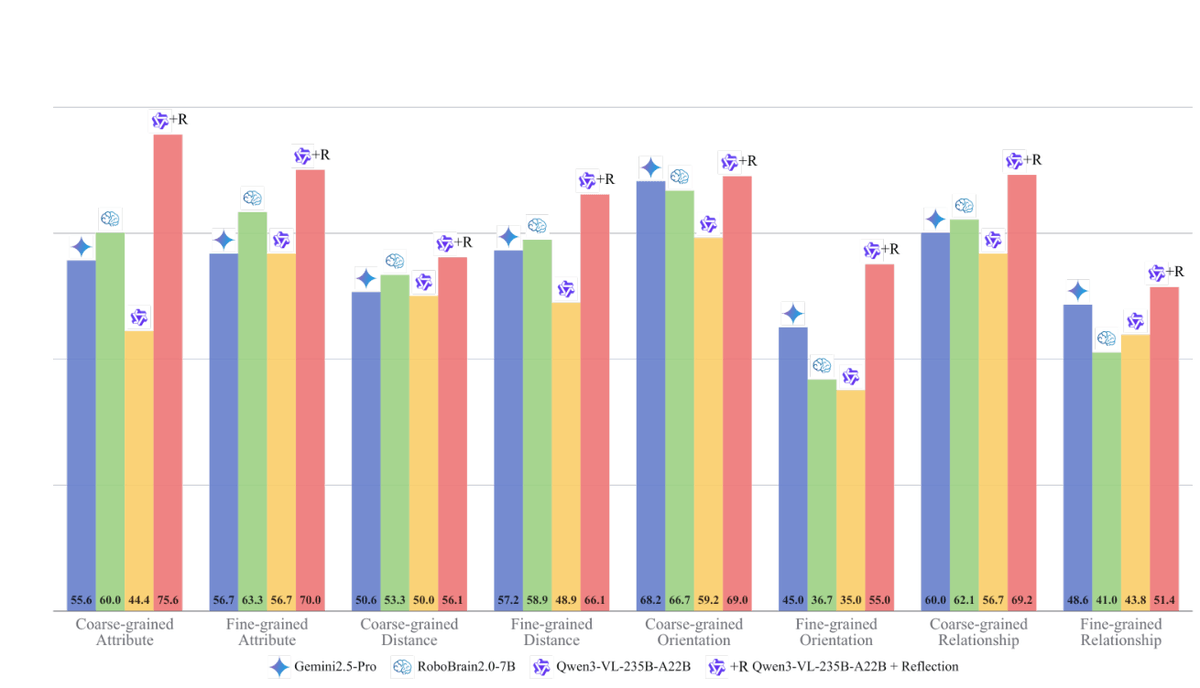
ESPIRE puts frontier vision-language models inside a physics simulator and asks them to actually pick and place, exposing sharp weaknesses in 3D rotation reasoning.
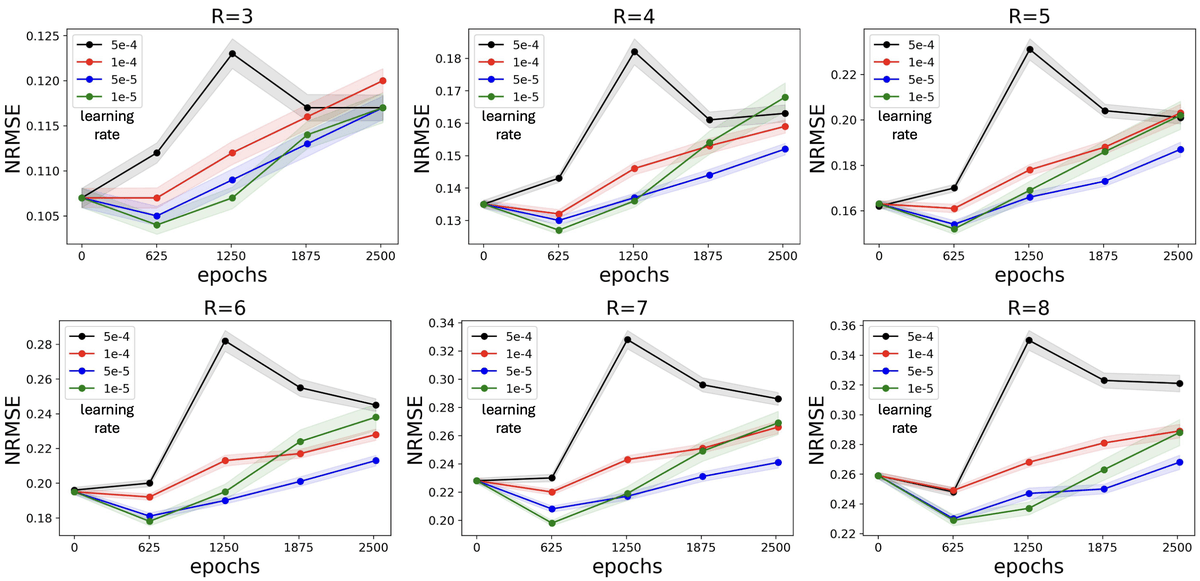
A foundation-model style recipe pre-trains diffusion priors on 4000 brain scans, then adapts to stroke MRI using only 20 patients.
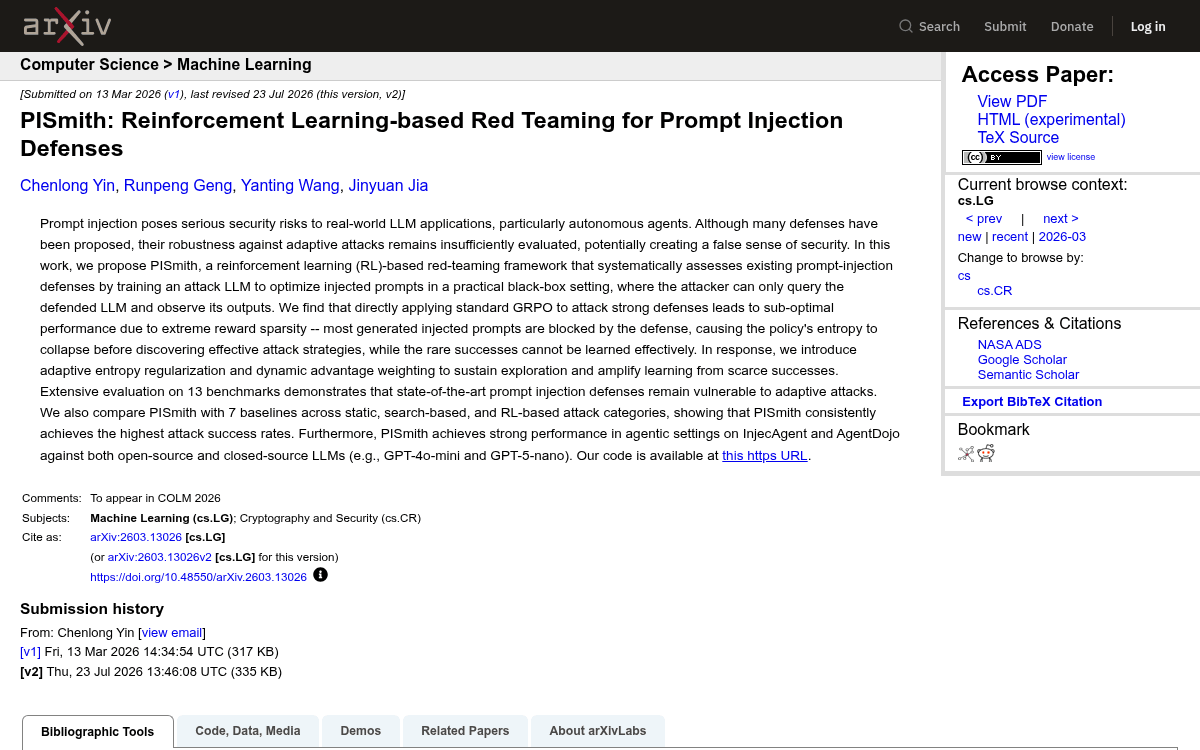
A new reinforcement learning attacker breaks state-of-the-art prompt injection defenses across 13 benchmarks, exposing a fundamental utility-robustness tradeoff.
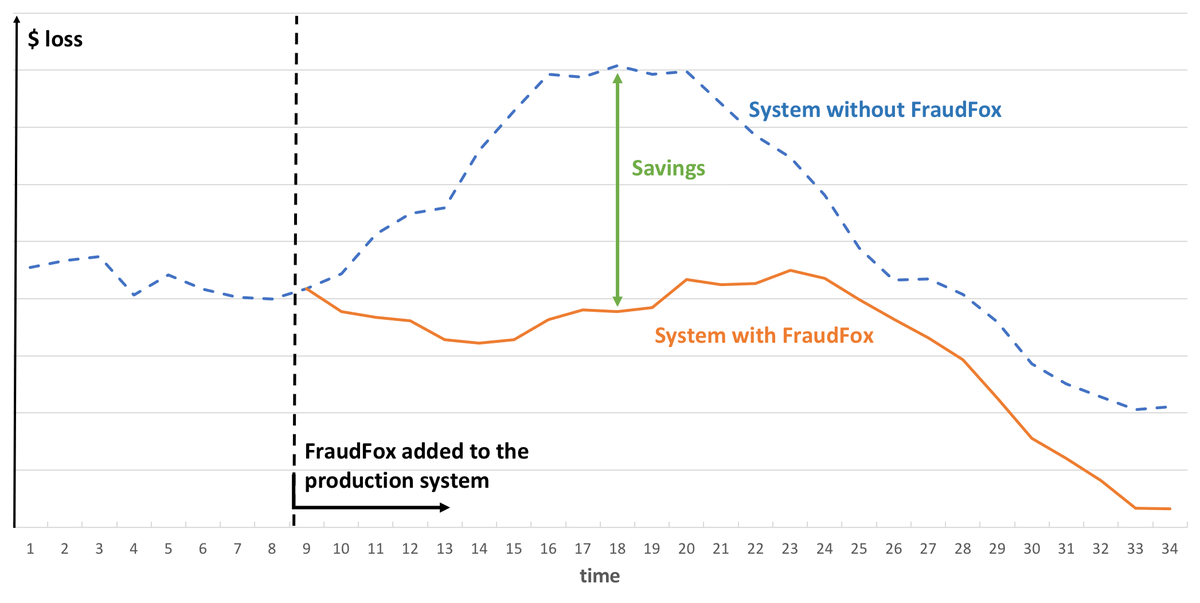
Amazon's production system uses Extended Kalman Filters and Pareto fronts to blend fraud oracles, adapt to shifting attacker tactics, and respect business budgets.
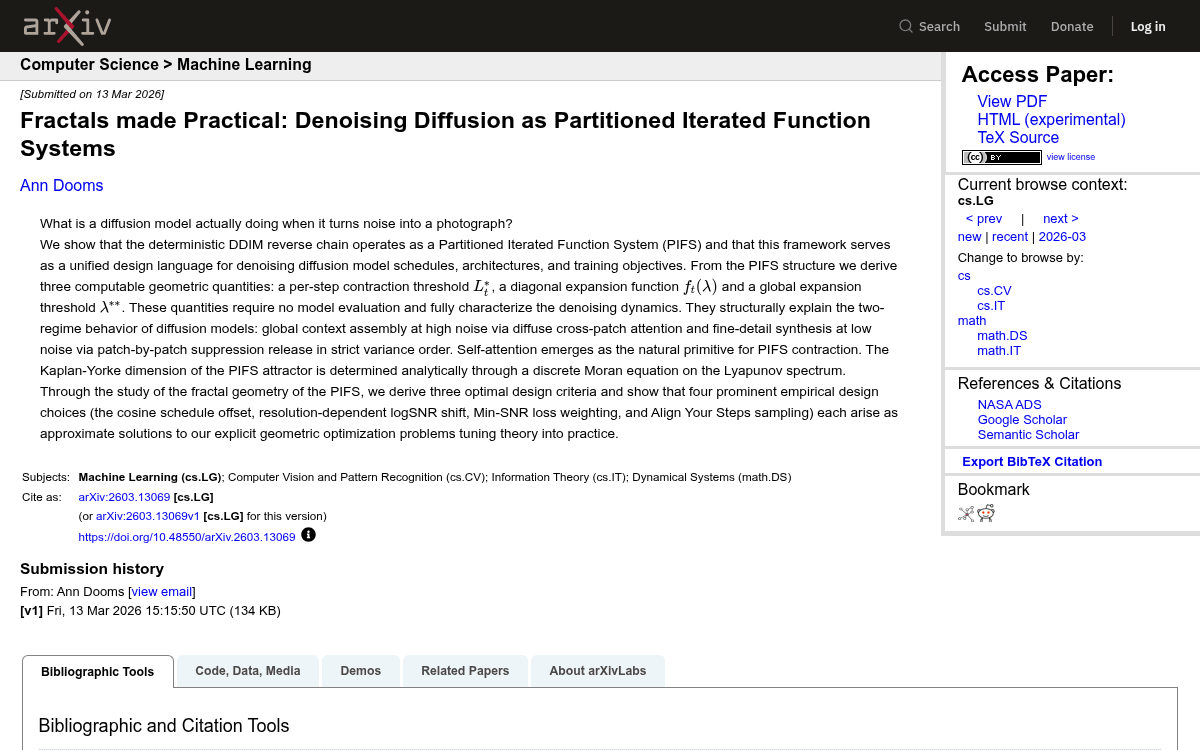
A new theoretical framework recasts DDIM sampling as a fractal iteration system, deriving four popular design heuristics from three closed-form geometric quantities.
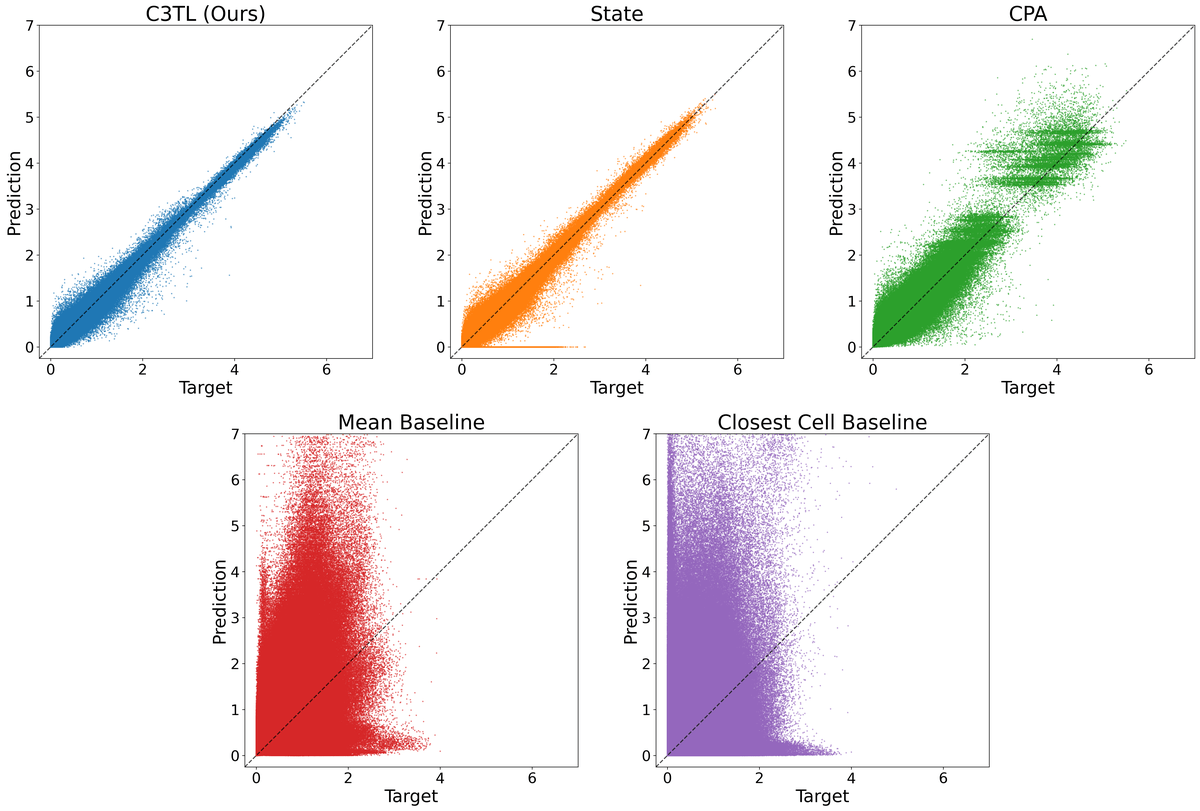
A compact autoencoder rivals billion-parameter foundation models at predicting how cells respond to drugs and gene edits, using only bulk RNA data.
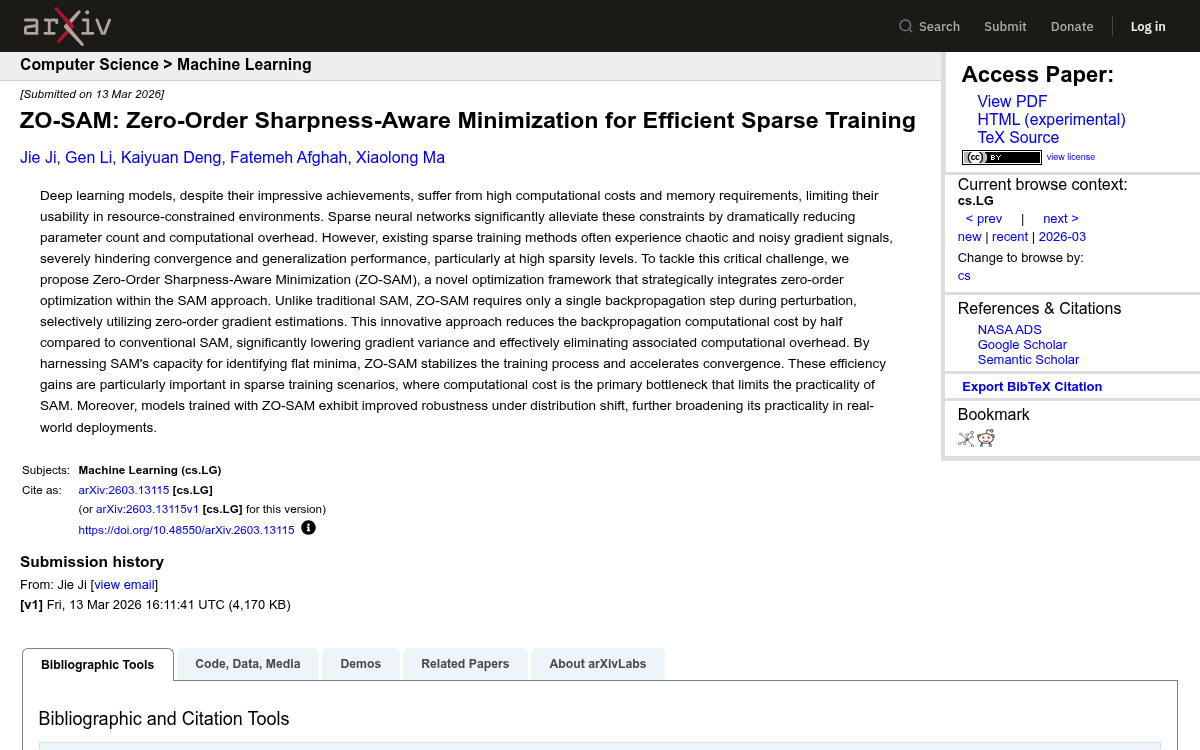
A new optimizer cuts Sharpness-Aware Minimization's cost in half by replacing one backprop with random probes, unlocking flat minima for highly sparse networks.