A 28-day study finds that subtle neuromotor changes in handwriting can flag low-recovery nights, hinting at wearable-free health monitoring on tablets.
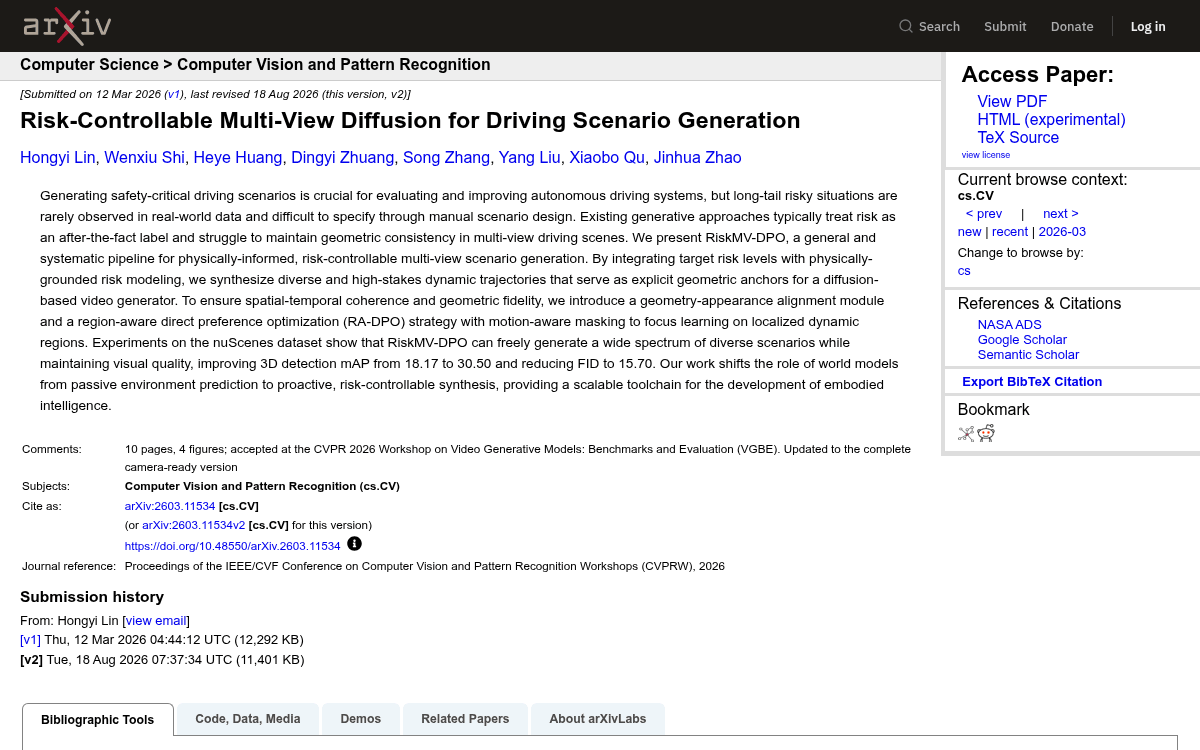
A new pipeline turns collision risk into a controllable input for diffusion video generators, synthesizing rare crash-like scenarios on demand for autonomous driving training.
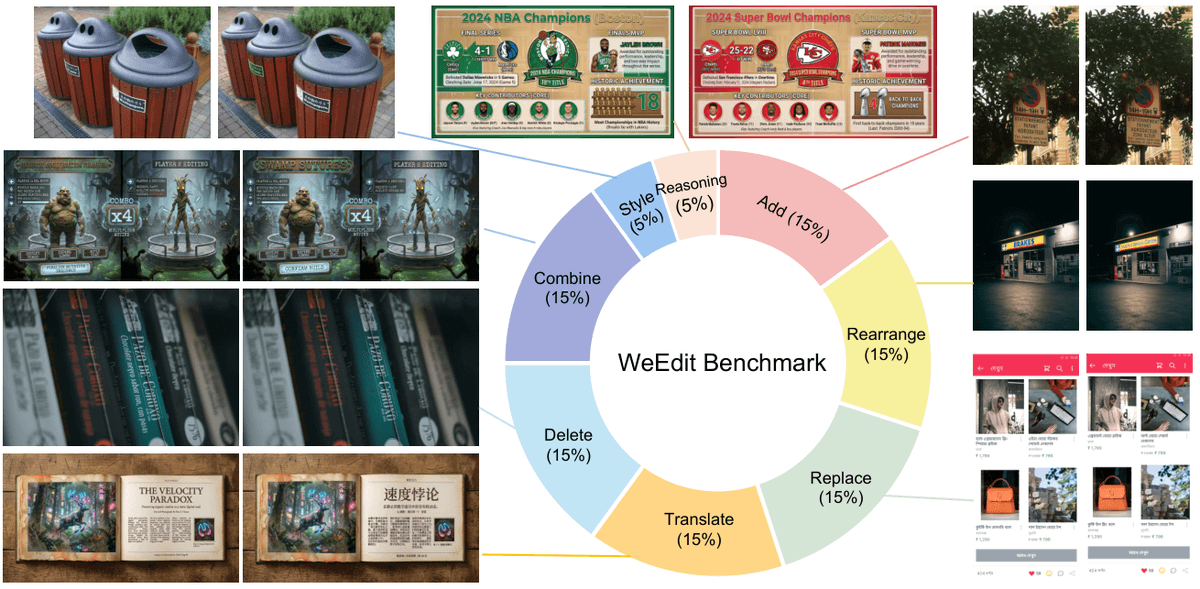
A Tencent-Fudan team tackles text-inside-images editing with glyph-guided fine-tuning, multi-objective RL, and a 330K-pair HTML dataset across 15 languages.
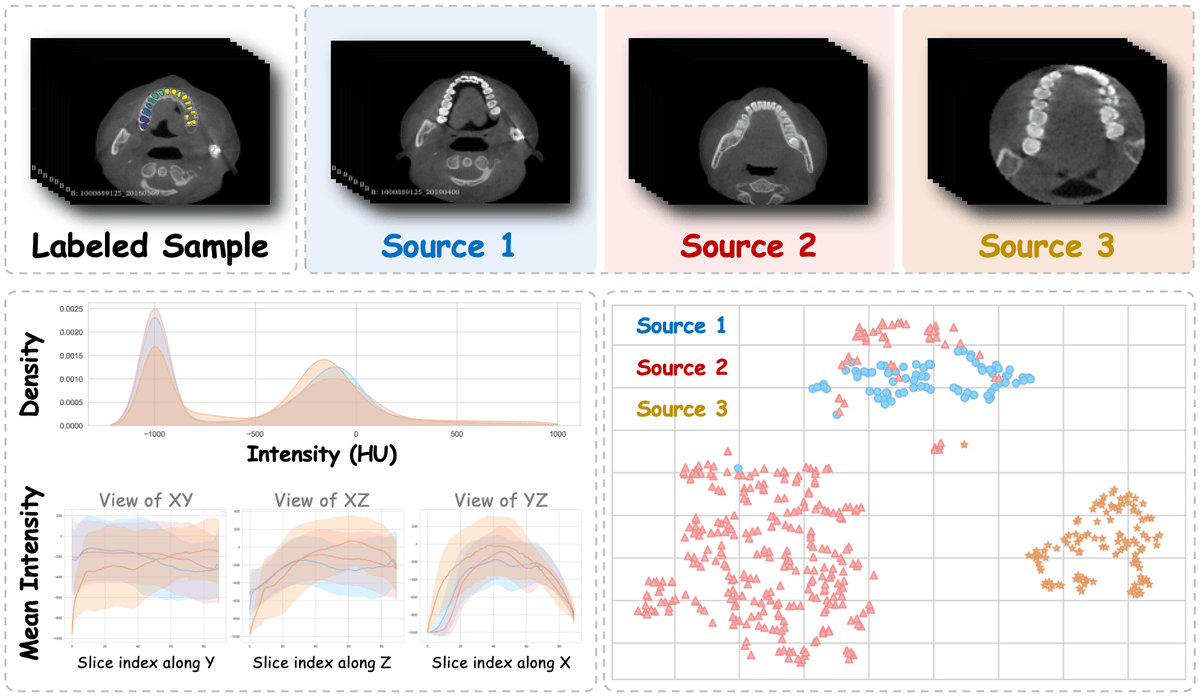
A new multi-teacher, multi-student framework tackles the messy reality of dental CBCT scans collected from different hospitals with mostly unlabeled data.
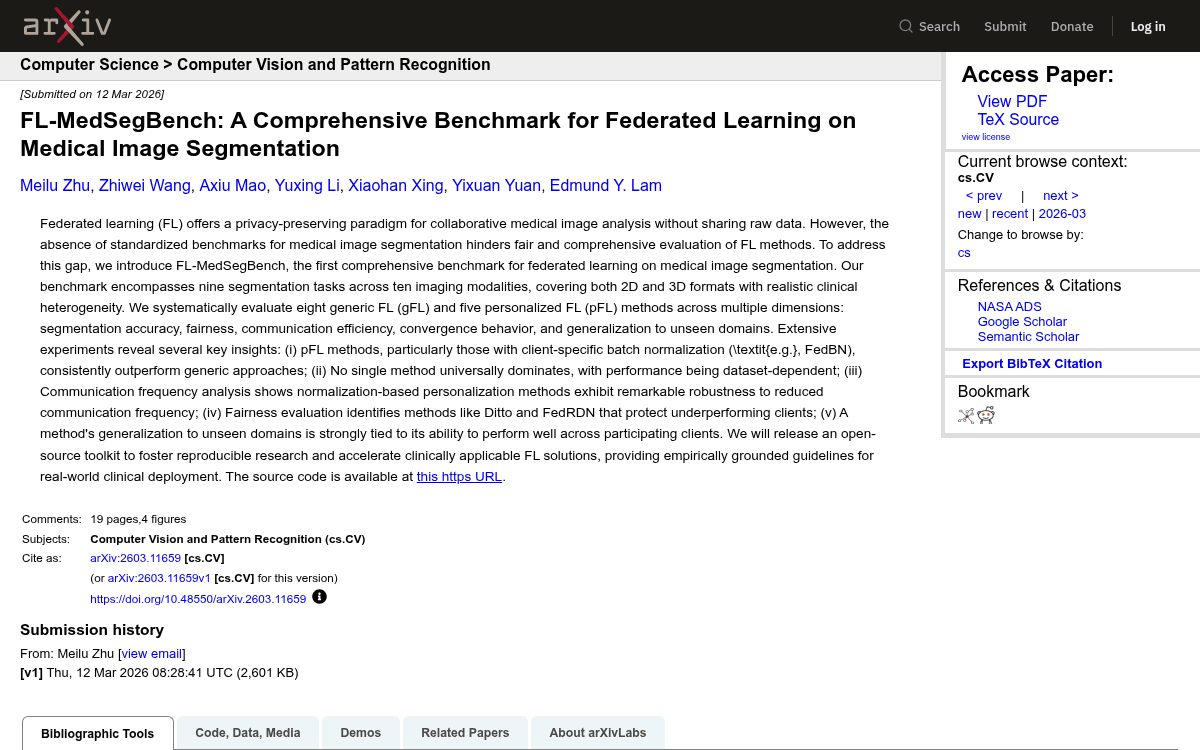
A new benchmark evaluates 13 federated learning methods across 27 medical imaging datasets, revealing which techniques actually hold up under real clinical heterogeneity.
A CVPR 2026 lightweight super-resolution model combines Flash Attention, Hedgehog linear attention, and large-kernel distillation to beat heavier models with fewer FLOPs.
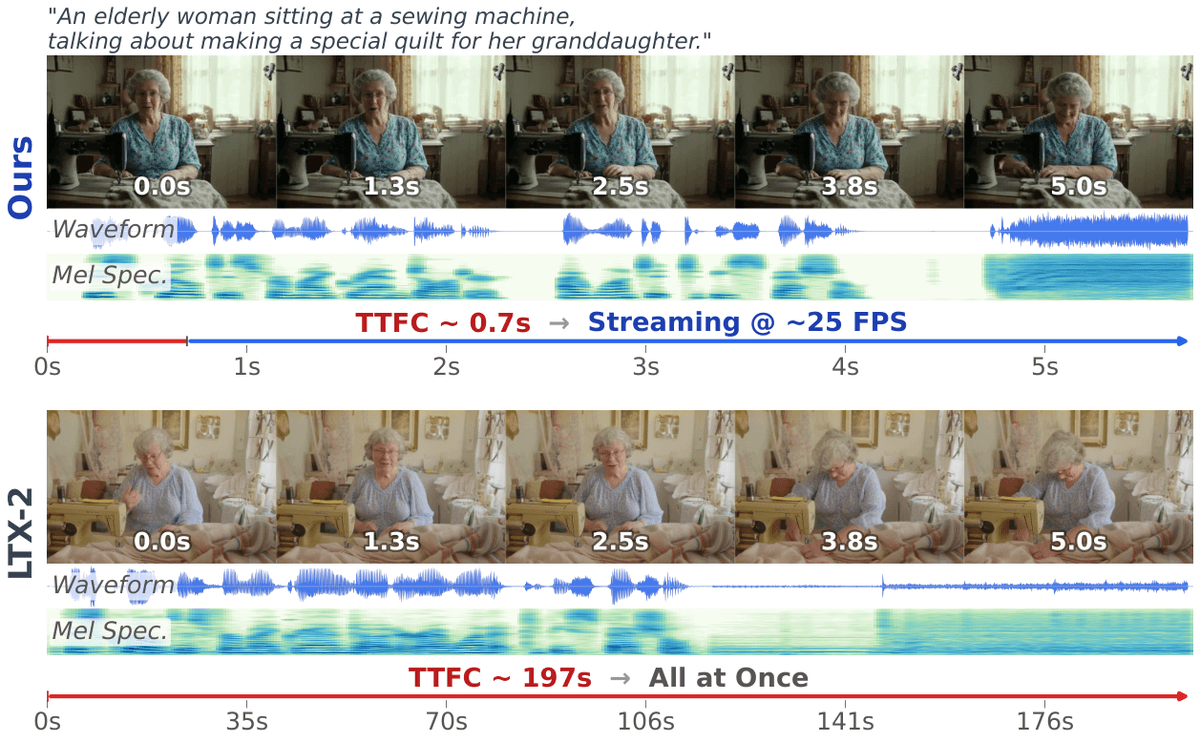
OmniForcing distills a 19B bidirectional audio-visual diffusion model into a streaming generator, hitting 25 FPS on one GPU with 0.7s time-to-first-chunk.
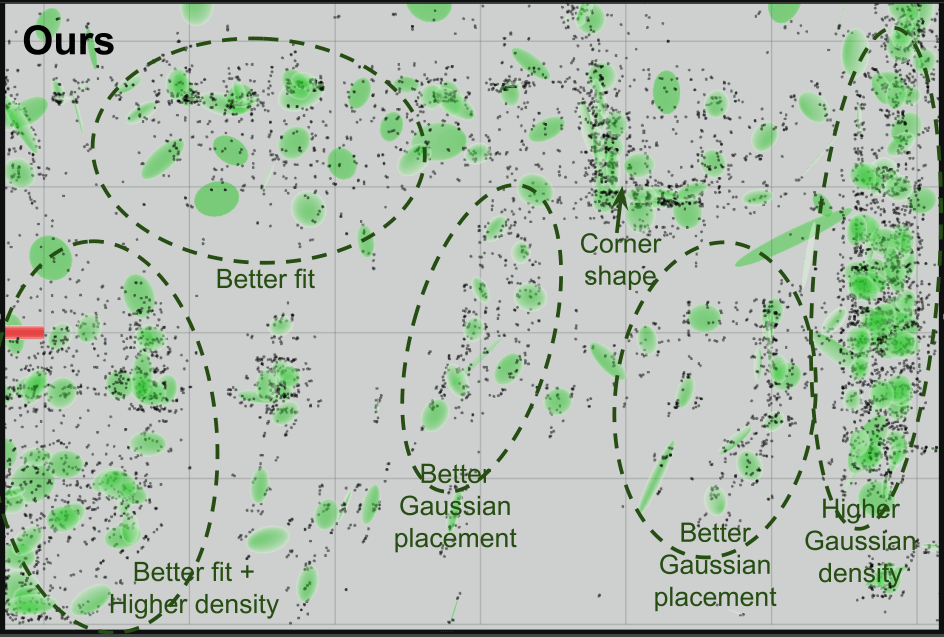
A new radar-inertial odometry pipeline borrows ideas from 3D Gaussian Splatting to handle sparse, noisy 4D radar scans more robustly than LiDAR-derived methods.
A new framework called GUIDES bolts vision-language reasoning onto legacy robot policies without retraining them from scratch, cutting sim-to-real grasp errors nearly tenfold.
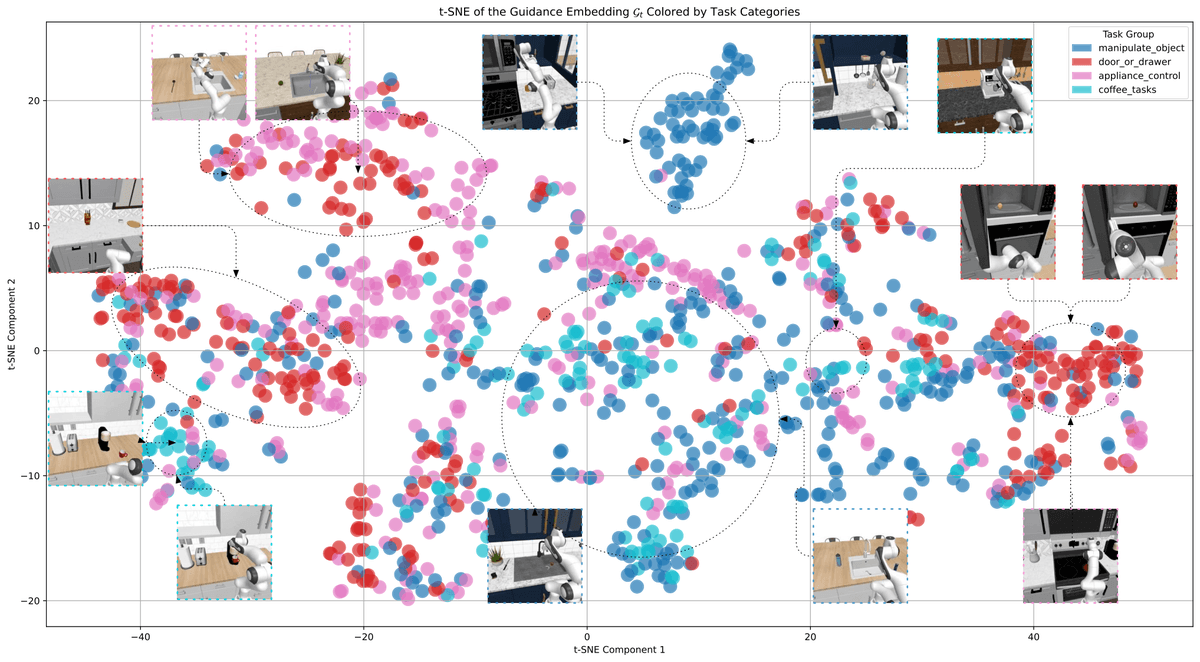
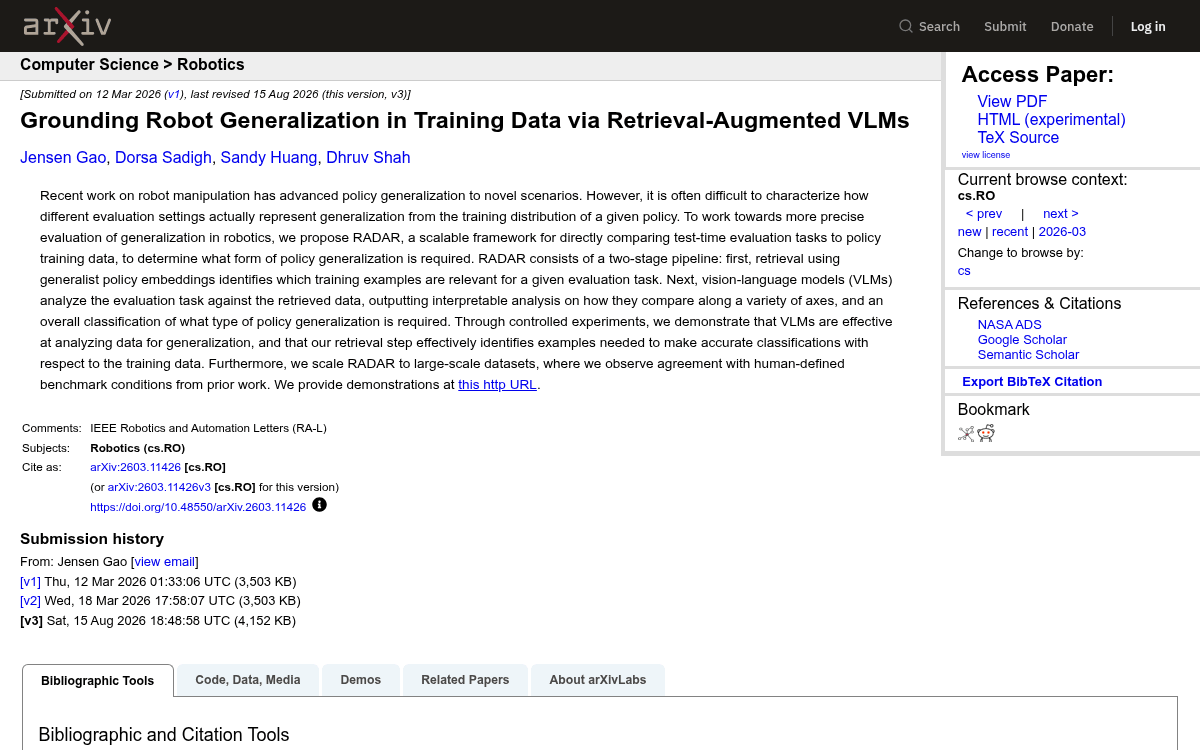
A new framework from Stanford and Google DeepMind uses VLA embeddings and vision-language models to precisely characterize whether a robot task requires visual or behavioral generalization from training data.
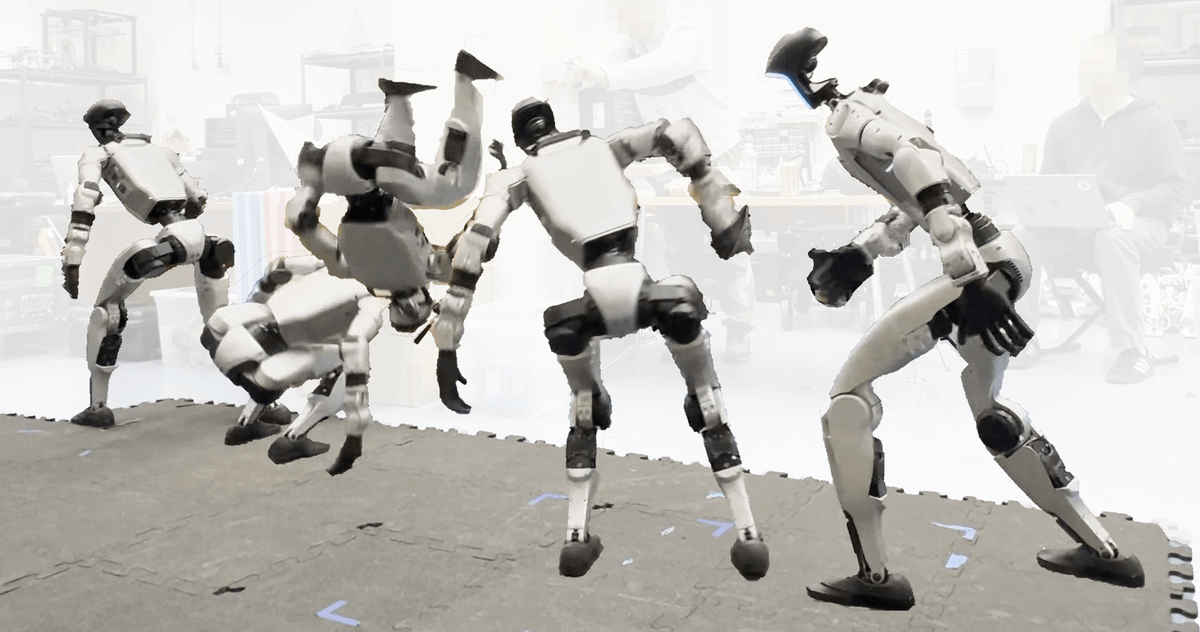
A new two-stage retargeting pipeline maps human motion to humanoids with skeleton calibration and progressive optimization, cutting IK error up to 83 percent.
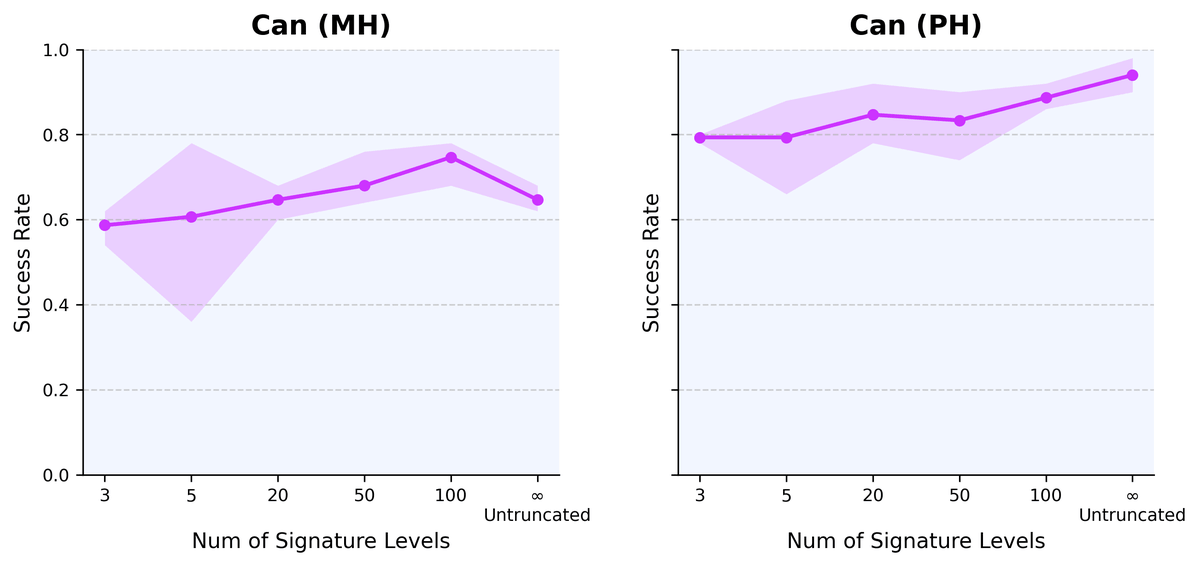
A signature-kernel entropy metric quantifies robot demonstration diversity, letting a model-free curator pick subsets that often beat training on the full dataset.
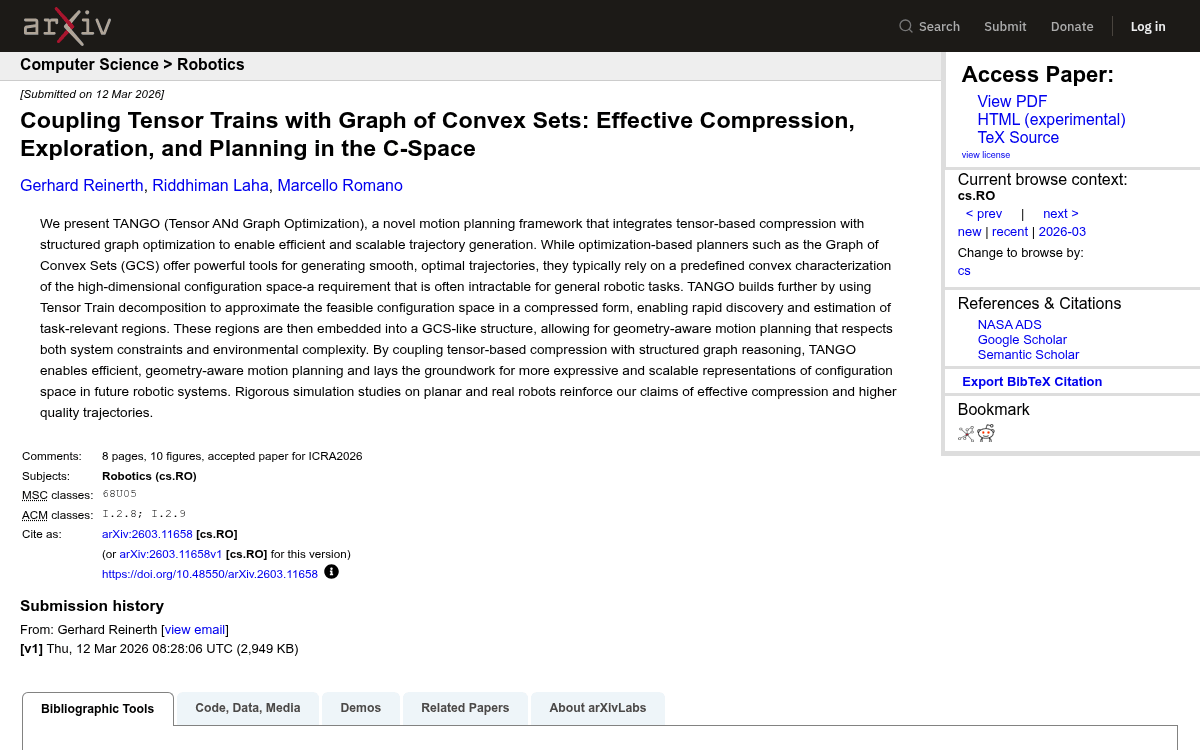
TANGO couples Tensor Train compression with Graph of Convex Sets, cutting memory 6x and generating smoother robot trajectories than RRT with far fewer waypoints.