
Pro
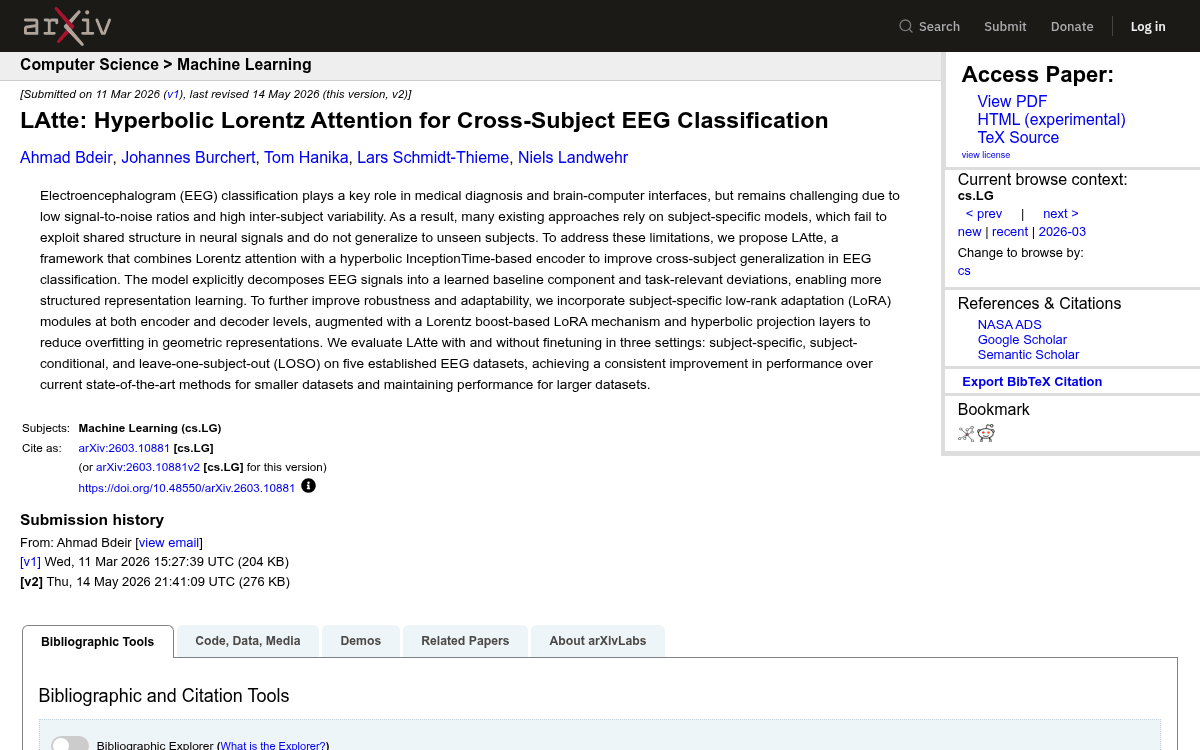
Hildesheim's LAtte Trains Brain-Signal AI 7x Faster With Curved Math
A new EEG classifier trades flat Euclidean space for curved hyperbolic geometry, then adds per-subject adapters to beat state-of-the-art on five brain-signal benchmarks.
20 stories
A new EEG classifier trades flat Euclidean space for curved hyperbolic geometry, then adds per-subject adapters to beat state-of-the-art on five brain-signal benchmarks.
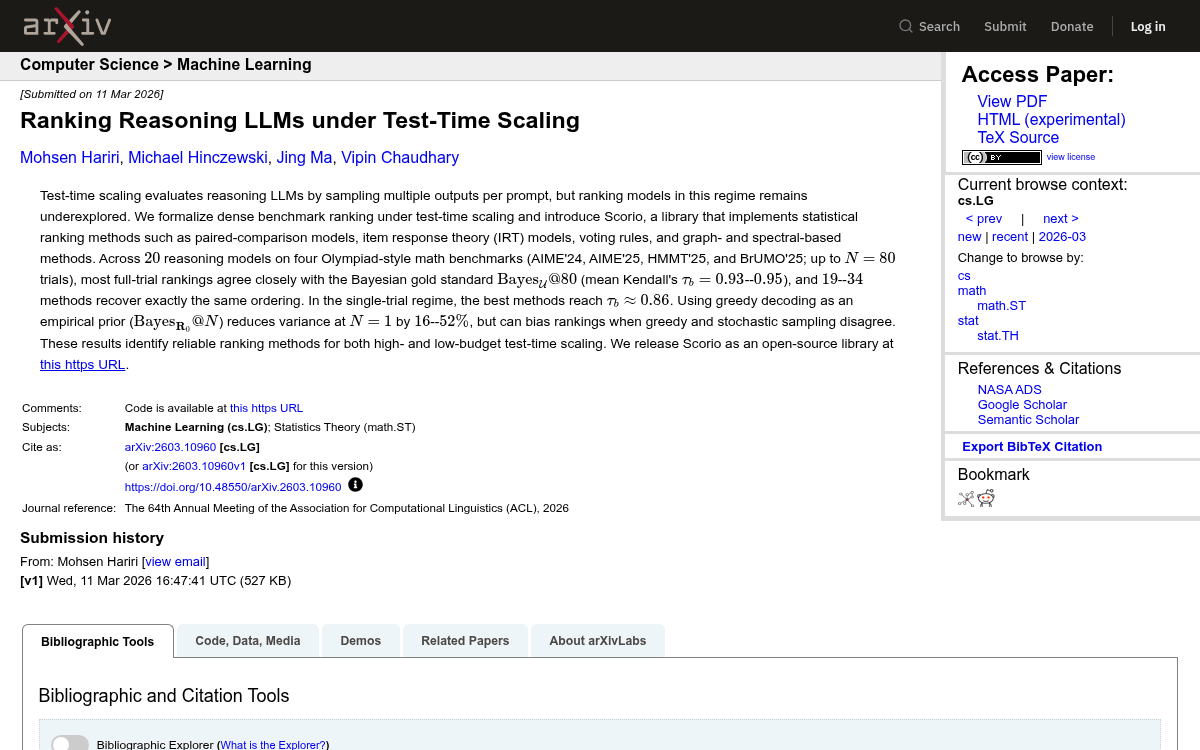
A new framework compares 72 ranking methods across 20 reasoning models to reveal which techniques stay reliable when compute budgets shrink.
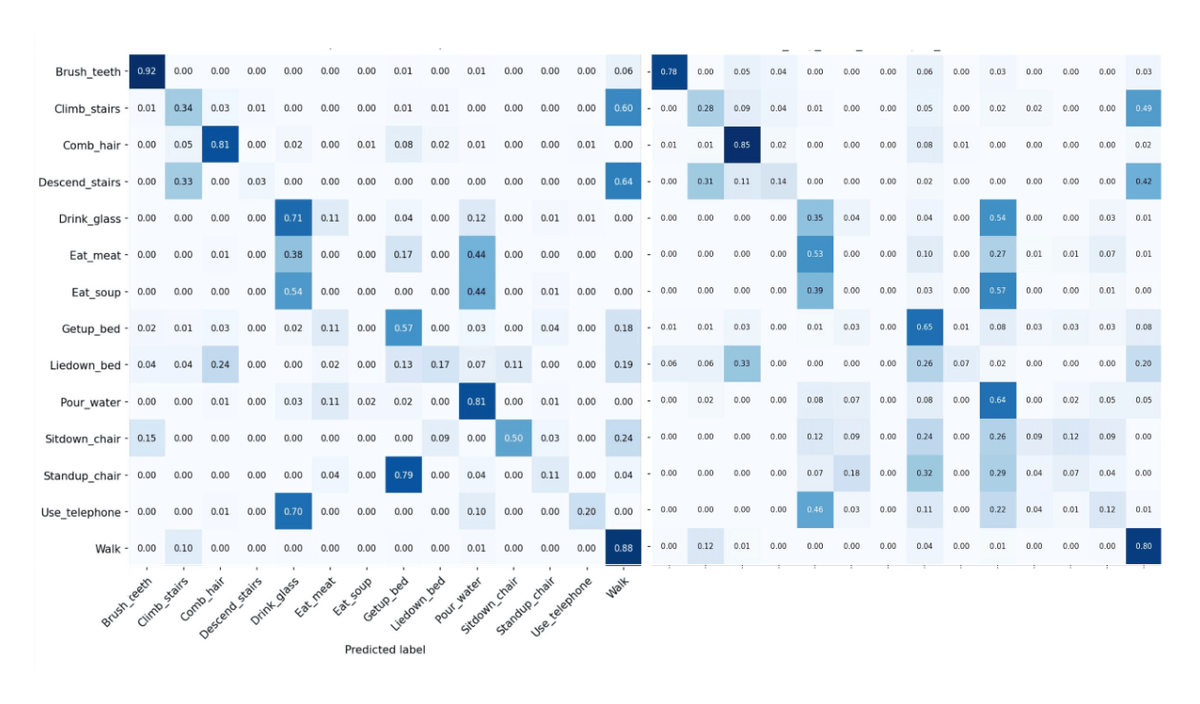
Researchers borrow from motor neuroscience to tokenize wrist accelerometer streams into movement segments, boosting activity recognition macro-F1 by 6 to 18 points.
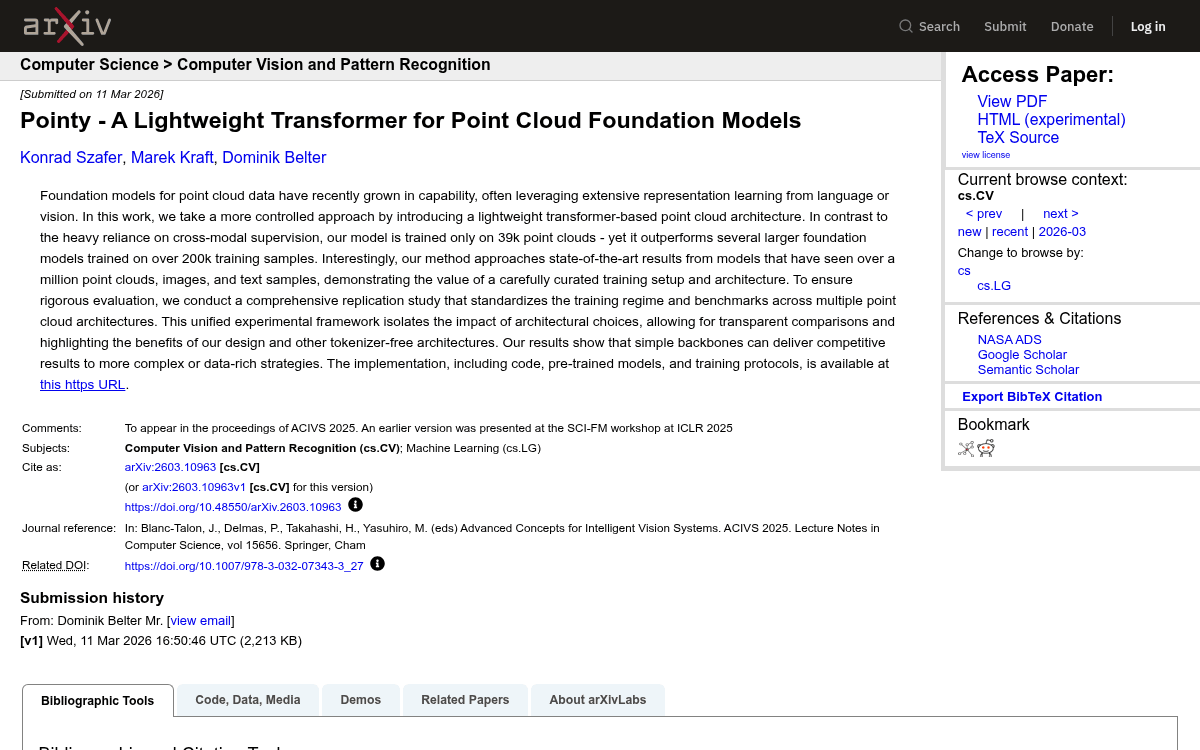
A 3M parameter transformer trained on just 39k point clouds matches foundation models trained on over a million cross-modal samples.
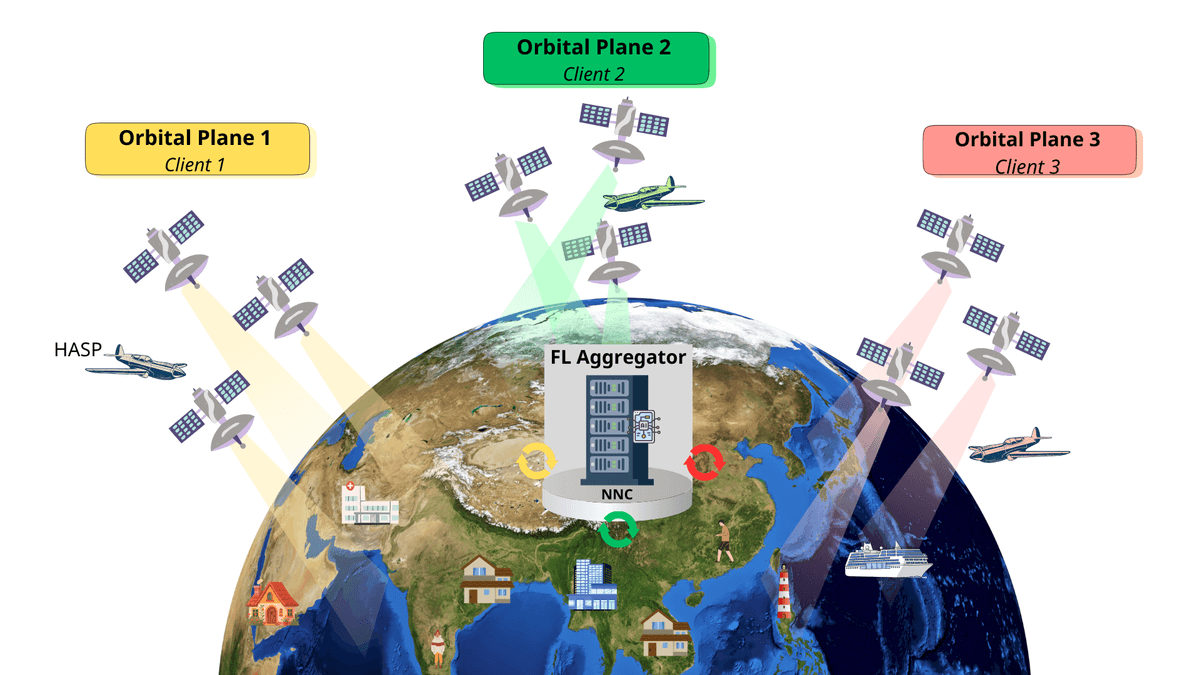
A hierarchical federated learning setup with graph neural networks predicts optimal satellite beams at 96% accuracy without shipping raw channel data to the ground.
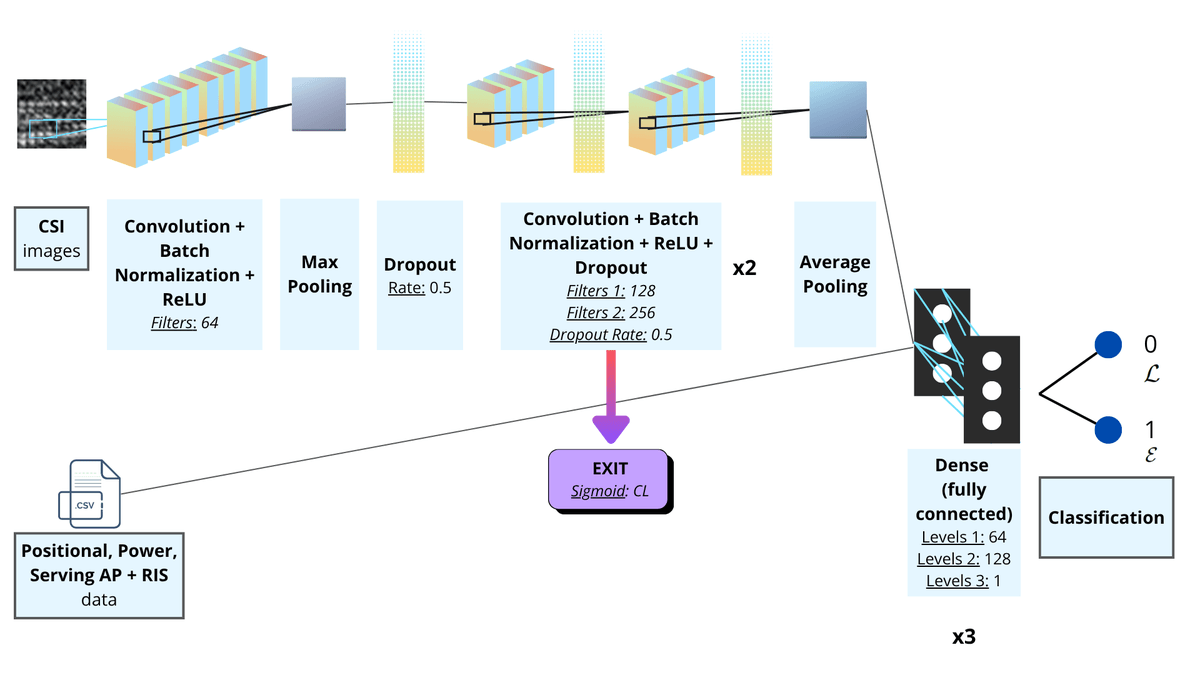
A federated learning framework called FRIEND detects eavesdroppers on cell-free mmWave networks using CSI, boosting secrecy rate by 30% versus non-RIS baselines.
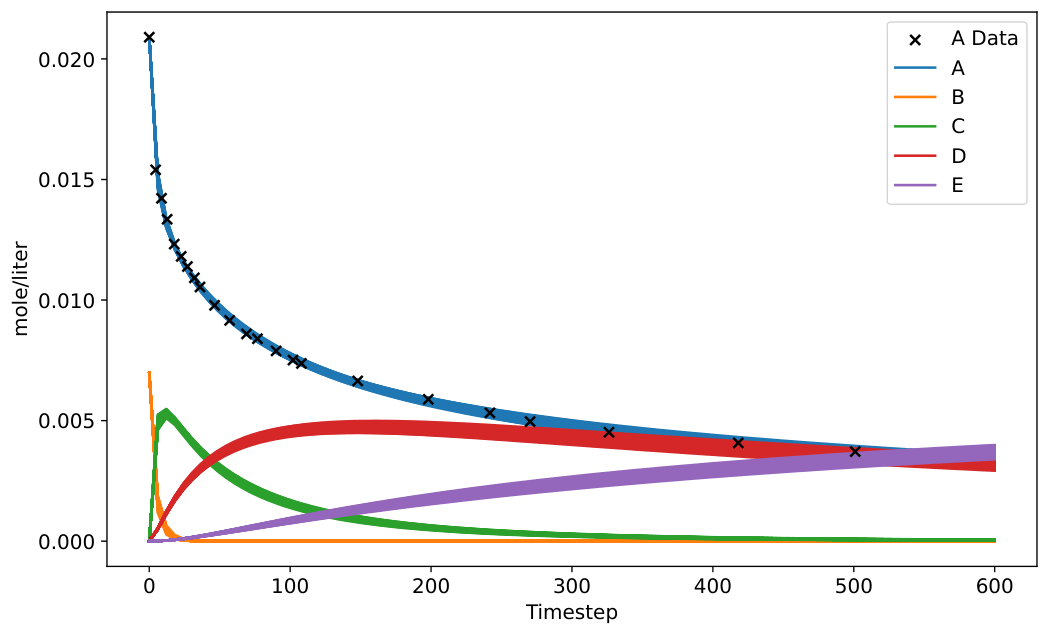
A new framework called MINE moves uncertainty quantification out of the neural network and into an offline MCMC step, cutting simulation cost dramatically.
One Bayesian optimization loop unifies minimization, dimer, and NEB saddle searches, cutting DFT calls by roughly 10x with a Rust reference implementation.
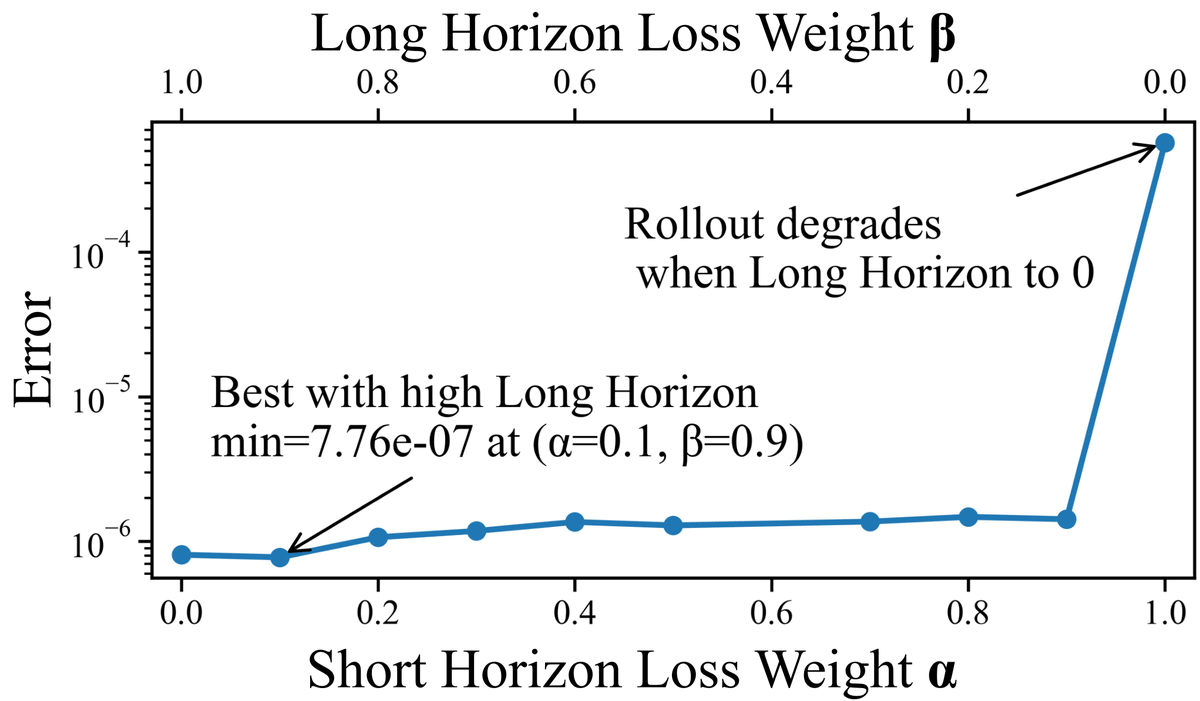
A physics-coded Koopman framework factorizes space and time into neural fields, delivering interpretable spectra and orders-of-magnitude gains on parametric PDEs.
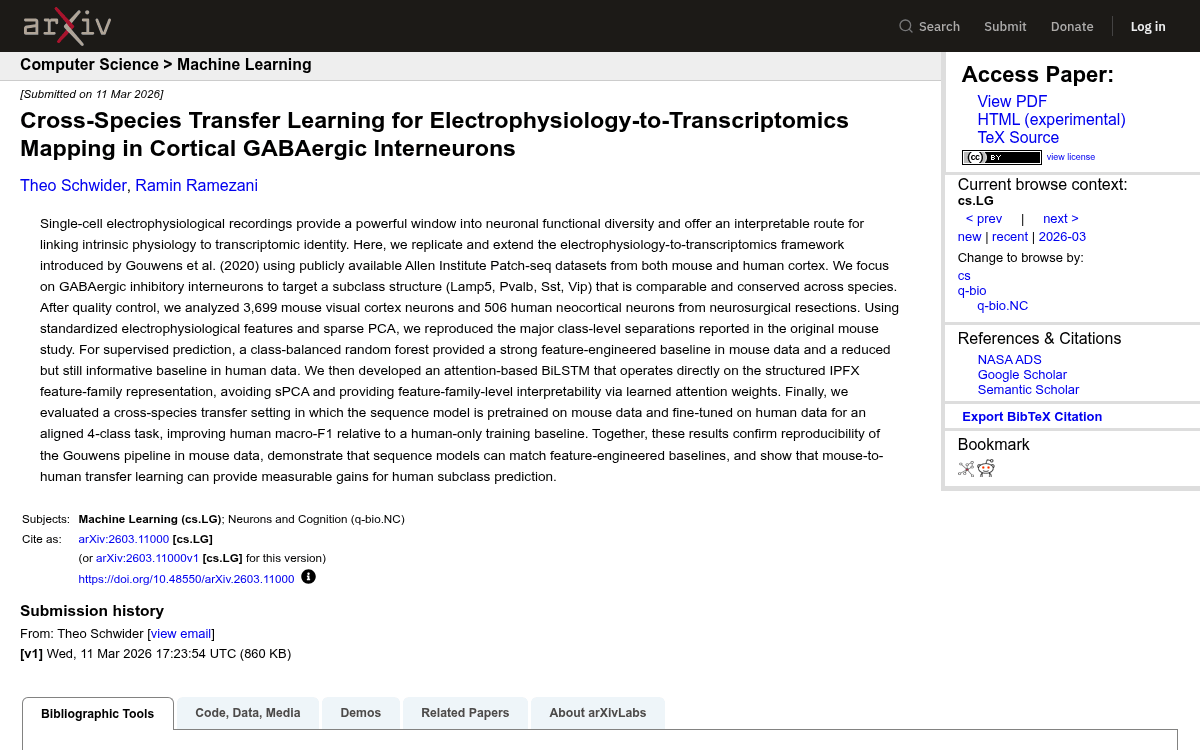
A replication study extends Patch-seq cell-type classification with an attention BiLSTM and shows mouse pretraining lifts human macro-F1 by roughly 2 points.
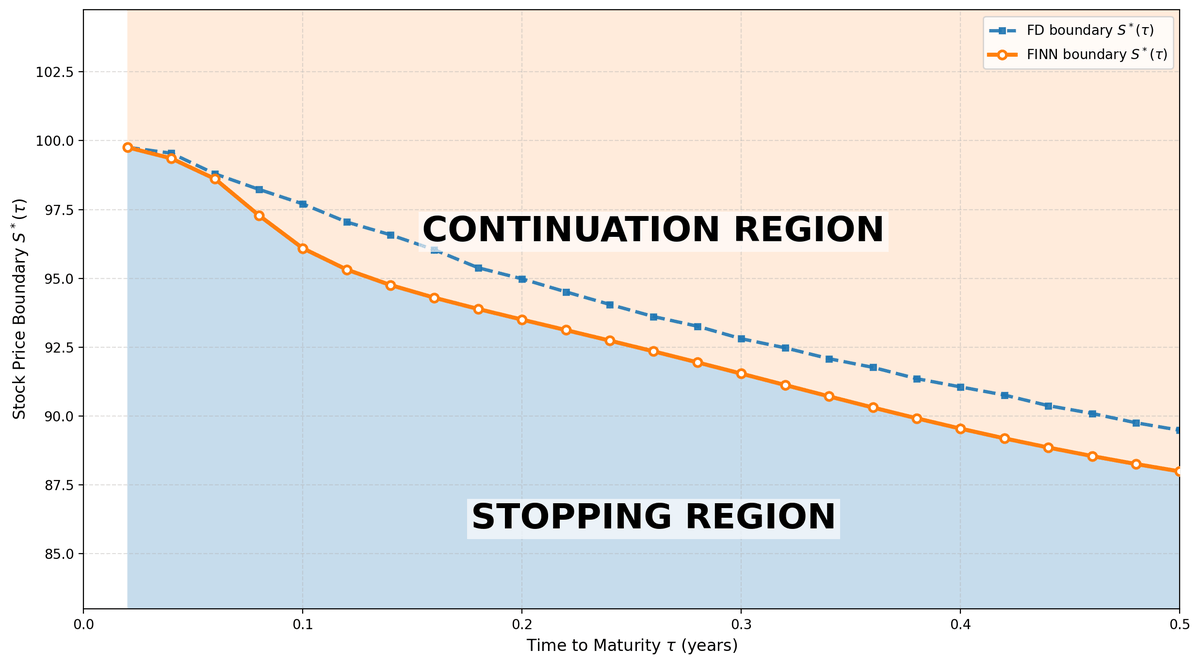
A new neural network for option pricing skips labeled prices entirely, learning from replication error and recovering no-arbitrage rules on its own.
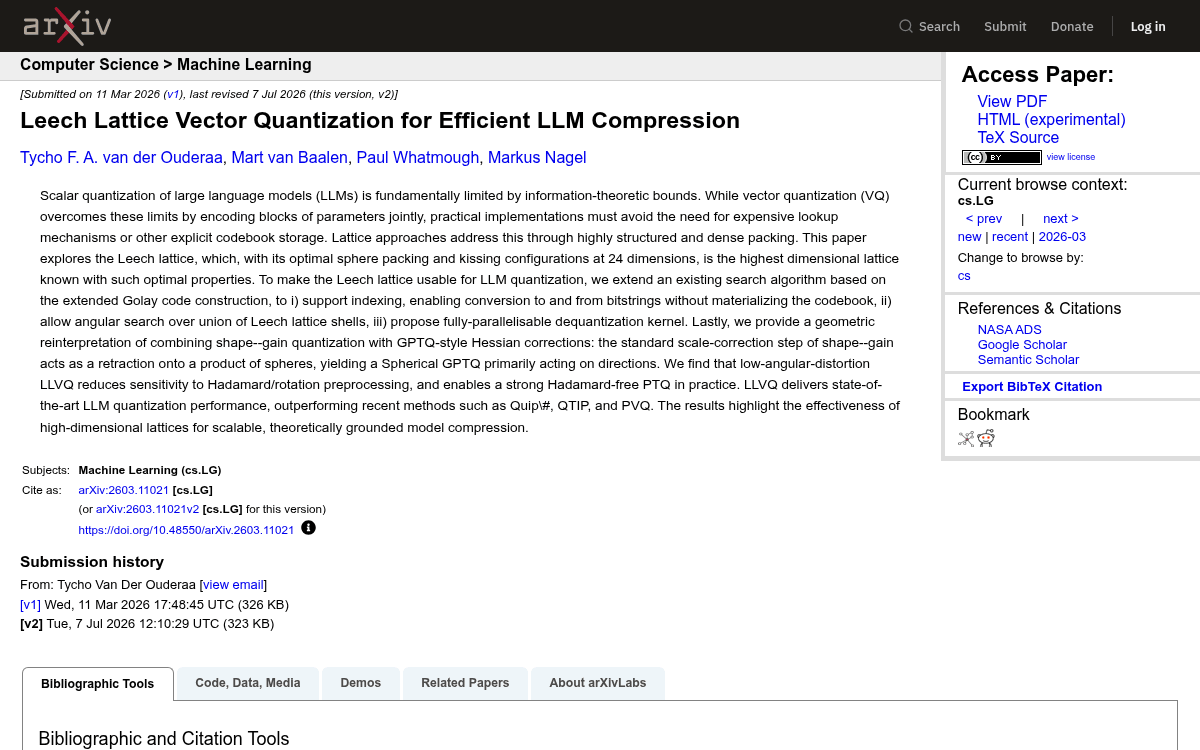
Qualcomm researchers use a 24-dimensional lattice tied to a Fields Medal result to squeeze large language models down to 2 bits per weight.
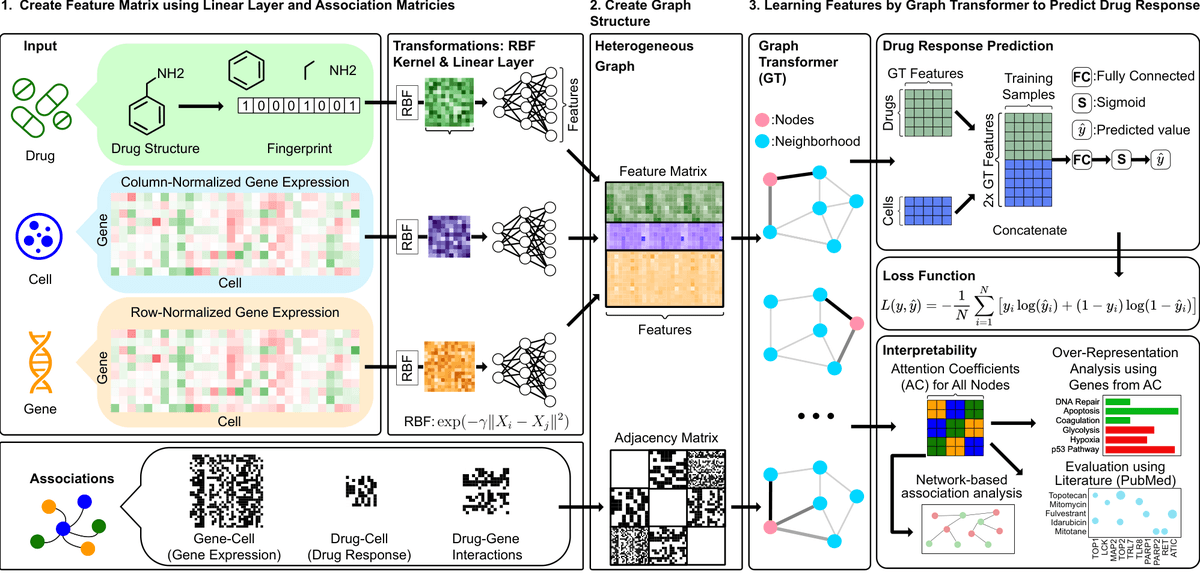
A graph transformer model predicts cancer drug sensitivity while attention coefficients expose which genes drive the response, offering biological explanations for each prediction.
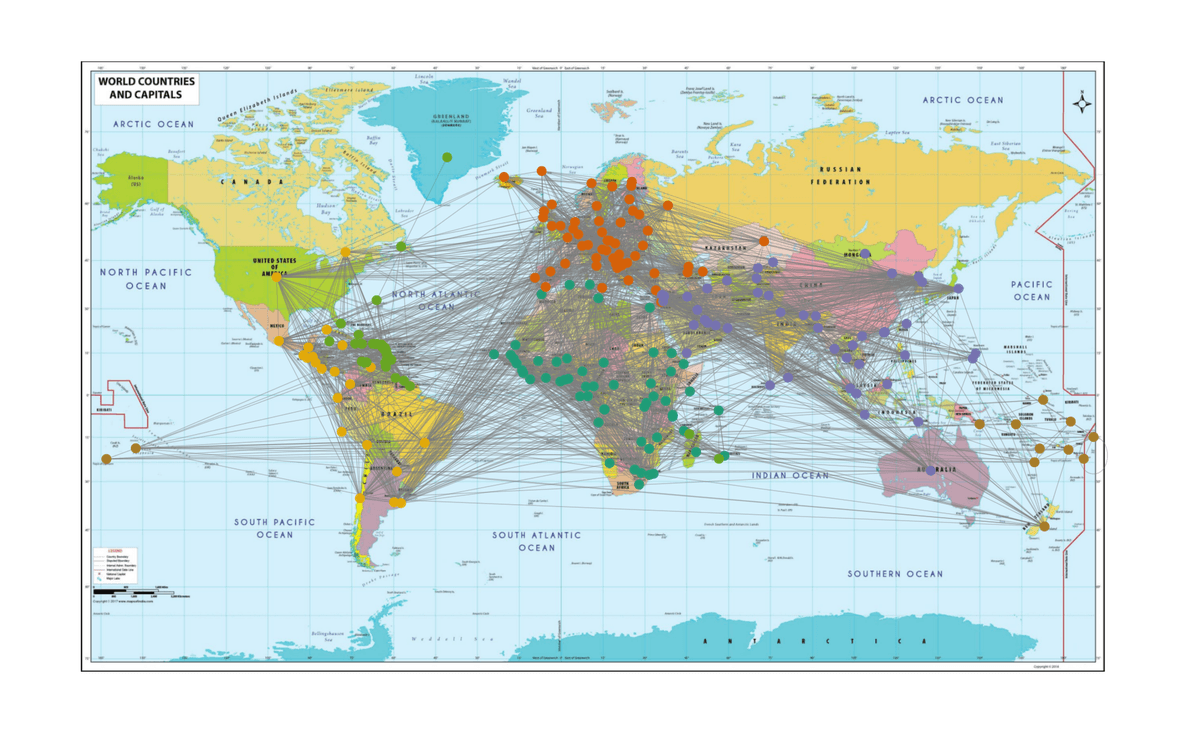
A new latent-space model extends spectral graph embedding to weighted networks, capturing higher-order moments so edges with equal means but different distributions become distinguishable.
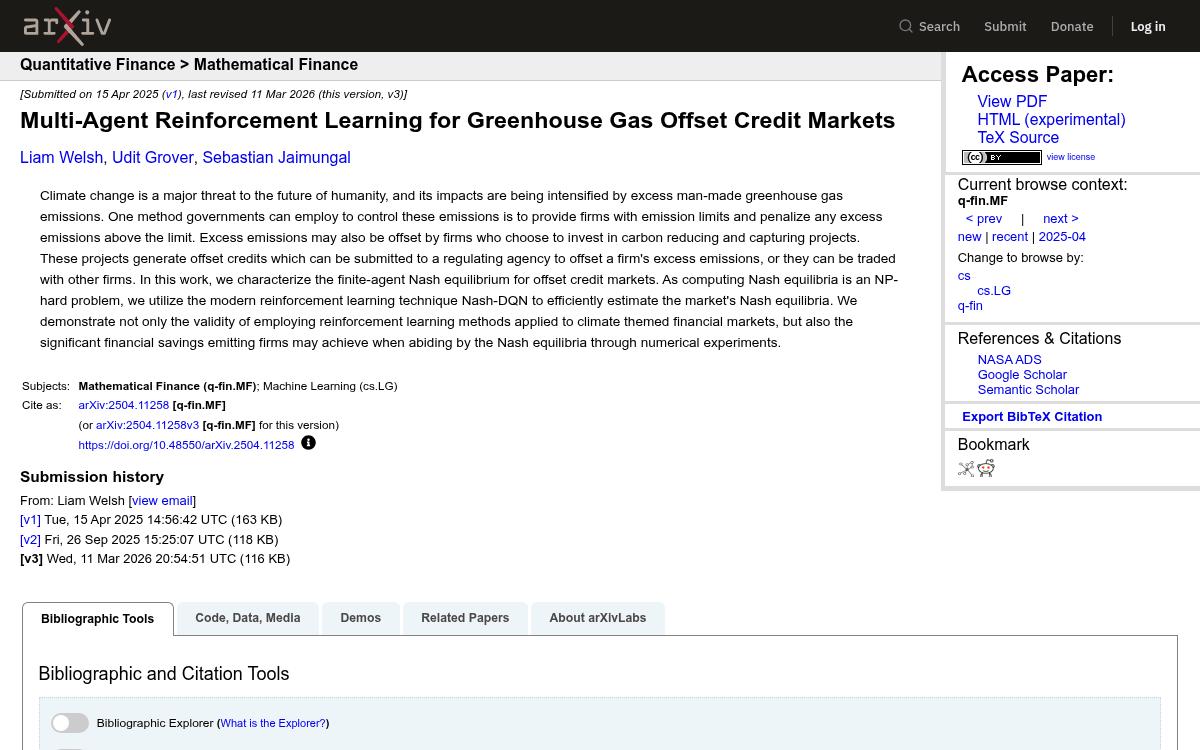
Researchers applied Nash-DQN to Canada's greenhouse gas offset credit market, showing regulated firms can substantially cut compliance costs by playing the equilibrium strategy.
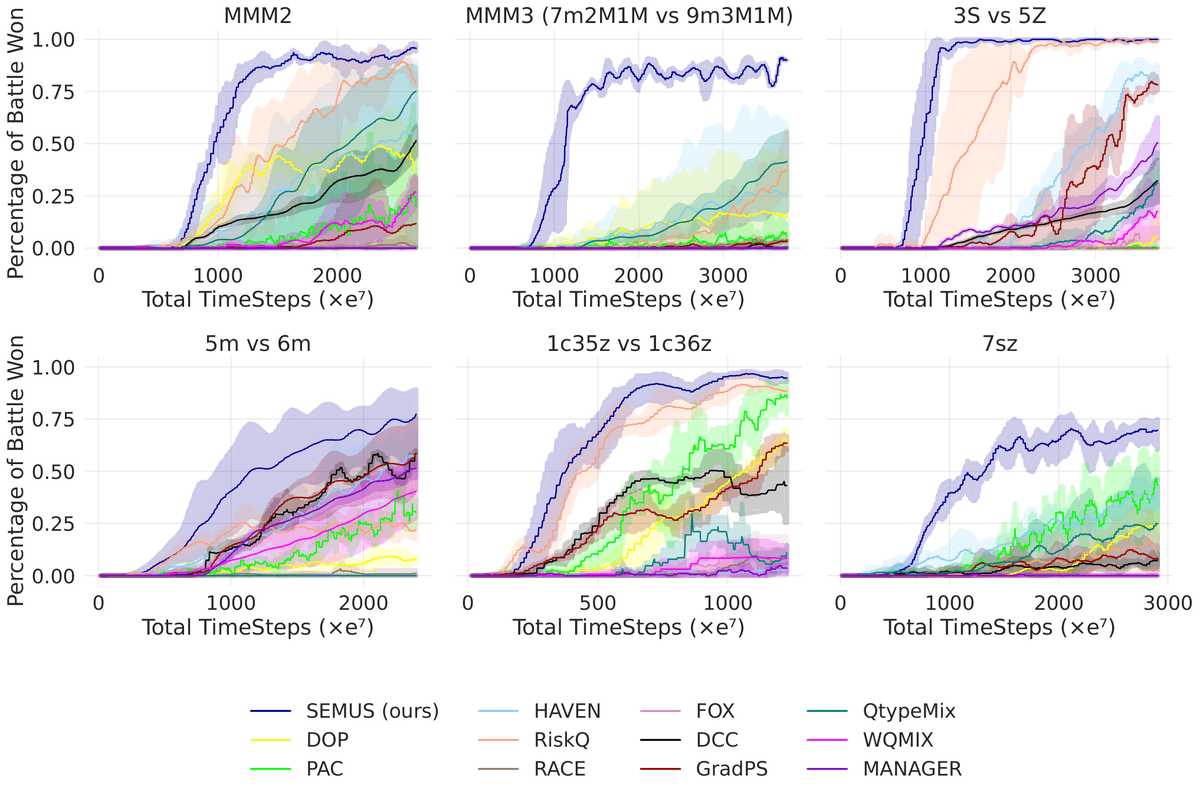
SEMUS uses ensemble kurtosis to steer exploration and cut variance in multi-agent RL, beating baselines on super-hard SMAC maps.
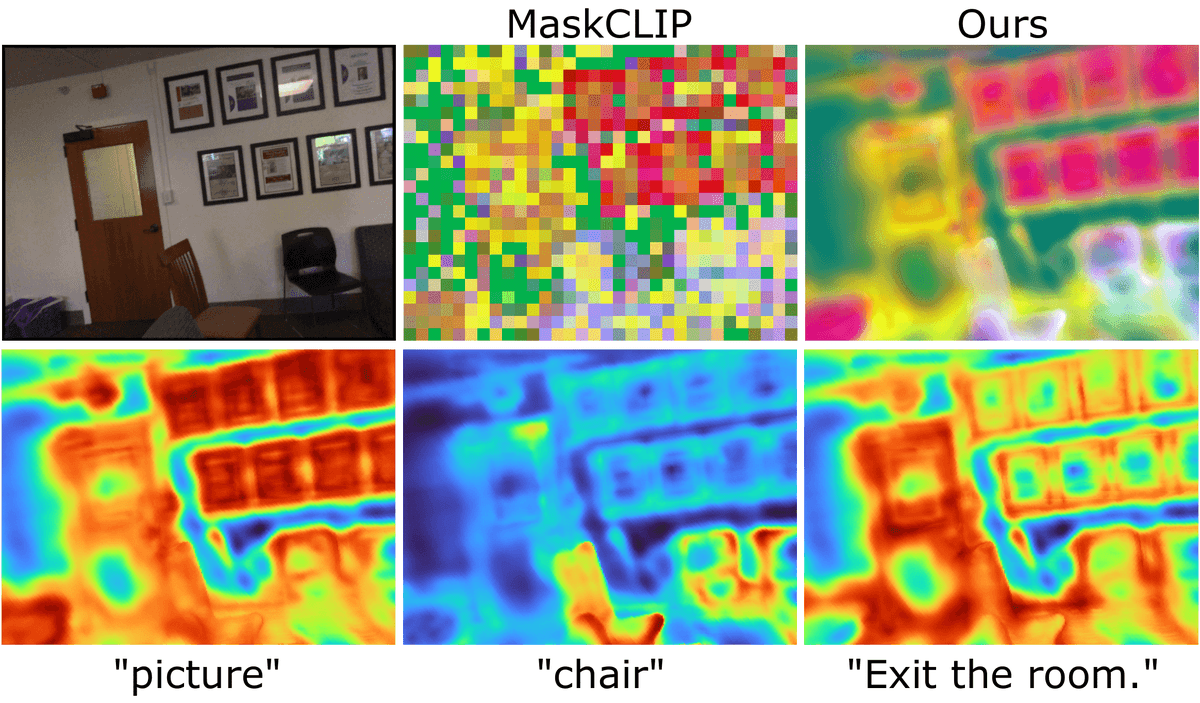
A new voxel-based feature field brings RGB, CLIP semantics, and geometry into one representation that also reports how much to trust each prediction.
New closed-form projections turn a classical geometry tool into a fast dataset-distance that beats existing sliced variants while running orders of magnitude faster than OTDD.
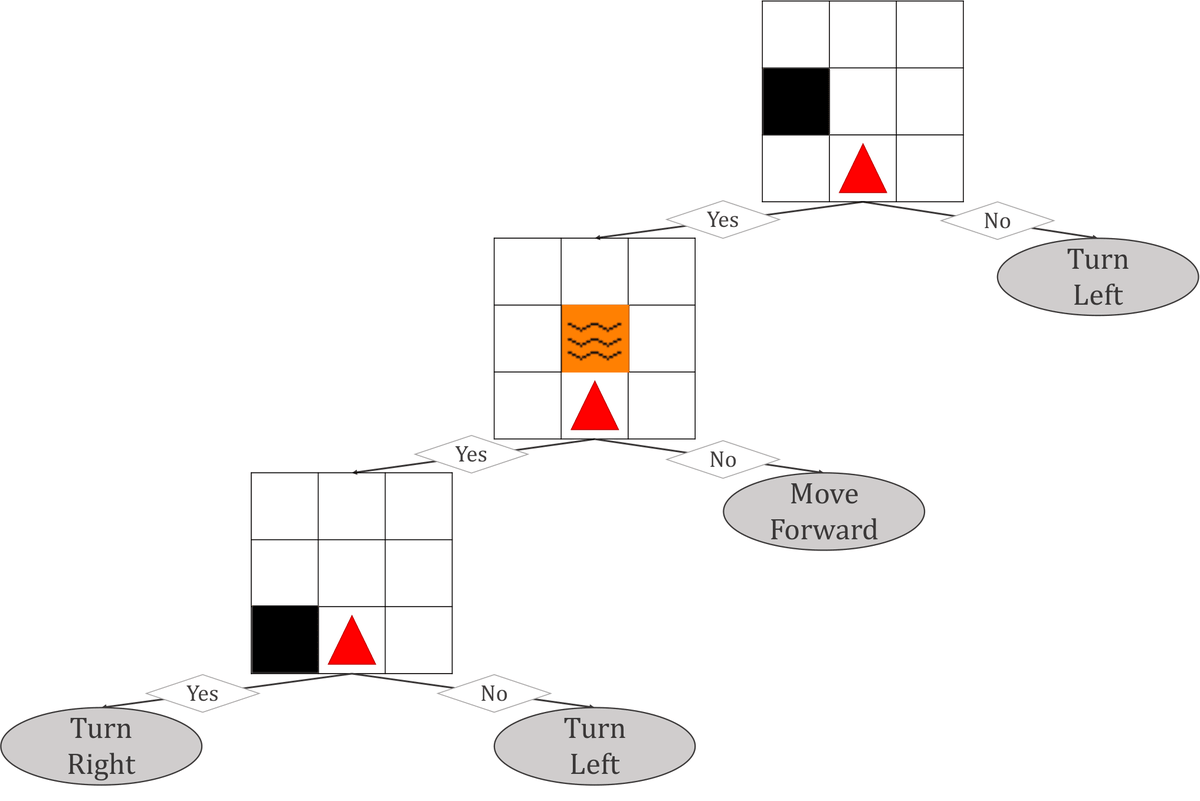
A doctoral thesis reformulates decision tree learning as a gradient descent problem, unlocking axis-aligned trees for tabular, multimodal, and reinforcement learning tasks.
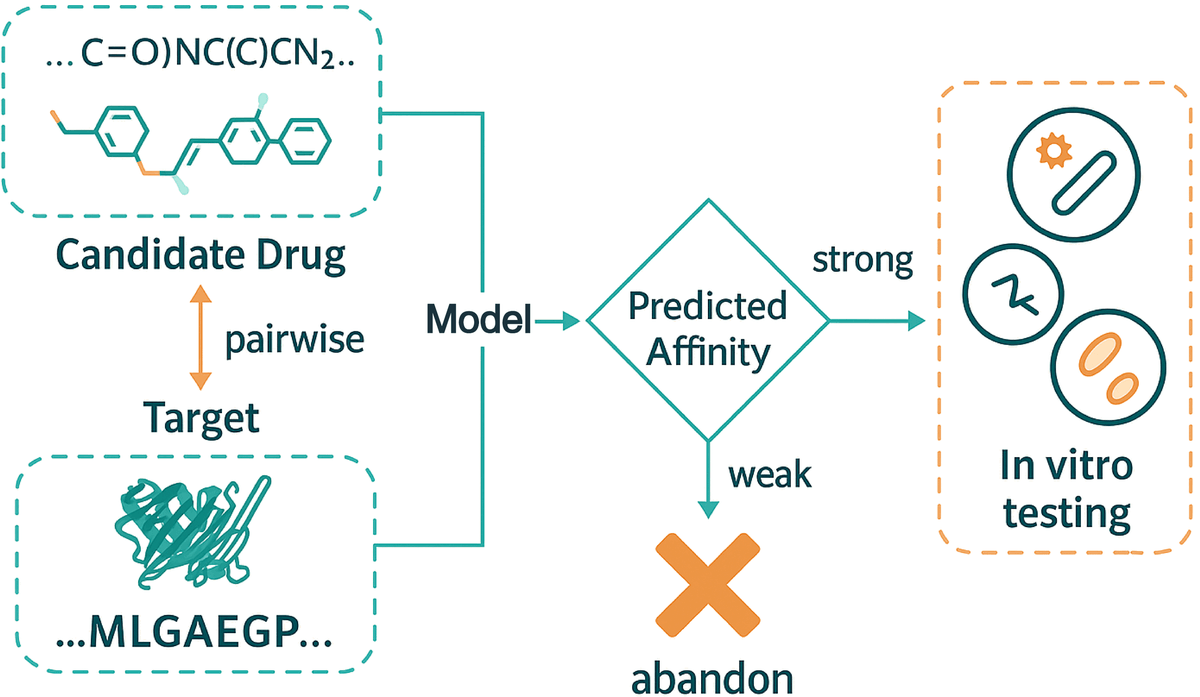
A two-stage latent diffusion approach tackles the cold-start problem in drug-target affinity prediction, cutting error 18.5% on out-of-sample PDBbind data.