
Pro
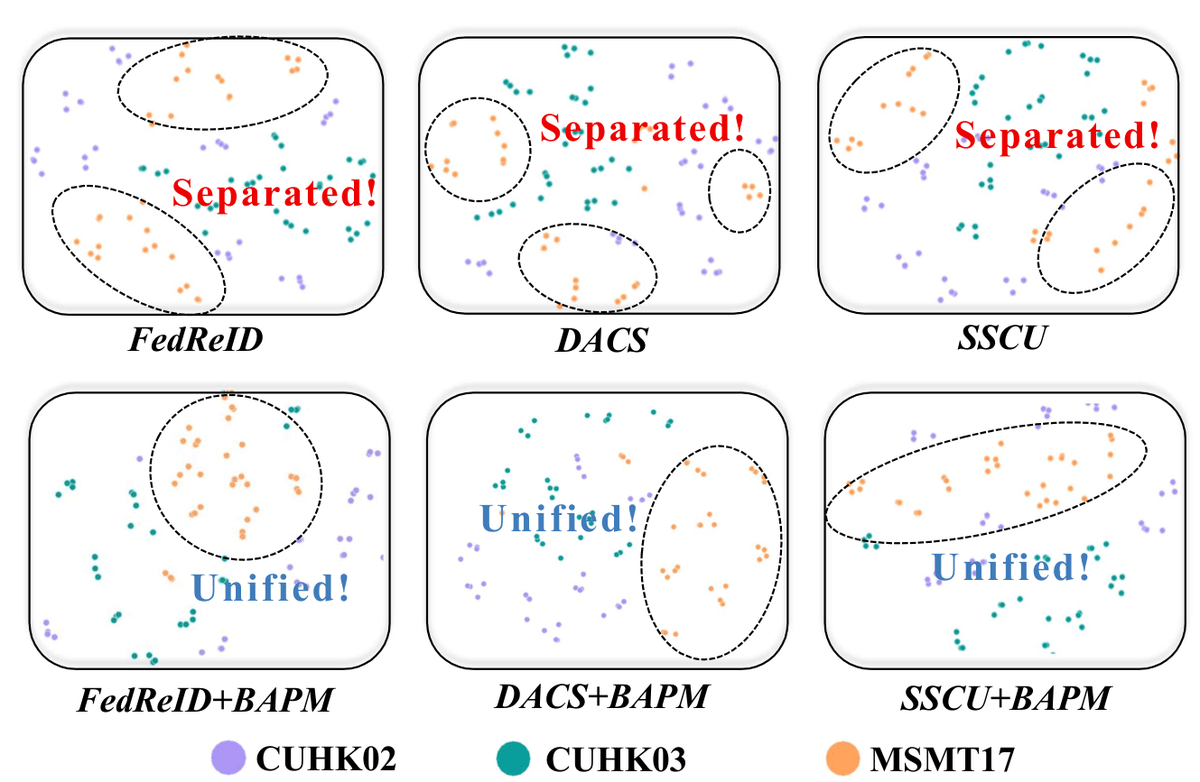
FedBPrompt Tracks People Across Cameras While Sharing 1% of Data
A visual prompting framework guides Vision Transformers toward pedestrians in federated re-ID, cutting communication by 99% while boosting cross-domain accuracy.
20 stories
A visual prompting framework guides Vision Transformers toward pedestrians in federated re-ID, cutting communication by 99% while boosting cross-domain accuracy.
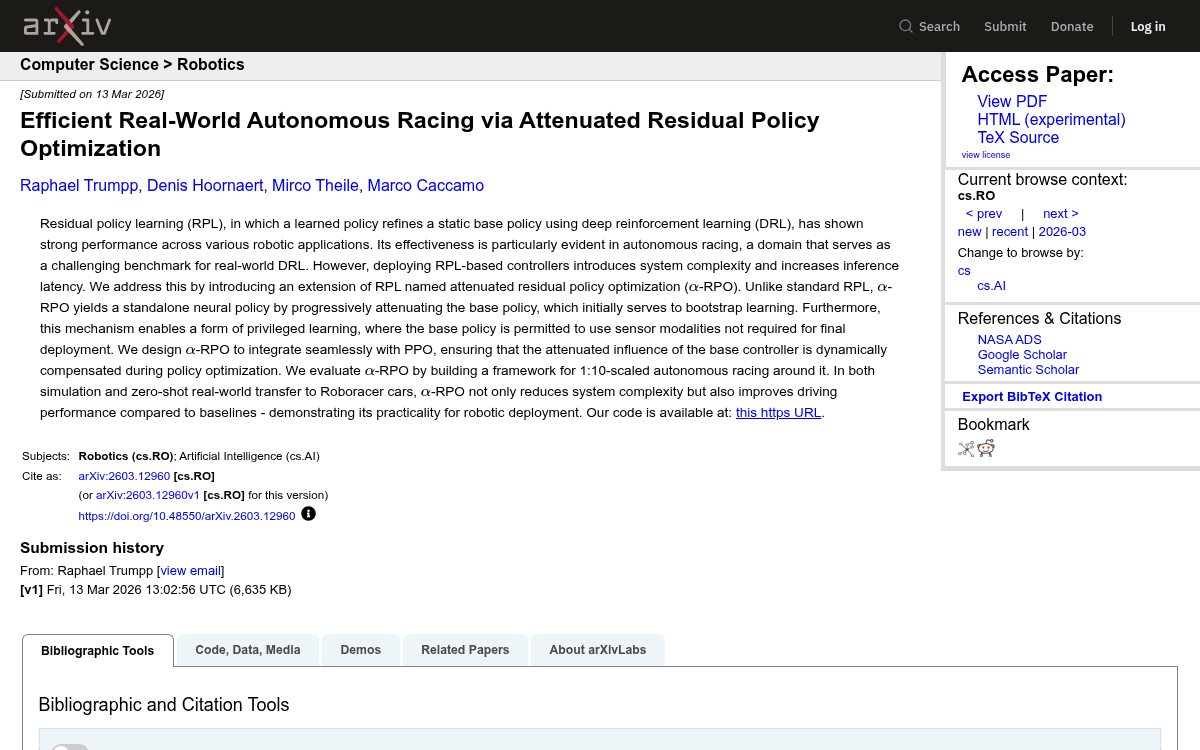
A new twist on residual reinforcement learning bootstraps training with a classical controller, then fades it out entirely for a lean, standalone neural policy.
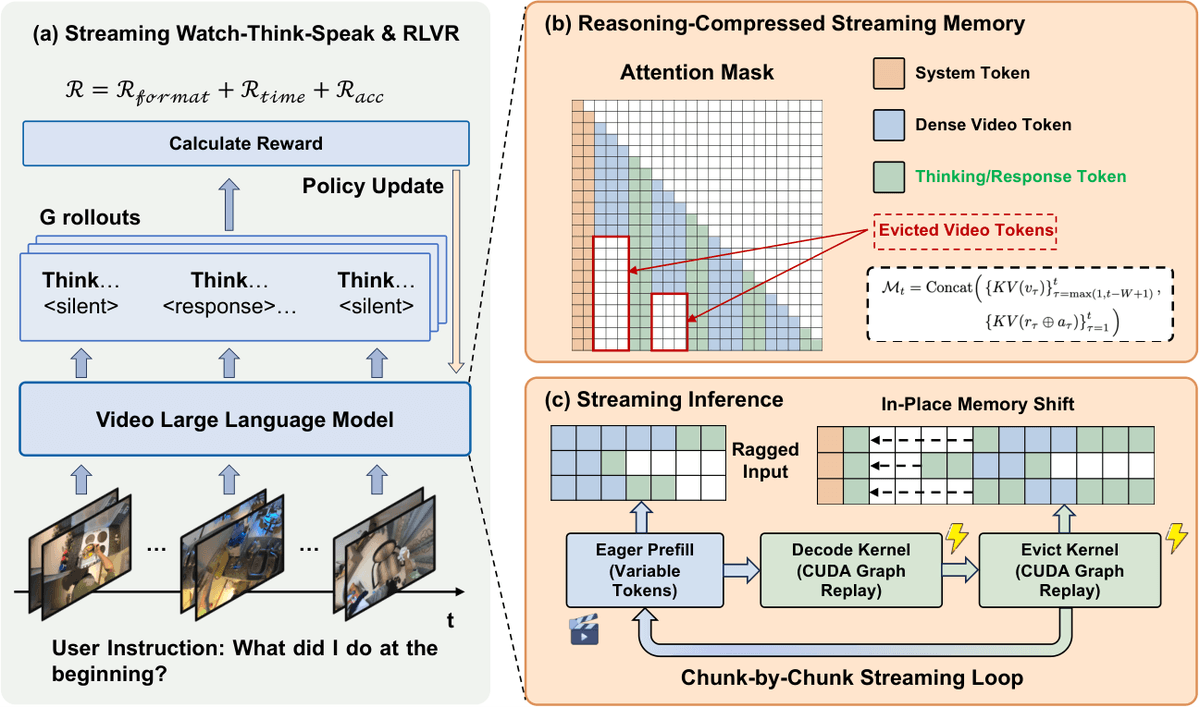
ThinkStream introduces a Watch-Think-Speak loop that lets a 3B video model reason incrementally over live streams while keeping latency under 0.5 seconds.
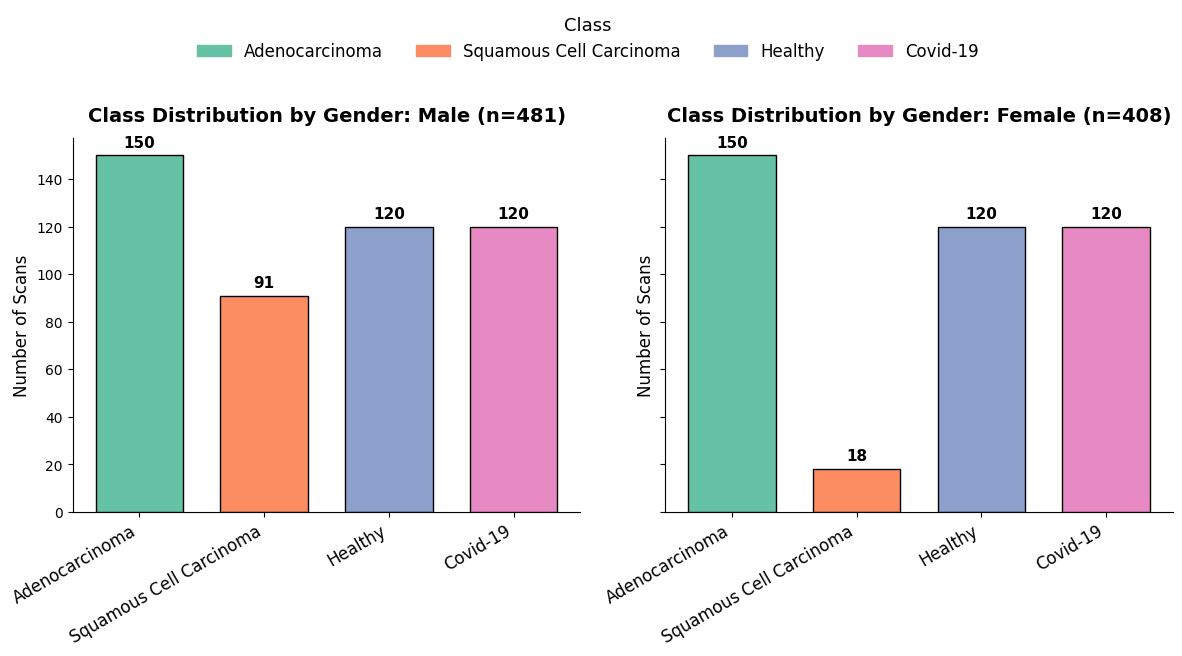
A CVPR 2026 challenge submission uses adversarial training to strip gender signals from CT scan features while classifying four lung conditions.
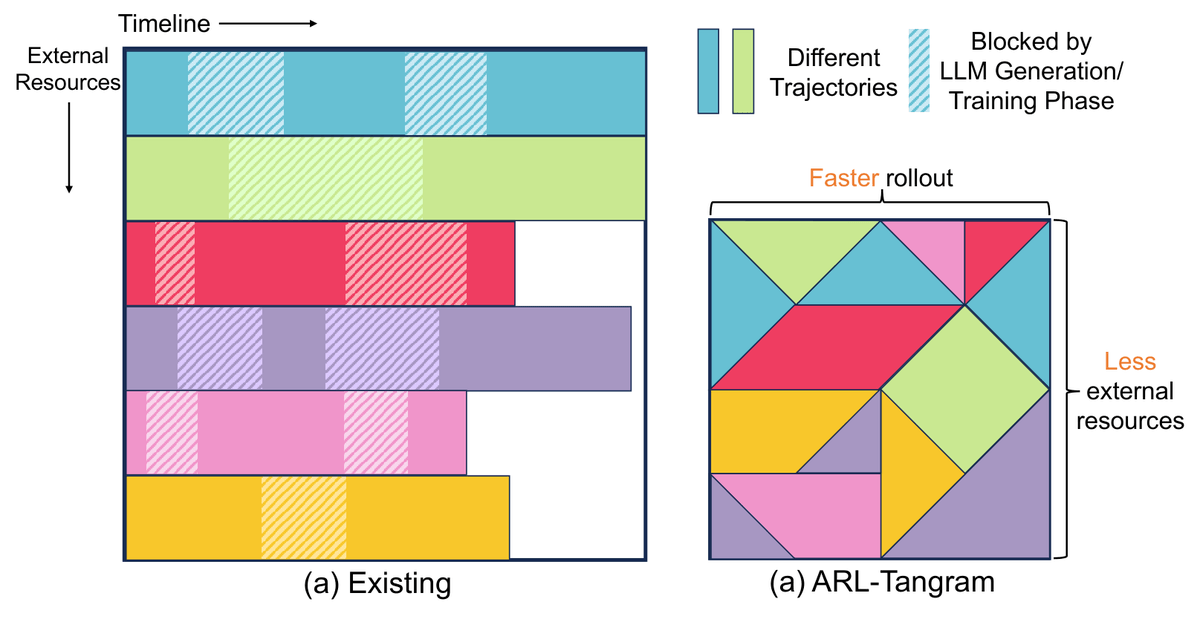
Xiaomi and Peking University built ARL-Tangram to schedule external CPUs, GPUs, and APIs at the granularity of individual actions, cutting resource waste by 71%.
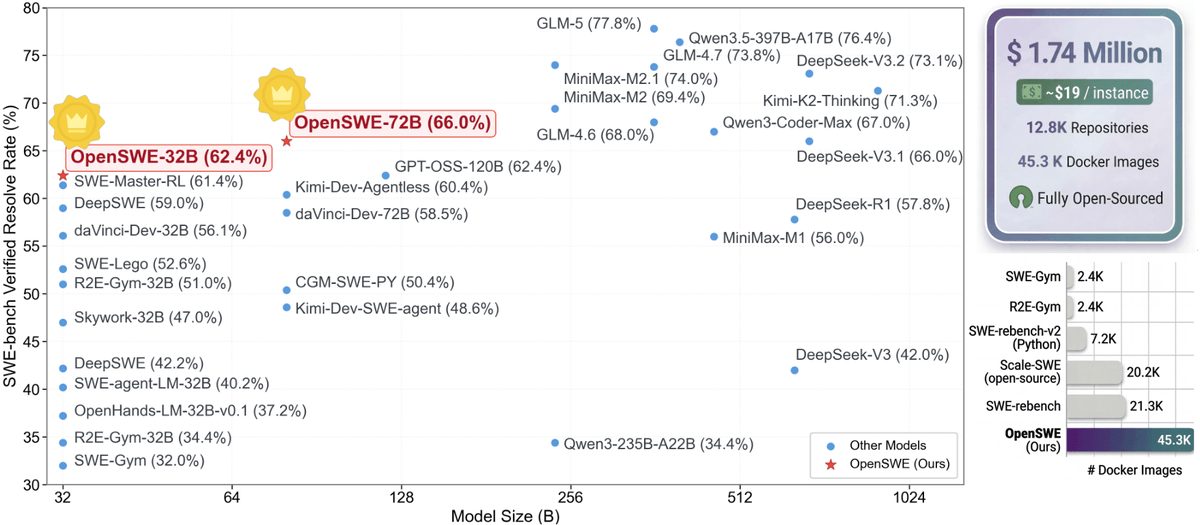
A fully open pipeline for building software engineering agent training data, with 45,320 Docker environments across 12.8k repositories and open-sourced infrastructure.
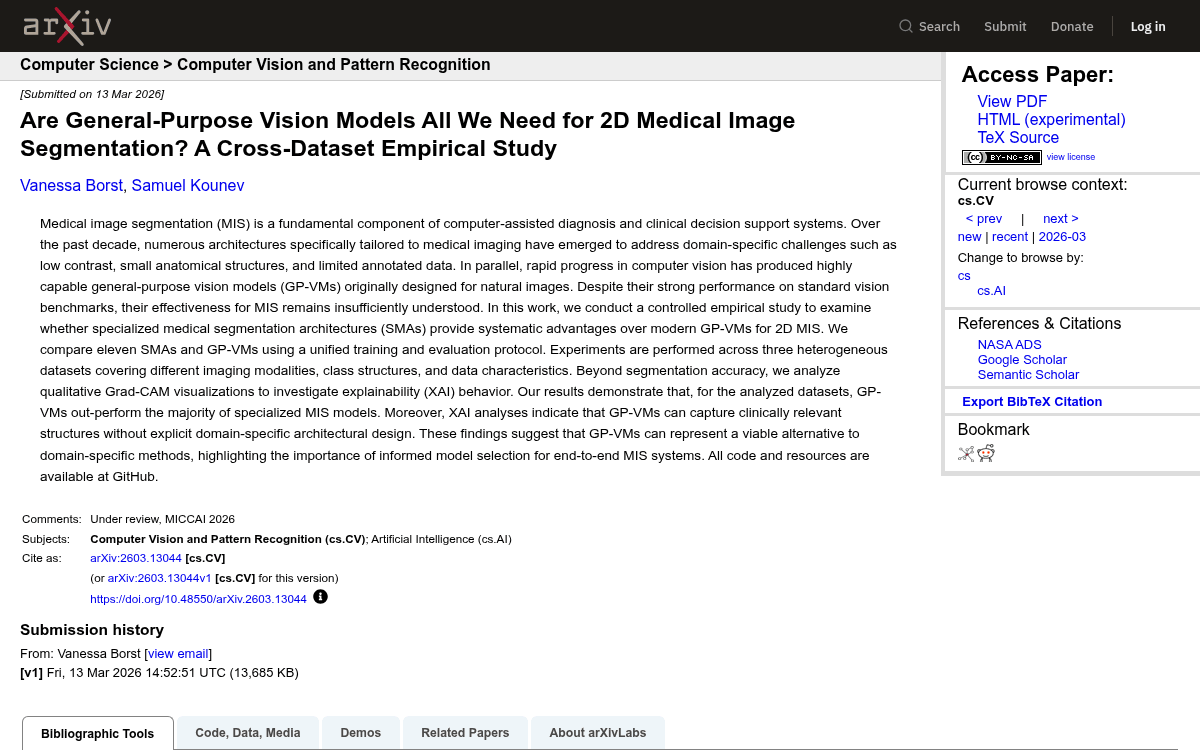
A controlled benchmark pitting eleven medical-specific segmentation networks against general vision models finds the generalists win on most 2D medical tasks.
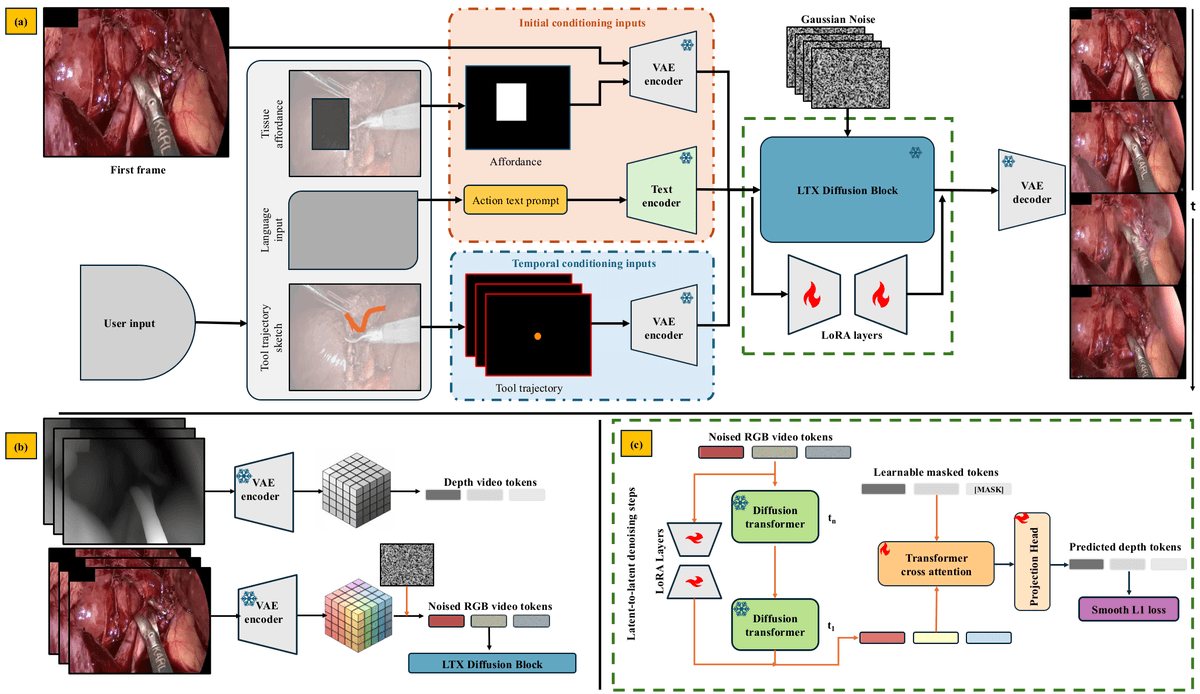
Johns Hopkins and NVIDIA researchers built a surgical video generator steered by tool trajectories, cutting temporal artifacts by more than half versus prior work.
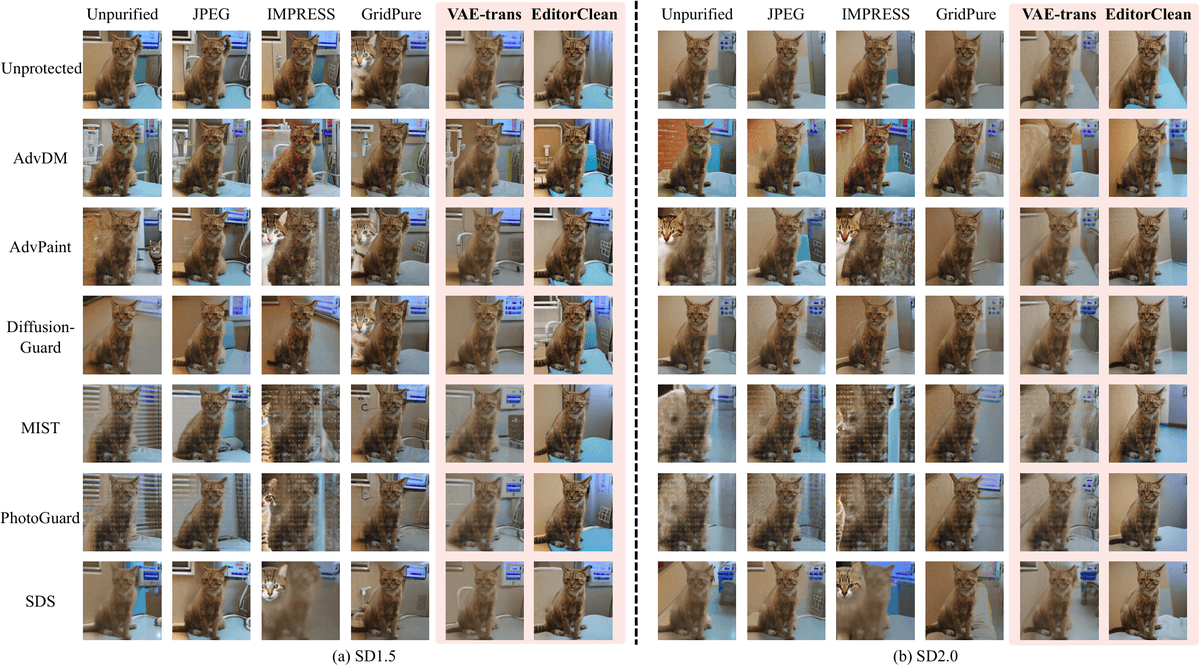
Researchers show that popular tools like Glaze, PhotoGuard, and Mist can be stripped away by attackers using mismatched diffusion pipelines, exposing images to unrestricted editing.

Team RAS uses Qwen3-VL, WavLM, and a Mixture-of-Experts fusion to hit 0.658 CCC on Aff-Wild2, pushing continuous emotion recognition forward.
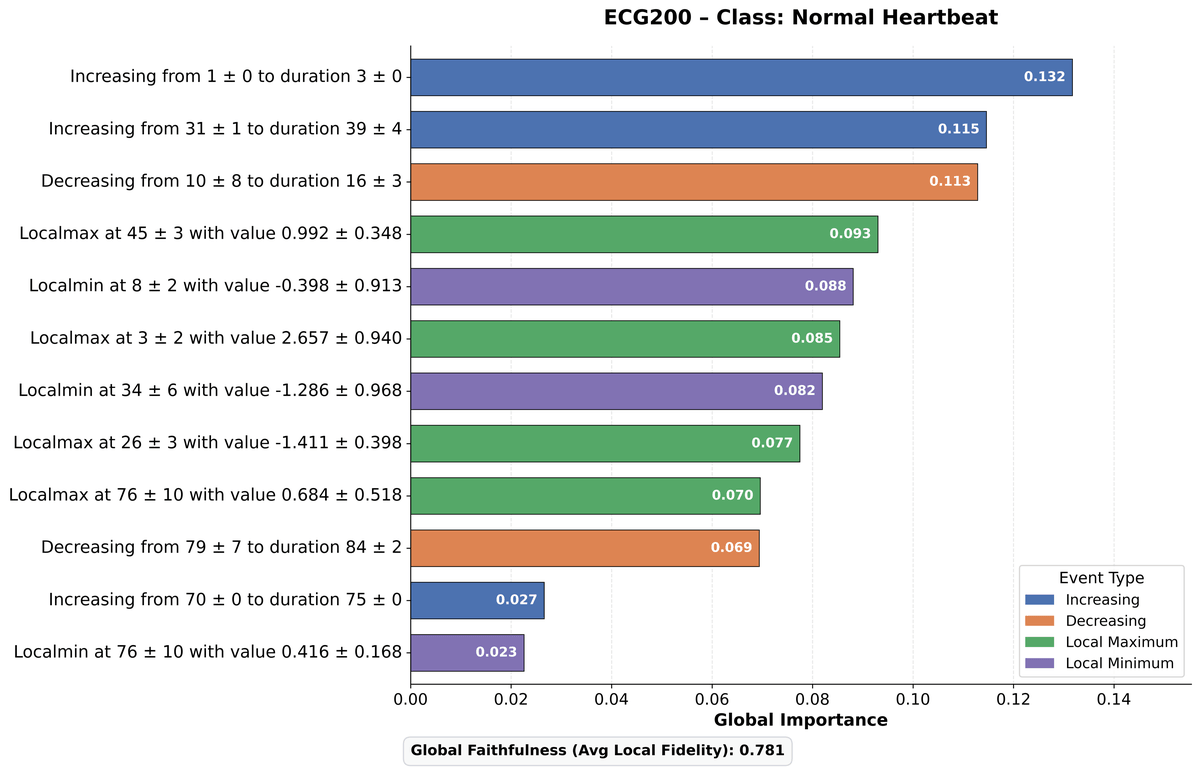
A new model-agnostic framework called L2GTX turns per-instance time series explanations into class-wide summaries built from human-readable event patterns.

A new open benchmark and transformer framework for detecting mineral deposits from geochemical survey data, targeting reproducibility gaps in exploration research.

Researchers at Vrije Universiteit Brussel built a hybrid pipeline that cuts handwritten math grading time by roughly 23% while matching human agreement.
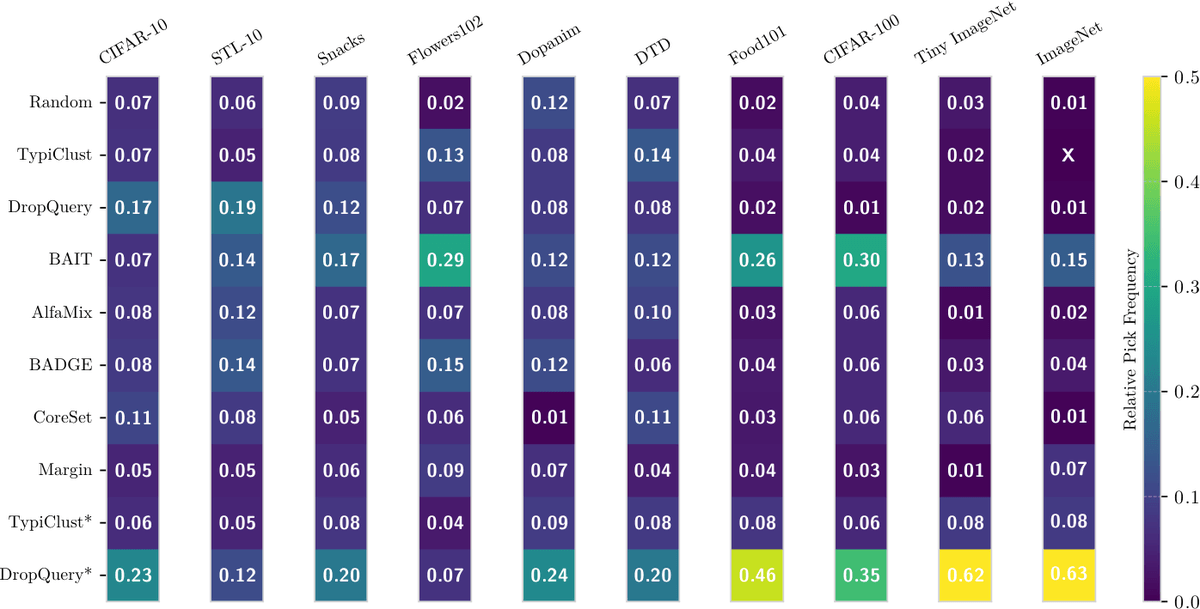
A new oracle strategy for active learning ensembles ten selection methods and retrains only the final layer, exposing how far current methods sit from optimal.
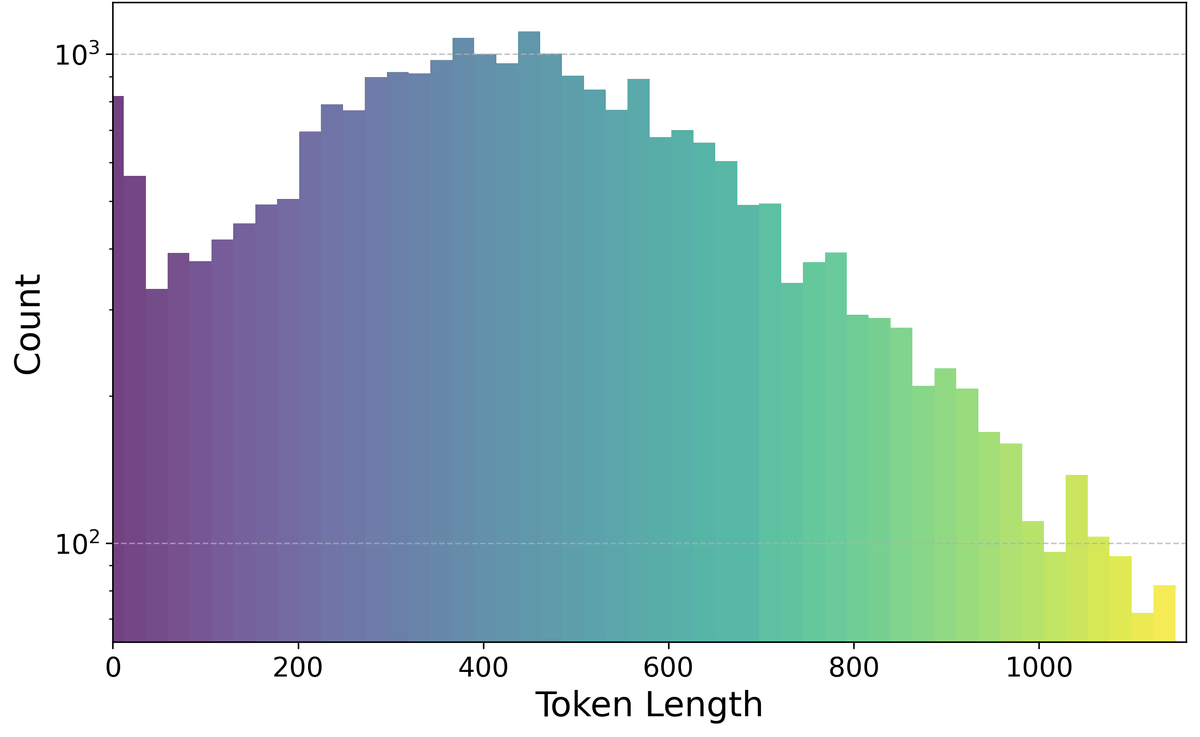
A new benchmark exposes how badly LLMs hallucinate on sustainability filings and shows that structured chain-of-thought fine-tuning fixes most of it.
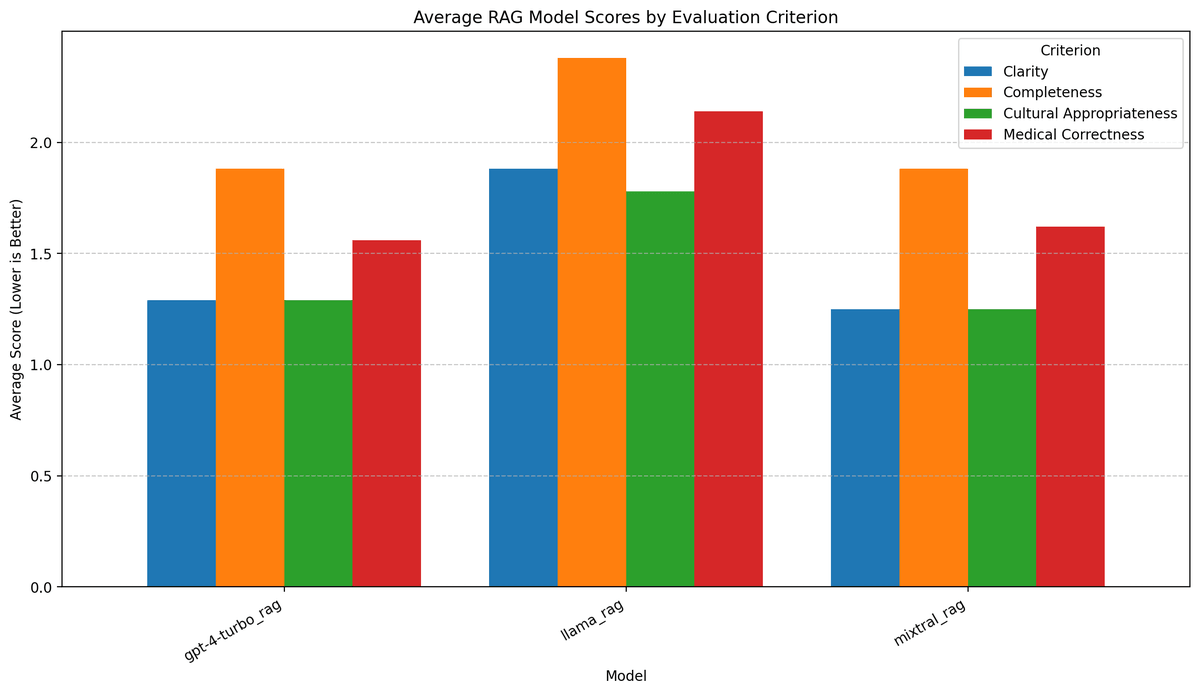
A CMU-led team built a WhatsApp maternal health assistant for India that catches 86.7% of emergencies through stage-aware triage and evidence-grounded generation.
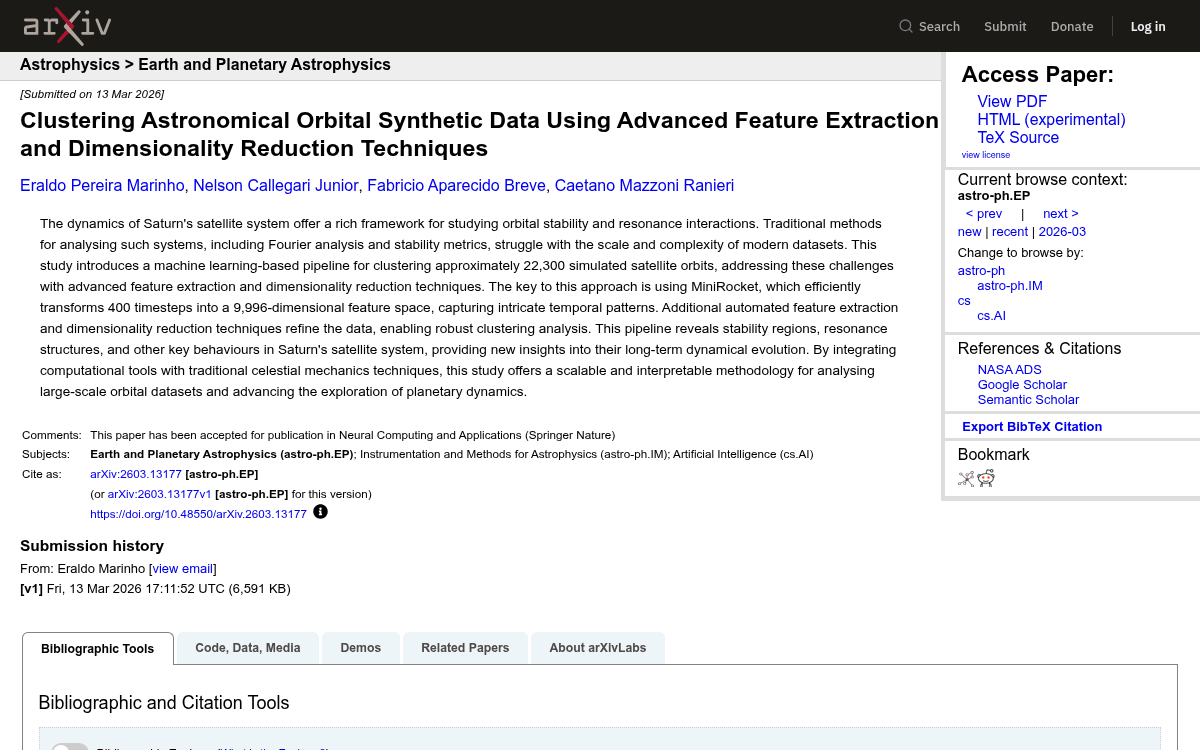
A new machine learning pipeline clusters 22,288 simulated Saturn satellite orbits, reproducing dynamical maps that once required massive integrations.
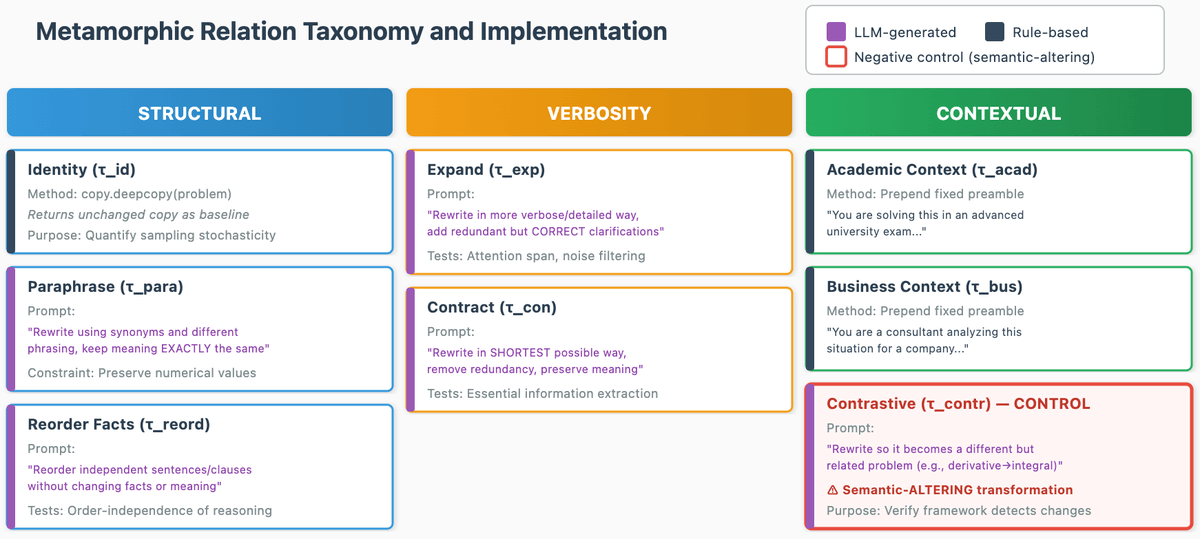
A new metamorphic testing framework rephrases the same problem eight ways and finds that bigger reasoning models often crack under trivial rewordings.
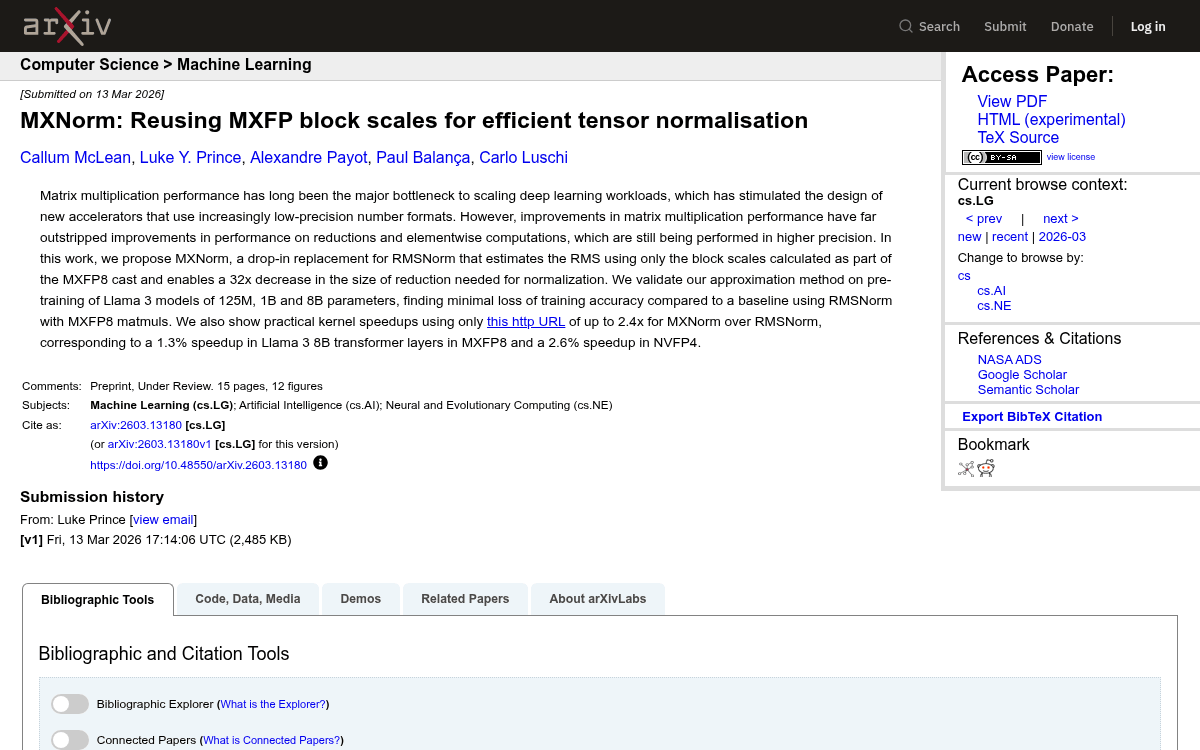
Graphcore researchers show RMSNorm can be replaced by reusing block scales from MXFP8 quantization, cutting reduction size 32x with matched accuracy.
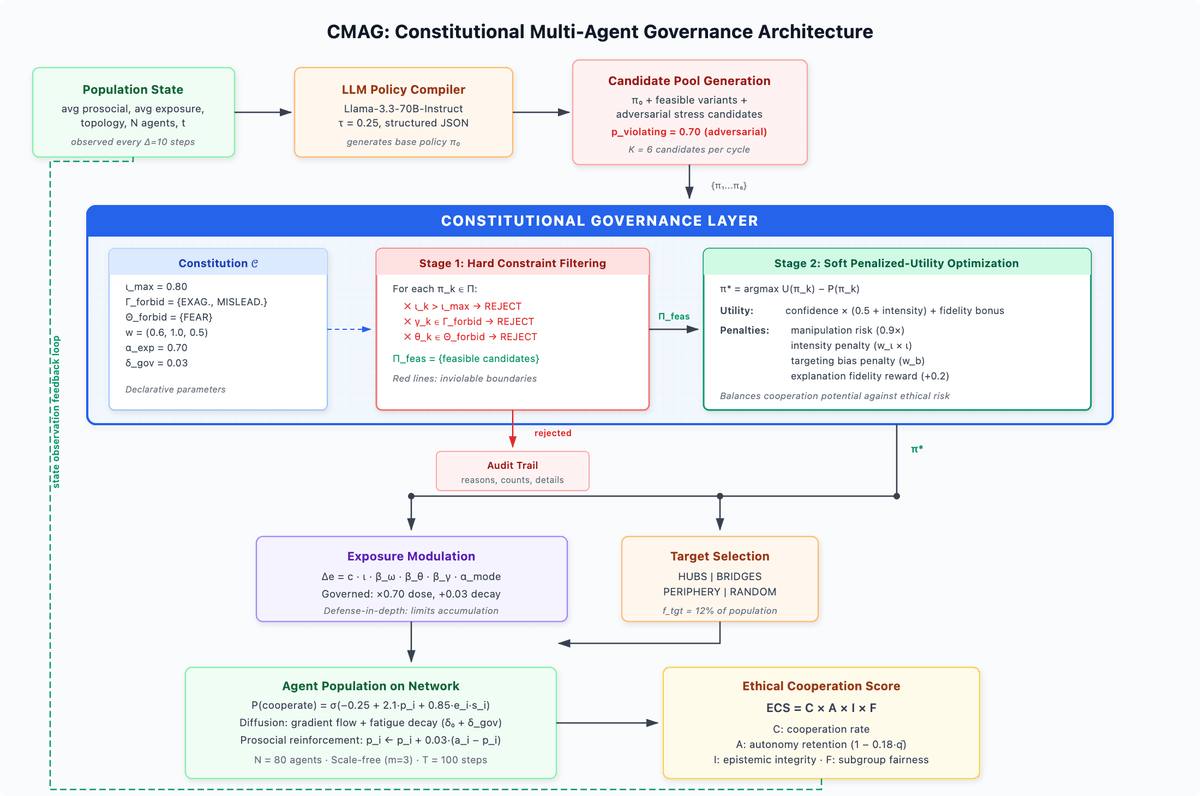
Researchers show unconstrained LLM policy compilers hit peak cooperation by eroding autonomy, and propose a two-stage governance layer that fixes it.