A new theoretical paper proves a decentralized strategy that traps and catches an evader inside a moving polygon of robots, with a formal capture-time bound.
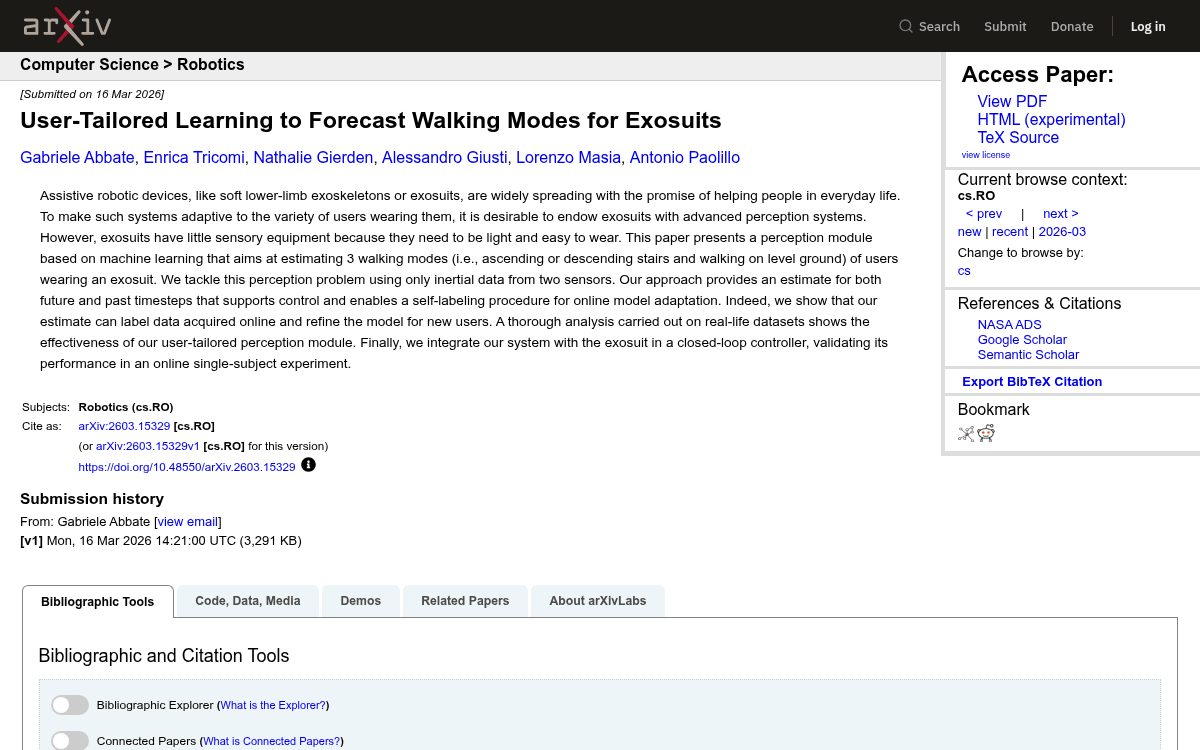
A temporal convolutional network reads two thigh-mounted IMUs to classify stairs and level ground, forecast intent, and self-label data to adapt to new wearers.
A new framework teaches robots to imagine how humans will react before moving, cutting collisions and hitting state of the art on social navigation benchmarks.
Researchers from the University of Padova show optimal control can plan trajectories for underactuated flat robots, cutting end-of-motion oscillations by up to 38 percent.
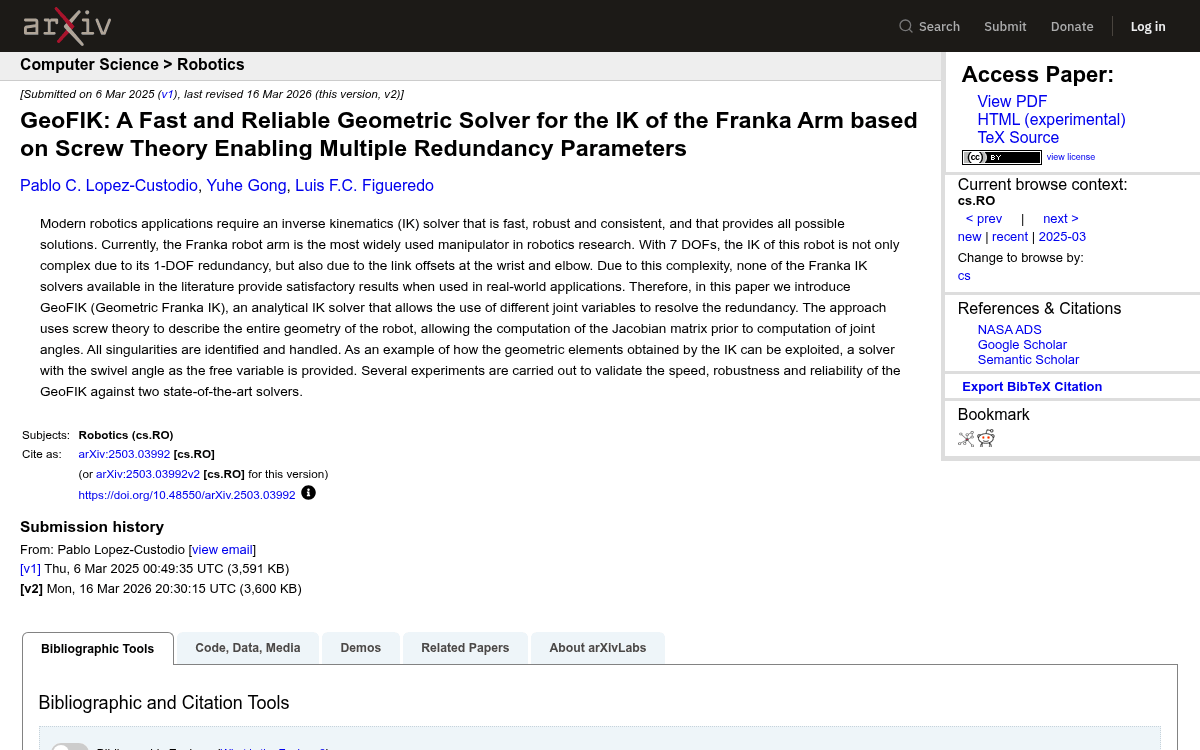
A screw-theory-based analytical inverse kinematics solver for the Franka arm delivers Jacobians for free, handles singularities, and beats existing solvers on speed and reliability.
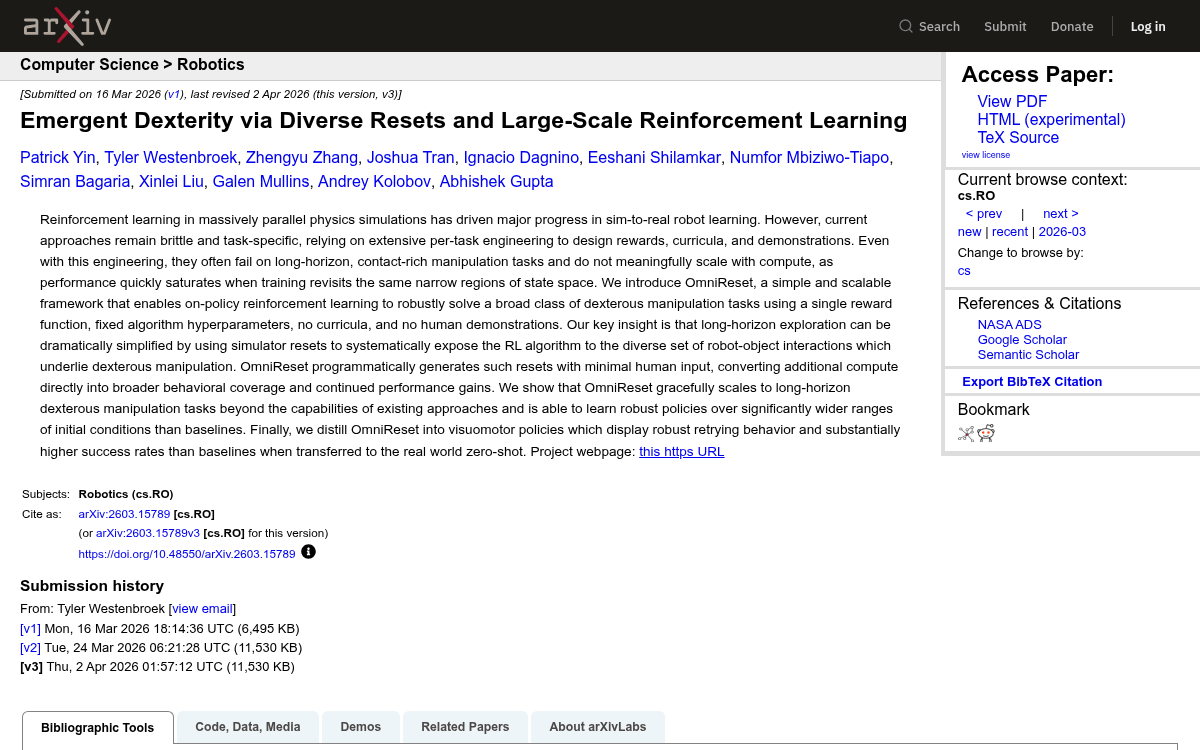
A new reinforcement learning recipe replaces demos, curricula, and reward tuning with diverse simulator resets, letting robots learn contact-rich manipulation that transfers zero-shot to hardware.
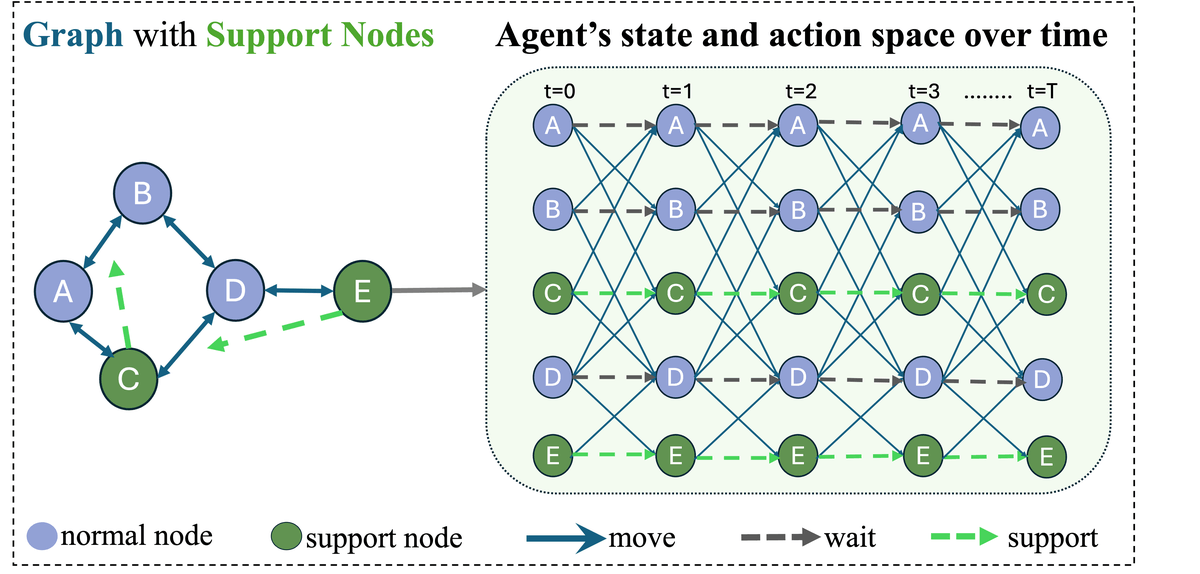
A new paper introduces forecast-aware planning for multi-robot teams facing moving threats, using Markov risk propagation to pre-position support and cut expected mission cost.
IF-CorrNet flips speech dereverberation from black-box spectral mapping to explicit filter estimation, delivering large gains on real-recorded reverberant audio.