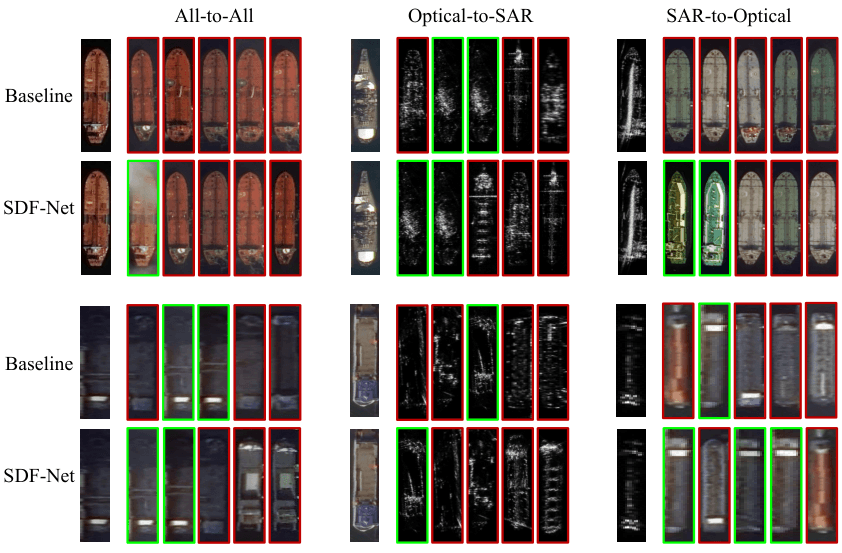
A new satellite-imagery model matches ships across optical and radar sensors by anchoring on hull geometry instead of texture, hitting 60.9% mAP on HOSS-ReID.
Neural Gate uses neuron-level gradient truncation to teach vision-language models to refuse privacy-sensitive prompts without breaking their normal task performance.
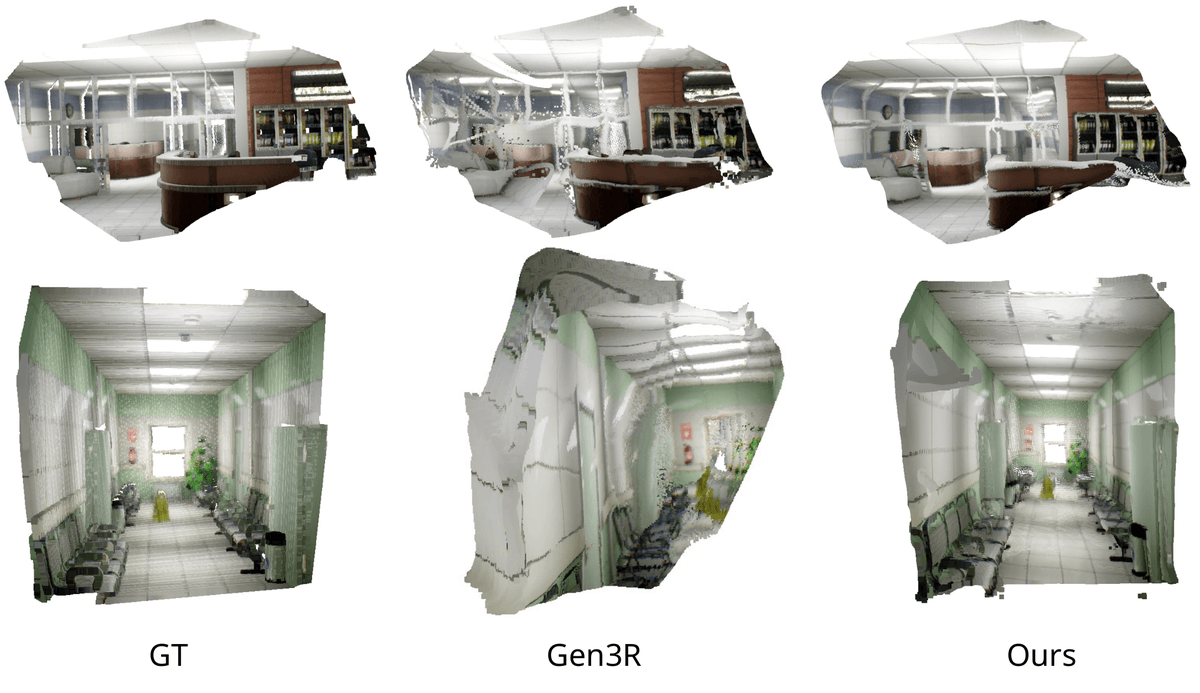
Researchers ditch pixel generation entirely, forecasting frozen VGGT geometry features to cut depth error up to 32% while running 5x faster than Cosmos.
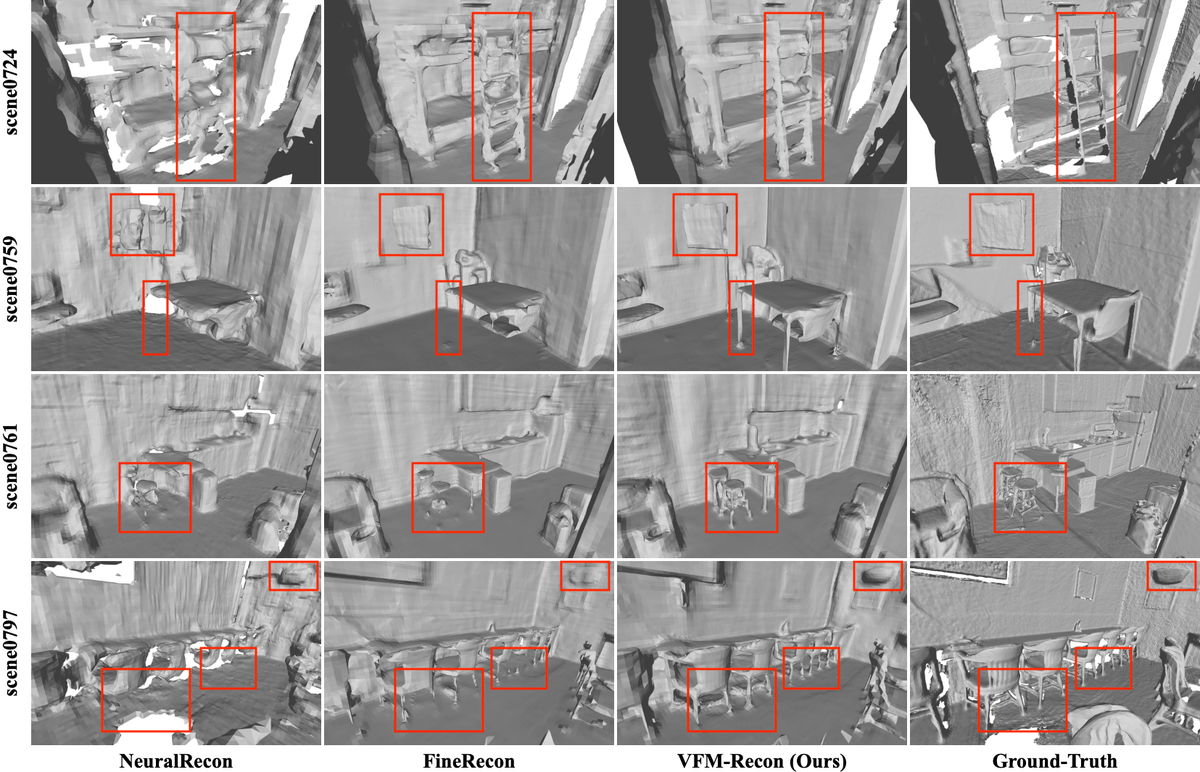
A new framework fixes the scale-ambiguity problem that has kept vision foundation models out of scene-level 3D reconstruction, delivering a 70.1 F1 on outdoor scenes.
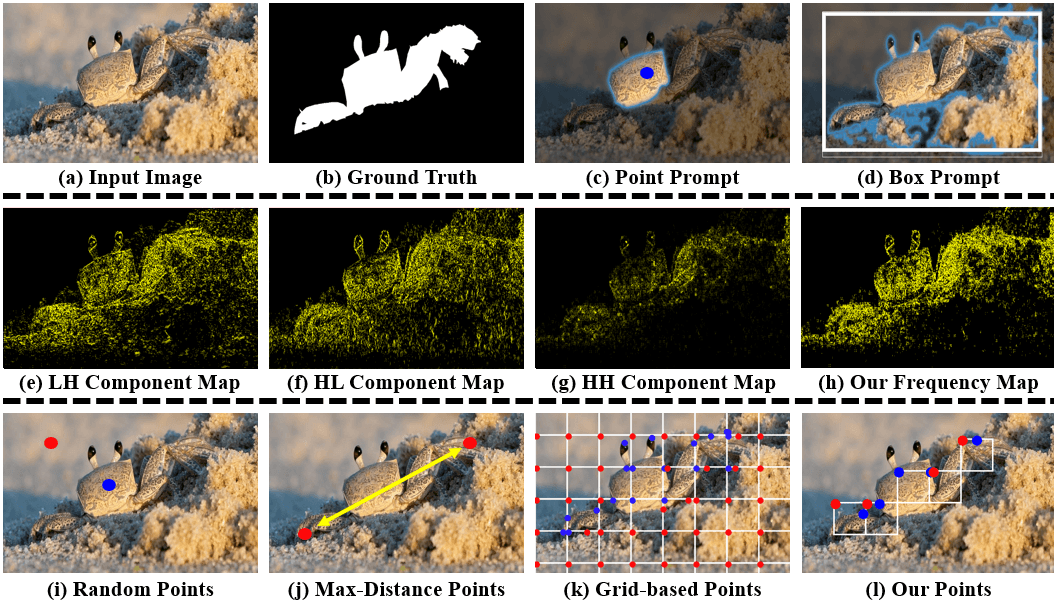
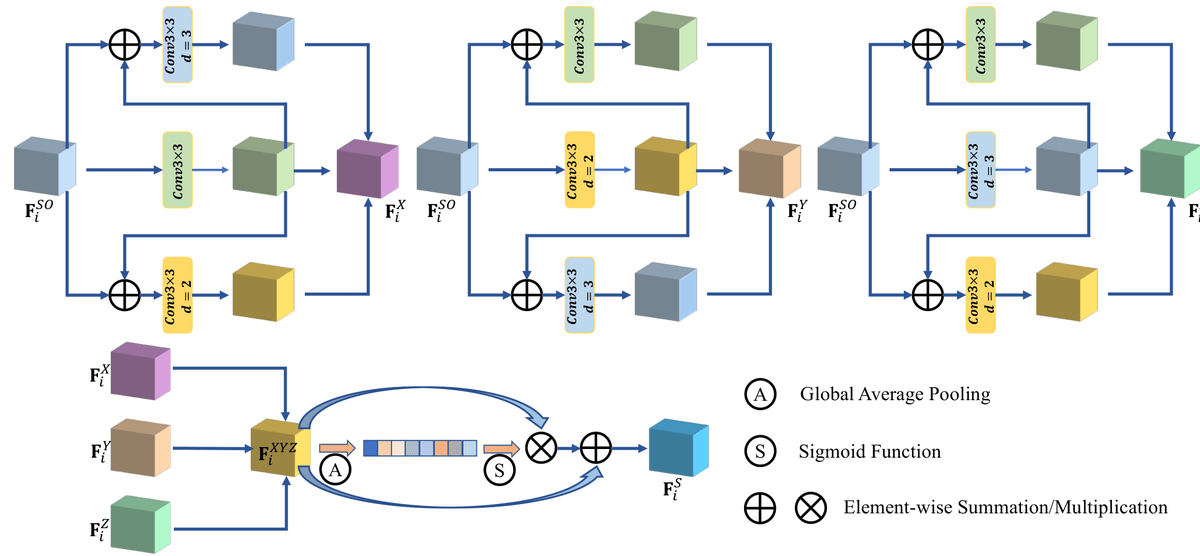
A frequency-aware SAM variant beats prior marine segmentation models by extracting wavelet edges as prompts and swapping the decoder for a Mamba block.
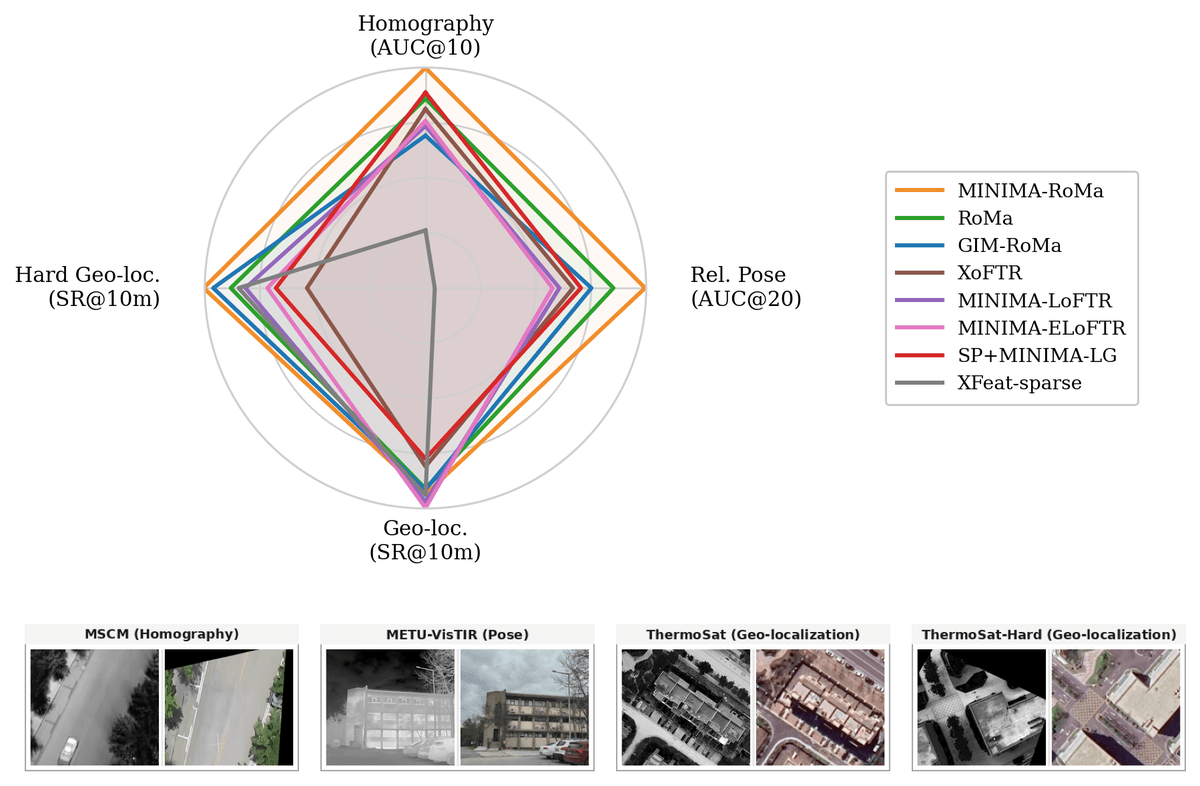
A new benchmark stress-tests 30 image matchers on infrared-visible pairs, exposes brittle baselines, and ships a thermal-satellite localization dataset.
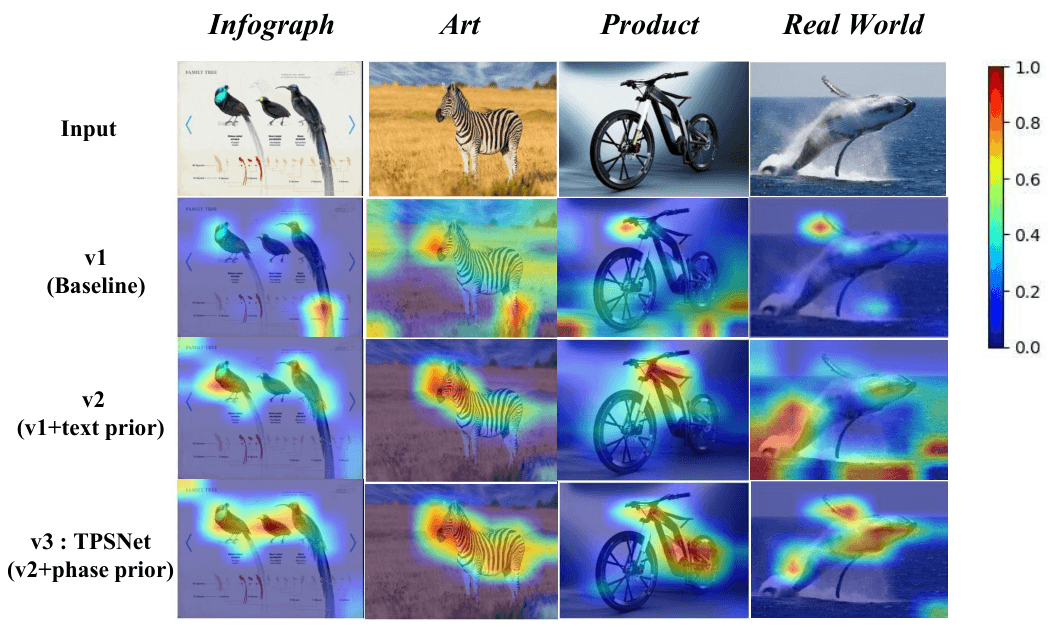
A new unsupervised cross-domain image retrieval method combines CLIP-derived text prompts with frequency-domain phase features to reach state-of-the-art.
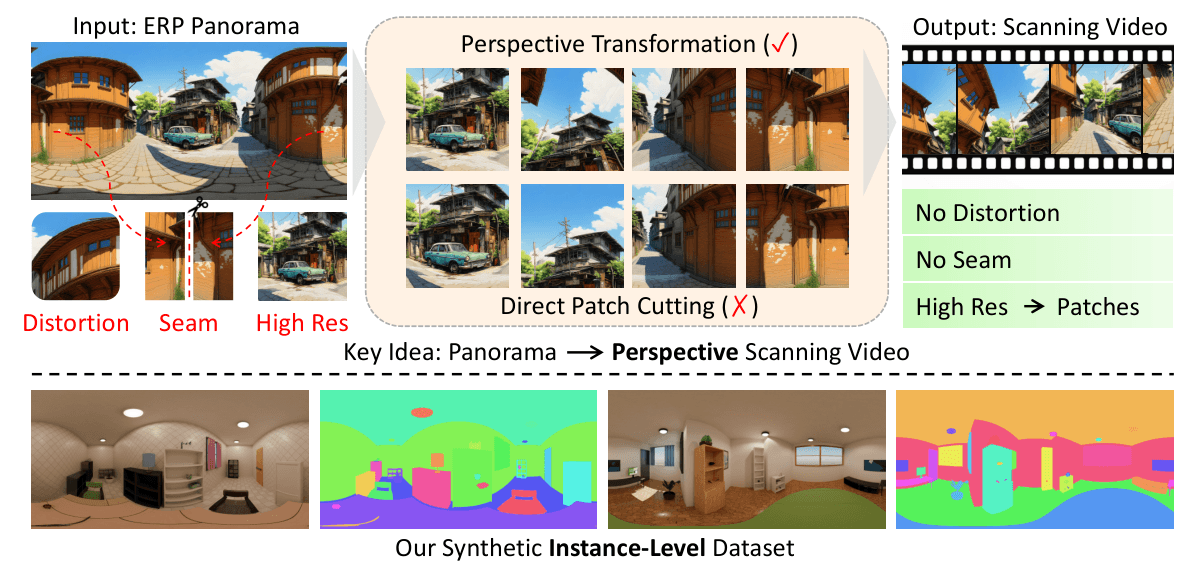
A new foundation model reformulates 360-degree segmentation as a fixed-trajectory perspective video, giving SAM2 a +17.2 mIoU zero-shot boost on 4K panoramas.
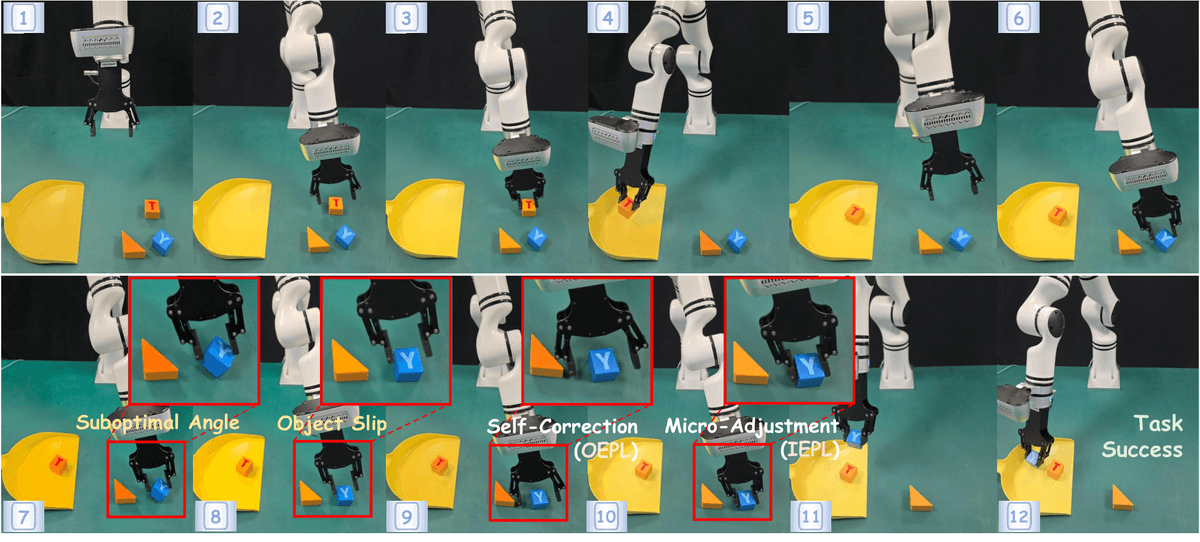
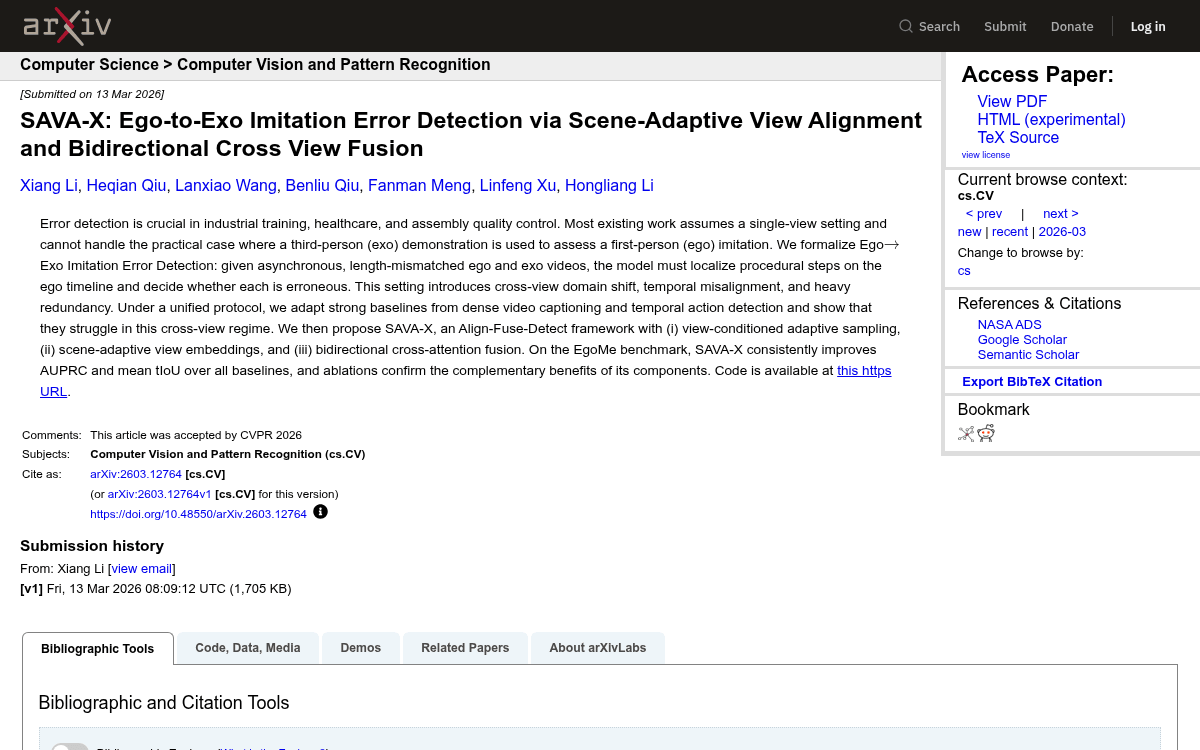
A new framework tackles procedural error detection when a first-person video must be judged against an unaligned third-person demo, beating strong baselines on EgoMe.
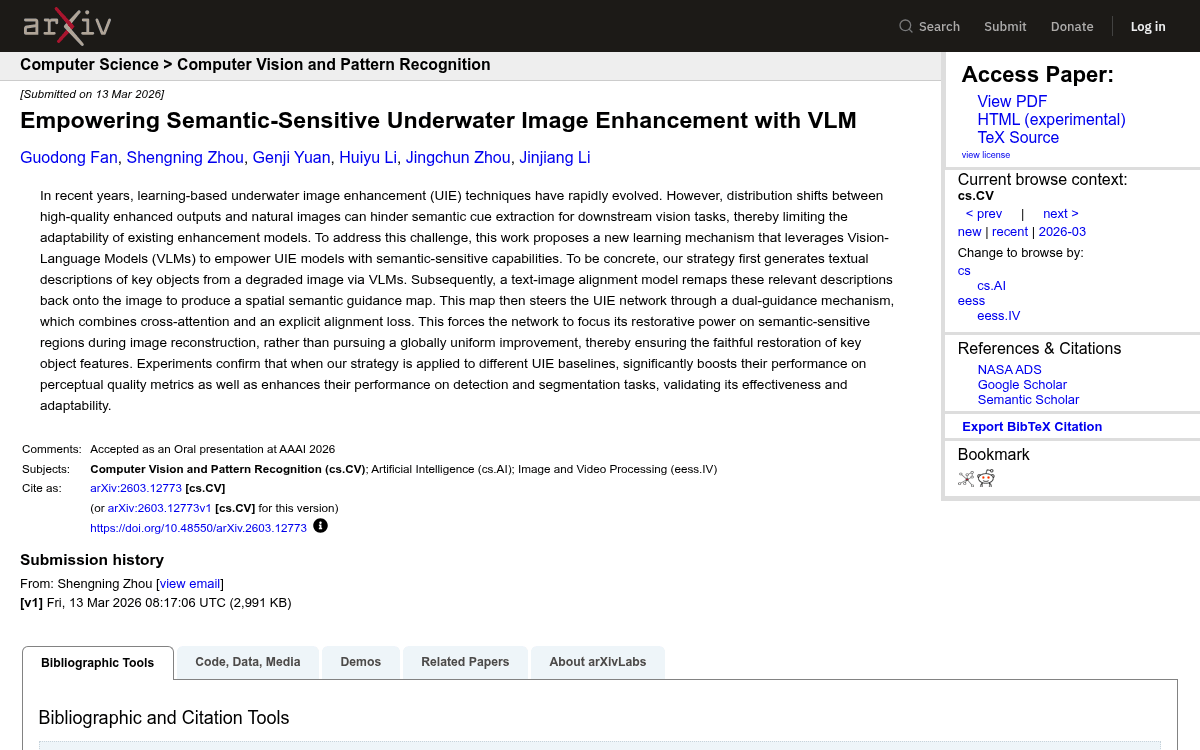
A new plug-in strategy uses vision-language models to tell underwater enhancement networks which pixels actually matter for detection and segmentation.