
Pro
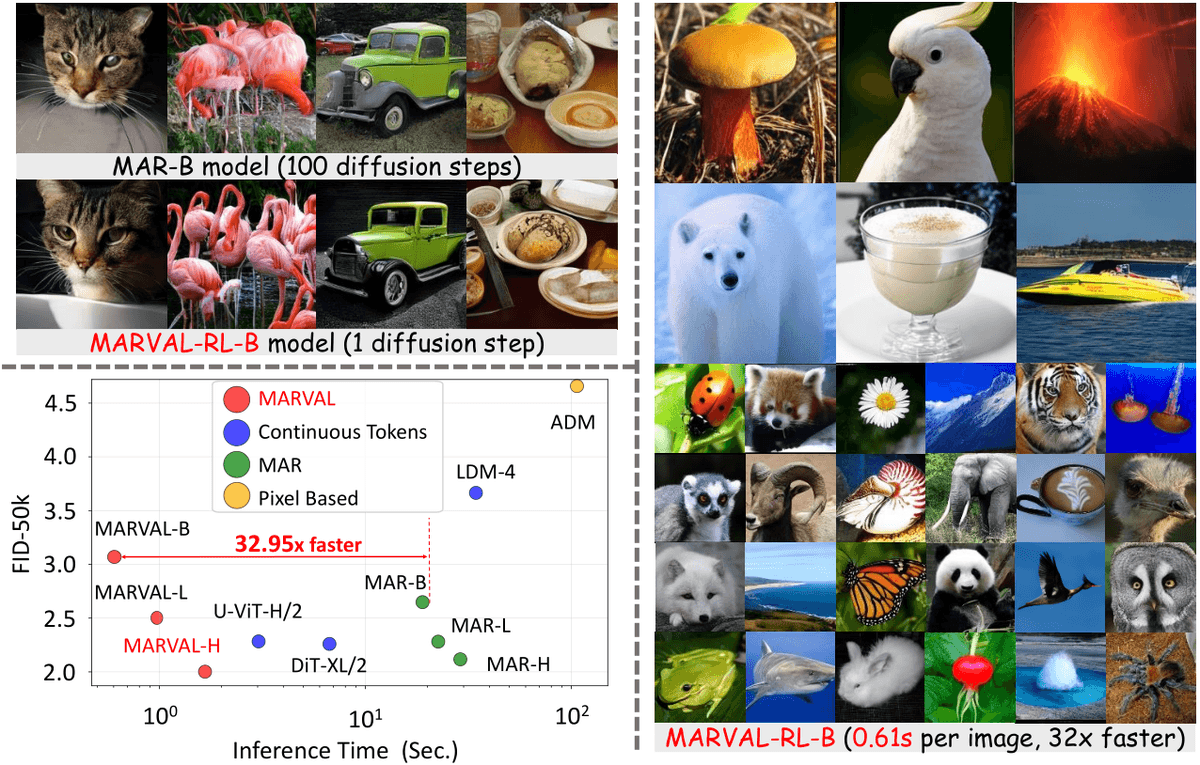
MARVAL Makes Image AI 33x Faster and Finally Unlocks Human Preference Training
A new distillation method collapses masked auto-regressive diffusion into a single step, delivering 30x speedups and making RL fine-tuning finally practical.
20 stories
A new distillation method collapses masked auto-regressive diffusion into a single step, delivering 30x speedups and making RL fine-tuning finally practical.
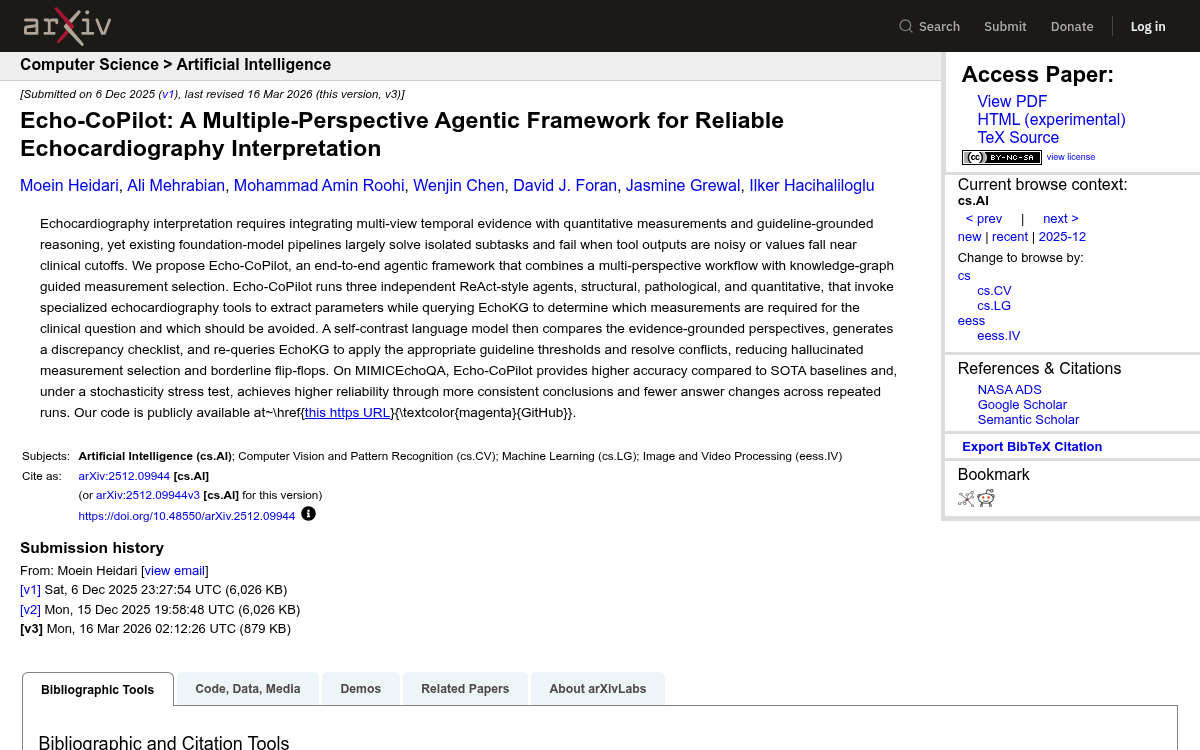
A new research paper proposes a three-agent system that grounds echocardiography interpretation in clinical guideline graphs, cutting hallucinations near decision cutoffs.
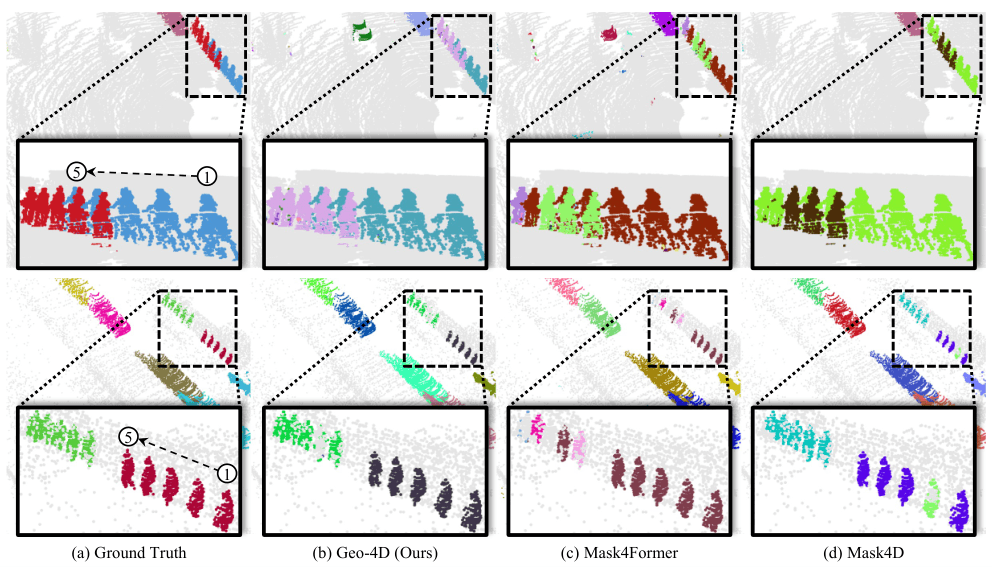
A new training-free pipeline for 4D LiDAR panoptic segmentation tops the SemanticKITTI leaderboard while cutting memory use and runtime dramatically.
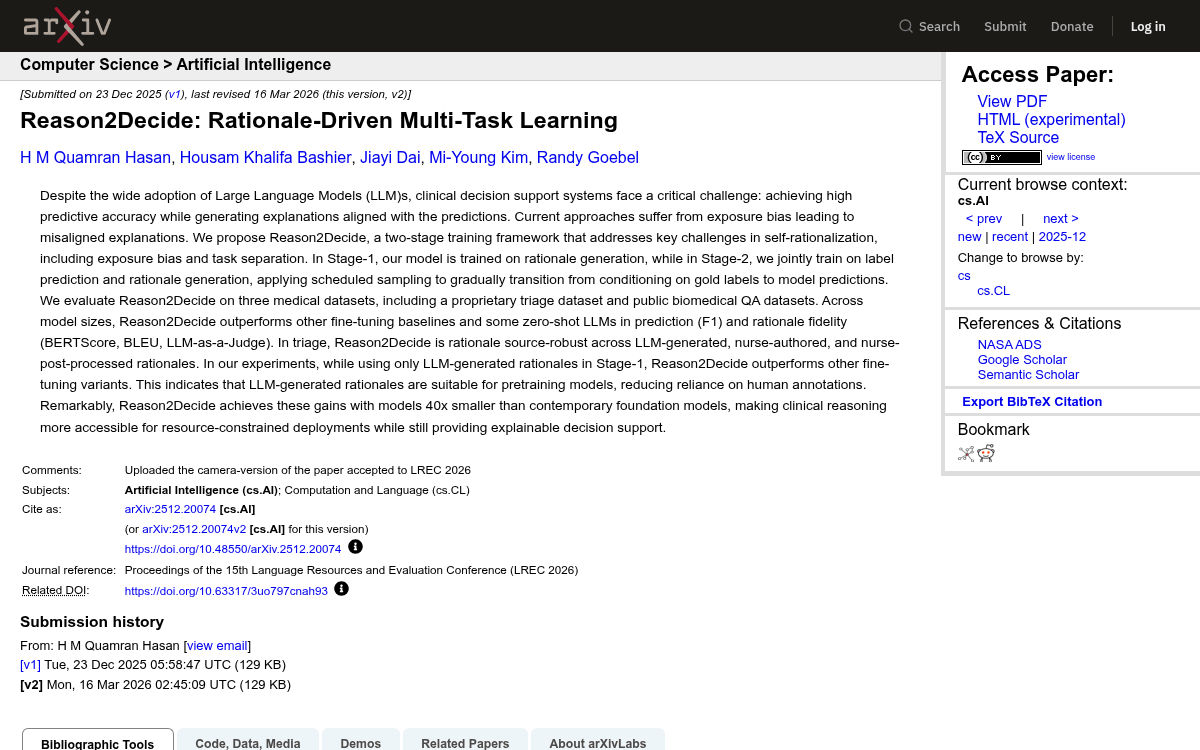
A two-stage training recipe teaches small T5 models to explain their own clinical predictions, beating Qwen-3-32B on medical benchmarks with 40x fewer parameters.
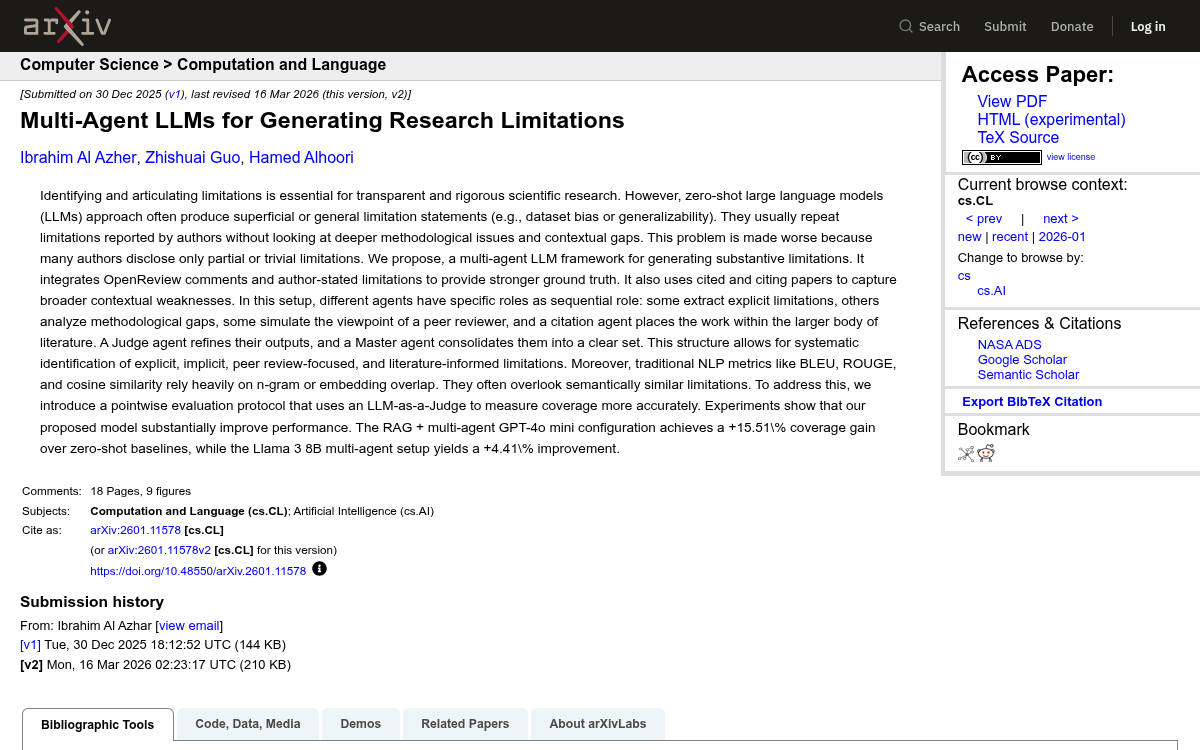
A multi-agent LLM pipeline extracts, infers, and cross-checks scientific paper limitations, boosting ground-truth coverage by up to 15.51 percent over zero-shot prompting.
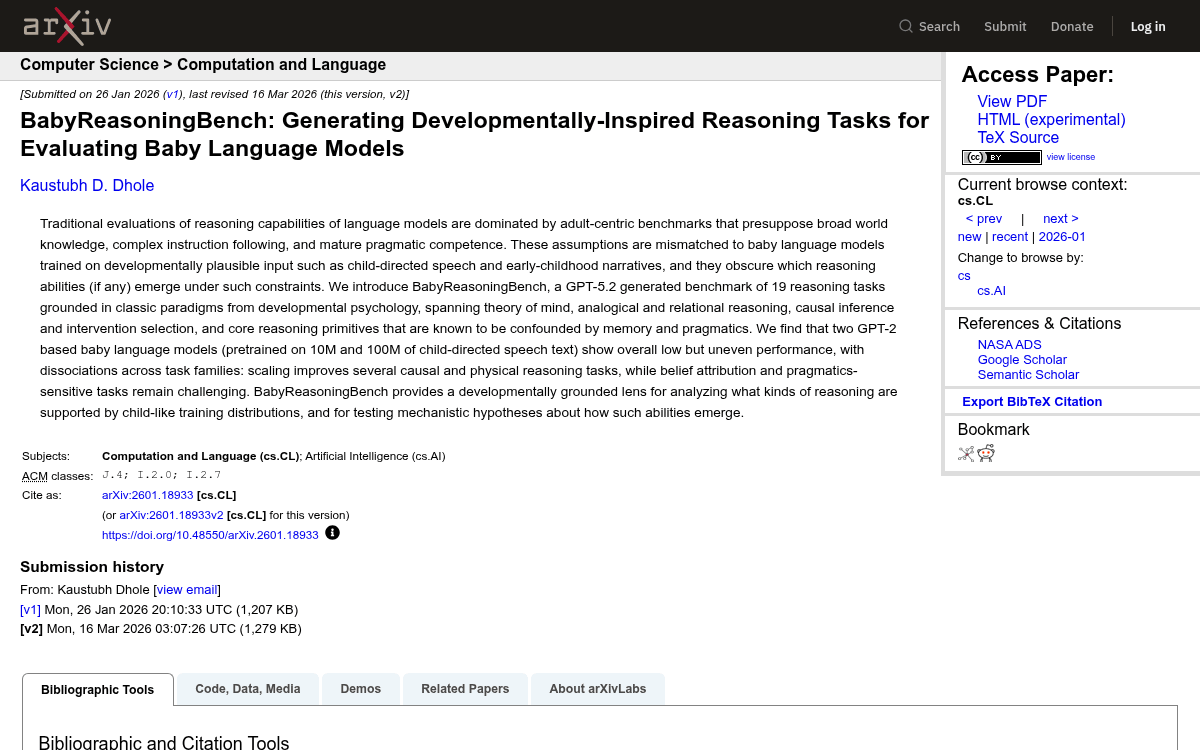
A new benchmark borrows 19 tasks from developmental psychology to test what reasoning actually emerges in tiny models trained on child-directed speech.

A rubric-based audit finds LLM essays outscore Korean student essays by 18 points, but the gap is driven by formal features while students still lead on creativity.
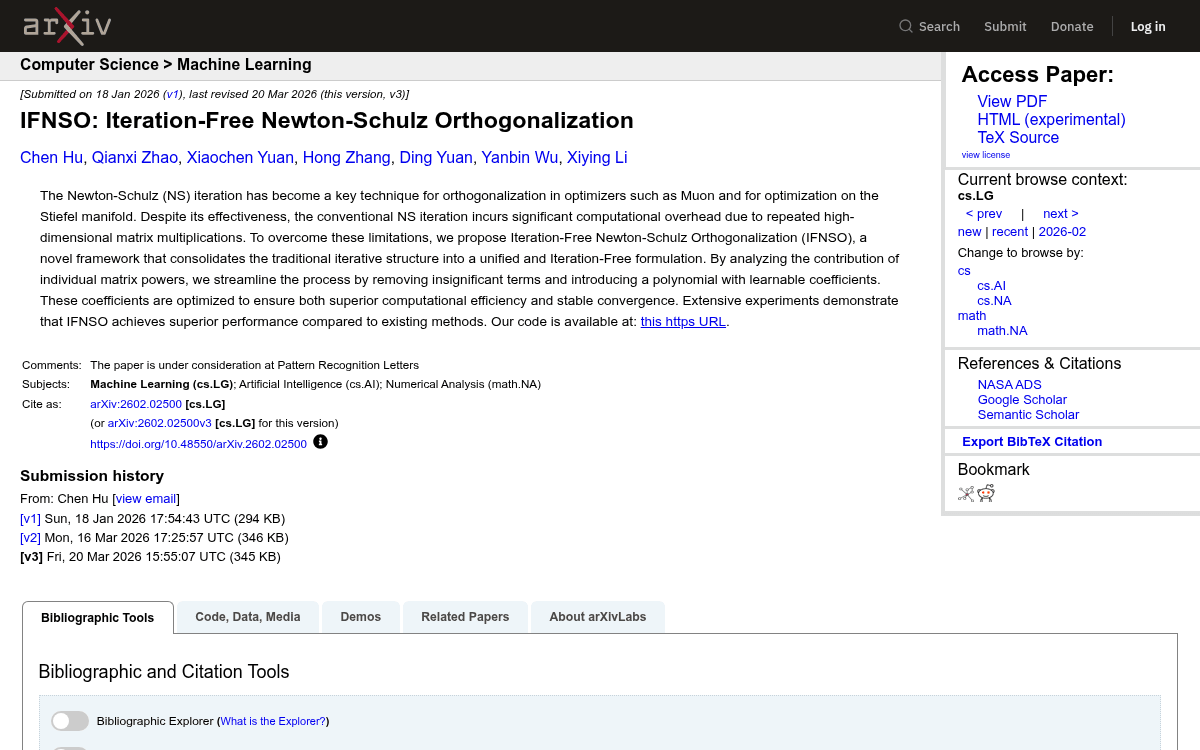
A new formulation replaces the iterative loop inside Muon's orthogonalization step with a single learned polynomial, cutting FLOPs by up to 4x on wide matrices.
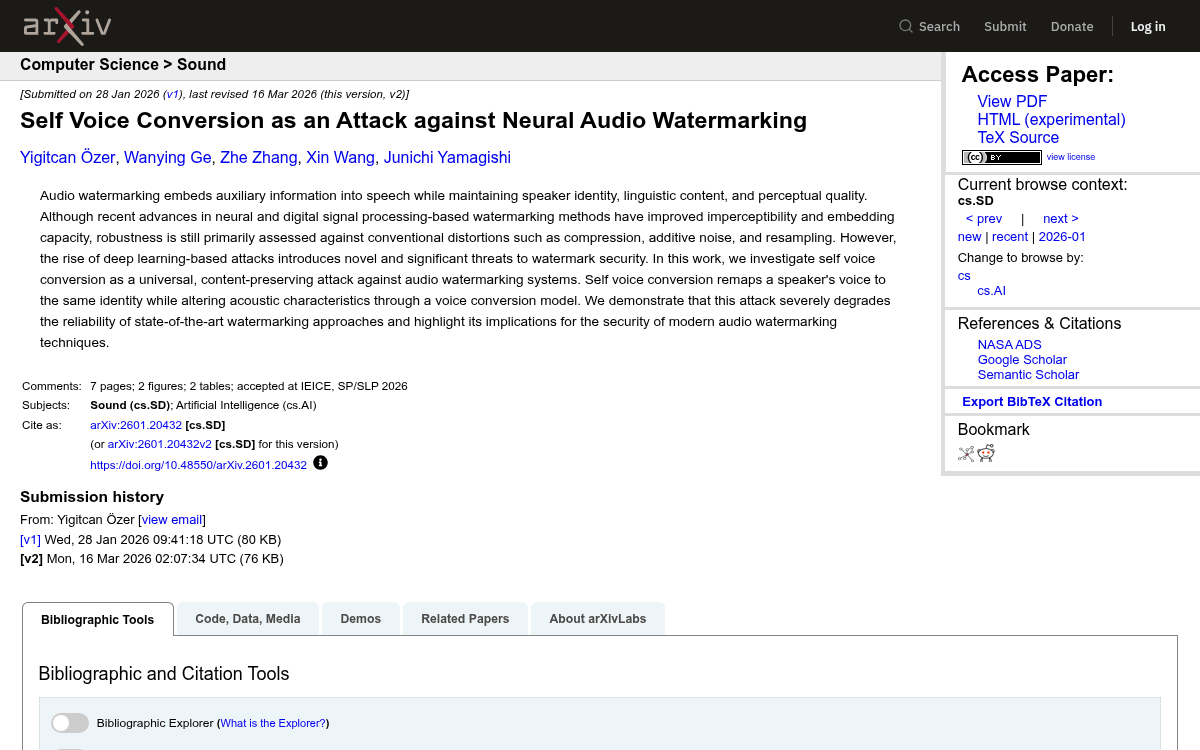
A new study shows that running watermarked speech through a voice conversion model that keeps the same speaker identity silently strips embedded watermarks from every major system tested.
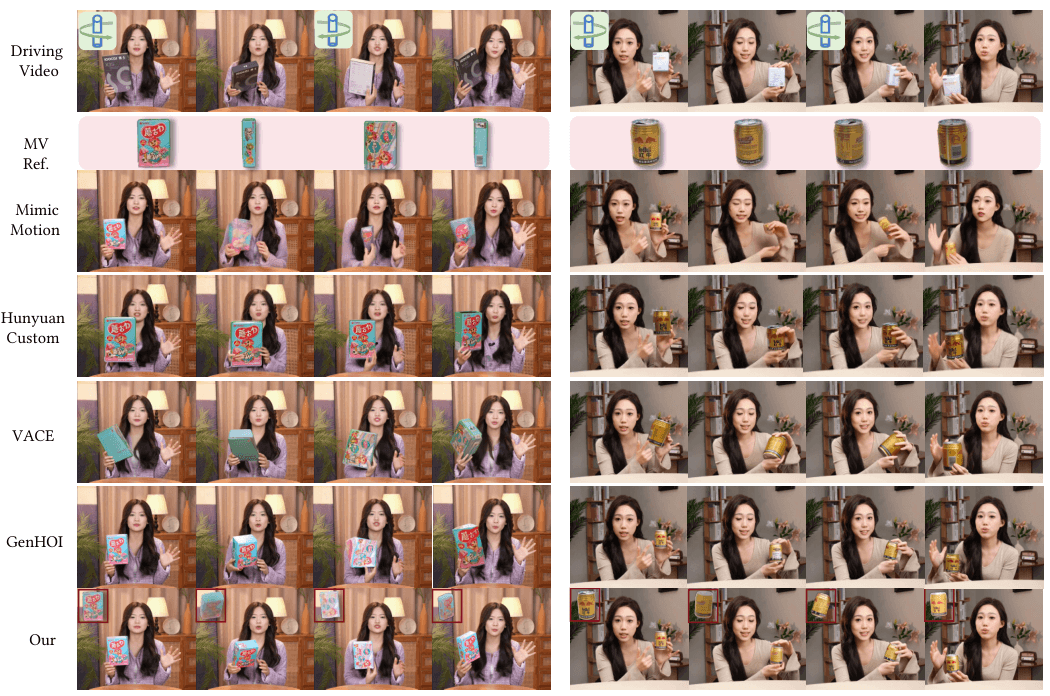
MVHOI uses a 3D foundation model to swap objects into videos while preserving realistic hand-object dynamics under complex rotations and occlusions.
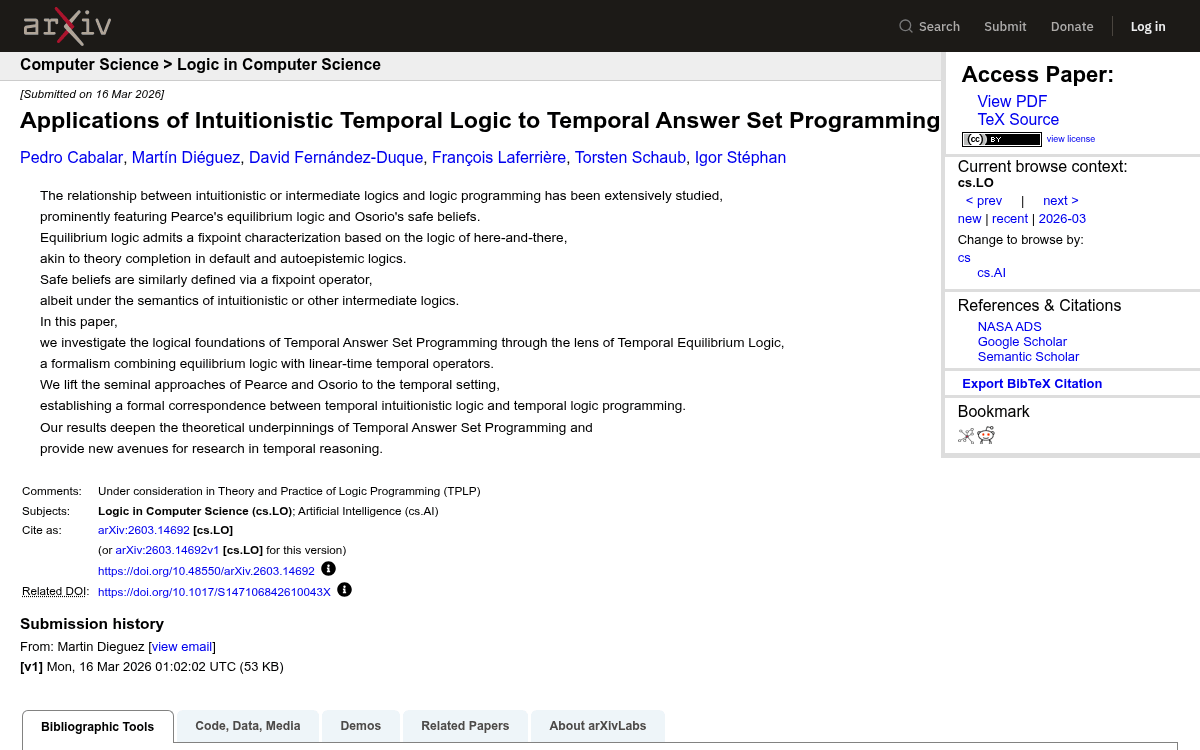
Researchers extend two classic fixpoint definitions of stable models into linear time, giving temporal answer set programming a firmer logical footing.
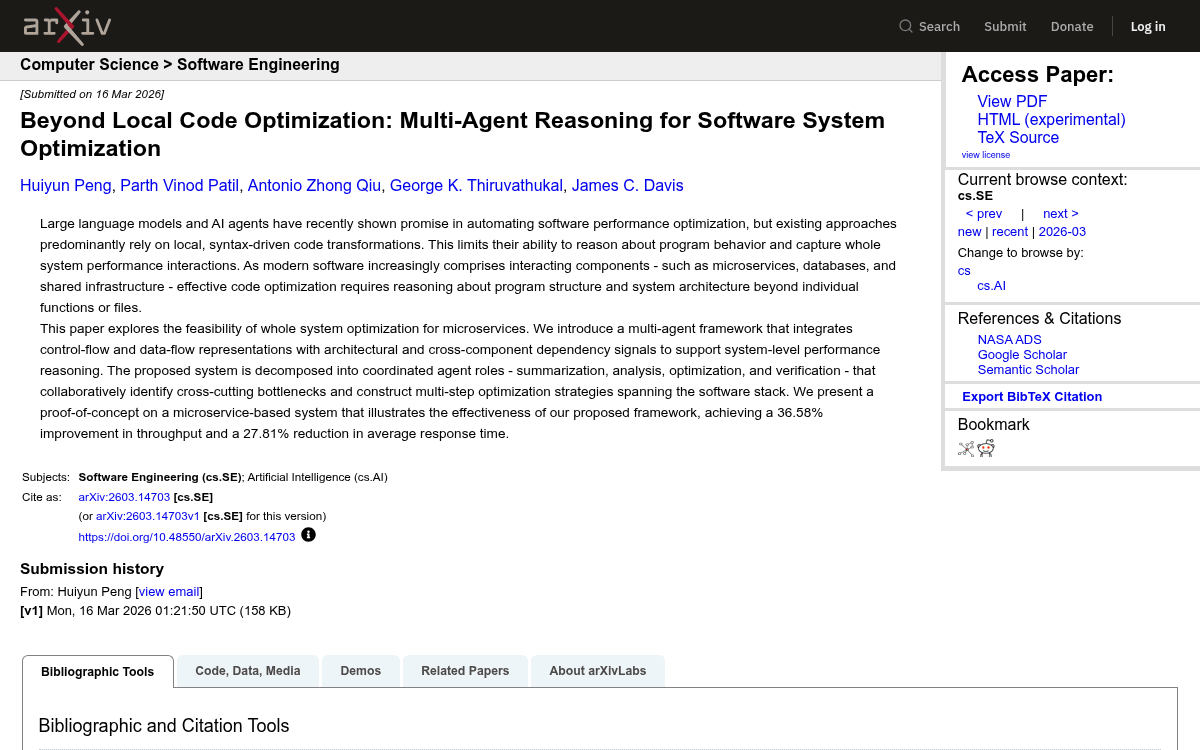
A four-agent pipeline reasons across microservice boundaries using static analysis, hitting 36% throughput gains on a Java retail benchmark for about a dollar per run.
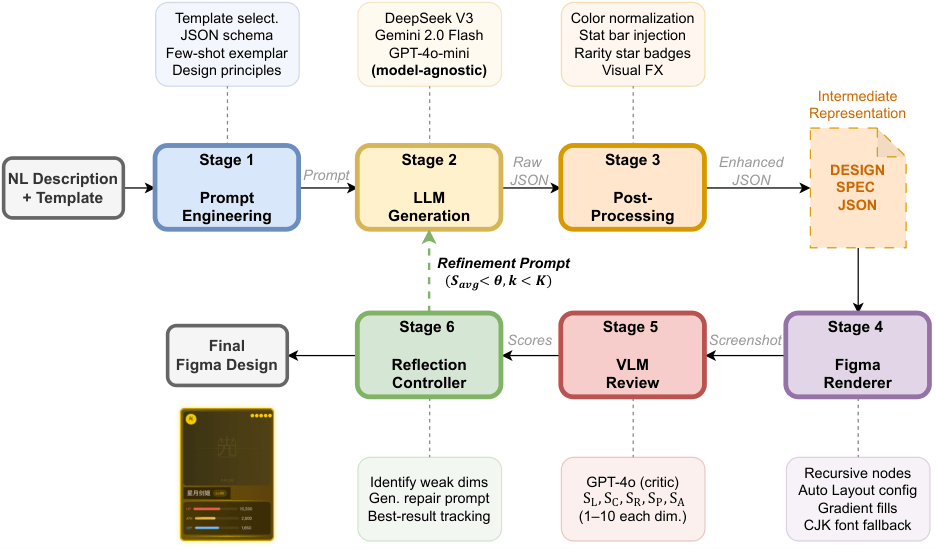
A neuro-symbolic pipeline turns text prompts into editable Figma game cards, exposing a quality ceiling that limits how much iterative refinement can help.
A new Mamba-based network predicts where a pedestrian will be in the next 1.5 seconds from a moving dashcam, beating transformer baselines with a fraction of the parameters.
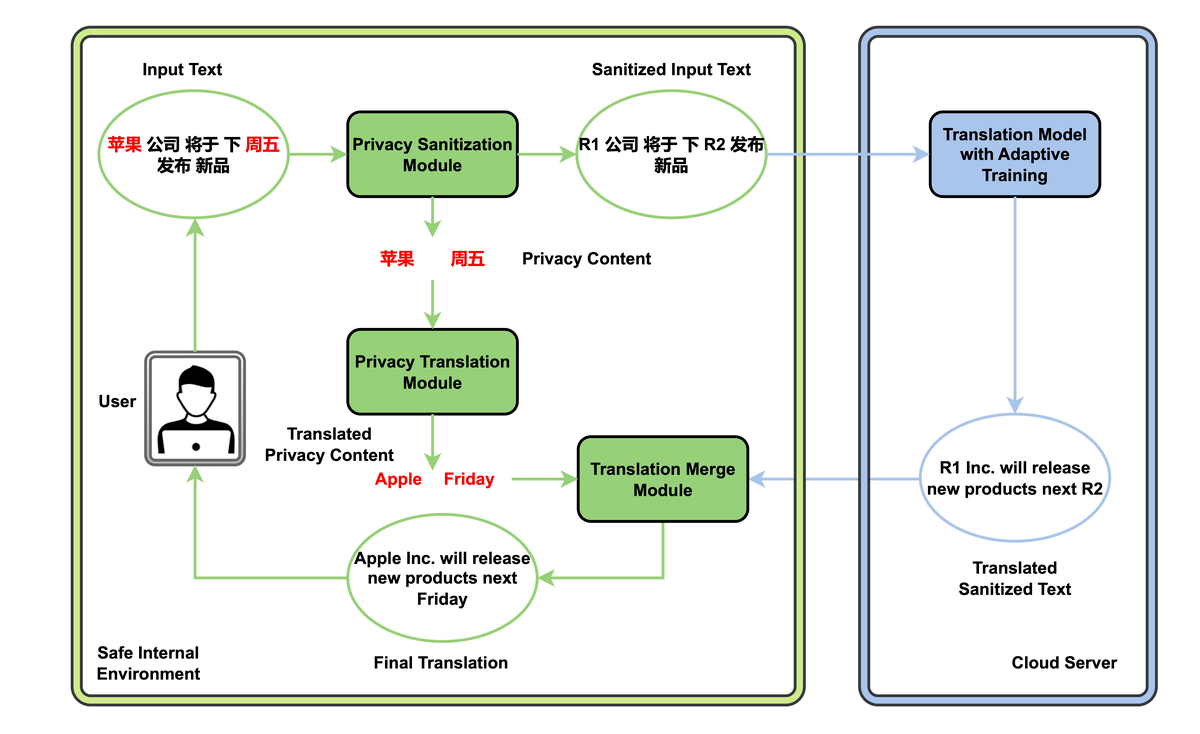
A new benchmark tackles the risk of leaking sensitive names, companies, and figures when sending text through cloud translation APIs.
A new priority-queue optimizer with semantic filtering beats GEPA and OpenEvolve at tuning agents, prompts, and CUDA kernels under noisy feedback.
A research team introduces a simulated hospital where physician and patient LLM agents interact to evolve collective clinical intelligence through practice.
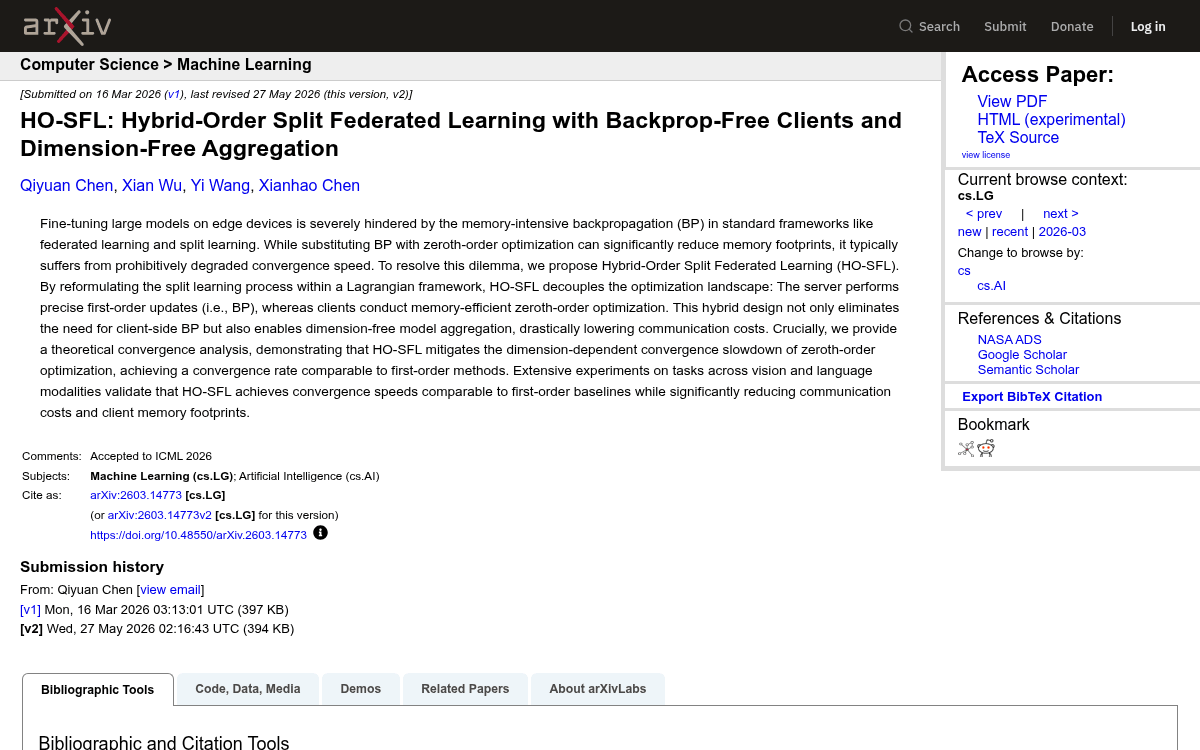
A new split learning framework lets edge clients skip backpropagation entirely while keeping first-order convergence speed and cutting network traffic to scalars.
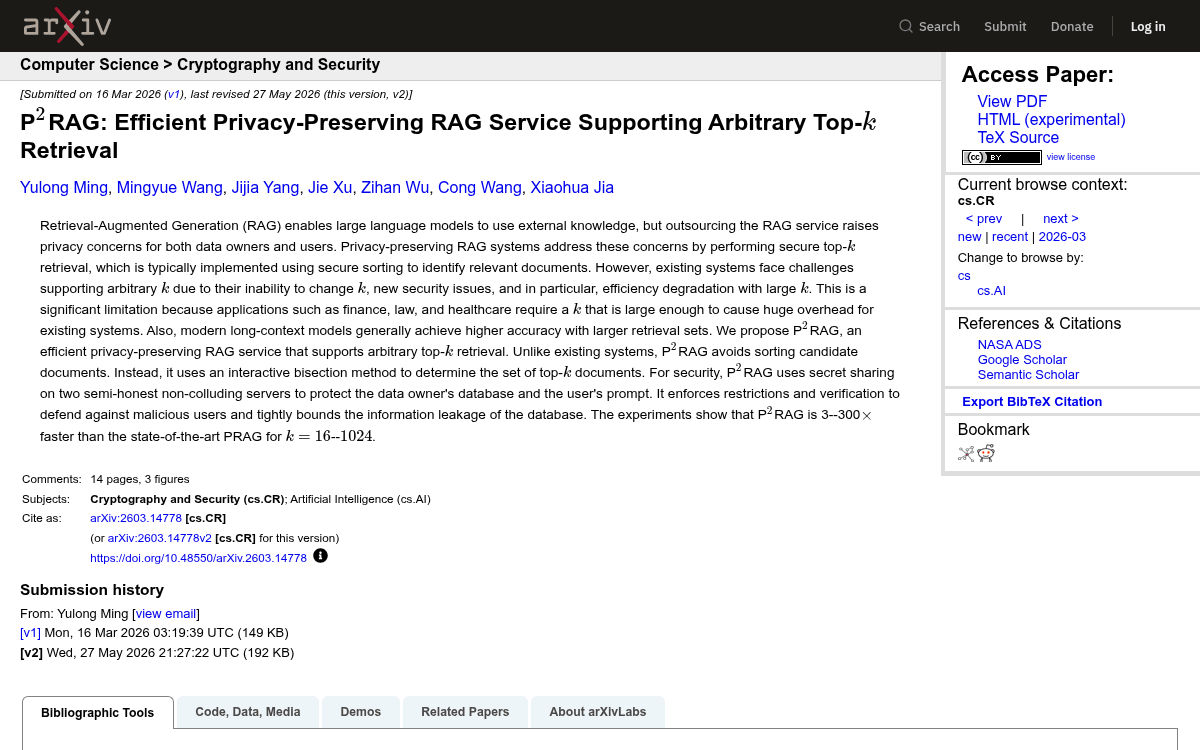
A new privacy-preserving RAG protocol replaces secure sorting with interactive bisection, cutting retrieval time by up to 300x for large k values.
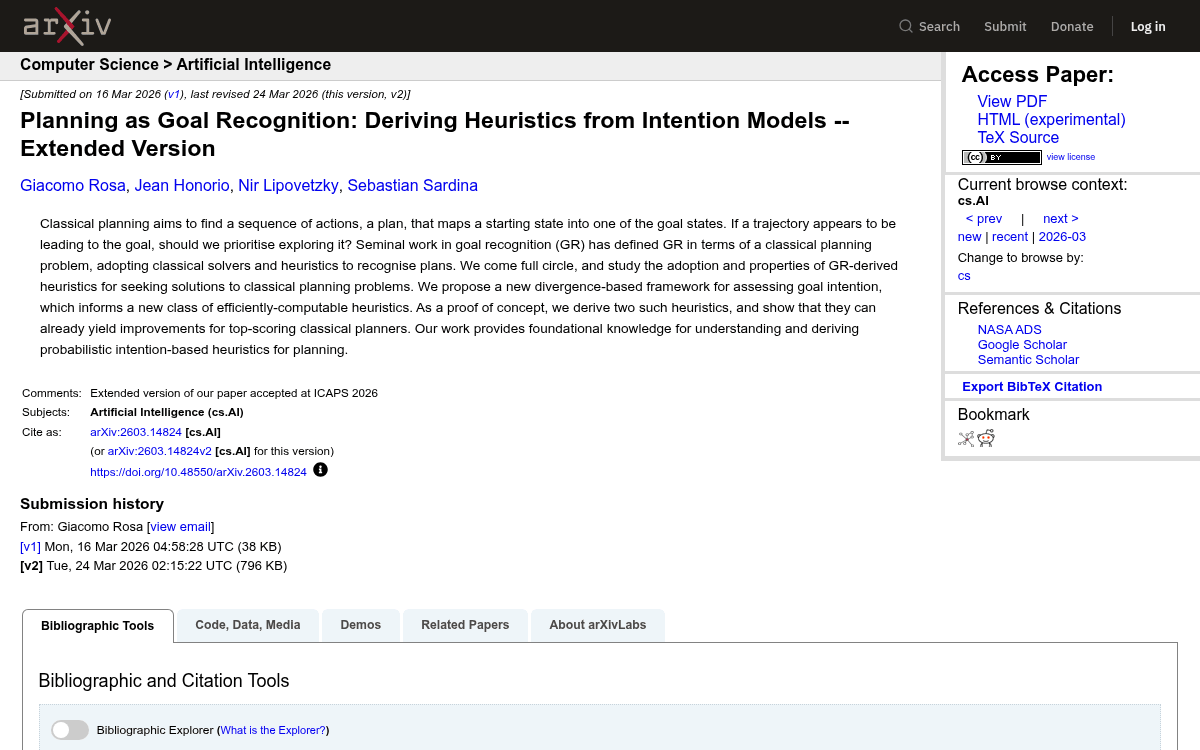
A new class of planning heuristics judges whether a trajectory looks intentional toward the goal, beating state-of-the-art classical planners on IPC benchmarks.