
Pro
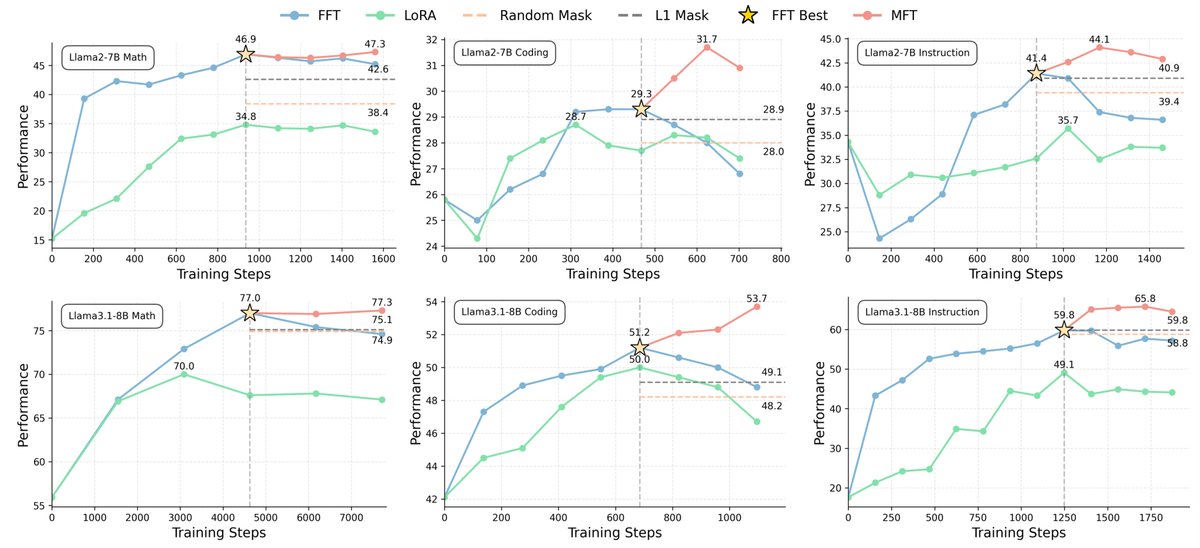
Northeastern Researchers Show Deleting 10% of Weights Beats Full Fine-Tuning
A new post fine-tuning method learns binary masks on frozen LLM weights, squeezing extra performance from already-tuned models without updating a single parameter.
20 stories
A new post fine-tuning method learns binary masks on frozen LLM weights, squeezing extra performance from already-tuned models without updating a single parameter.
A new polynomial-time algorithm prunes dominated actions directly on the game tree, shrinking real poker games by over 50% before Nash solvers run.
QLLM replaces trained mixing networks in multi-agent RL with LLM-generated code, cutting parameters up to 37 percent while boosting interpretability.
NVIDIA and CMU show that mixing law, science and humanities data into reinforcement learning makes reasoning models sharper across the board and 28% more concise.
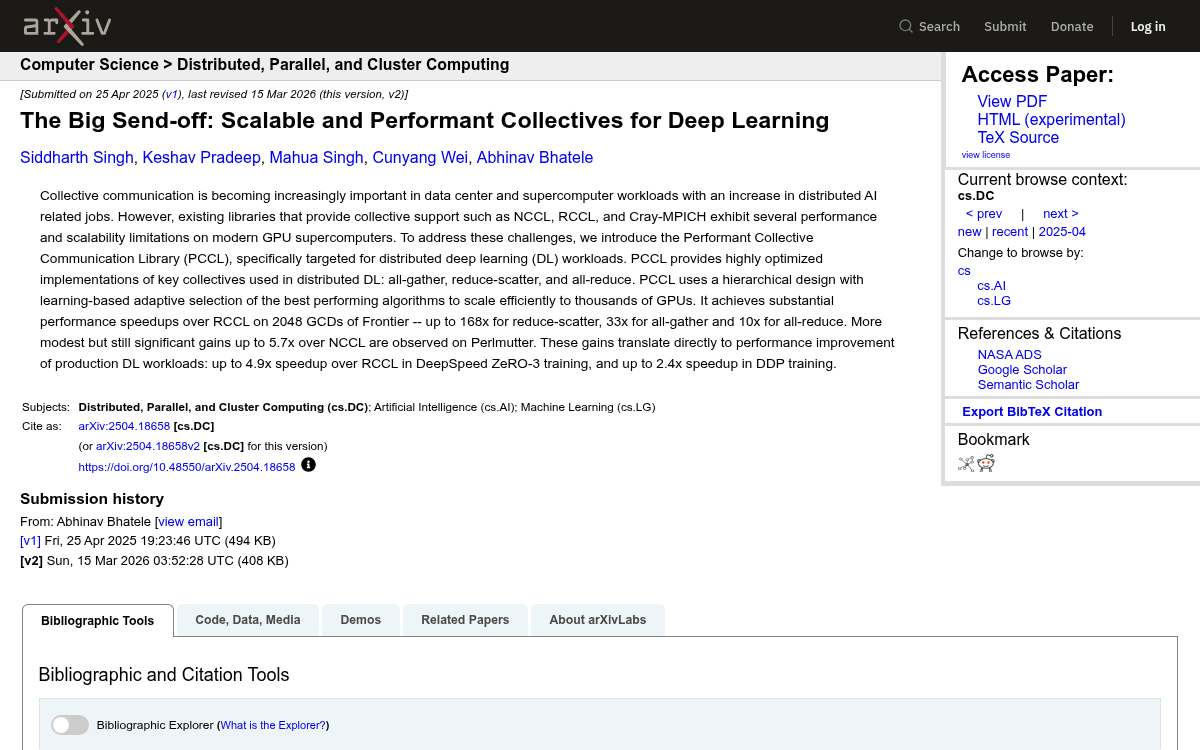
A new University of Maryland library rewrites GPU collectives from the ground up, delivering up to 168x speedups over RCCL at 2048 GPUs.
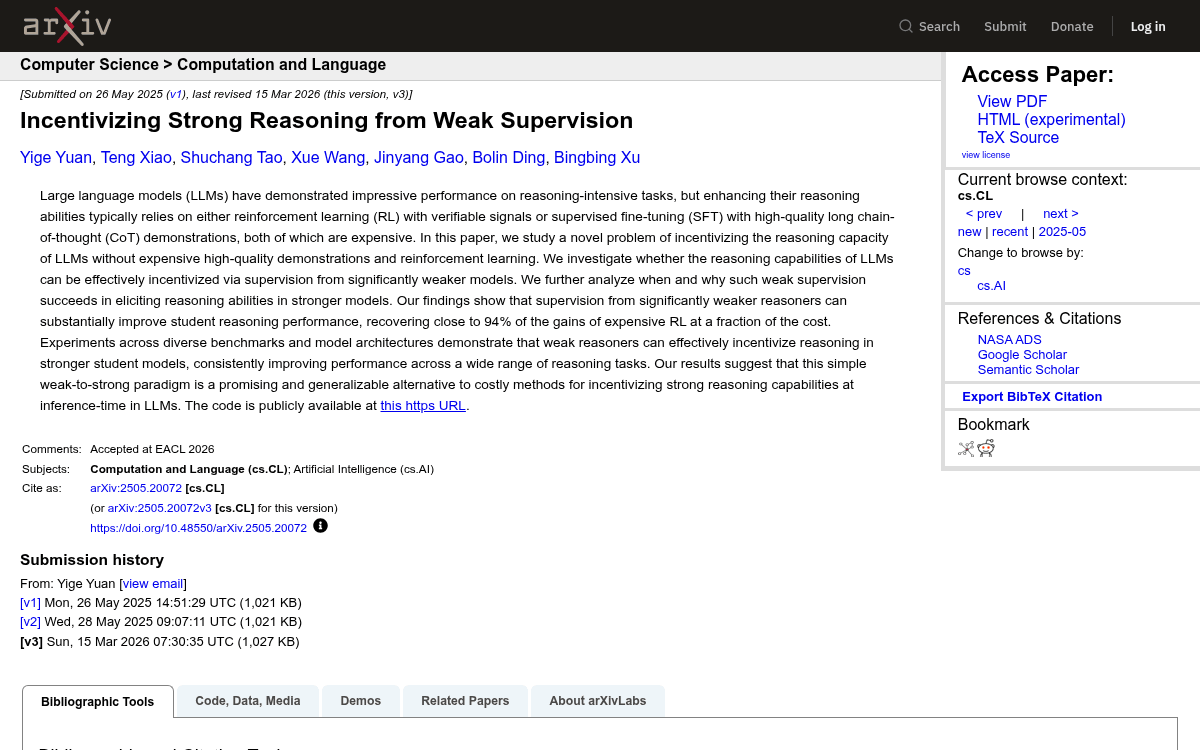
A new fine-tuning recipe shows tiny models can teach much larger ones to reason, recovering 94% of reinforcement learning's gains for a fraction of the cost.
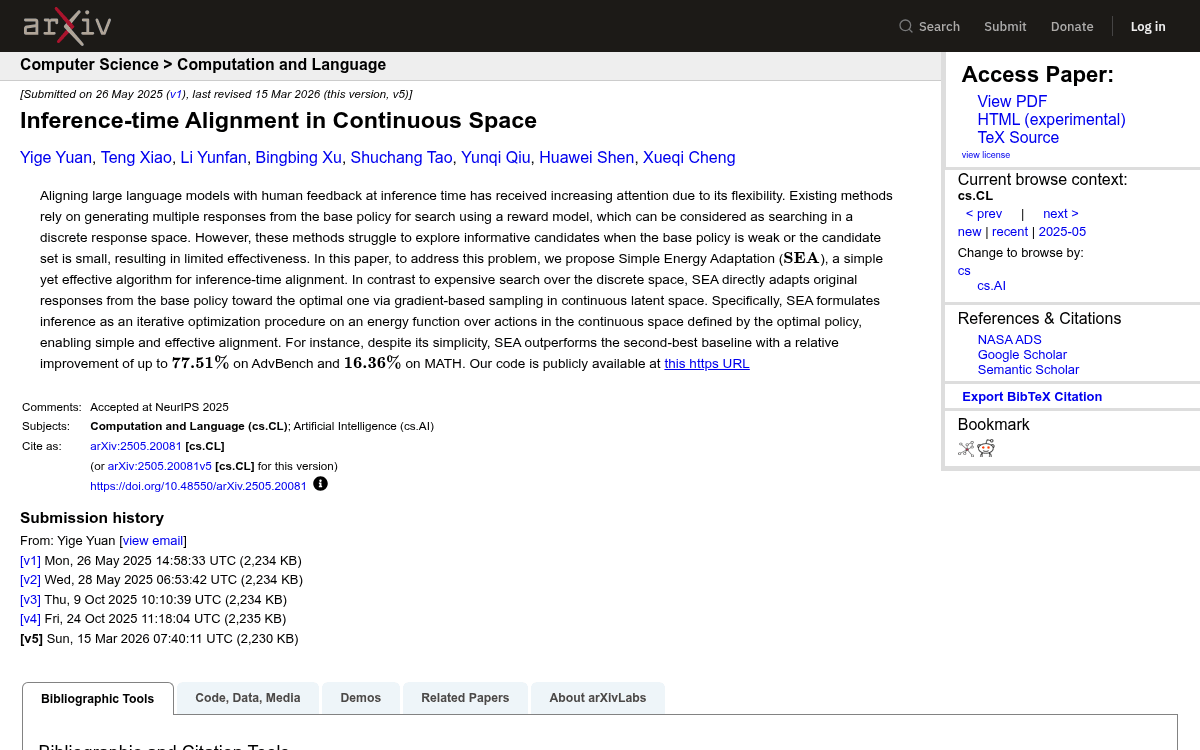
A new inference-time alignment method uses gradient descent in continuous logit space instead of sampling, beating Best-of-64 with fewer computations.
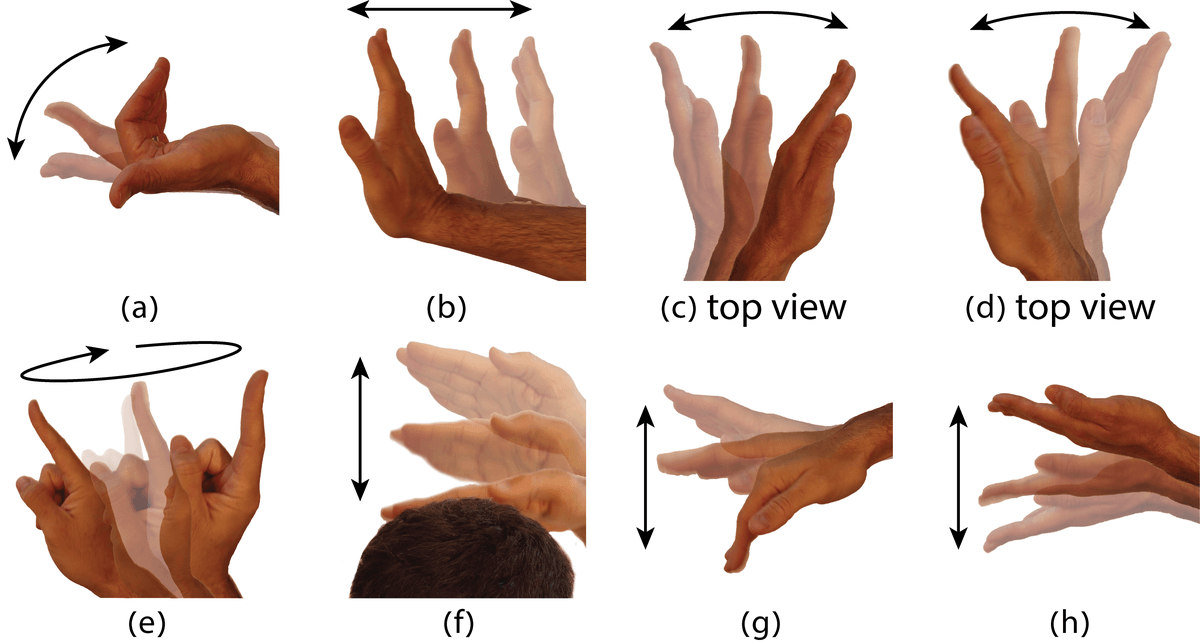
Researchers built the first gesture recognition system that reliably reads dynamic hand signals from up to 30 meters away using only a standard RGB camera.

Alibaba DAMO's Lumos-1 shows how to fold video generation into a standard LLM using a smarter position encoding and a mask-based diffusion trick.
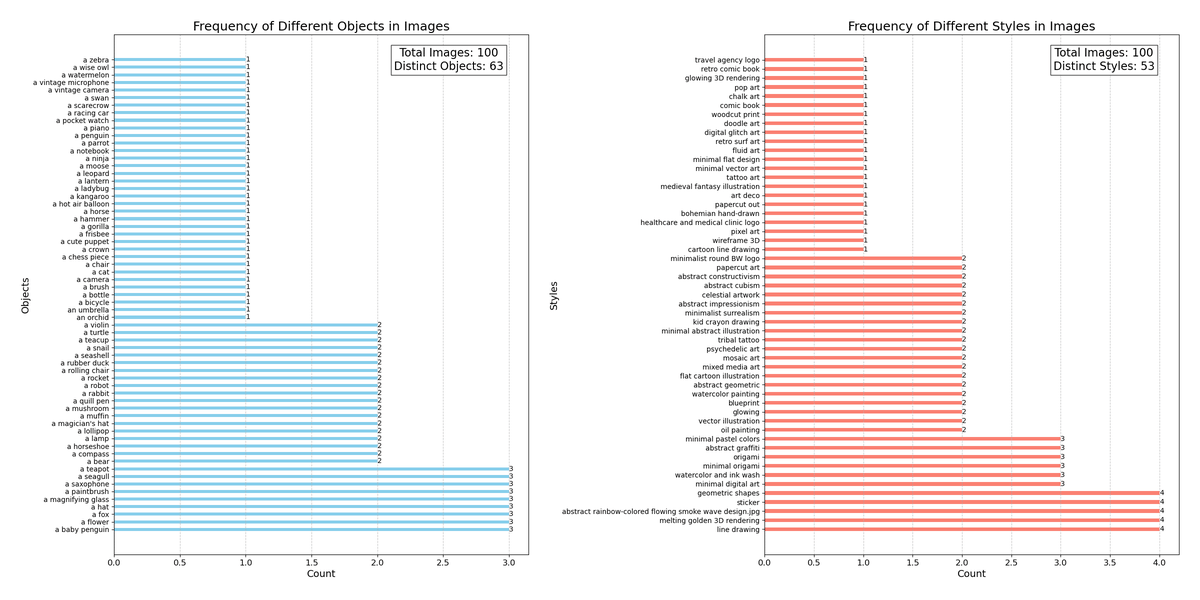
A new ICCV research paper splits a single image into reusable content and style tokens by exploiting the multi-scale structure of visual autoregressive models.
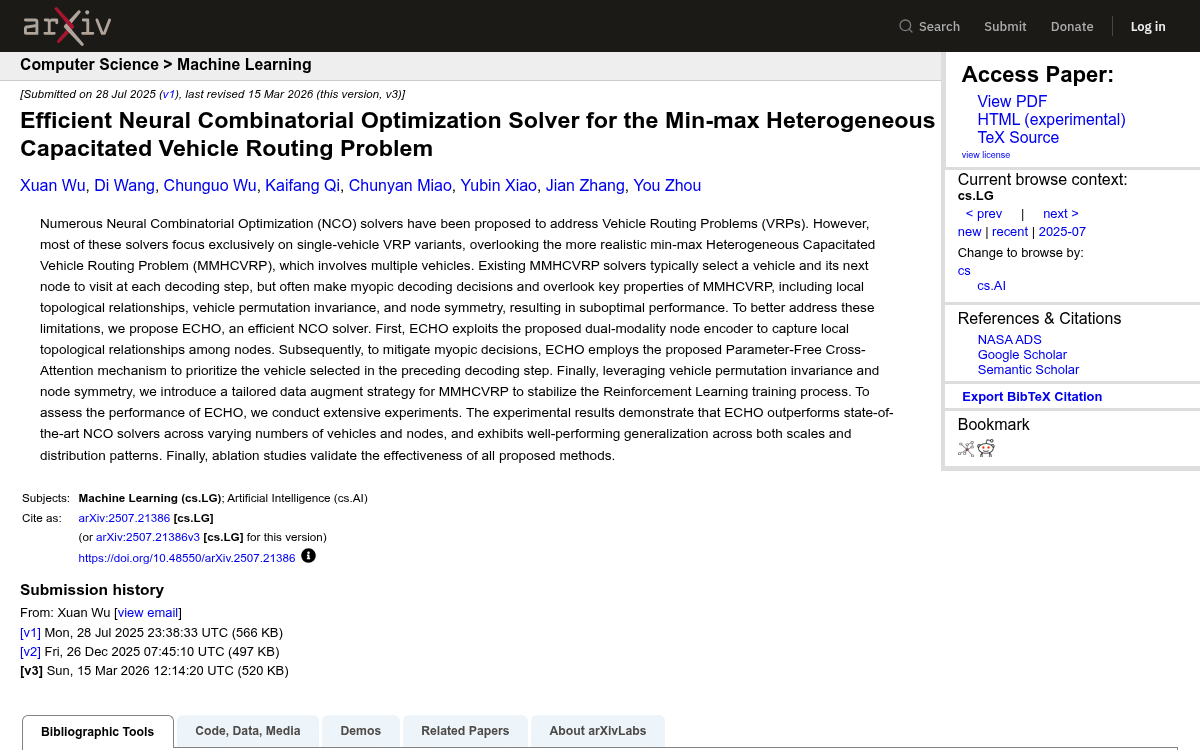
ECHO is a neural solver for min-max heterogeneous vehicle routing that beats prior state of the art by about 3% while running 100x faster than top heuristics.
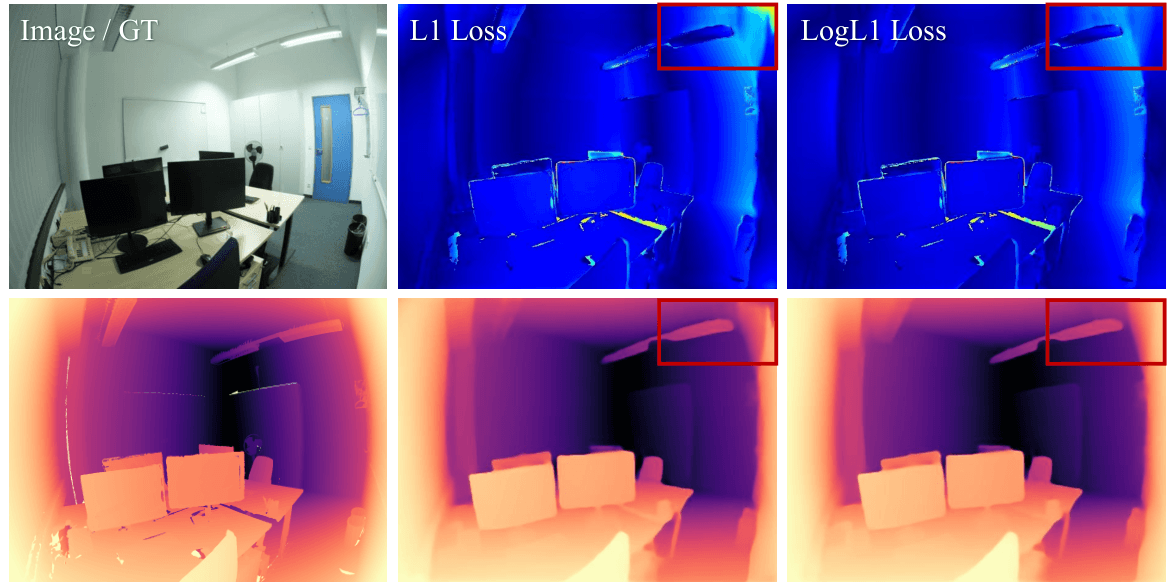
A lightweight set of trainable tokens teaches frozen depth foundation models to handle fisheye distortion without retraining, finetuning, or camera calibration at inference.
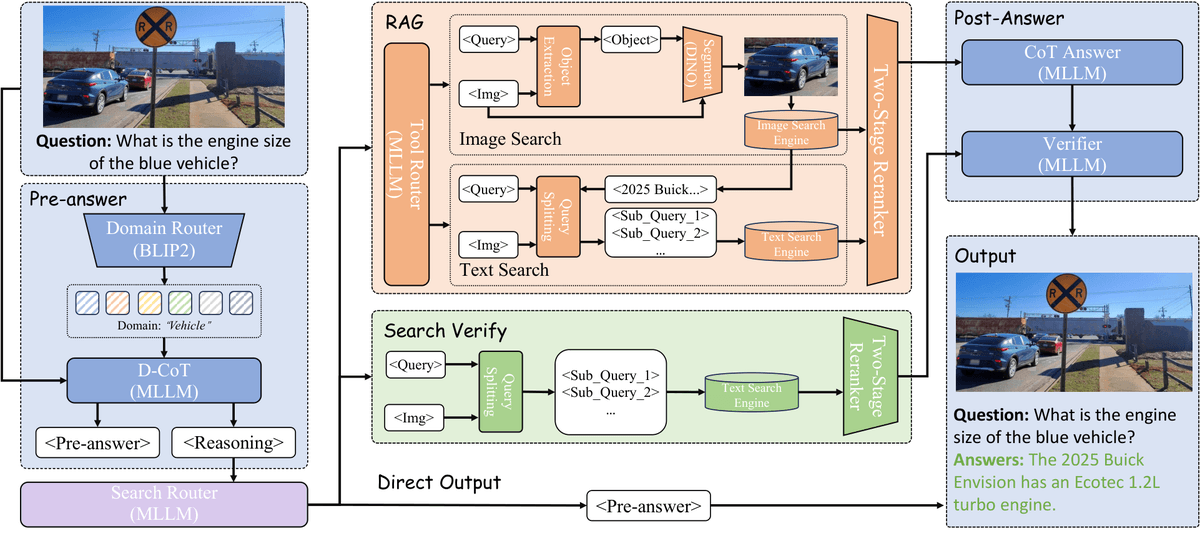
A modular RAG framework routes visual questions across text and image search agents, then reranks results in two stages to beat baselines by up to 6.35%.
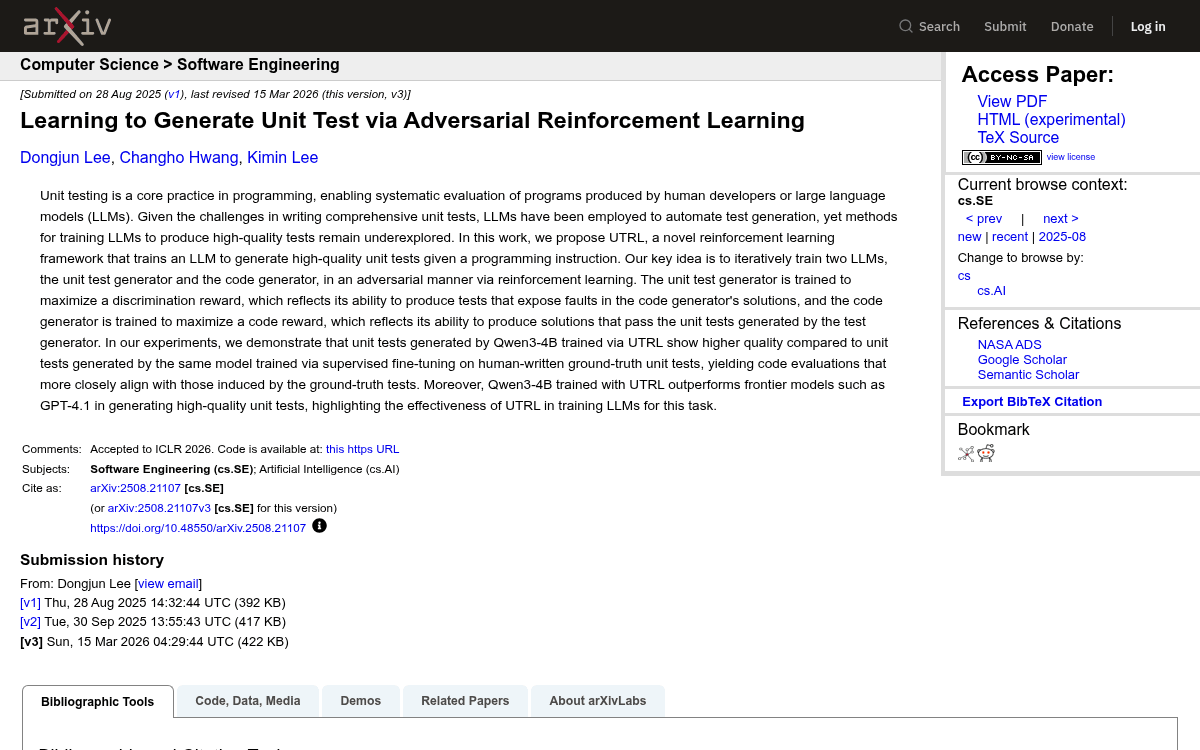
UTRL trains a unit test generator and a code generator against each other, letting a 4B model outperform GPT-4.1 on test quality without human-written test labels.
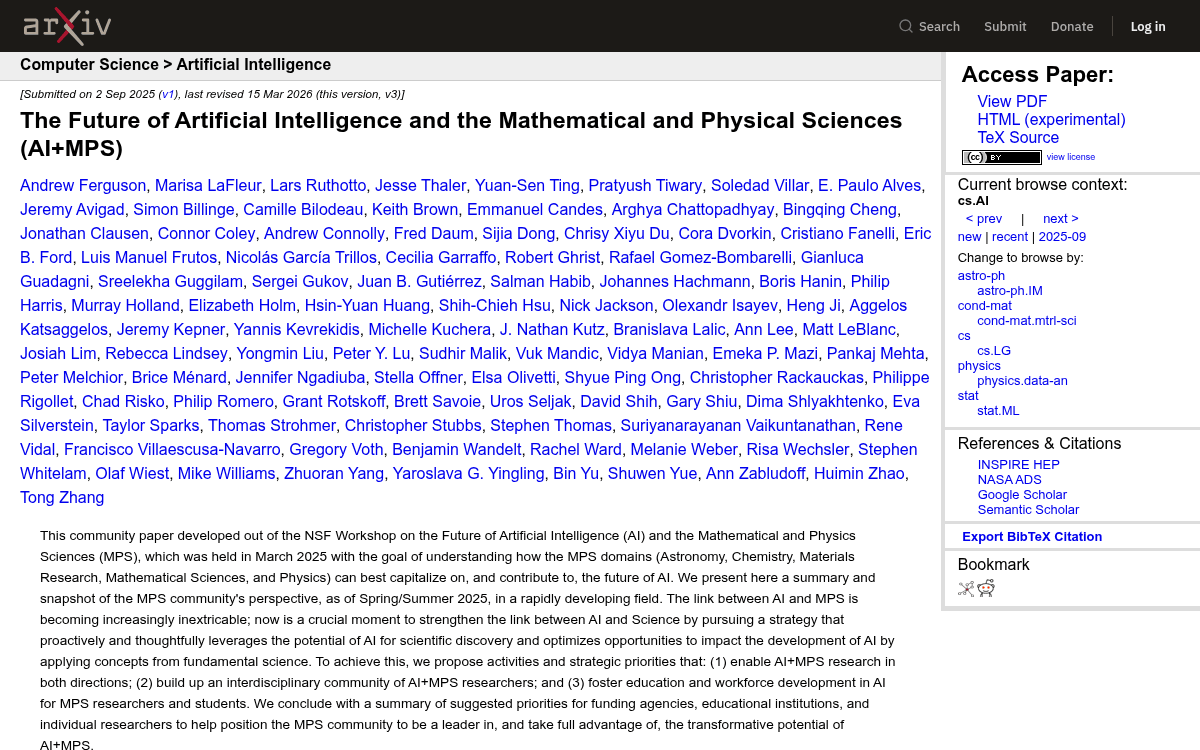
A hundred researchers across astronomy, chemistry, materials, math, and physics map out how the AI-science relationship should evolve in both directions.
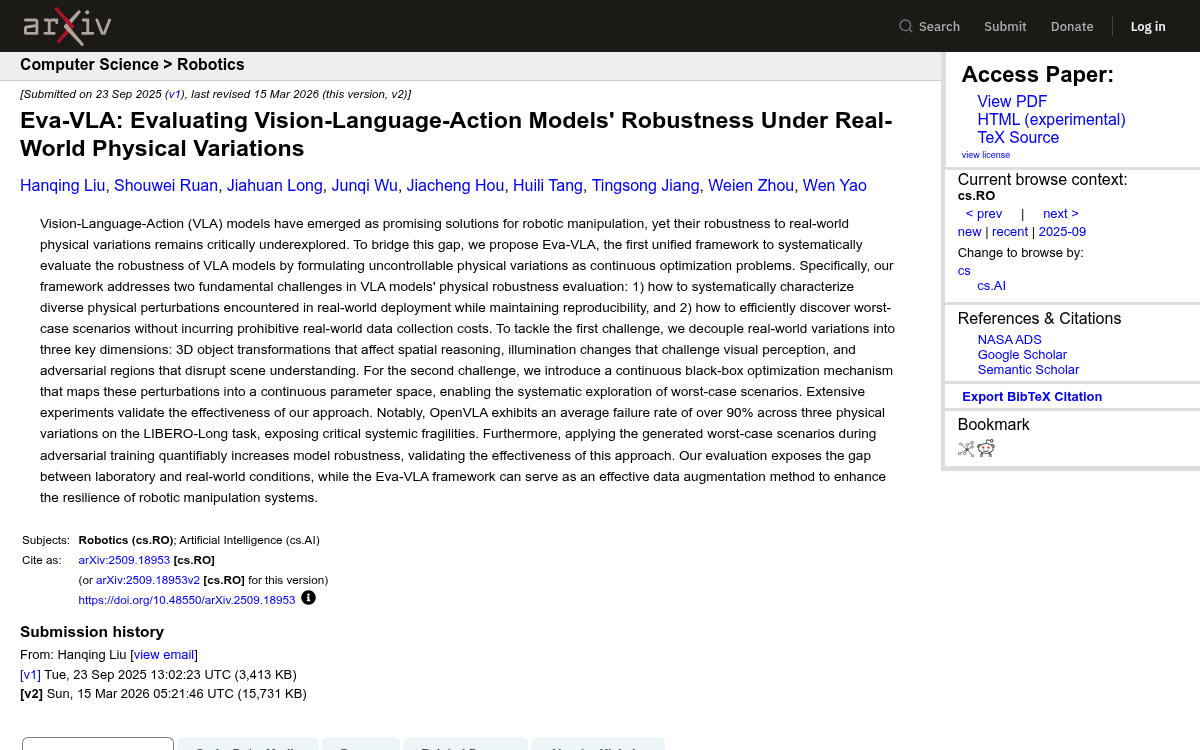
A gradient-free evaluation framework drives state-of-the-art VLA models to 90%+ failure rates by finding worst-case object poses, lighting, and background patches.
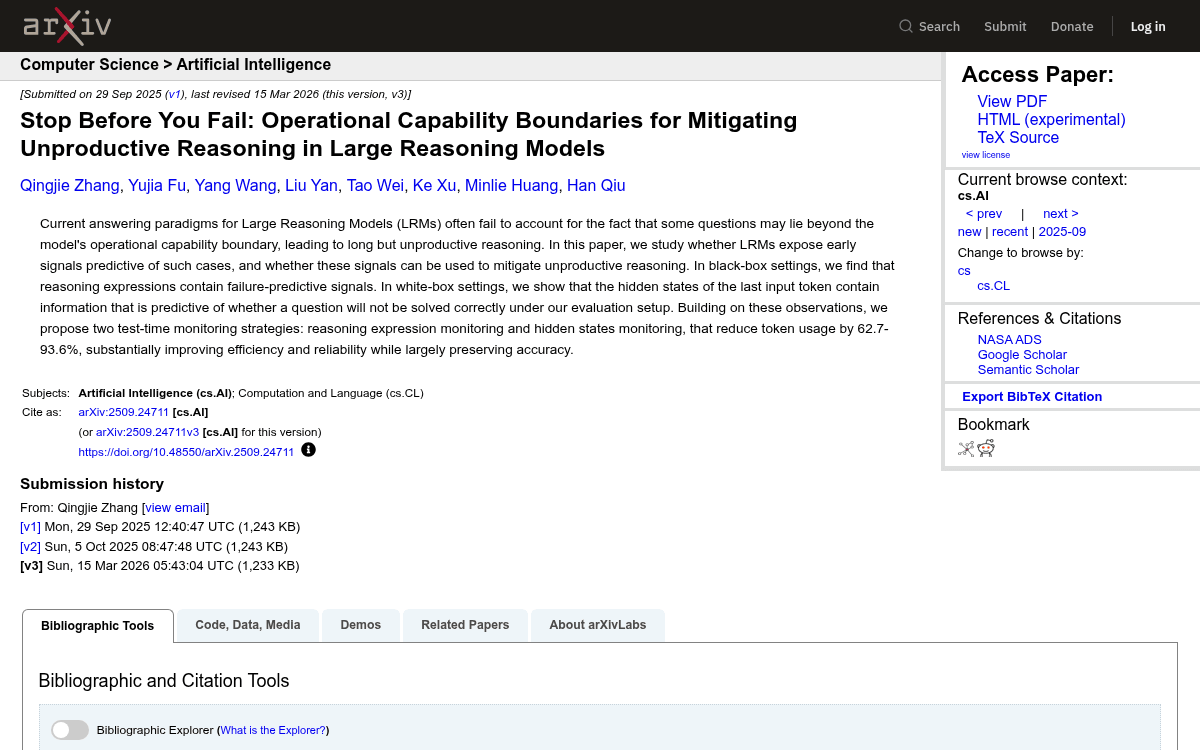
Researchers from Tsinghua and Ant Group found reasoning models leak signals of failure early, letting you stop them before wasting 60-90% of tokens.
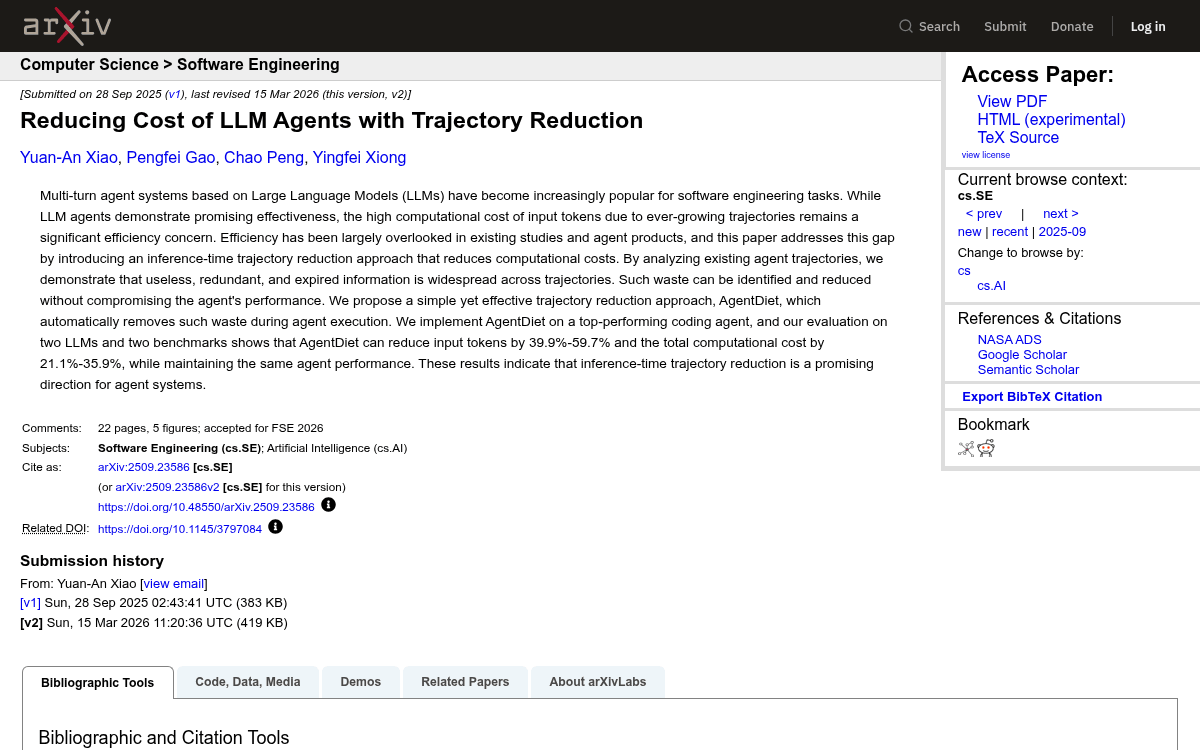
AgentDiet cuts input tokens by up to 60% and total inference cost by up to 36% on coding agents, with no drop in task success rate.
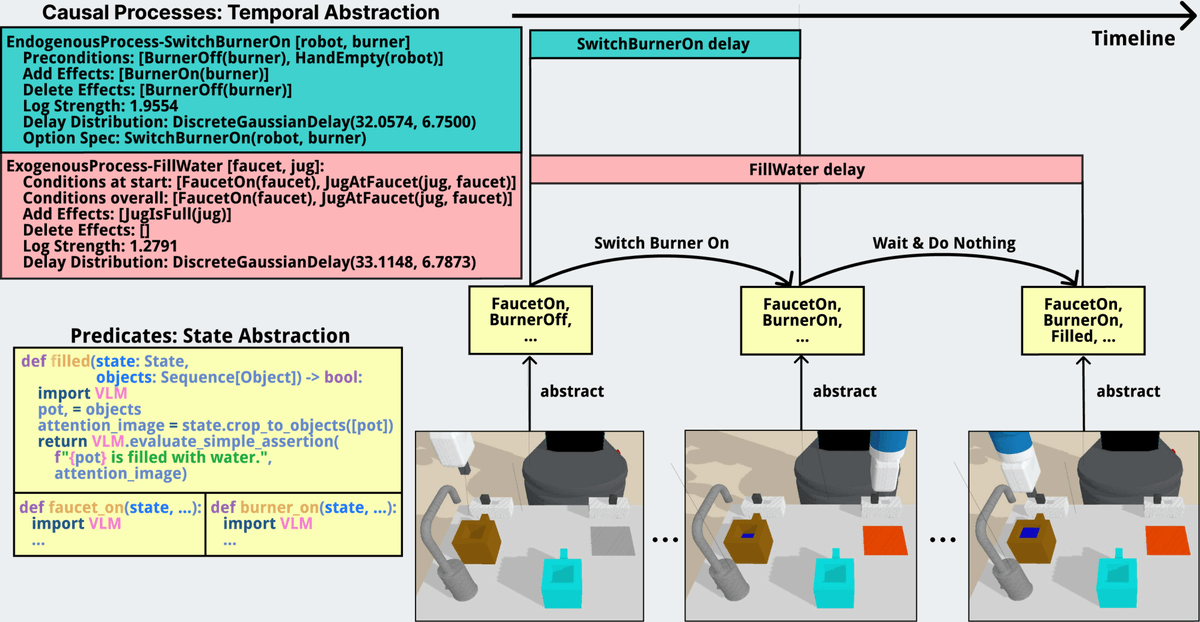
A new framework teaches robots to reason about the world's own dynamics, from boiling water to cascading dominoes, using symbolic causal processes.
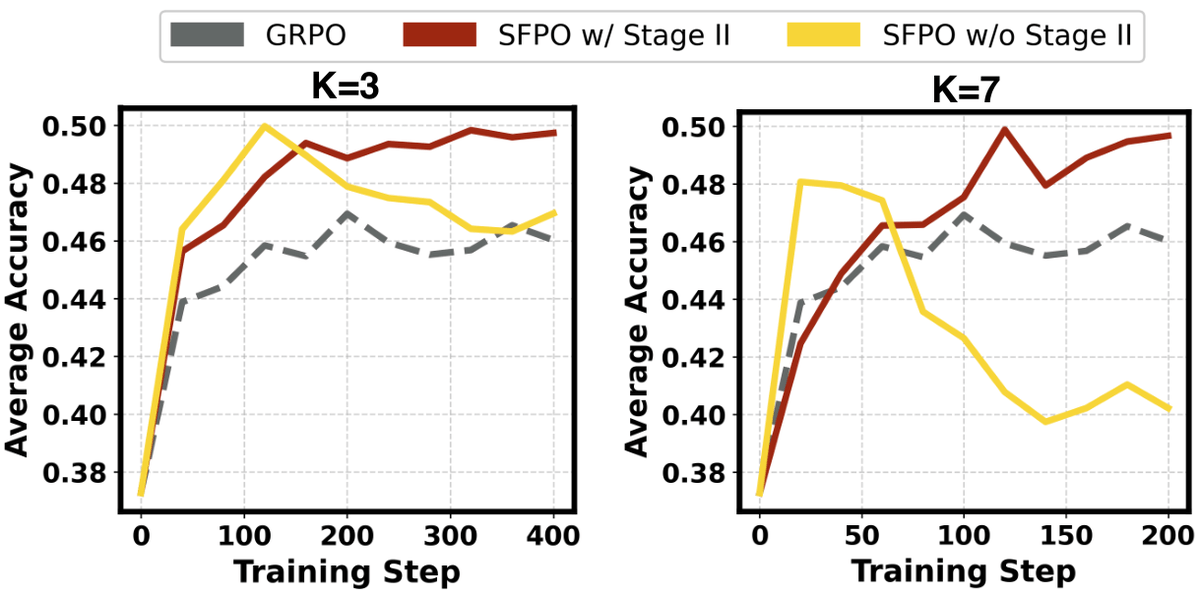
A new three-stage twist on GRPO cuts rollouts by up to 4.93x and matches best accuracy in a fraction of the wall-clock time.