
Pro
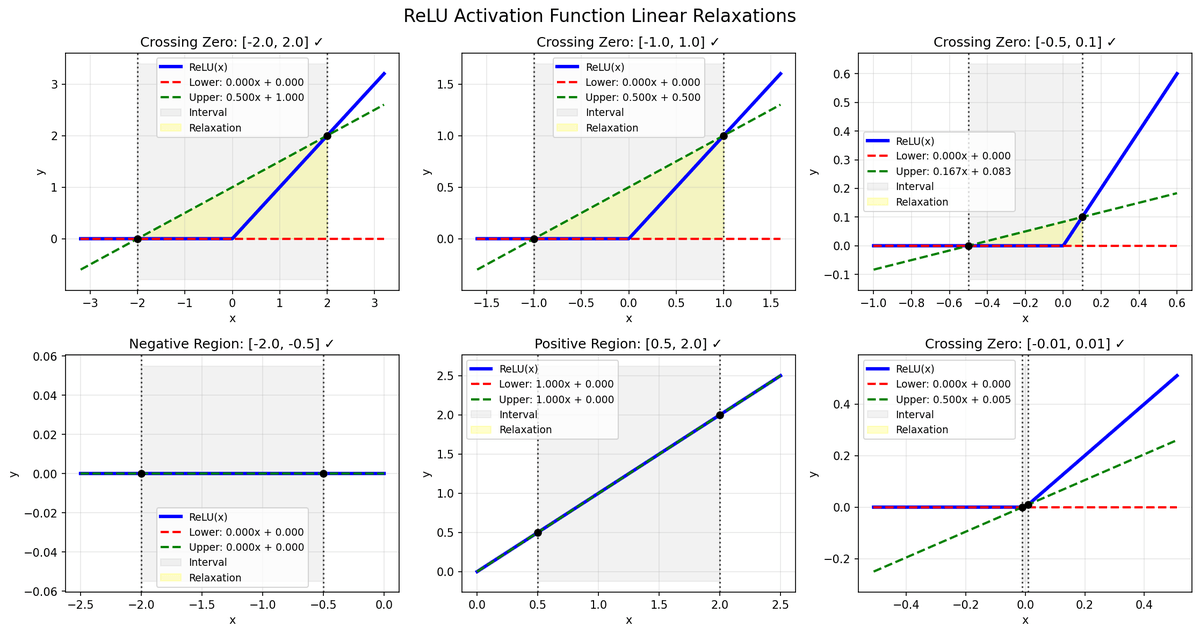
Oxford Researchers Verify Neural Safety Controllers 382x Faster Than Current Tools
A new framework verifies neural safety certificates for control systems orders of magnitude faster than SMT solvers, unlocking much larger networks.
20 stories
A new framework verifies neural safety certificates for control systems orders of magnitude faster than SMT solvers, unlocking much larger networks.
A post-hoc gradient trick spots when a trajectory predictor is about to fail, boosting AUROC from 56.8% to 71.0% on the Shifts benchmark.

A new framework maps each brain-signal modality to its own curved geometry, delivering double-digit accuracy gains on emotion, sleep, and cognitive tasks.
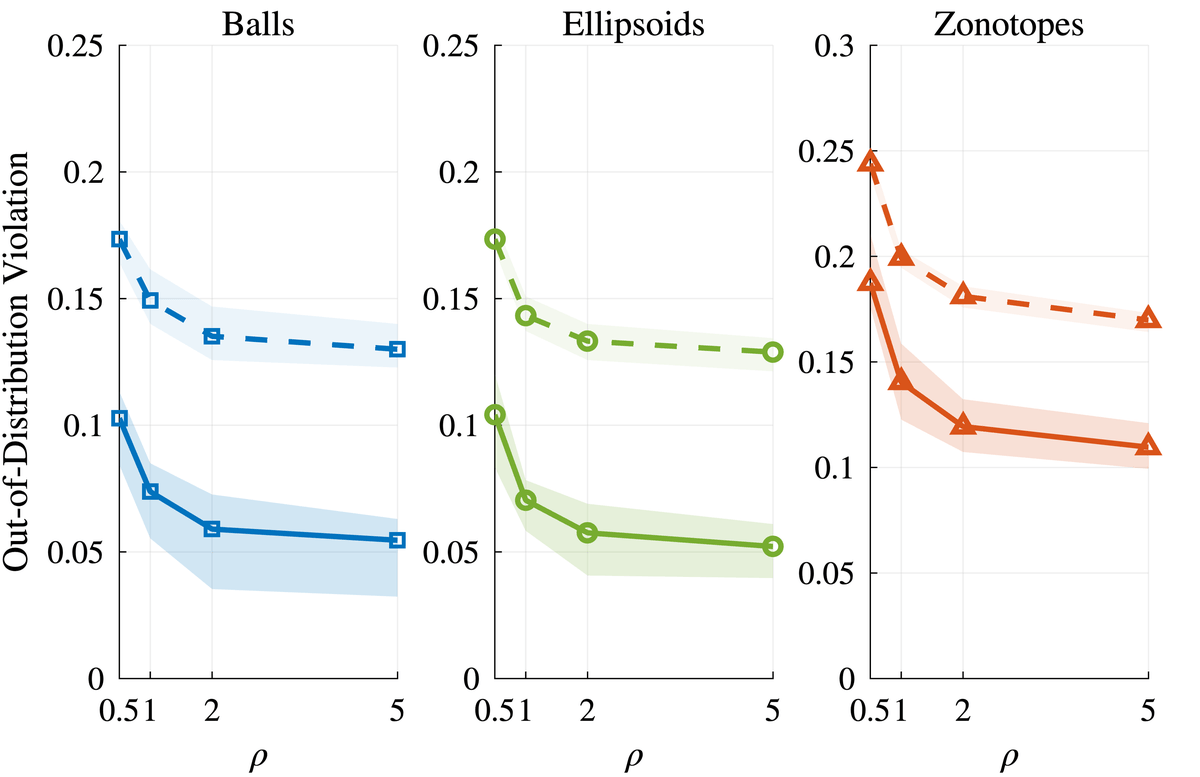
A new scenario optimization framework learns reachable sets from trajectory data with tunable guarantees that survive adversarial noise and distribution shifts.

A new paper turns an abstract lower-bound recipe for tail-risk in interactive learning into concrete, order-tight bounds for Gaussian estimation and bandits.
A wearable wristband combined with a badge that listens to voice and motion pushes binary stress detection to 94 percent accuracy during a lab stress test.
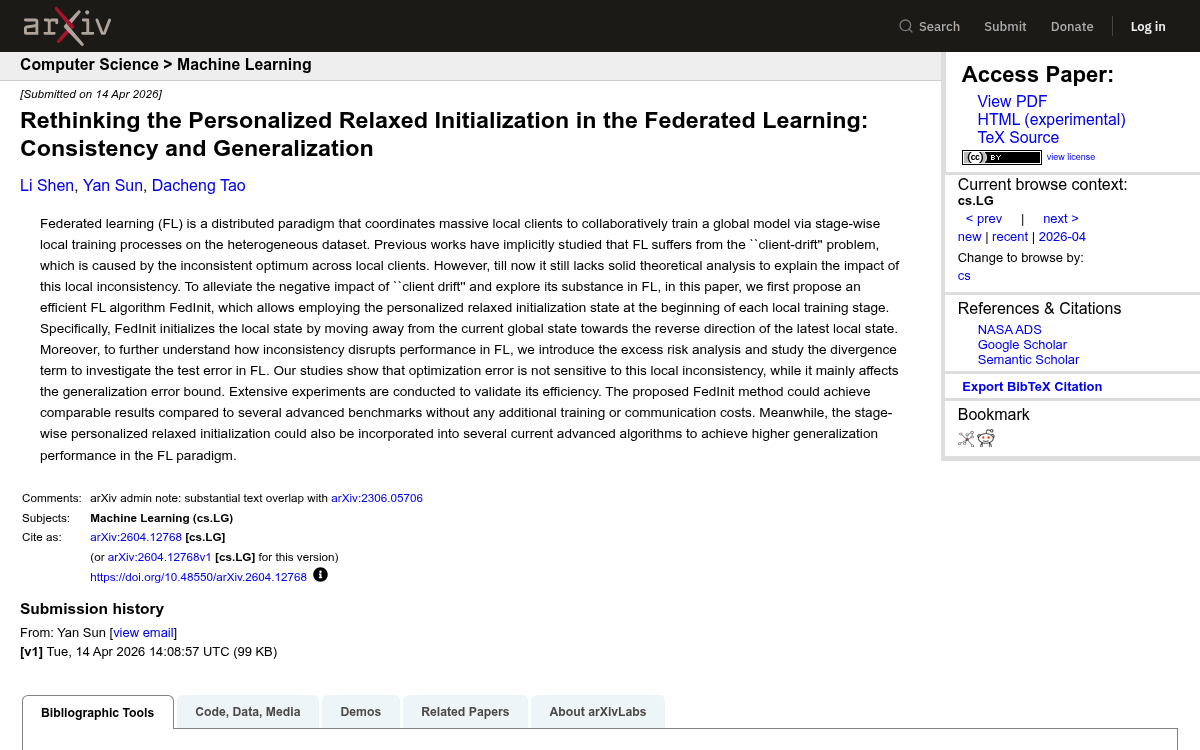
A new federated learning trick called FedInit nudges local models backwards before training, cutting client drift with zero extra communication cost.

A new framework borrows LoRA from the LLM world to help wireless authentication systems recognize unknown devices across shifting radio channels with 83% less training time.

Apple and EPFL researchers propose a video tokenizer that packs 10-second clips into 672 tokens, cutting training compute by up to 10x.
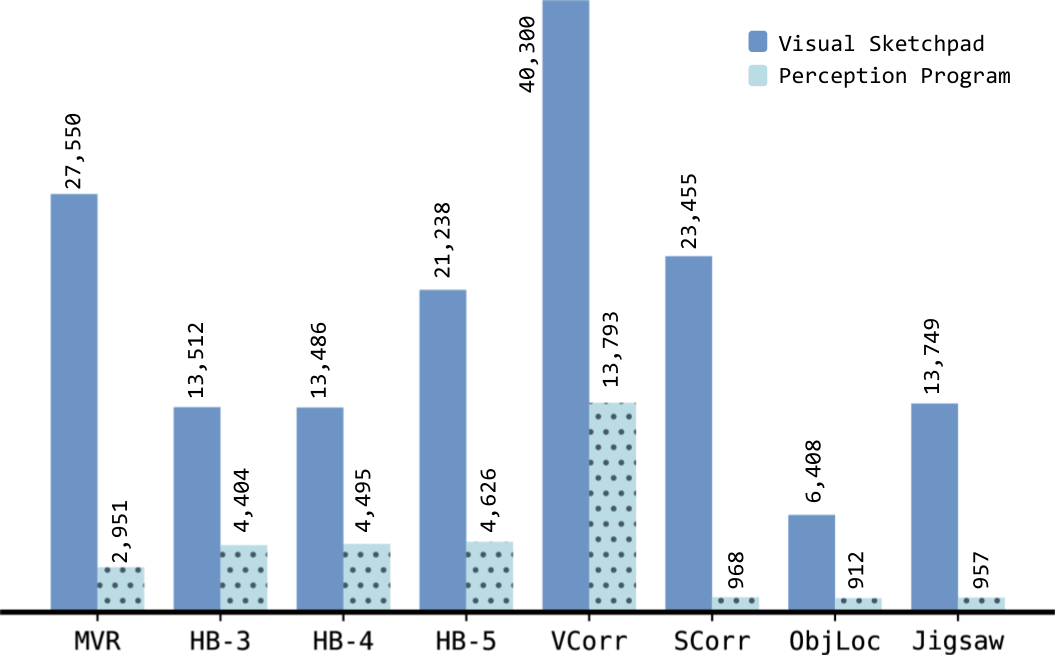
A new academic paper argues that multimodal models fail at visual tools not because tools are weak, but because pixel outputs are the wrong format.
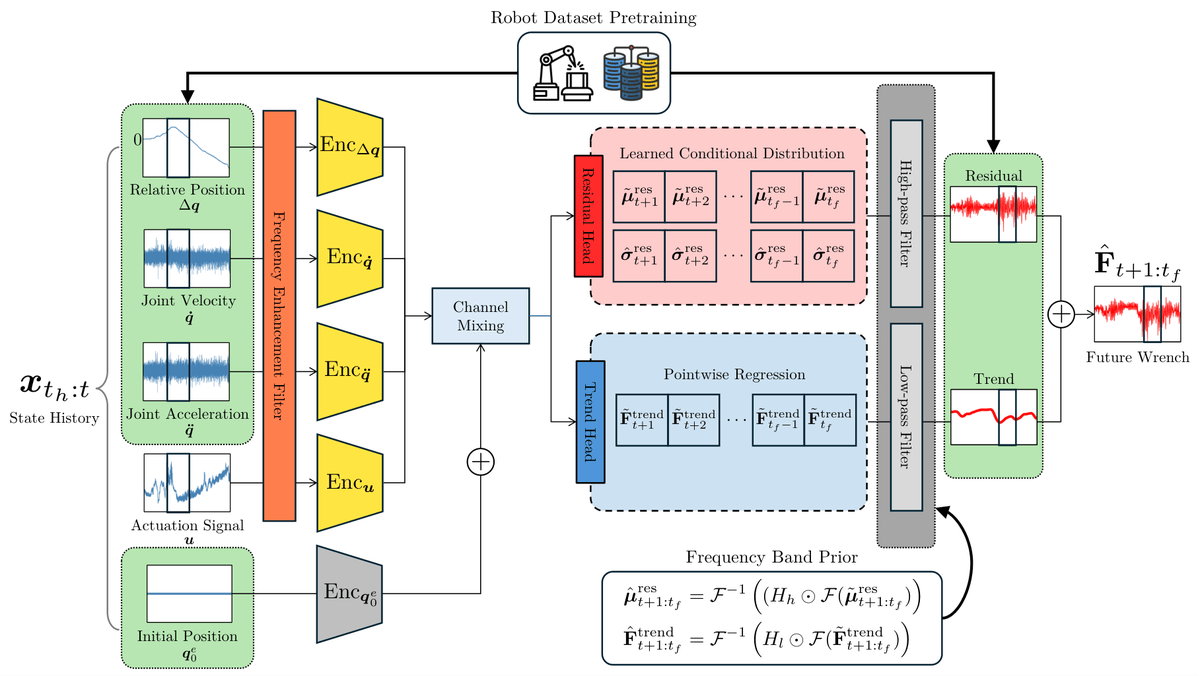
A frequency-aware network predicts force and torque on a hydraulic arm during grinding without needing a physical F/T sensor, beating baselines on high-frequency vibrations.
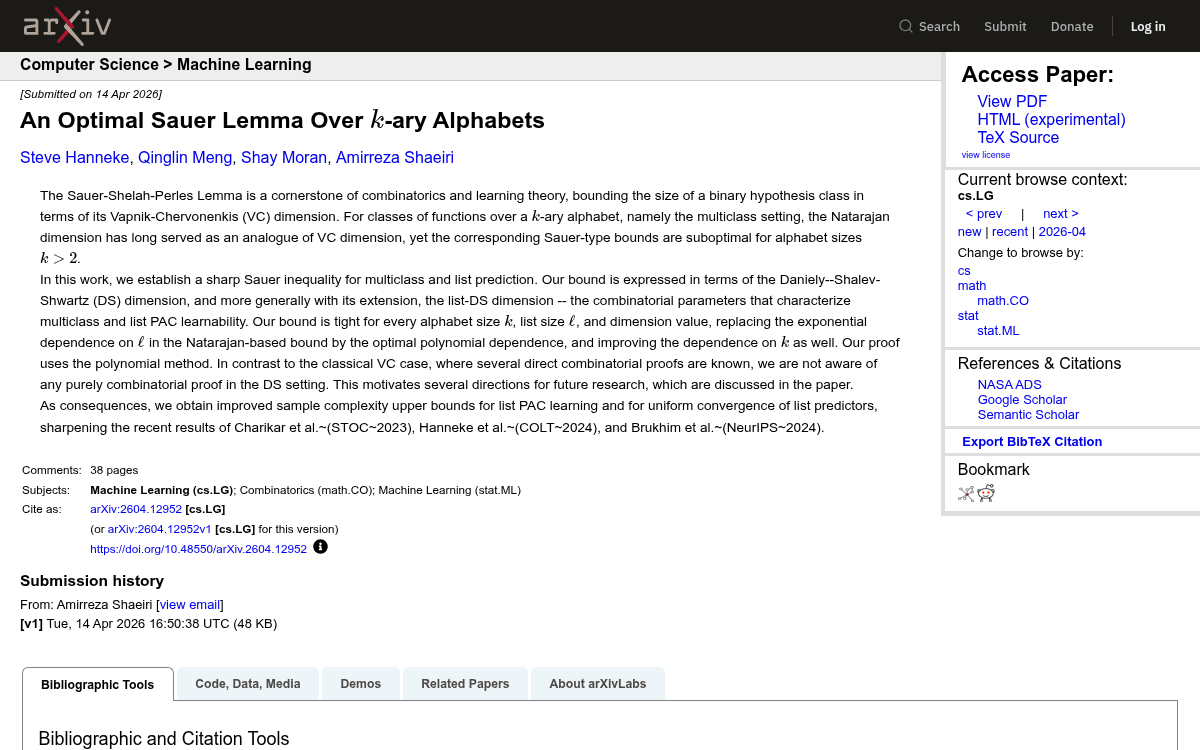
Researchers prove a tight Sauer-type bound for multiclass hypothesis classes using the DS dimension, tightening sample complexity for list PAC learning.
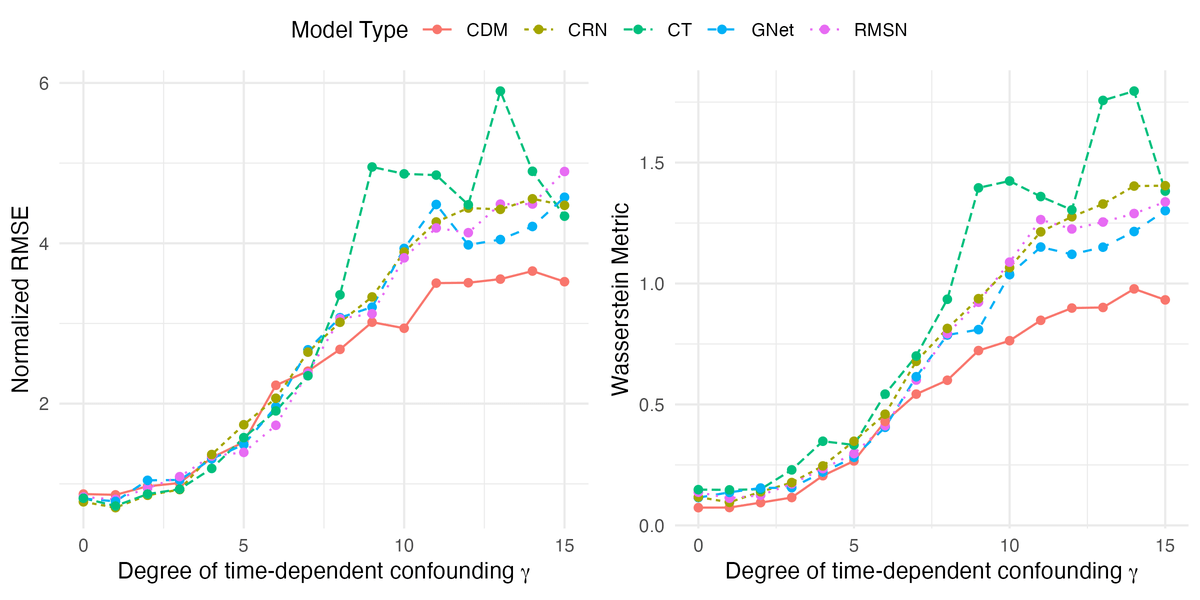
A new diffusion-based approach predicts full distributions of counterfactual patient outcomes under sequential treatments, beating transformer and RNN baselines under heavy confounding.
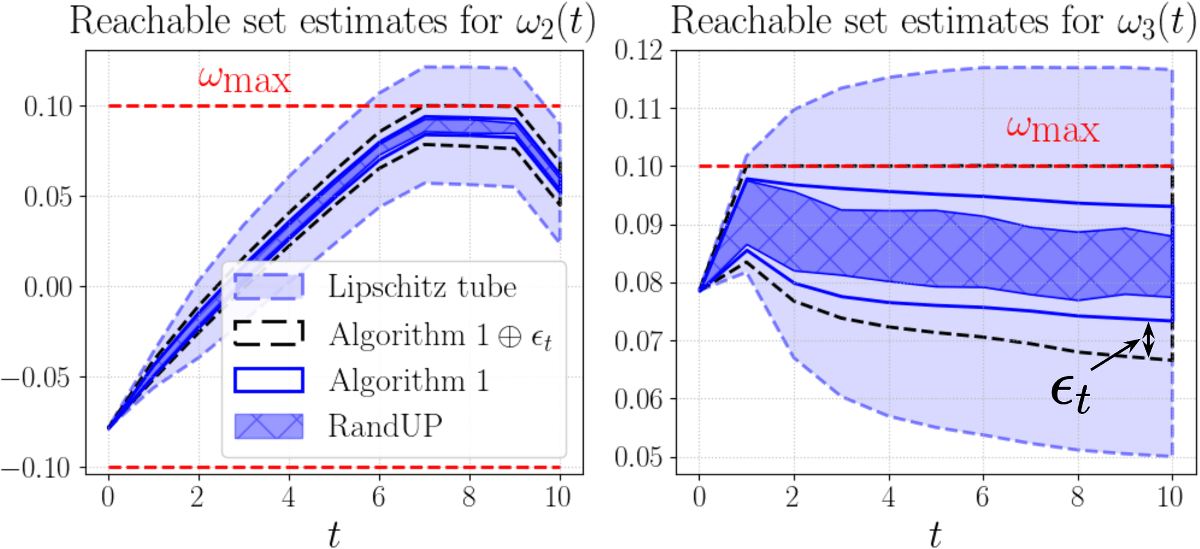
A new characterization reduces reachable set estimation for nonlinear systems to integrating an ODE from points on a sphere, cutting samples by orders of magnitude.
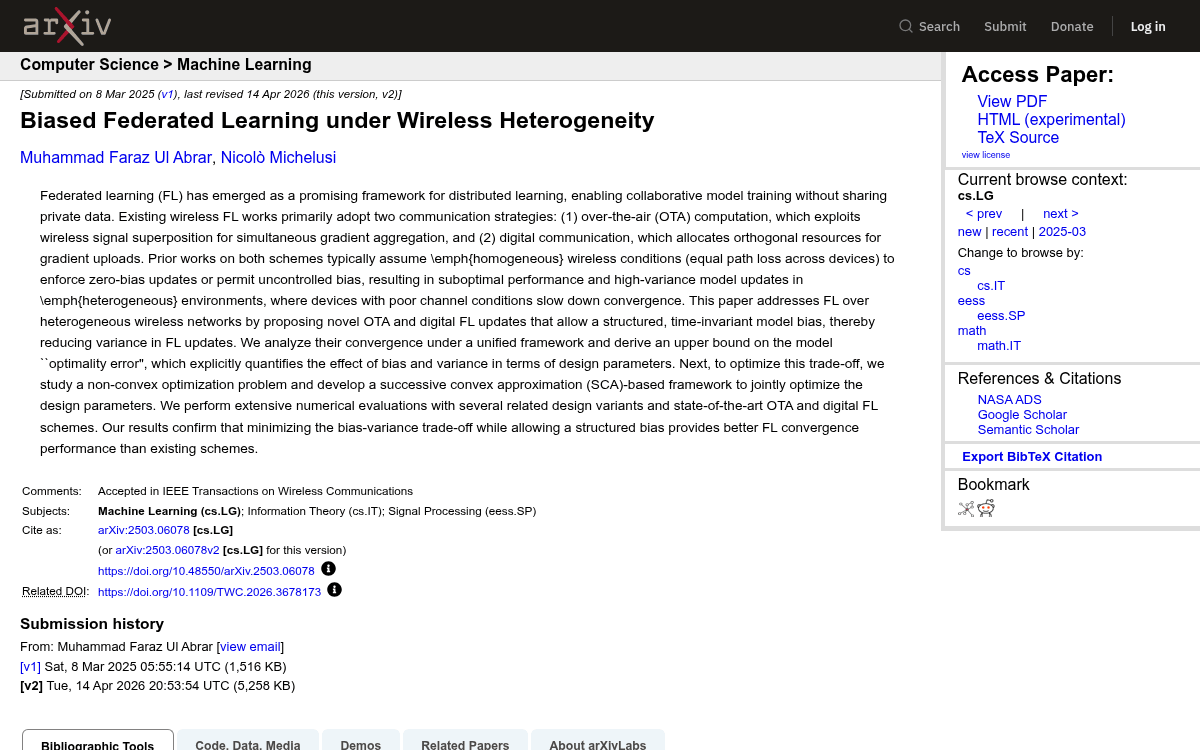
A new framework lets wireless federated learning deliberately embrace bias to escape the straggler bottleneck when devices have wildly different signal quality.
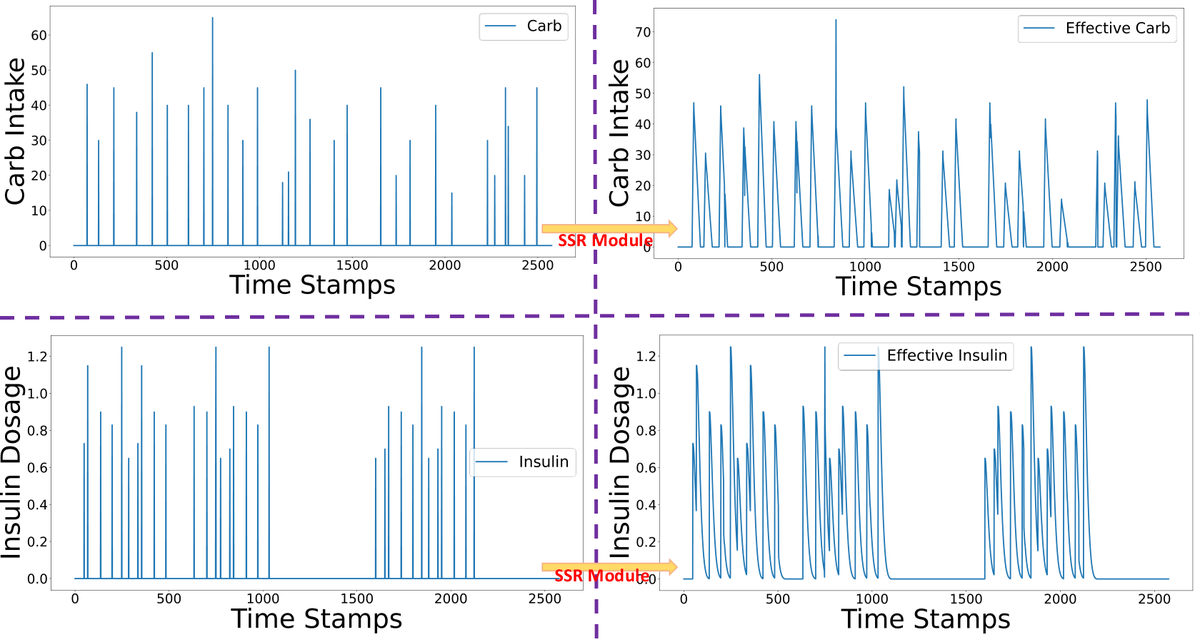
A hybrid LSTM plus Transformer model splits glucose signals by frequency, then distills the Transformer down to about 10,900 parameters for edge deployment.
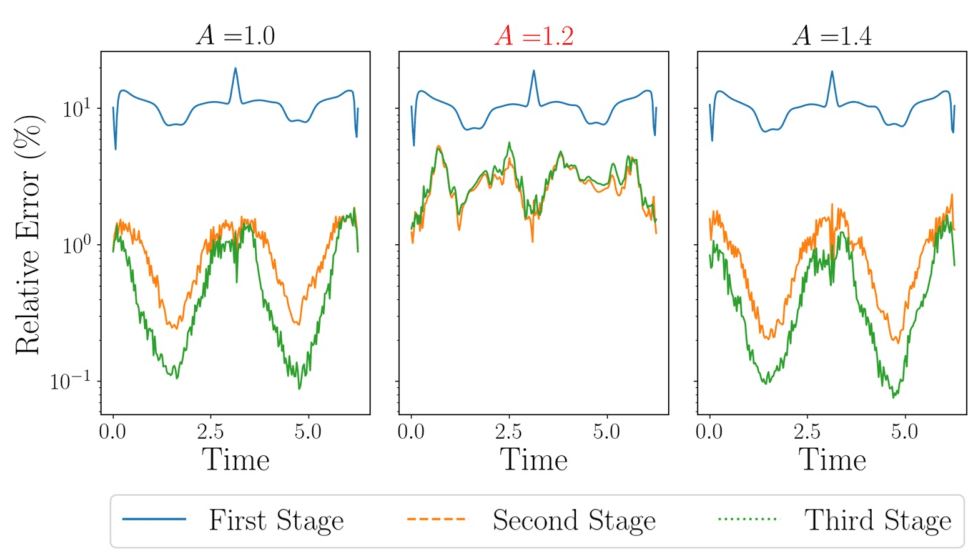
Researchers at Lawrence Livermore fix a core tension in data-driven PDE surrogates by stacking decoders that fill in residuals stage by stage.
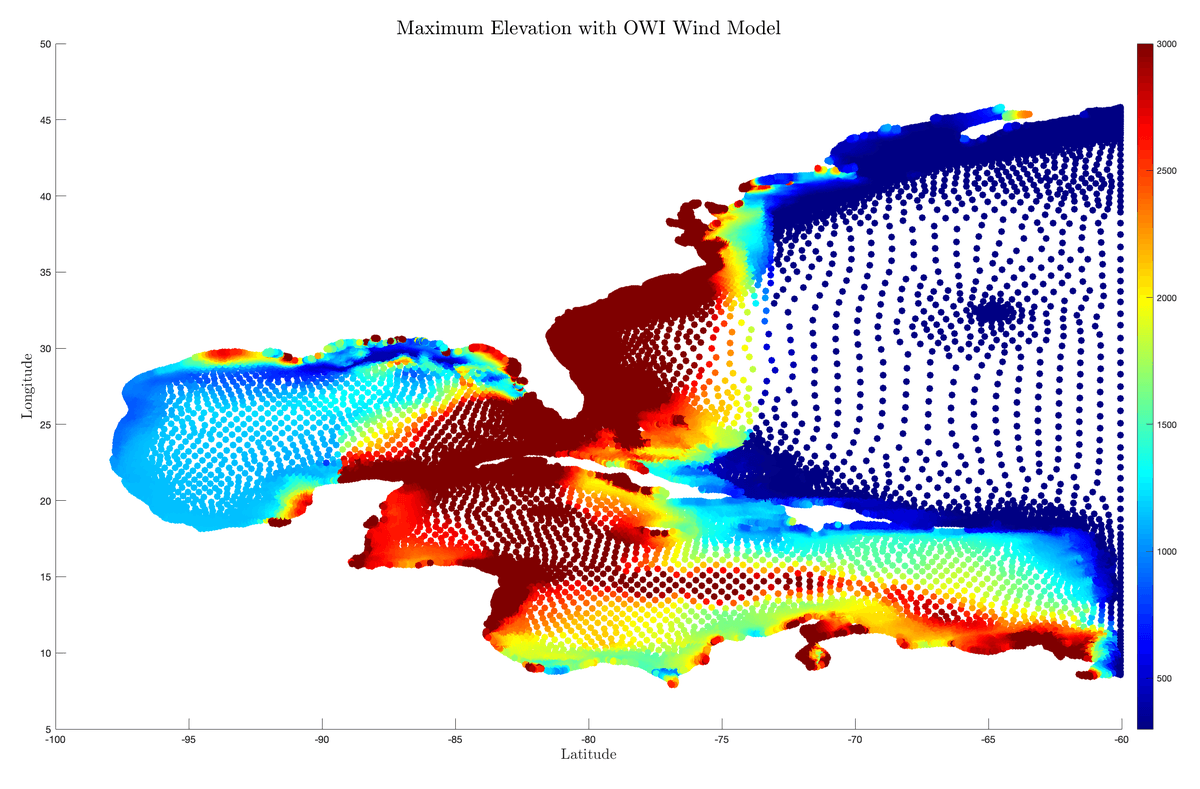
A new review maps eight diffusion-based methods for simulation-based inference and shows how they handle missing, unstructured, and misspecified data in scientific pipelines.
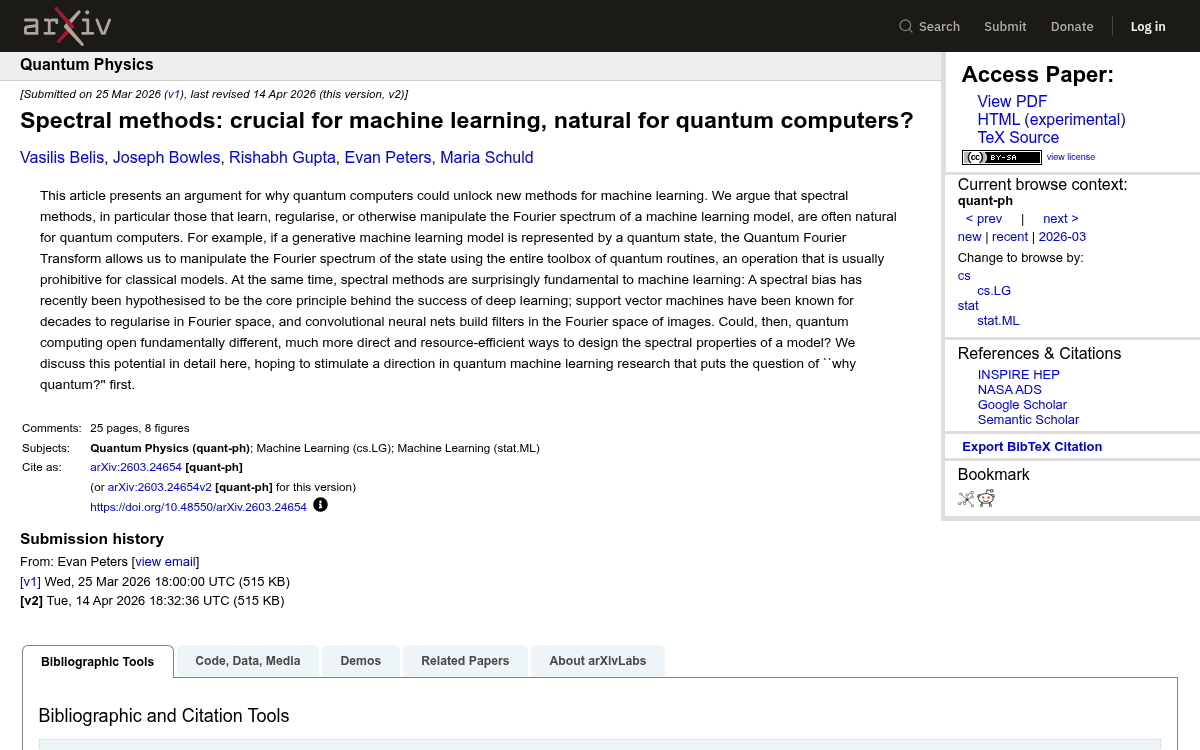
A Xanadu team argues that the Quantum Fourier Transform is a natural tool for building the simplicity biases that make modern machine learning work.

A CUDA voxelizer and hierarchical SGGX clustering approach preserves anisotropic material appearance across Level-of-Detail hierarchies for fabrics, hair, and brushed metals.