
Emory Researchers Map How Diffusion Models Are Fixing Broken Scientific Simulators
A new review maps eight diffusion-based methods for simulation-based inference and shows how they handle missing, unstructured, and misspecified data in scientific pipelines.
Takeaways
- New review surveys eight diffusion-based simulation-based inference methods, published on arXiv.
- Focuses on three failure modes: missing data, unstructured observations, and simulator misspecification.
- Groups methods by architecture: conditional, guided, sequential, factorized, and consistency-based diffusion.
- Simformer comes closest to unifying all three challenges via transformer-based joint modeling.
- Trade-off: diffusion samples in 10 to 1000 steps versus one pass for normalizing flows.
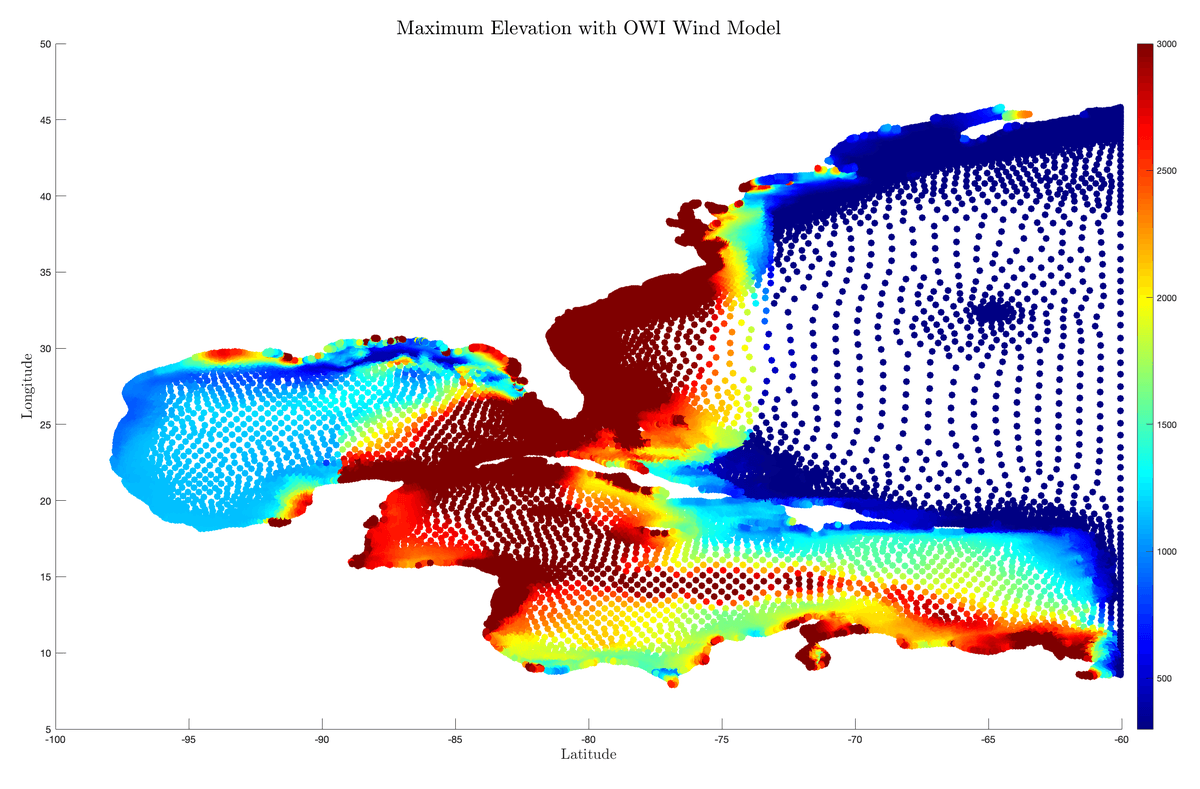
- Motivated by geophysical applications like storm surge and climate modeling with ADCIRC.
When a scientific model is defined by a simulator instead of a clean equation, computing a likelihood becomes impossible. That is the setting this new review from researchers at Emory University tackles, and it argues that score-based diffusion models are quickly becoming the most flexible tool available for Bayesian inference in these regimes. The paper synthesizes eight recent methods and stress-tests them against the three failure modes that most often break real scientific pipelines: missing data, irregular observations, and simulators that disagree with reality.
Why likelihood-free inference needs a rethink
Simulation-based inference (SBI) exists because many scientific simulators (climate, cosmology, epidemiology, storm surge) map parameters to data through opaque numerical pipelines with no tractable likelihood. SBI sidesteps this by treating simulations as training data for neural networks: run forward simulations with sampled parameters, train deep learning models to learn the inverse mapping from observations to parameters, then perform fast inference on new observations. A single trained model can quickly estimate posteriors for multiple observations without retraining, a property known as amortization.
Until recently, the dominant neural approach used normalizing flows. Those work, but they carry a heavy architectural tax: invertibility and tractable Jacobians constrain expressiveness, and fixed-dimensional inputs make flows awkward for irregular observations, missing entries, or function-valued parameters without lossy preprocessing. Diffusion models replace density evaluation with score estimation, which lifts most of those constraints.
Where real data breaks amortized inference
The review's central framing is that idealized SBI benchmarks hide the failure modes that actually matter. Model misspecification (mismatch between the simulator and real-world data-generating processes) can produce miscalibrated or overconfident posteriors, particularly for amortized neural inference methods. Many observational datasets also deviate from standard assumptions of fixed-dimensional, fully observed inputs, instead exhibiting missing values, irregular sampling, or function-valued structure. Such settings arise in climate monitoring, ecological time series, and PDE-driven inverse problems, where parameters or observations naturally live in high- or infinite-dimensional spaces.