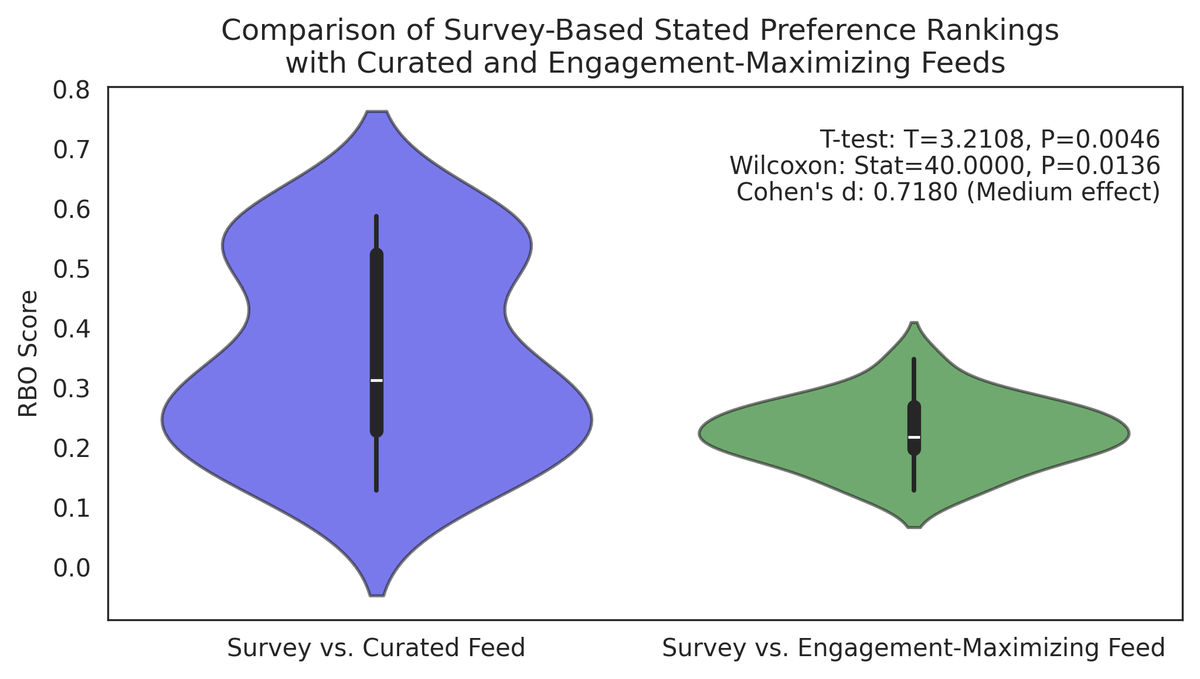
New study finds young adults engage with low-quality news they don't endorse, and shows how value-based curation could realign feeds with what users actually want.
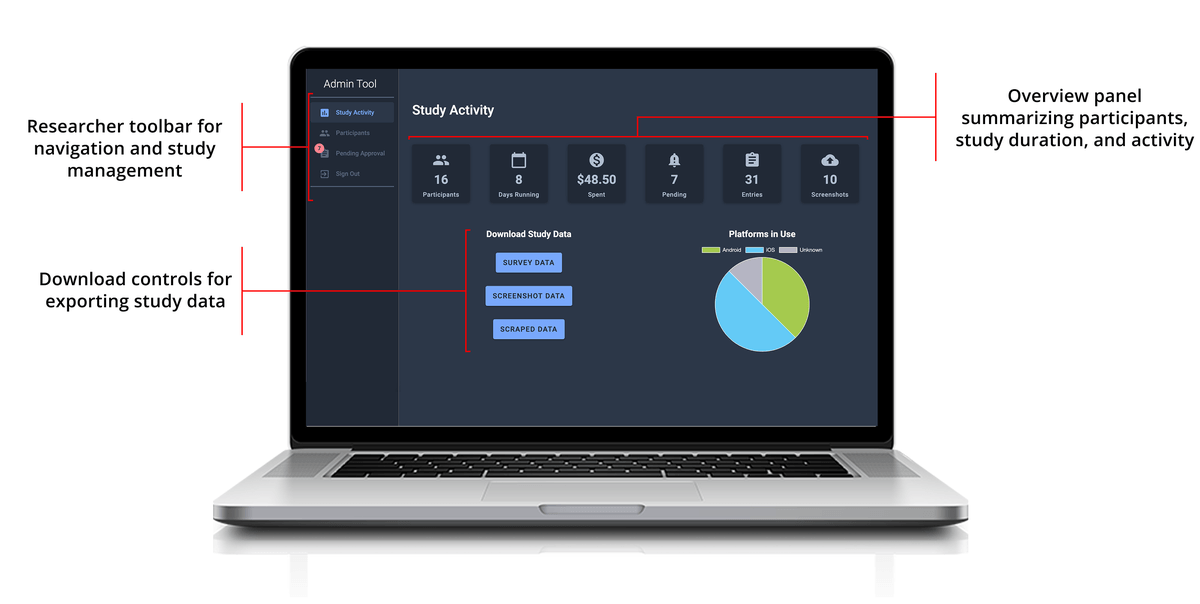
A case study of a co-designed EMA platform with teens reveals what actually sustains engagement in longitudinal adolescent studies, and where research infrastructure still breaks down.
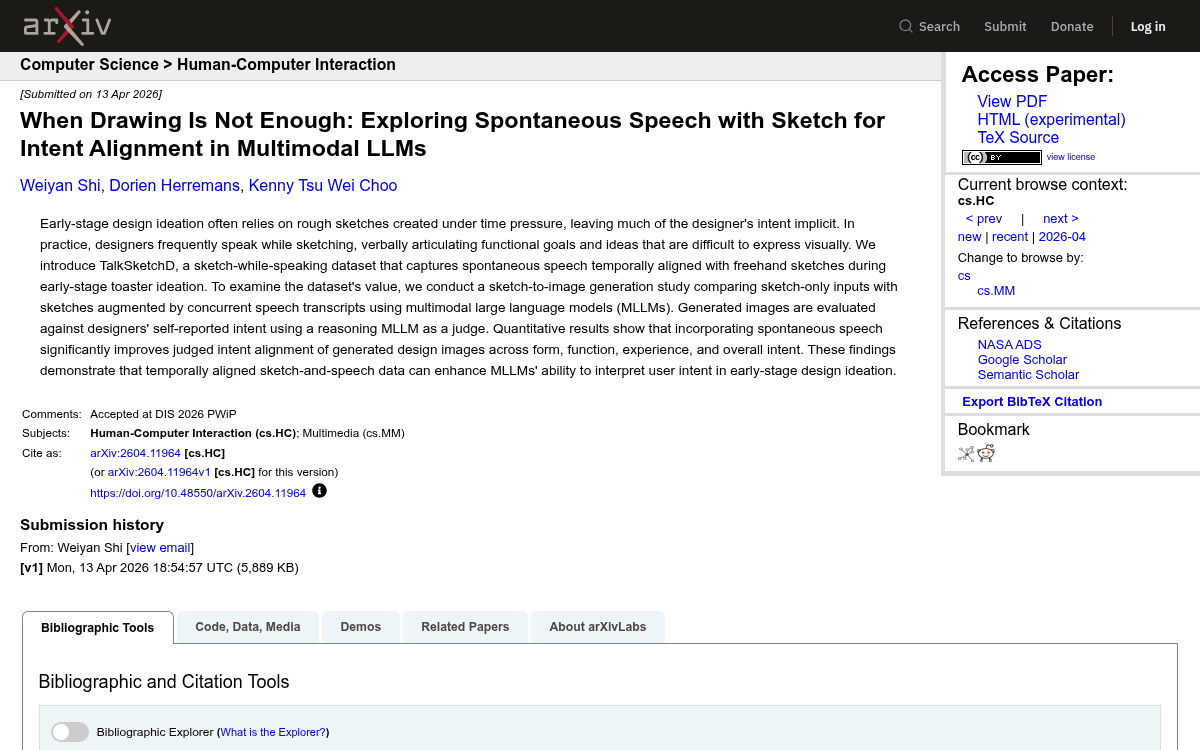
A small study shows that feeding a designer's messy real-time speech alongside their rough sketches lifts intent-alignment scores from a median of 2 to 7 out of 7.
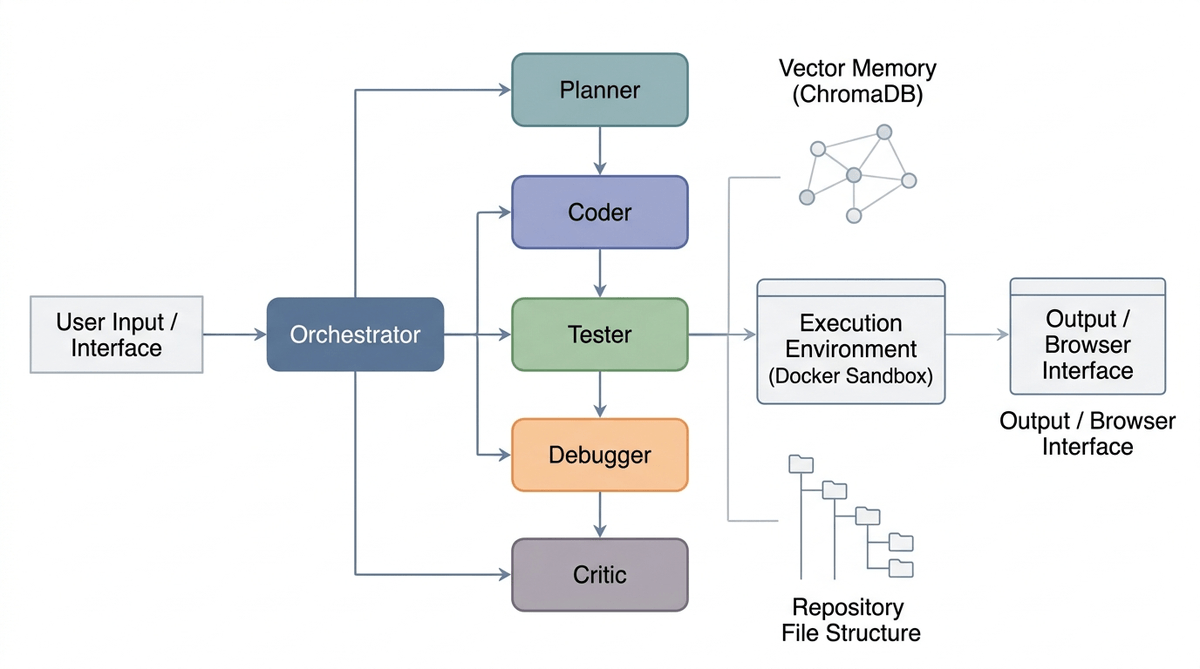
A five-agent pipeline that forces every generated patch through a Docker sandbox hits 40 percent on SWE-Bench Lite, more than doubling single-agent GPT-4o.
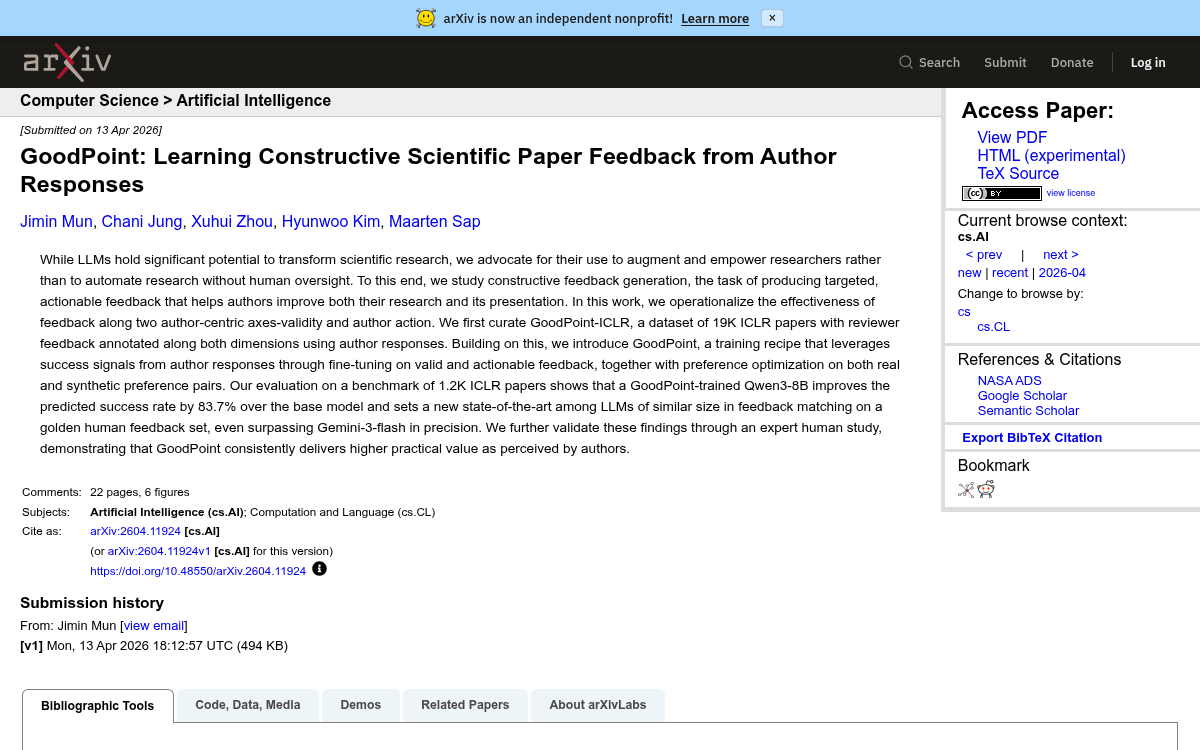
GoodPoint trains an 8B model on 19K ICLR papers to generate targeted, actionable paper feedback that authors actually act on — beating Gemini-3-flash in precision.
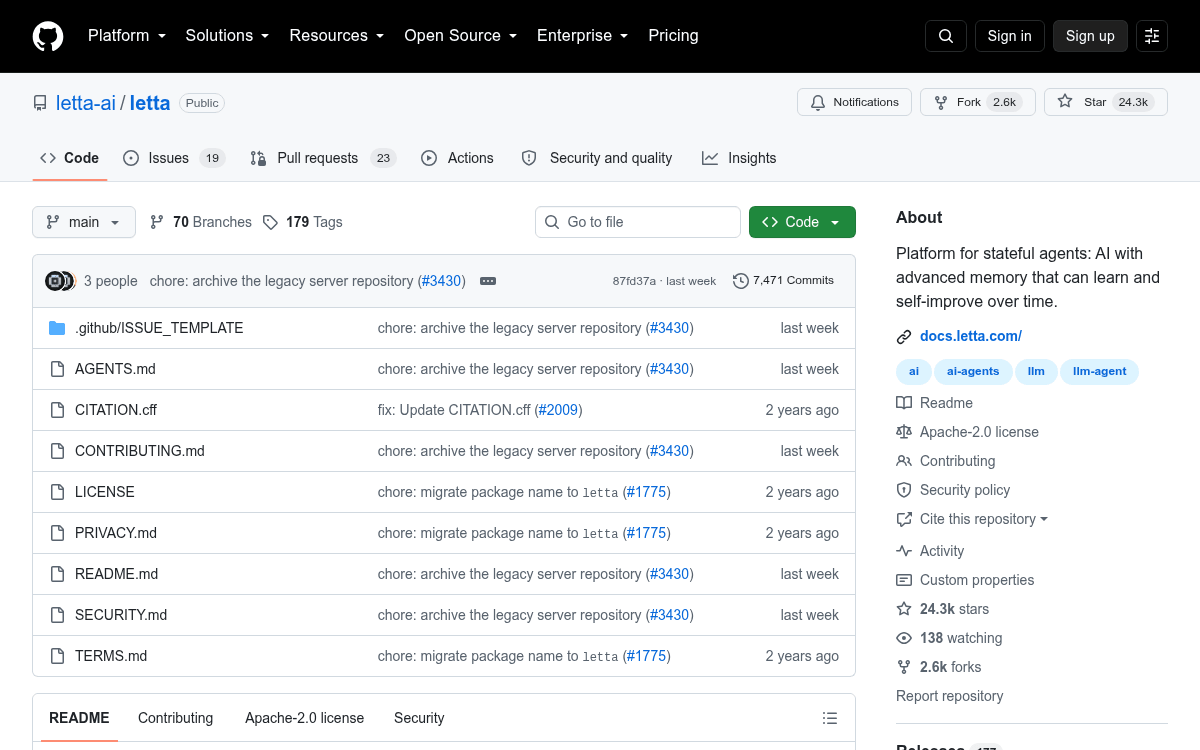
The original letta-ai/letta repository has been retired, with active development shifting to letta-code, a memory-first coding agent with git-backed context.
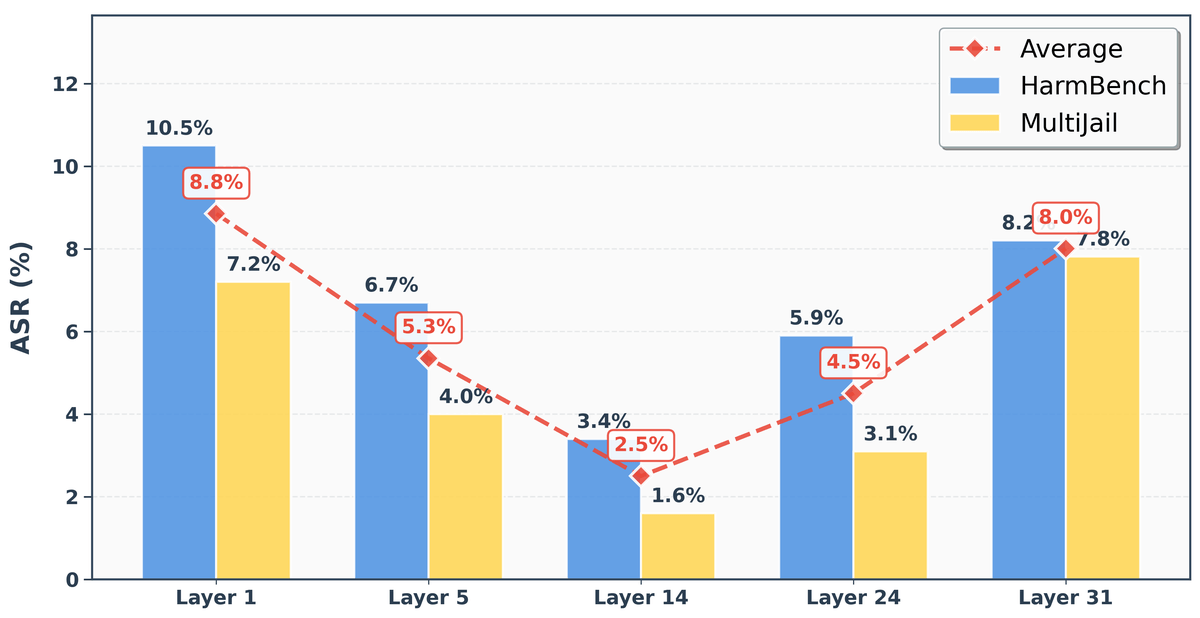
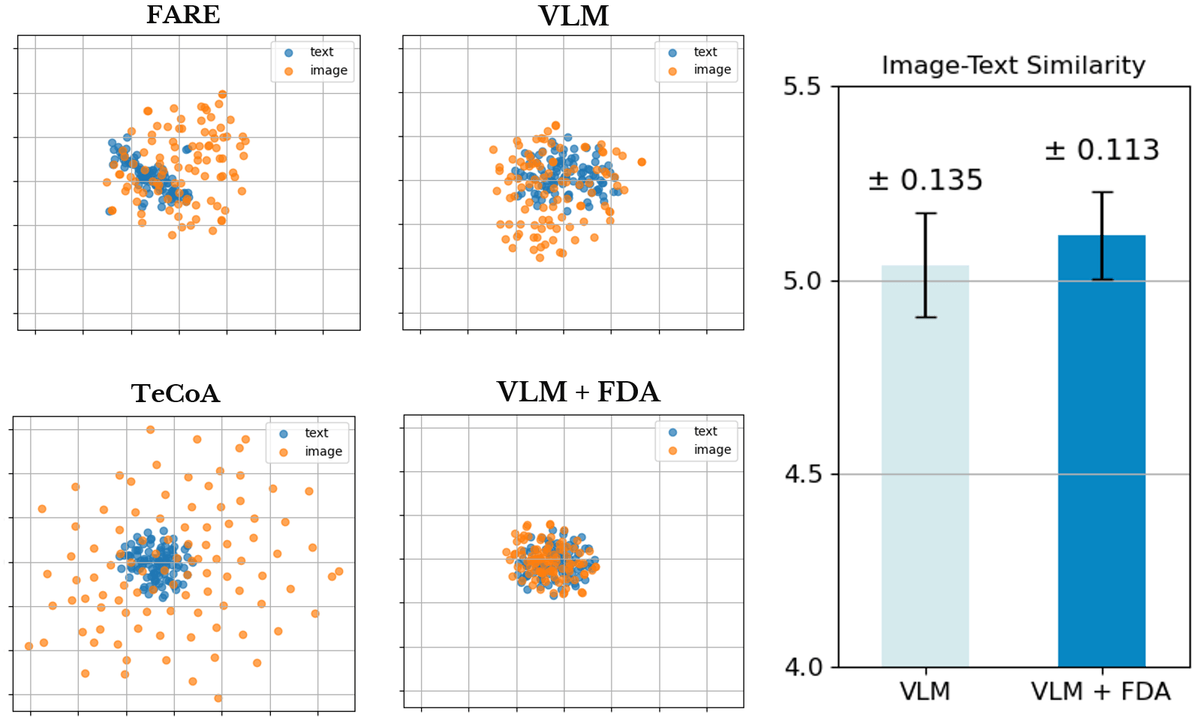
New attention trick removes function words from vision-language alignment, cutting adversarial attack success by up to 90% with essentially no accuracy loss.
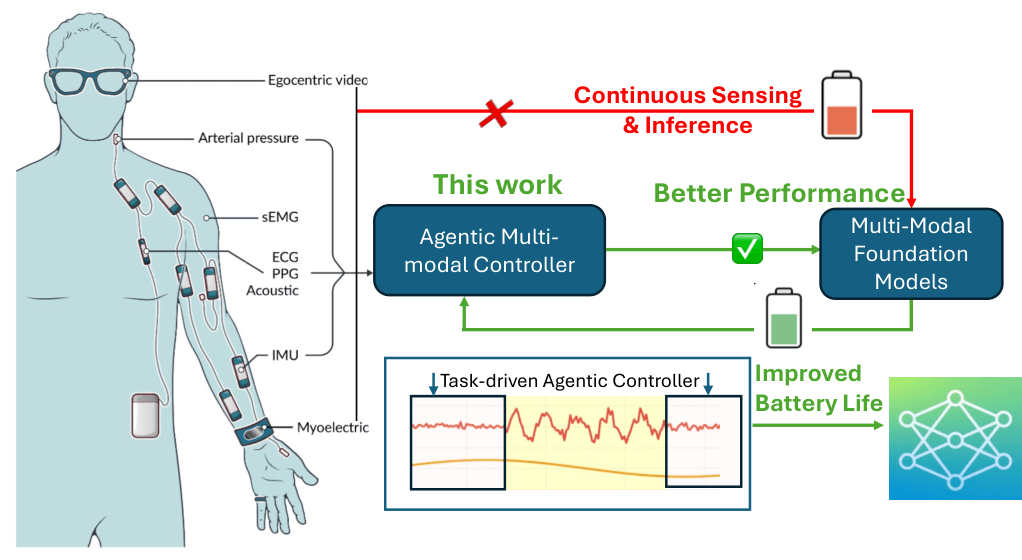
A new framework called AMI lets wearable medical devices skip redundant sensor readings and idle unused modalities, cutting sensor usage nearly in half while lifting accuracy.
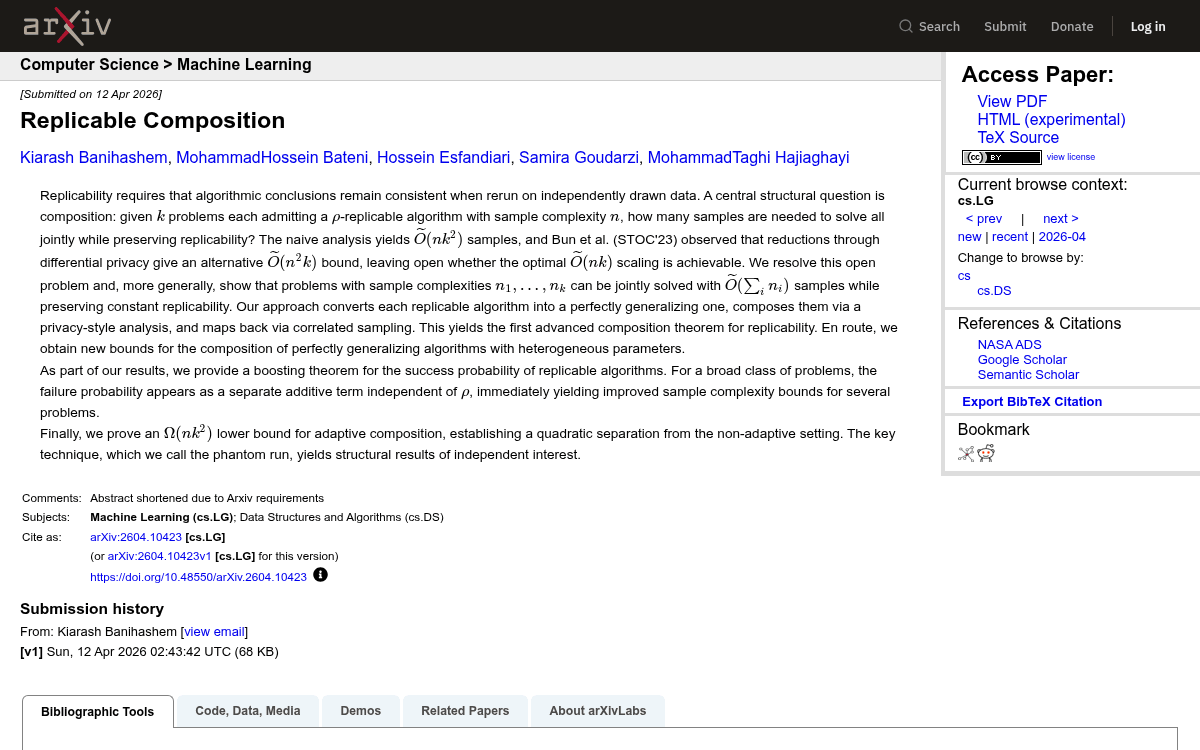
A team of five researchers closes a decade-defining gap in replicable algorithm theory, proving optimal sample scaling when composing k stable procedures.
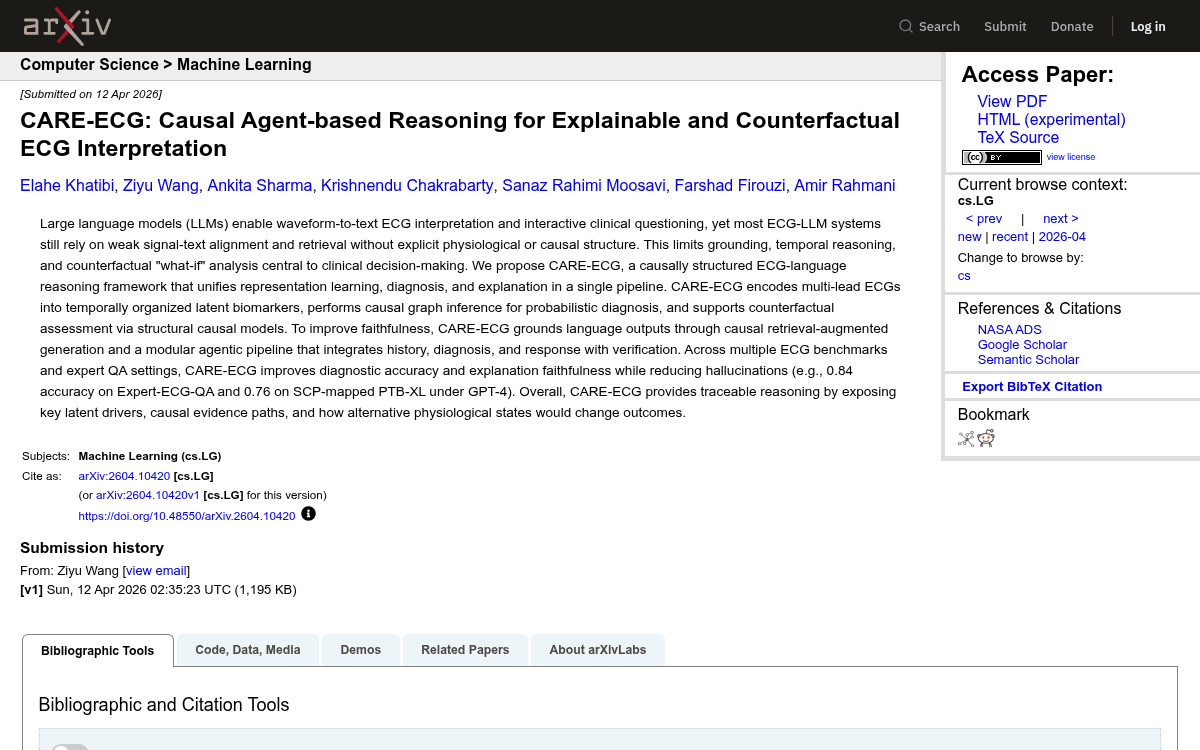
A new framework grounds ECG language models in causal graphs and counterfactual reasoning, cutting hallucinations to 4% while lifting diagnostic accuracy to 84%.
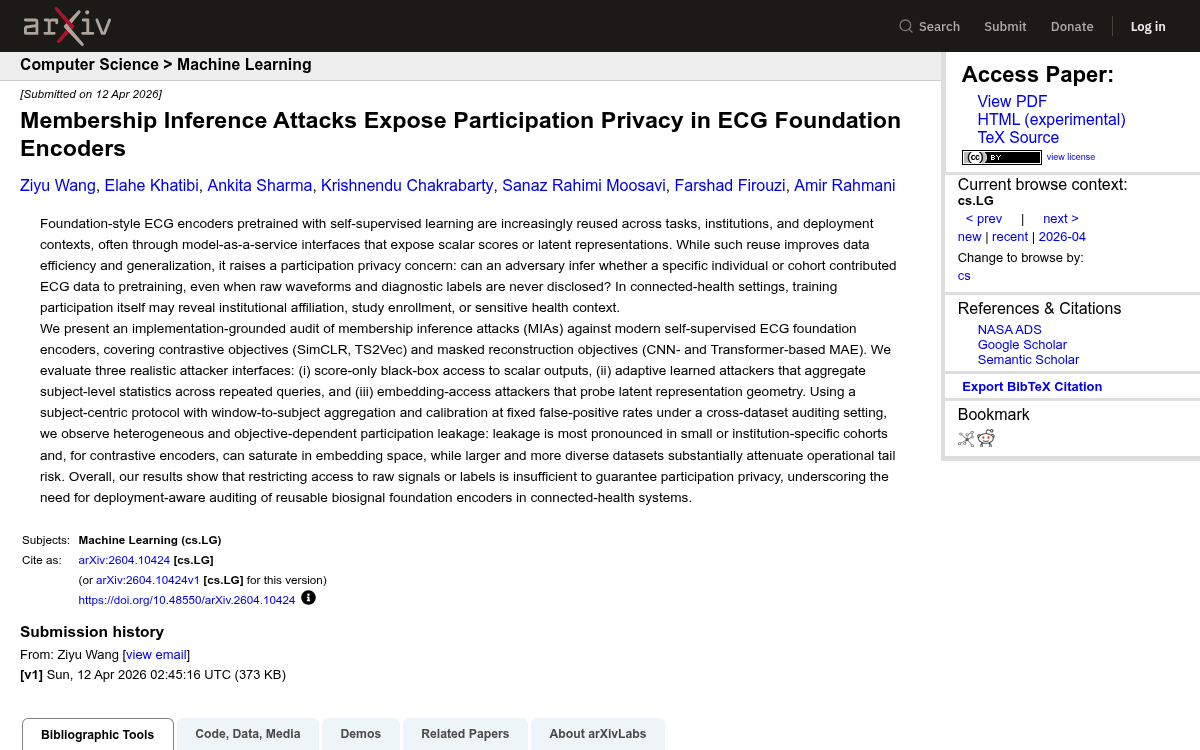
A new audit finds self-supervised ECG encoders can reveal whether a specific cohort's data was used for pretraining, especially when embeddings are exposed.
New research shows heterogeneous sparse connectivity only helps when placed by gradients, and RigL's equilibrium topology can be predicted and used as initialization.