
Notre Dame Builds an Open-Source Teen Study App and Exposes Its Flaws
A case study of a co-designed EMA platform with teens reveals what actually sustains engagement in longitudinal adolescent studies, and where research infrastructure still breaks down.
 Pro
Takeaways
- Notre Dame and ICSI Berkeley evaluated a co-designed EMA platform for adolescent longitudinal research.
- Case study ran with the Arizona Twin Project; six research-team members interviewed about real deployment.
- Gamified earnings and in-app reminders shifted engagement work off staff and onto participants themselves.
- Parental concerns over location permissions and visible teen earnings caused recurring friction and workarounds.
- Data exported as one Excel file per participant, requiring heavy preprocessing before longitudinal analysis.
- Authors publish actionable design guidelines and an open-source platform for teen-centered research tooling.
Building software to collect real-time self-reports from teenagers sounds like a solved problem. In practice, it's a mess of missed check-ins, angry parents asking about location permissions, and researchers stitching together one Excel file per participant. A new case study from Notre Dame and ICSI Berkeley digs into what happens when you co-design an Ecological Momentary Assessment (EMA) platform with the adolescents it's meant to study, then hand it to a real research team for a longitudinal deployment.
EMA is the method of pinging participants throughout the day to capture experiences as they happen, rather than asking them to remember a week later. It's widely used to study teenagers, yet how platform design shapes engagement, research practices, and power dynamics in youth studies remains under-examined. That gap is what this paper tries to fill.
The platform under the microscope
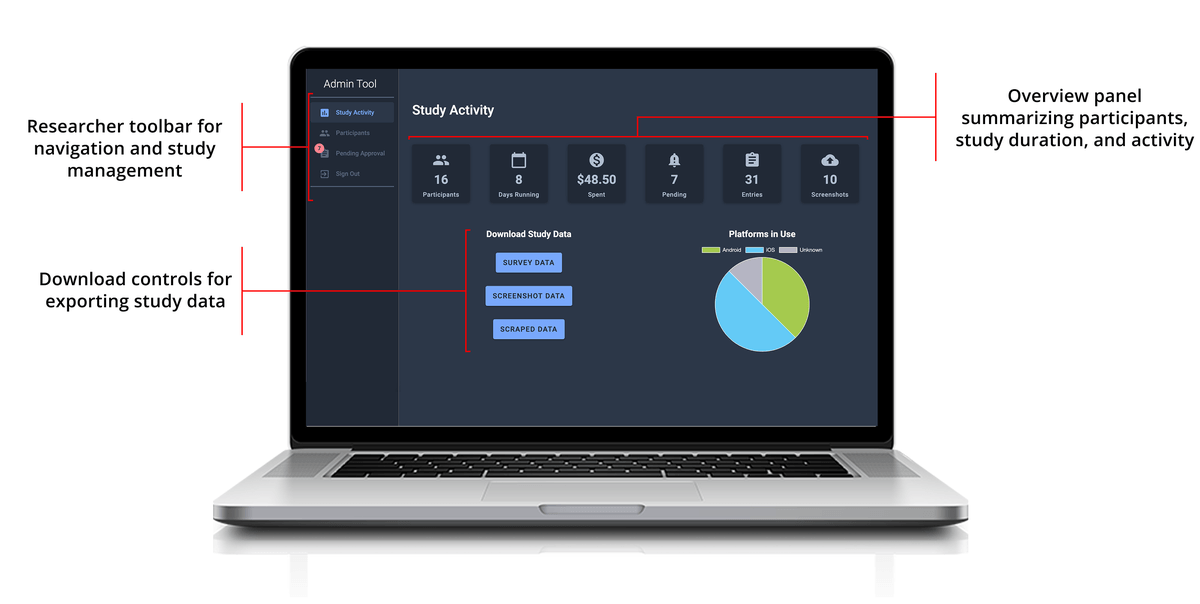
The team built a two-part system: a cross-platform mobile app for teens and a web portal for researchers. The mobile side pushes daily journal prompts, tracks progress and earnings, and surfaces help resources. The web portal gives researchers a centralized dashboard for enrollment, submission review, risk monitoring, and data export. The whole thing is open source and was designed via storyboarding sessions with adolescents rather than dictated by an IRB template.

To evaluate it, the authors deployed the system with the