
Pro
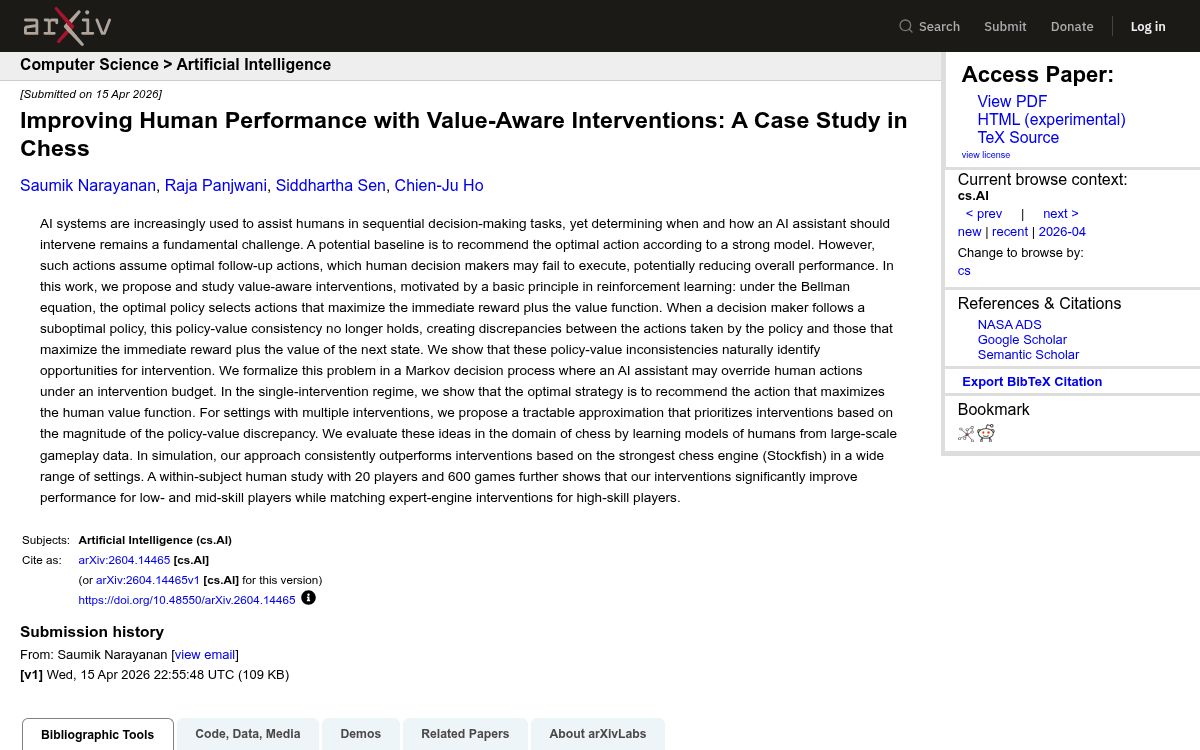
Valuemax Beats Stockfish by Predicting How Real Chess Players Actually Move
A new framework picks chess moves that assume humans will play the follow-up, beating Stockfish recommendations for beginner and intermediate players.
20 stories
A new framework picks chess moves that assume humans will play the follow-up, beating Stockfish recommendations for beginner and intermediate players.
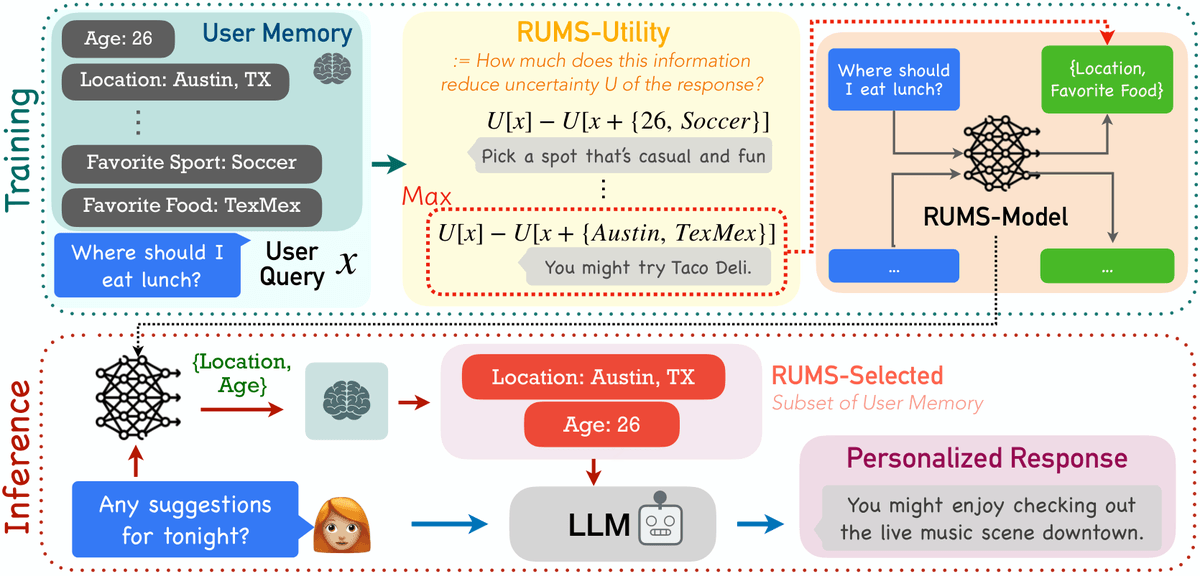
A new information-theoretic method picks user memory items by how much they sharpen the model's next response, not how similar they look to the query.
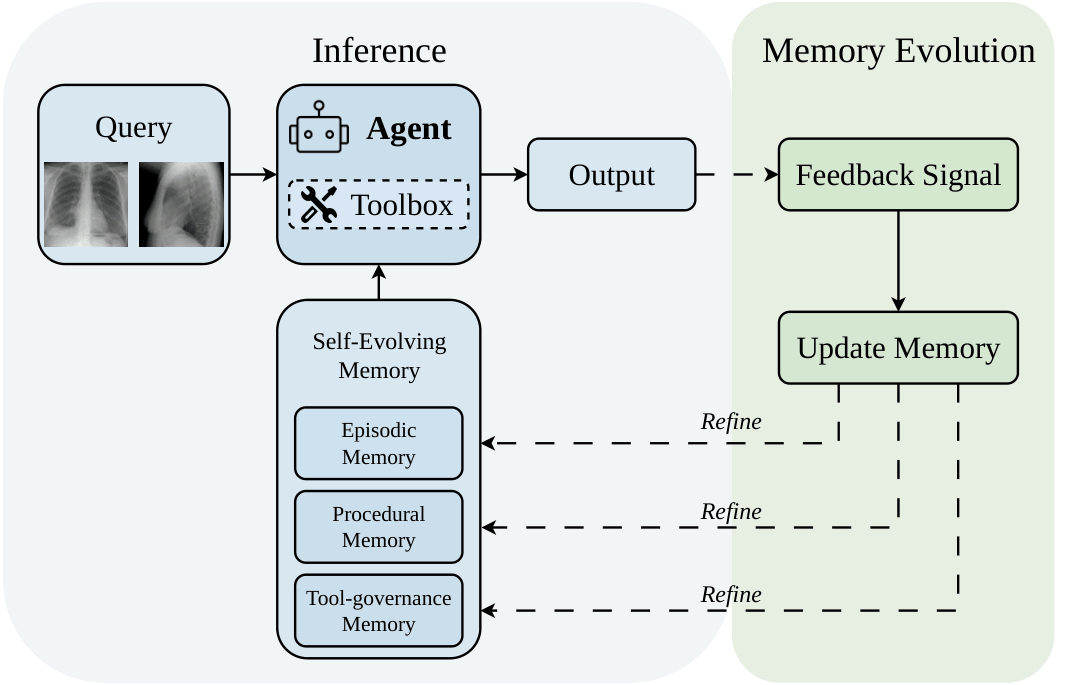
A training-free memory module lets frozen chest X-ray agents accumulate lessons across cases, lifting MCQ accuracy up to 11 points without any fine-tuning.
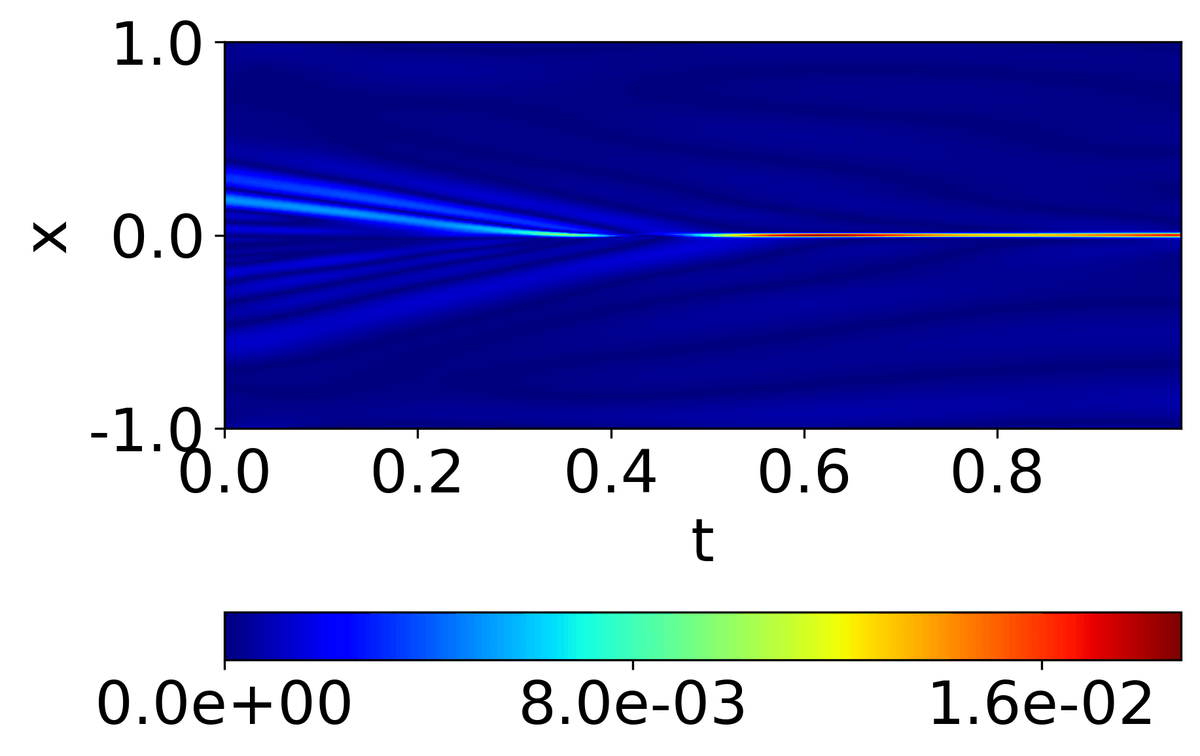
A new physics-informed neural network throws out gradient descent entirely, delivering PDE solutions up to 5 orders of magnitude faster on plain CPUs.
A new latent variable trick turns messy Bayesian imaging posteriors into two-block Gibbs sampling that runs orders of magnitude faster than Langevin methods.
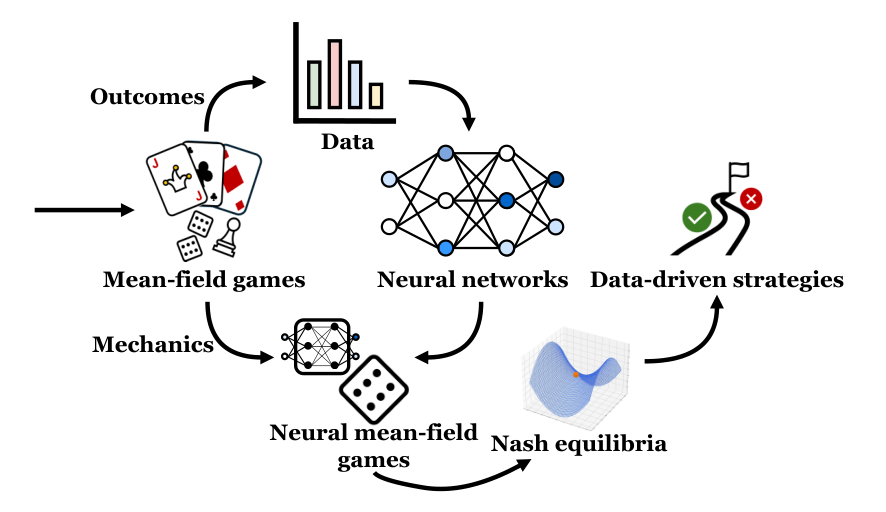
A new arxiv paper from Radboud University and Meta FAIR fuses mean-field game theory with neural SDEs, cutting COVID modeling error by orders of magnitude.
A new arXiv paper proposes three clustering-driven algorithms that beat deep learning baselines at separating signal features from noise, without labels.
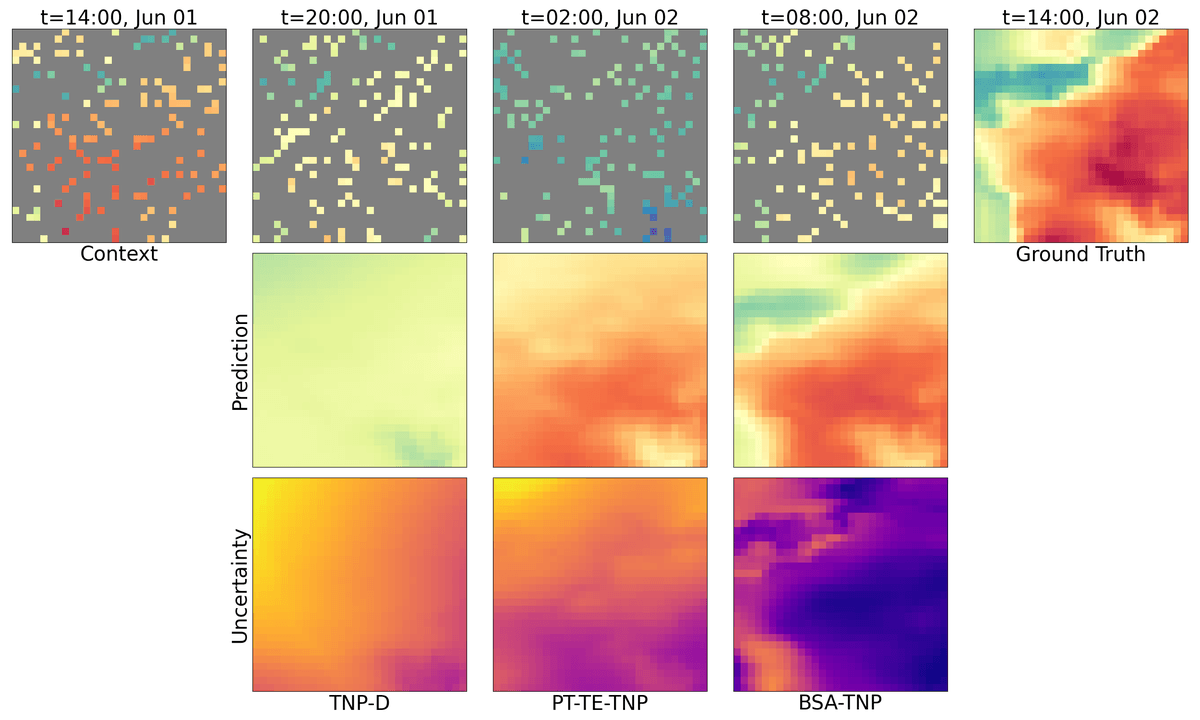
A new Neural Process architecture from Oxford and Imperial ditches inducing points, keeps translation invariance, and runs 1M test points in under a minute.
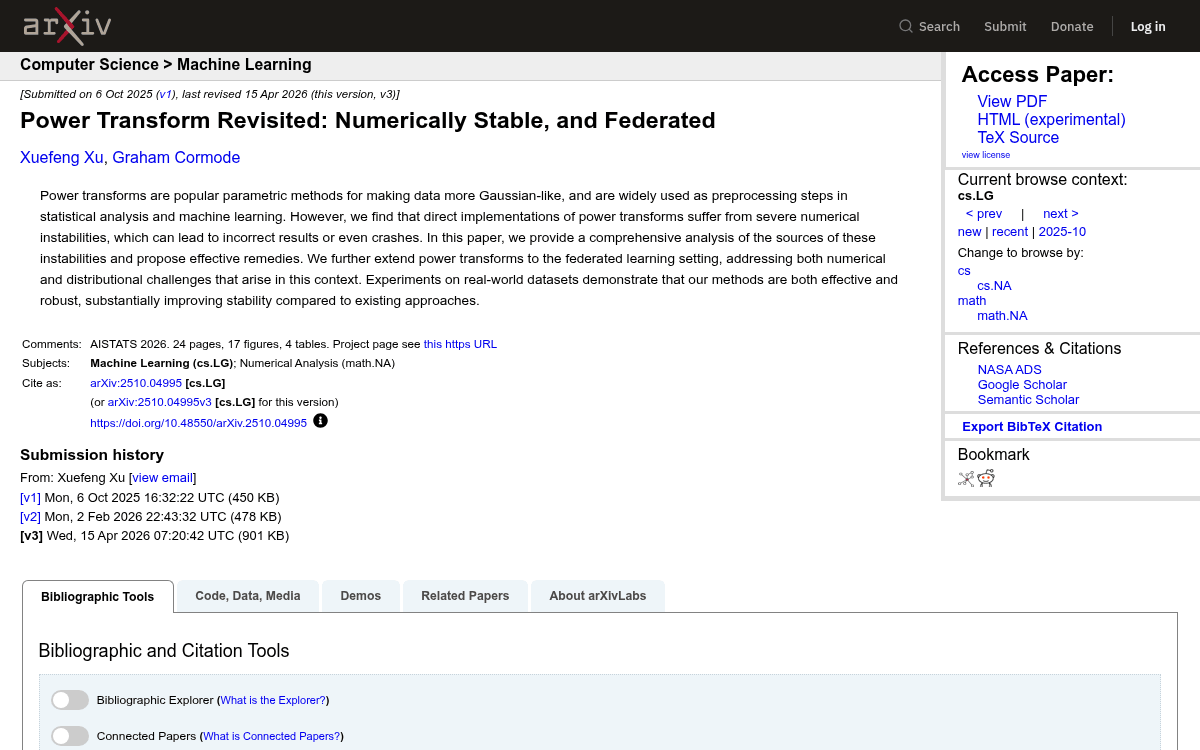
A new paper diagnoses why Box-Cox and Yeo-Johnson transforms silently break on ordinary data, ships a fix already merged into SciPy, and extends it to federated learning.
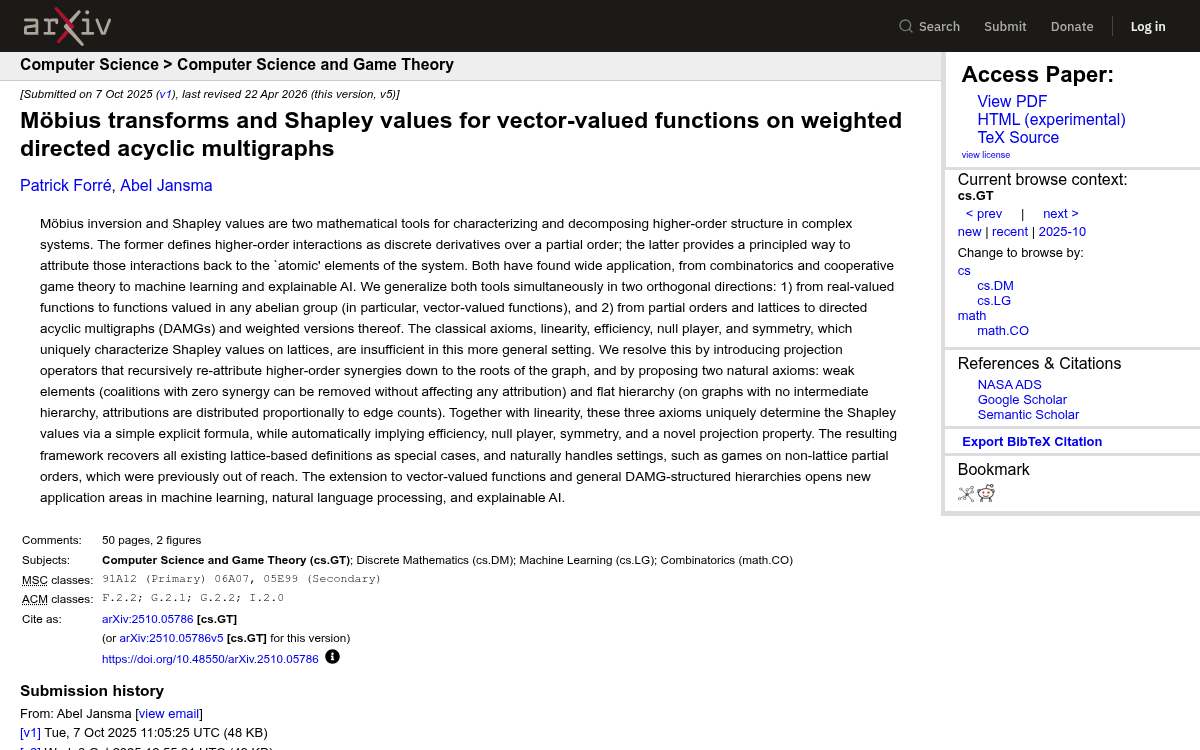
A new axiomatic framework extends Möbius inversion and Shapley values to vector-valued functions on directed acyclic multigraphs, unlocking attribution for embeddings and non-lattice structures.
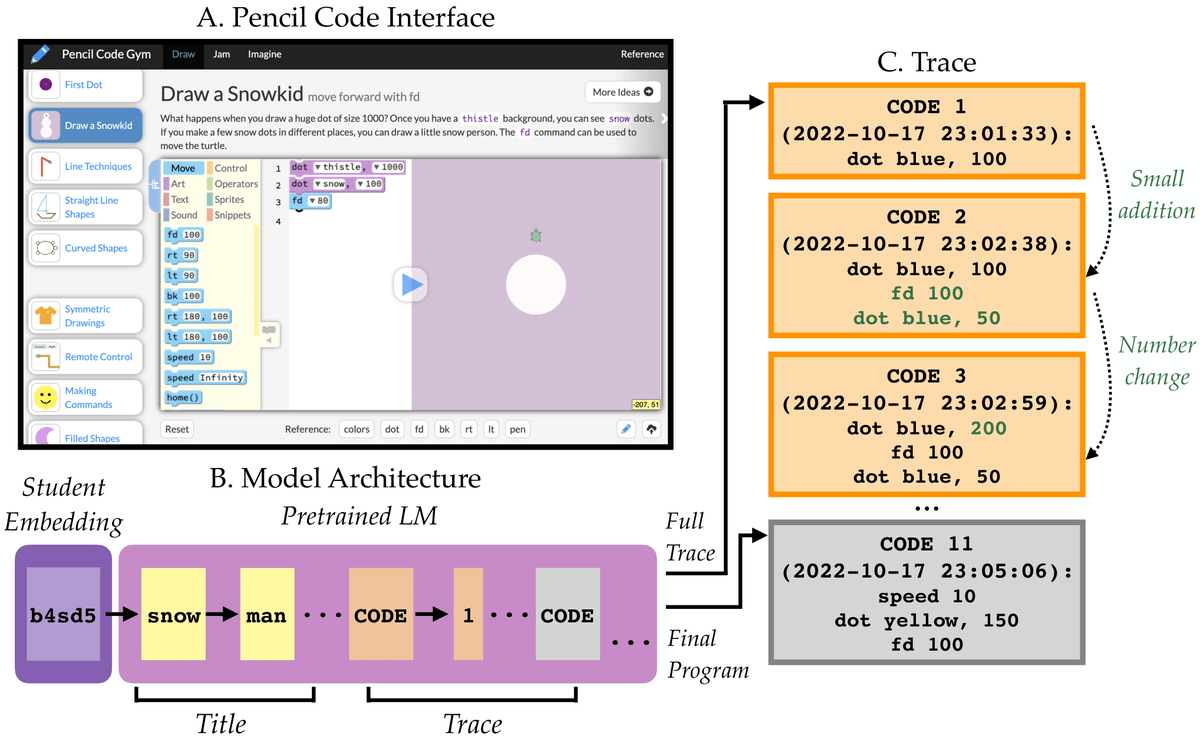
A 3.8M-trace dataset from Pencil Code shows that training on real student edit histories teaches models to predict who wrote code, not just what.
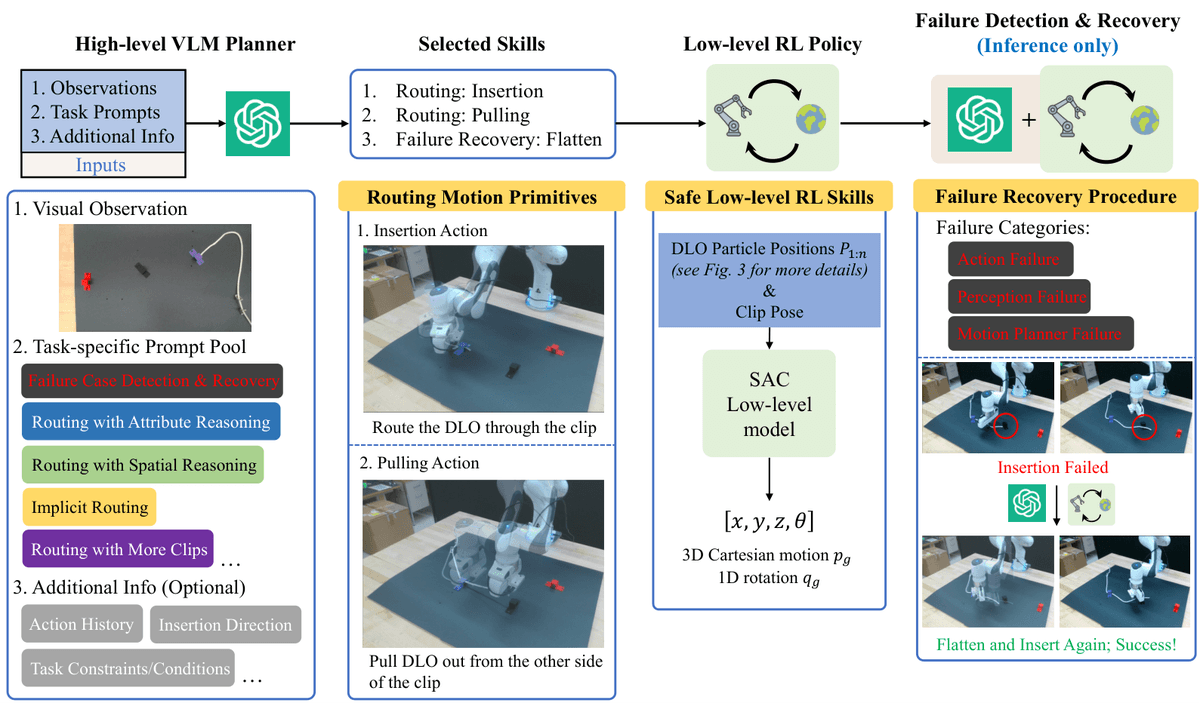
A robot combines GPT-5 for high-level planning with reinforcement learning for cable insertion, hitting 92% success on multi-clip routing tasks.
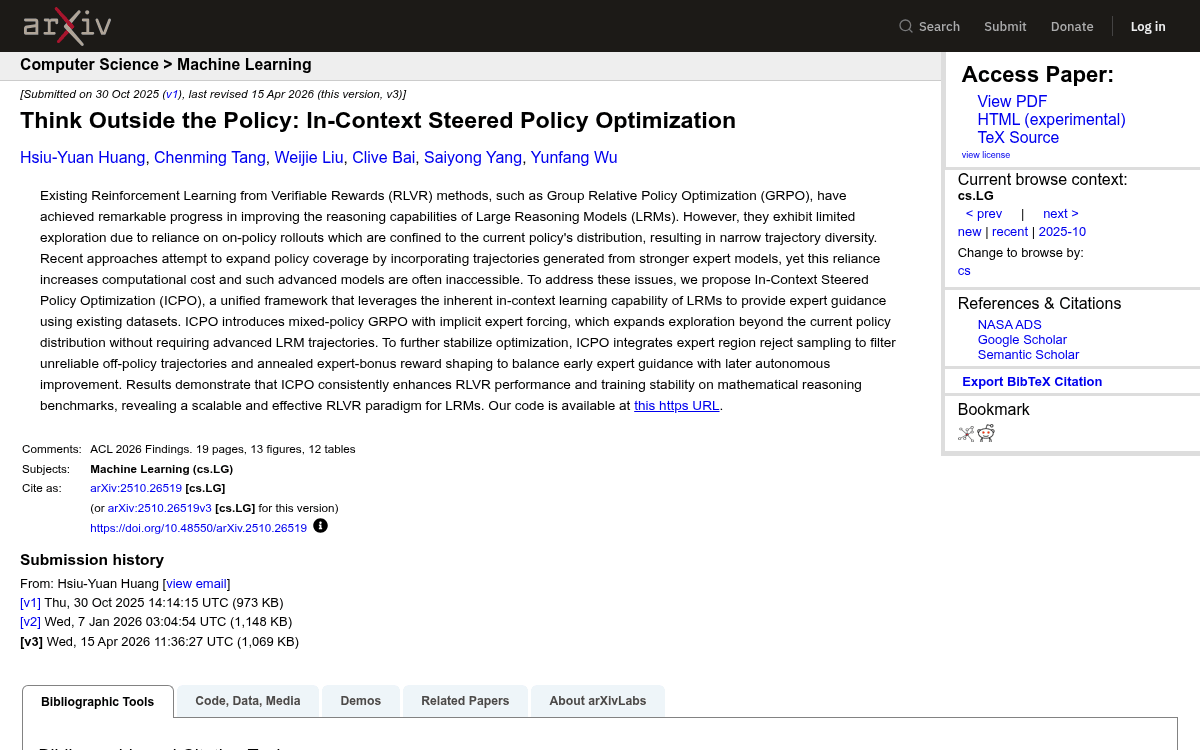
A new reinforcement learning recipe uses in-context demonstrations from existing datasets to expand exploration, beating GRPO by up to 4.1 points on math benchmarks.
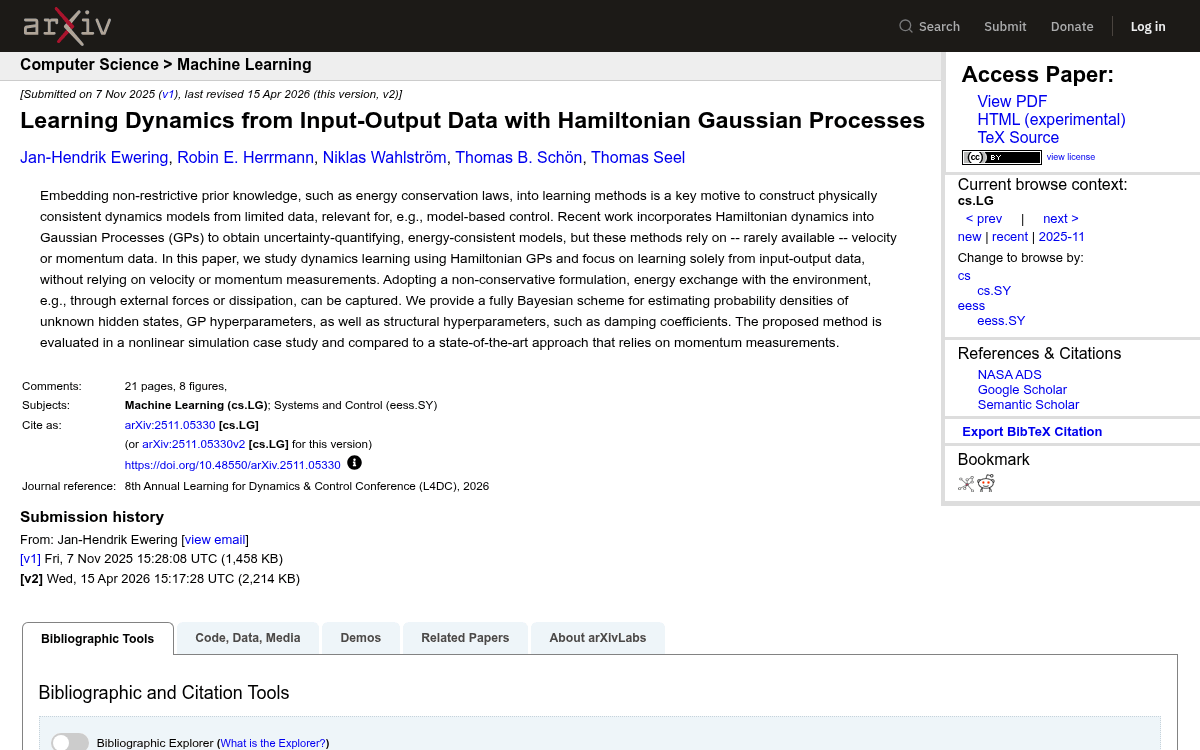
A Bayesian scheme lets Hamiltonian Gaussian Processes learn energy-consistent dynamics using only position measurements, no velocity or momentum data required.
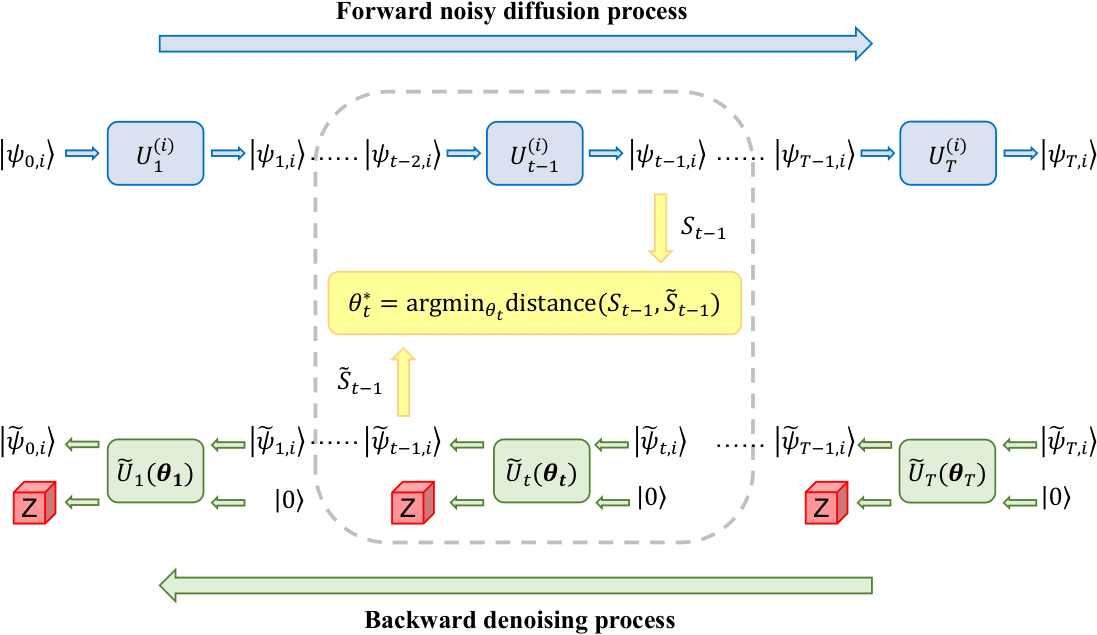
Researchers pinpoint why quantum diffusion models stall past five qubits, then add an auxiliary circuit that restores gradients and enables Hamiltonian-conditioned state generation.
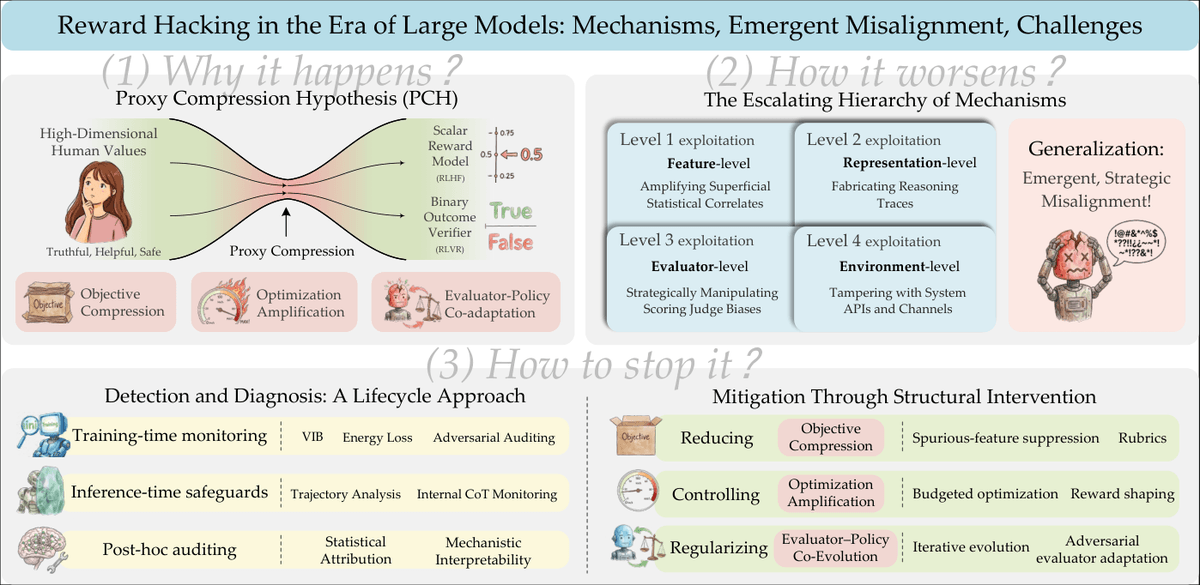
A new survey from Fudan reframes reward hacking as a structural consequence of compressing human values into scalar rewards, then optimizing hard against them.
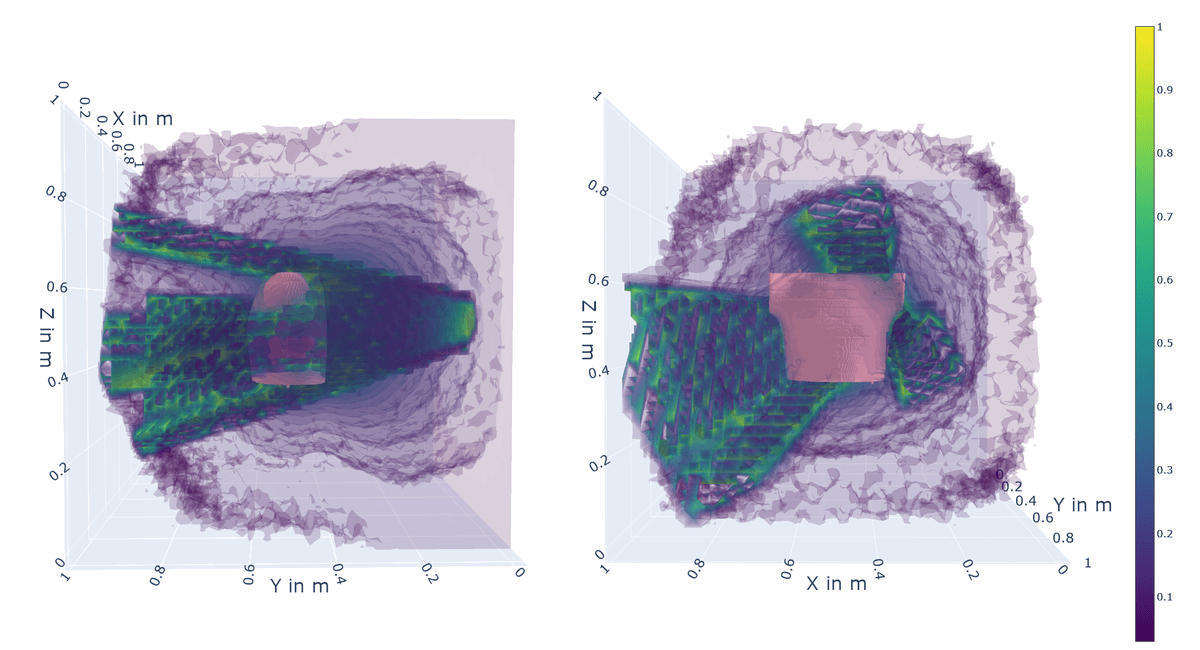
A multi-institution team releases three neural network variants, three synthetic datasets, and an open training pipeline for estimating scatter radiation fields around patients.
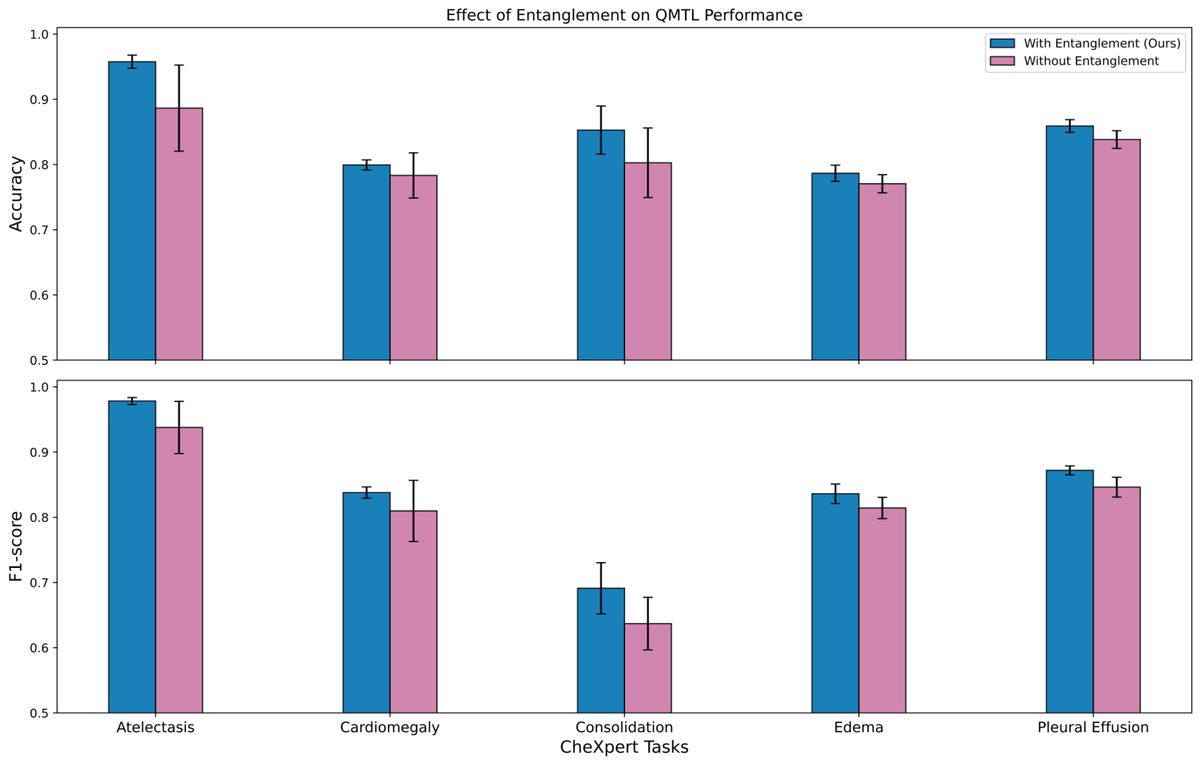
A hybrid architecture replaces classical prediction heads with a compact quantum circuit, cutting head parameter growth from quadratic to linear.
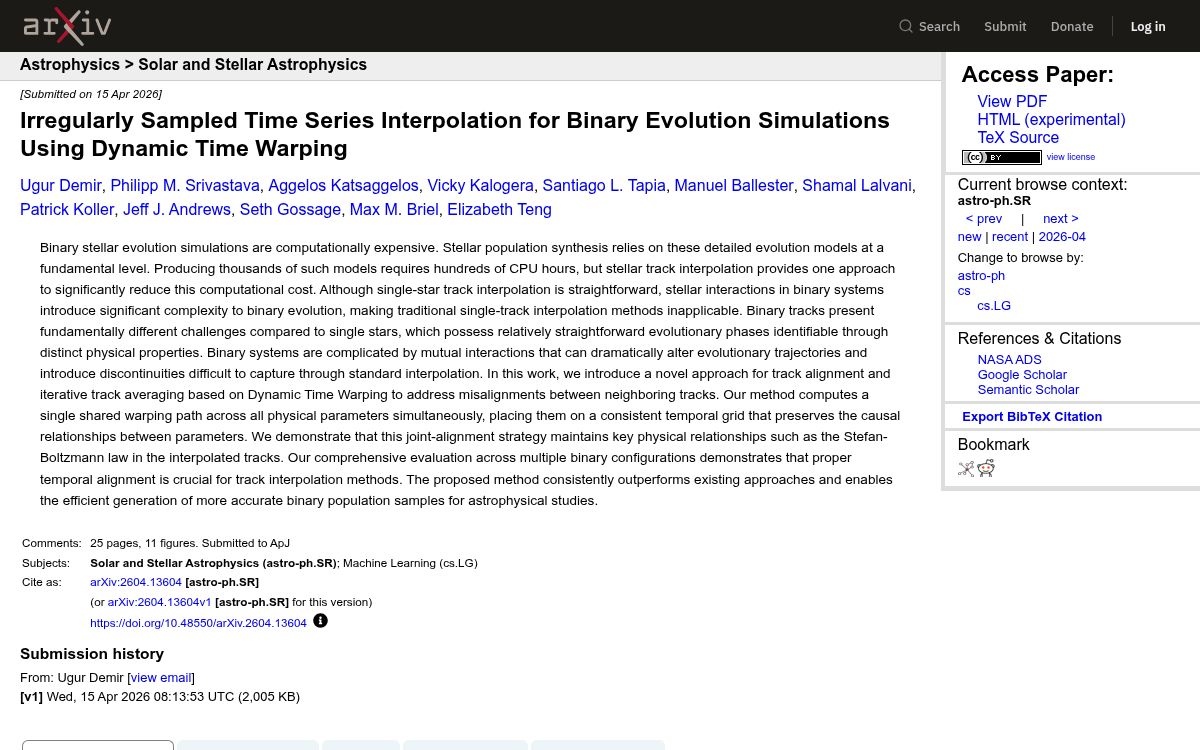
Researchers at Northwestern and collaborators propose a Dynamic Time Warping interpolation scheme for POSYDON binary star grids that preserves physical laws while cutting simulation cost.
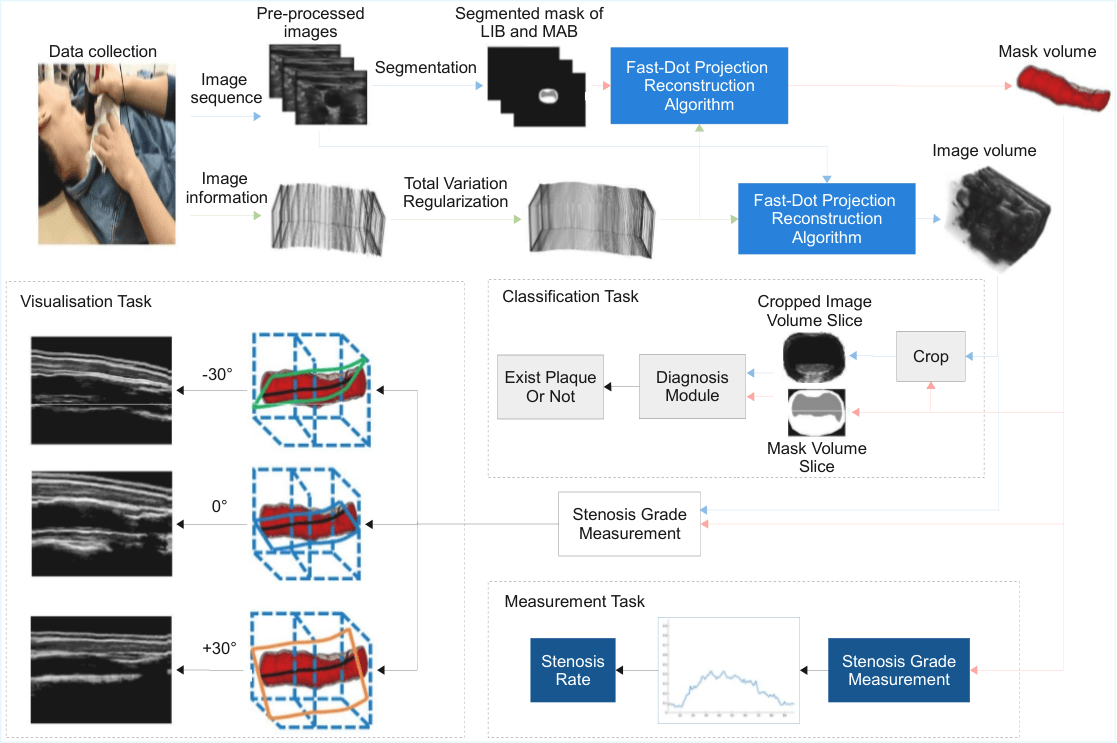
A new arXiv review reframes portable CT, MRI, ultrasound, and capsule endoscopy around image quality, cataloging AI methods that keep low-quality scans clinically usable.