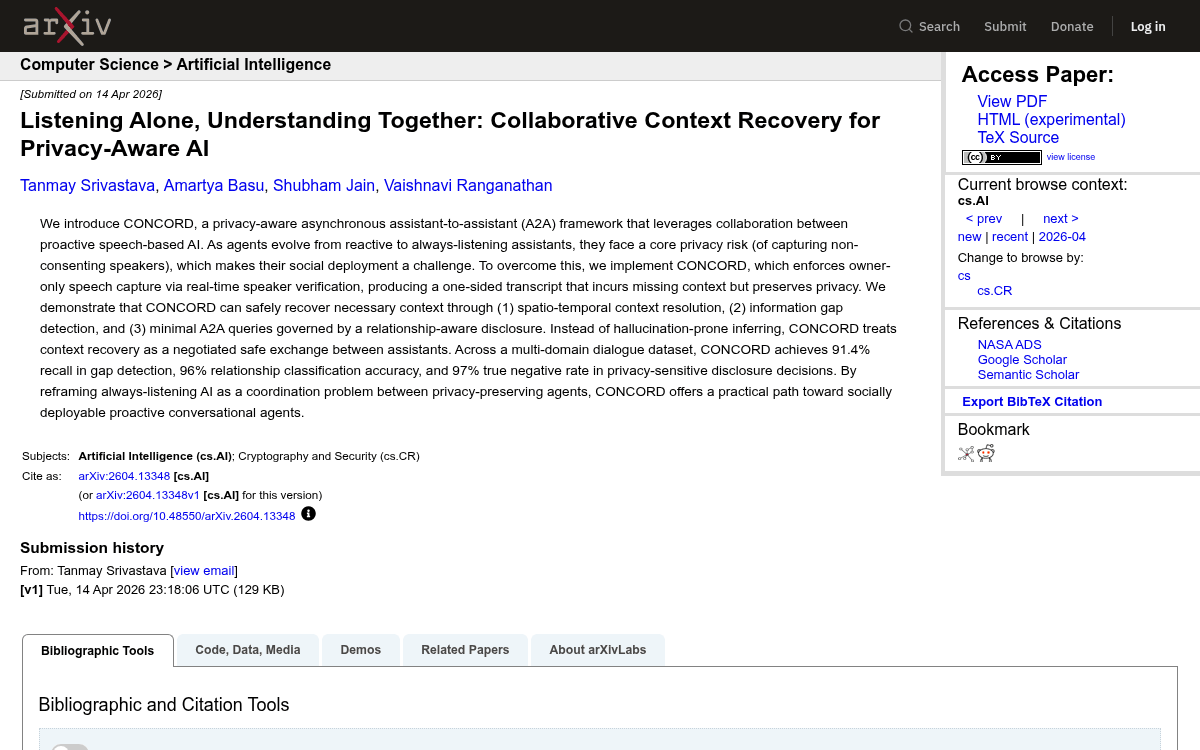
CONCORD reframes always-listening AI as a coordination problem between two agents that each hear only their owner, then negotiate the missing context safely.
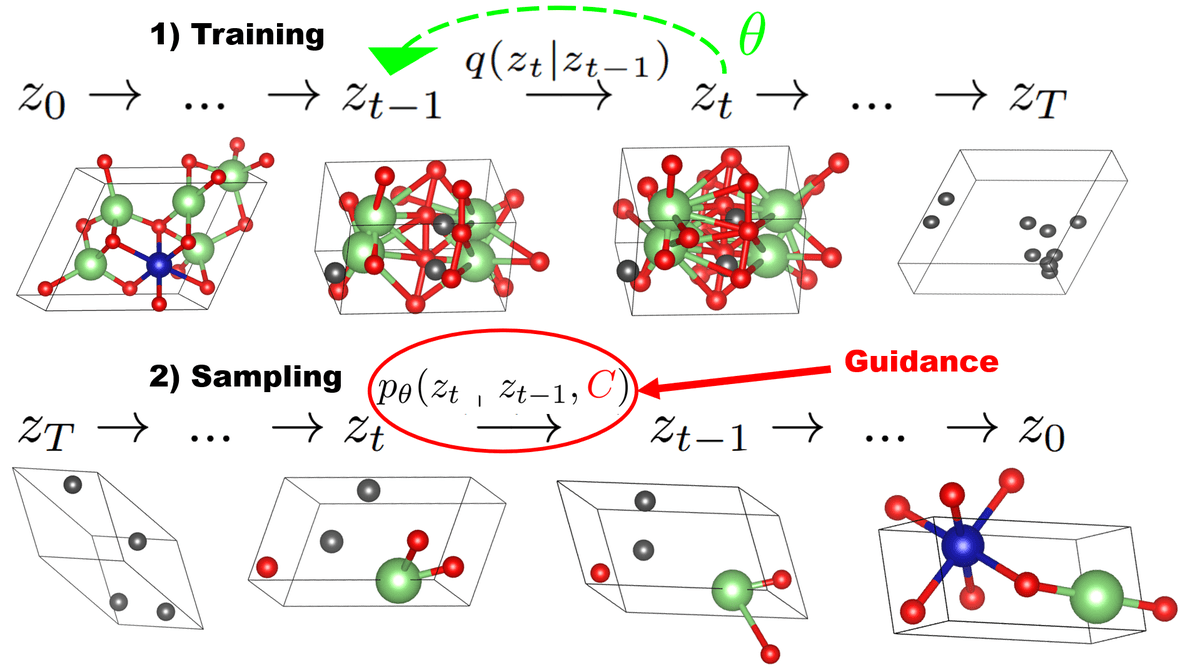
A new framework bolts differentiable constraint guidance onto pre-trained crystal diffusion models, letting chemists steer generation without any retraining.
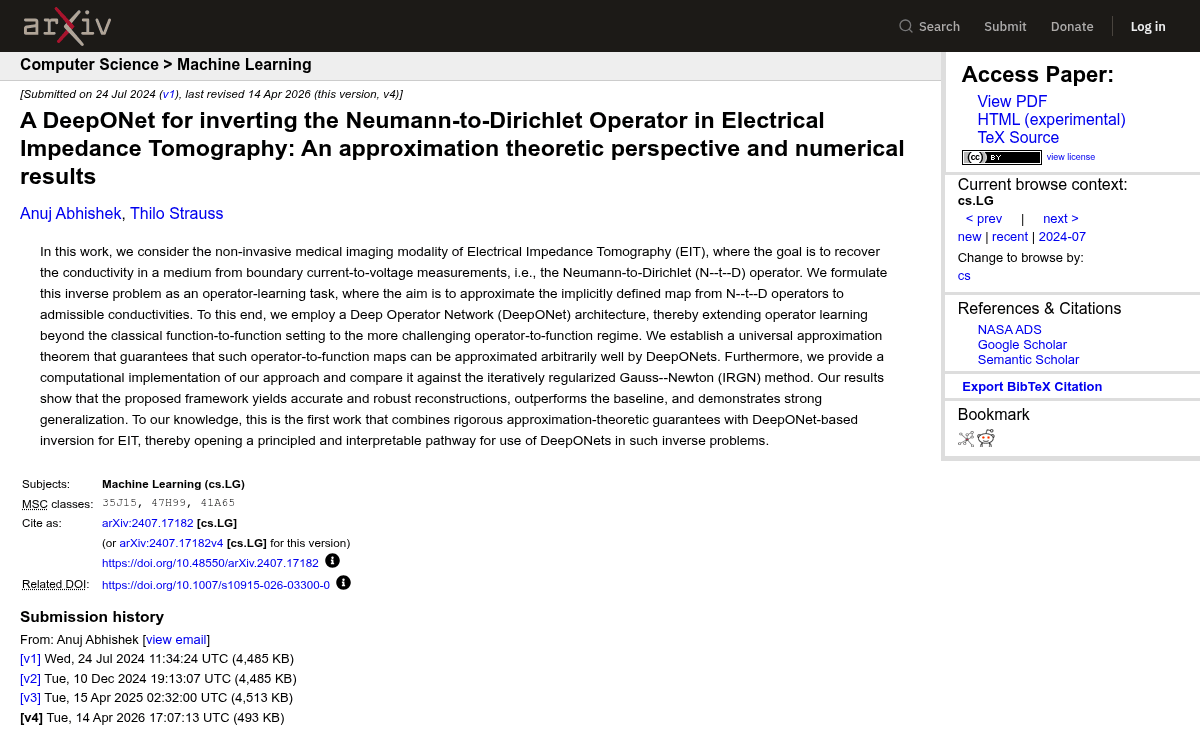
Researchers prove that Deep Operator Networks can invert the Neumann-to-Dirichlet map in Electrical Impedance Tomography, with universal approximation guarantees for operator-to-function learning.
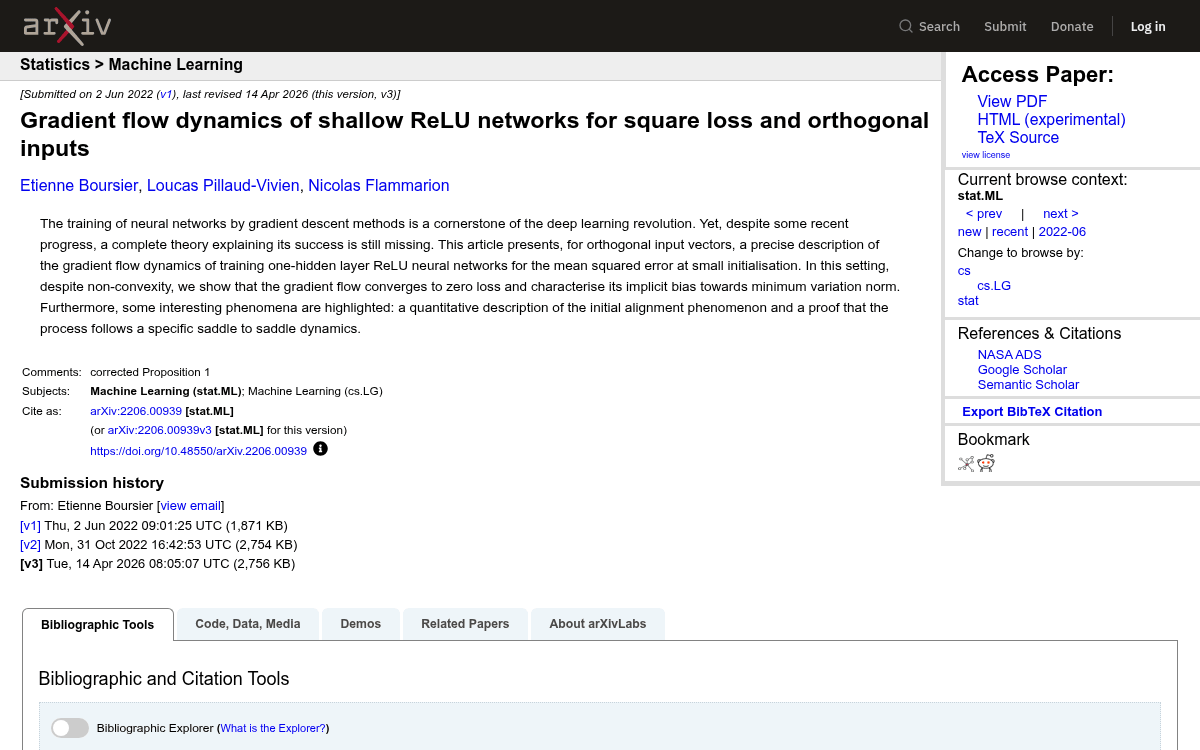
EPFL researchers deliver a rigorous proof that small-initialization gradient flow on shallow ReLU nets converges to a minimum-norm interpolator through saddle-to-saddle dynamics.
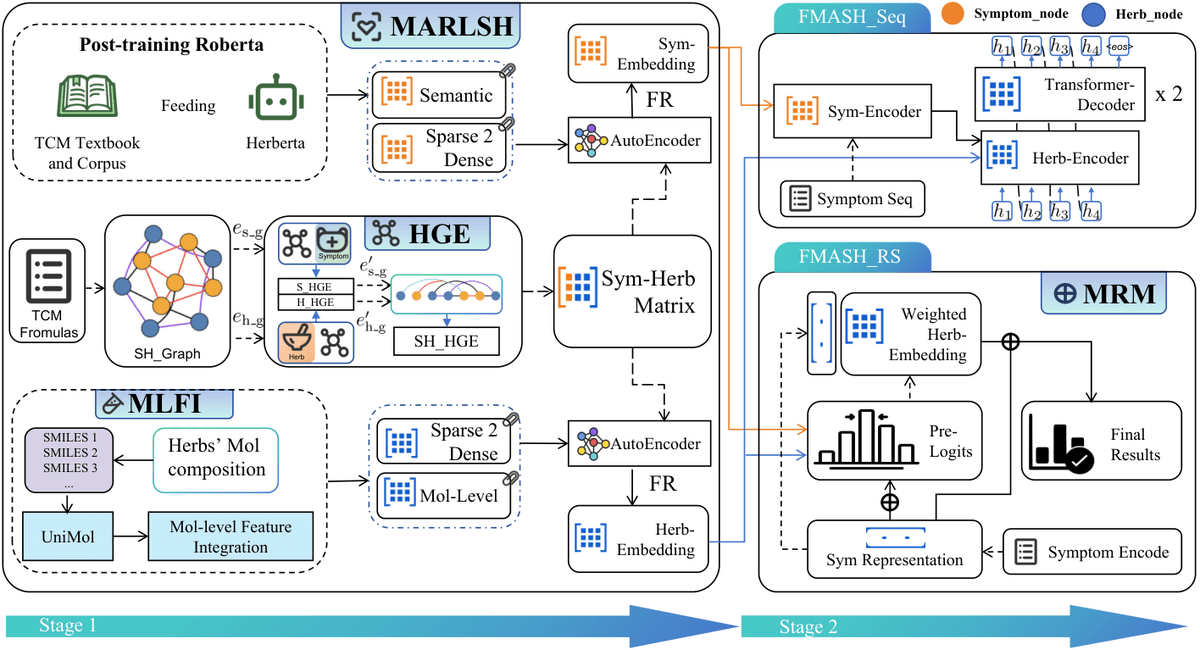
A new framework fuses molecular structure with symptom-herb graphs to recommend Traditional Chinese Medicine formulas, outperforming prior state-of-the-art models.
A new parameter-efficient fine-tuning method uses tensor networks to deliver full-rank weight updates while training as few as 48 parameters per adapter.
EPFL researchers show federated inference is dangerously exposed to poisoned predictions, and their DeepSet-TM defense beats prior methods by up to 22 accuracy points.
A new random matrix theory result pins down the exact spectrum of softmax attention at initialization, overturning a previously assumed Marchenko-Pastur law.
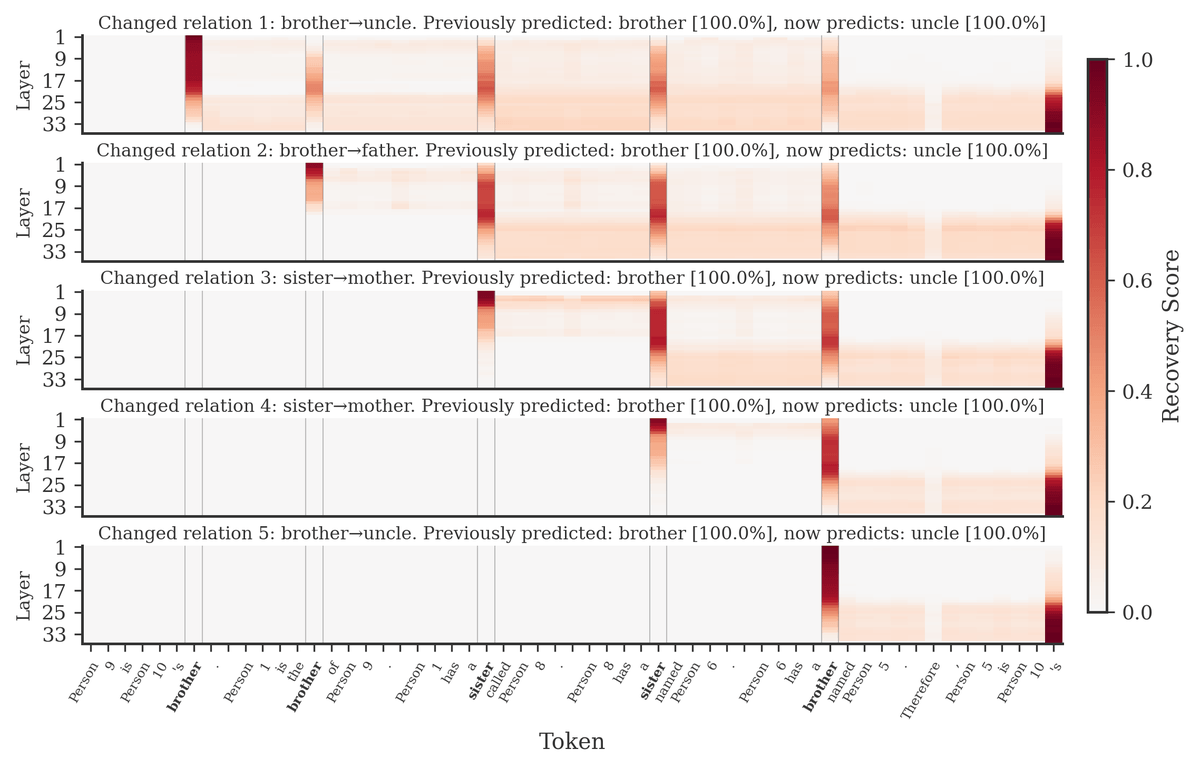
A new interpretability study probes whether transformers dial up more layers for harder multi-hop reasoning, finding the effect is weak until finetuning kicks in.
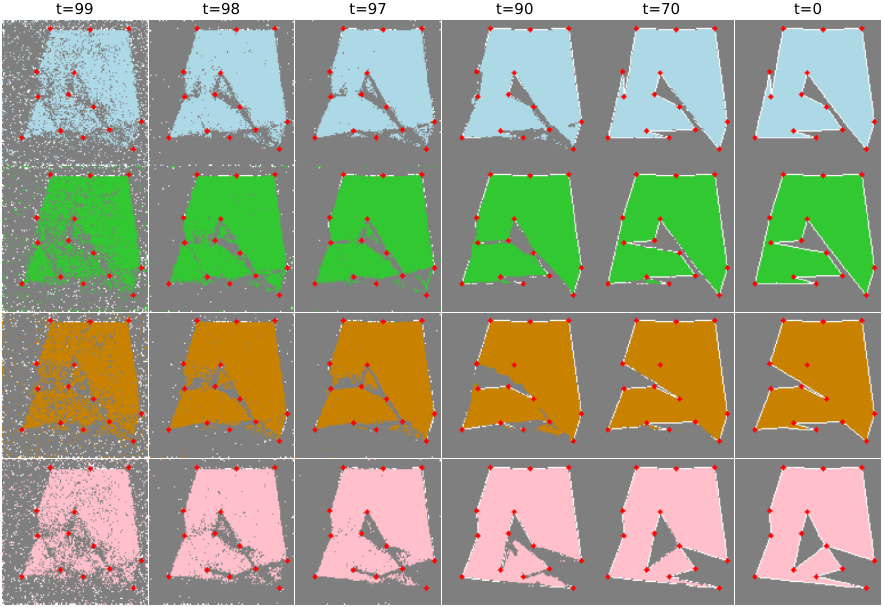
Researchers at Tel Aviv University show a plain diffusion model, trained on rasterized shapes, can approximate classical geometry problems that have no known efficient solvers.
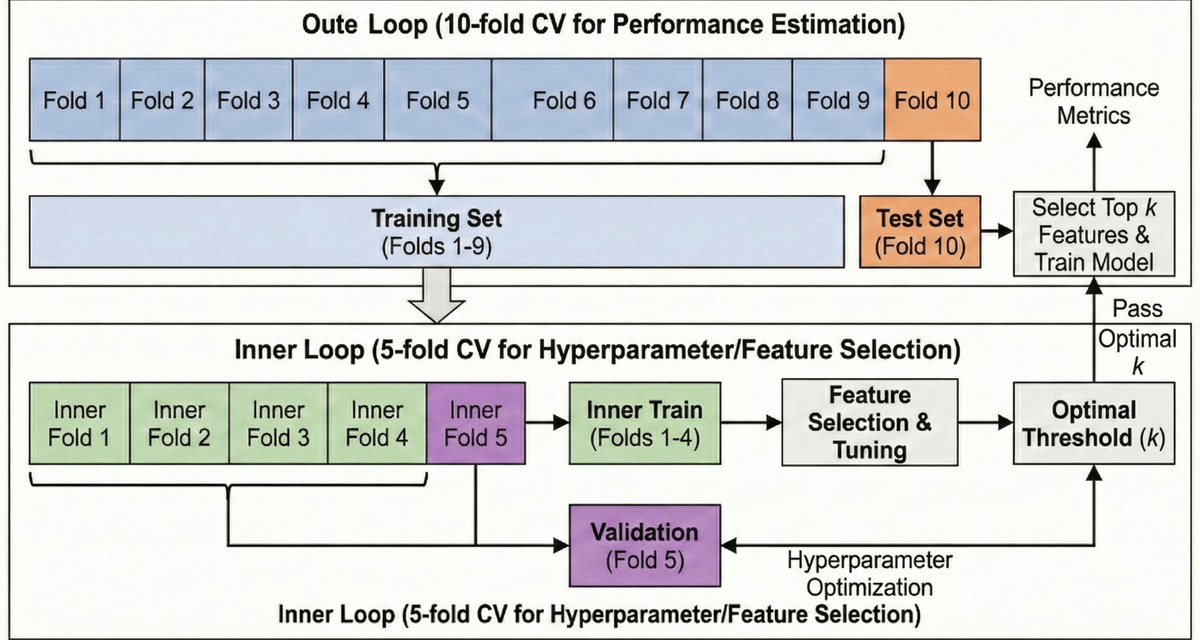
A new pipeline uses Fast-mRMR feature selection to trim genomic noise, boosting predictive accuracy while cutting compute costs for dietary restriction gene discovery.