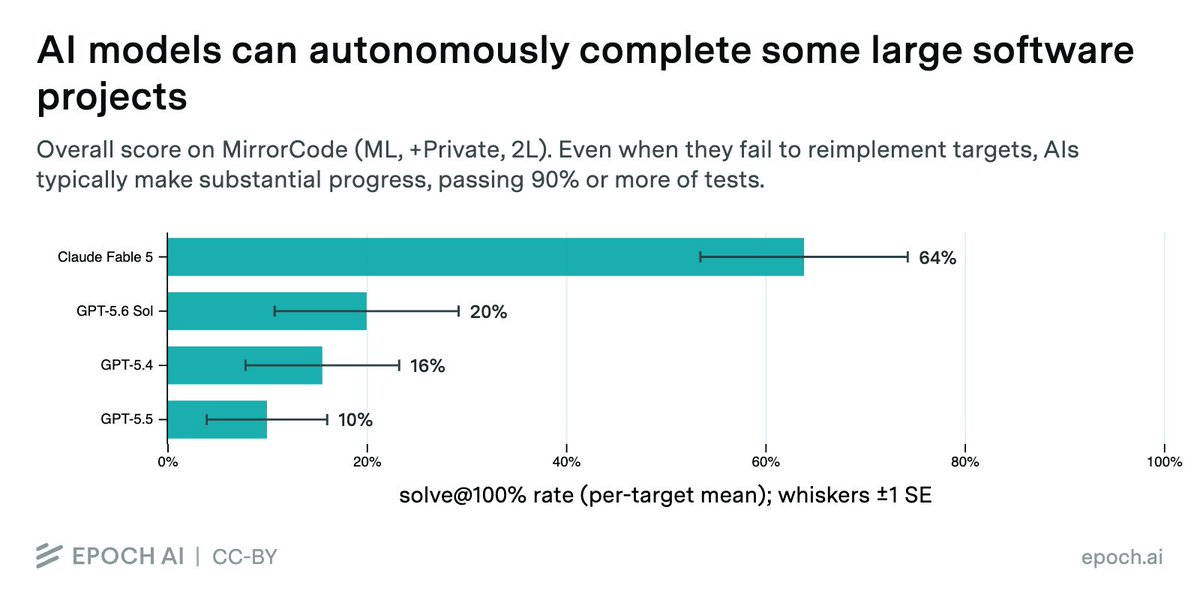
Epoch AI's MirrorCode leaderboard puts Claude Fable 5 at 64% and GPT-5.6 Sol at 20% on full-program reimplementation tasks that can run for weeks and cost thousands of dollars per attempt.
We ran Claude Opus 5 through 260 debugging attempts at Low, Medium, High, and XHigh effort, then compared its reliability, cost, latency, token use, and patch behavior with nine other models.
The containers/kubernetes-mcp-server gives AI agents a native, dependency-free interface to Kubernetes clusters, turning natural language into real cluster operations.
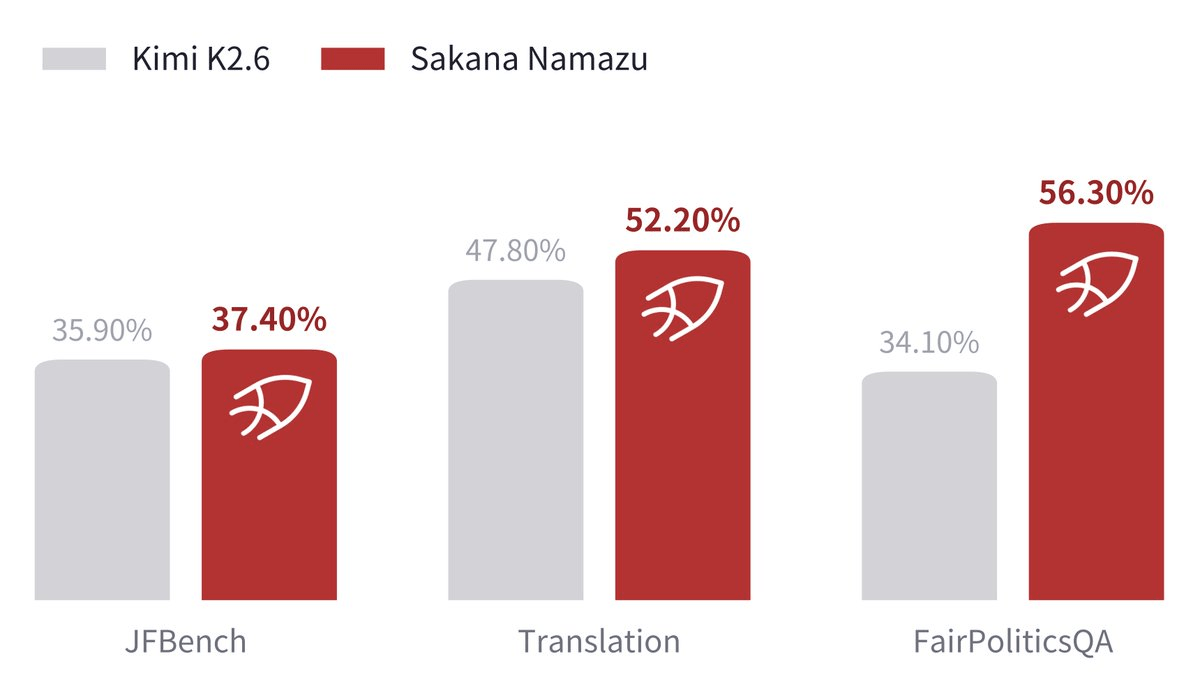
Sakana AI opens its Japanese-specialized Namazu LLM as an API, built on Kimi K2.6 with Japan-specific fine-tuning, built-in web search, and OpenAI-compatible endpoints.
A 14B ternary Qwen2.5-based model refactored with BitNet-style weights runs on plain CPUs with 8-12 GB of RAM and native tool-call plus robotics tokens.
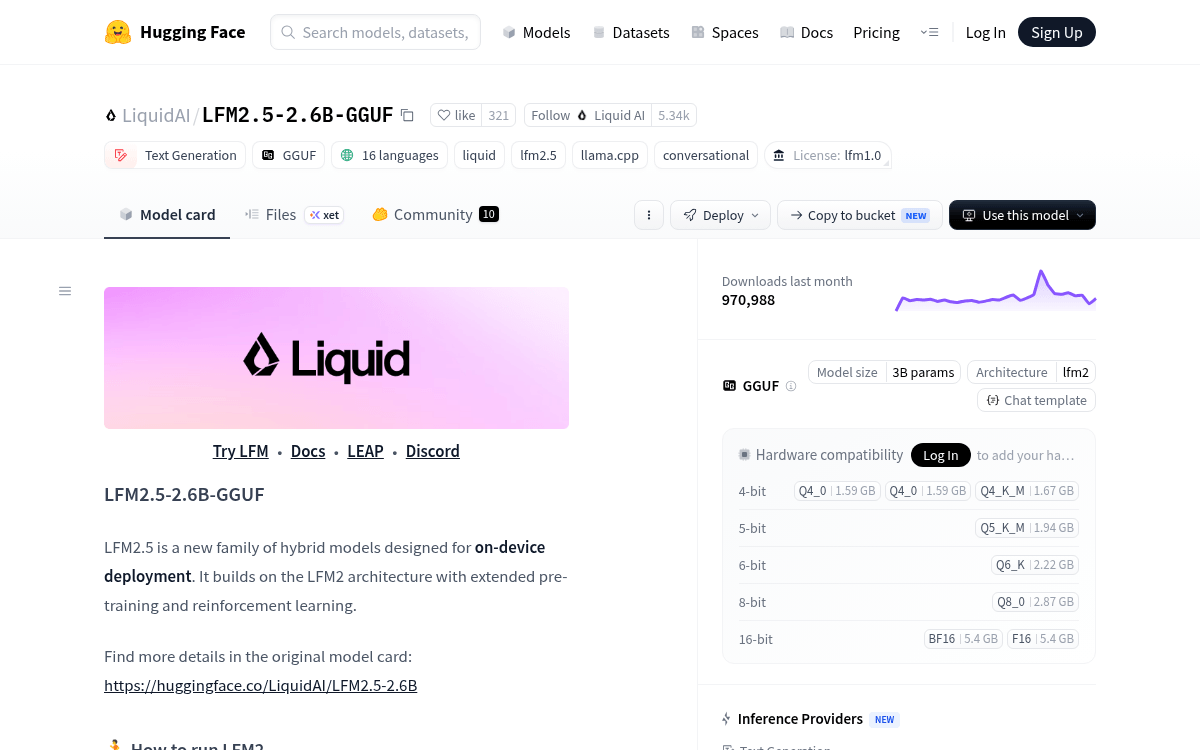
Liquid AI's 2.6B parameter agent model runs entirely on-device at 220 tokens per second, fits in 2.5 GB, and beats models four times its size on tool use.
Mureka V9 debuts at #2 on both Artificial Analysis leaderboards, sitting within 1 Elo point of Suno V5.5 for instrumentals — and its DAW-native workflow sets it apart from every rival.
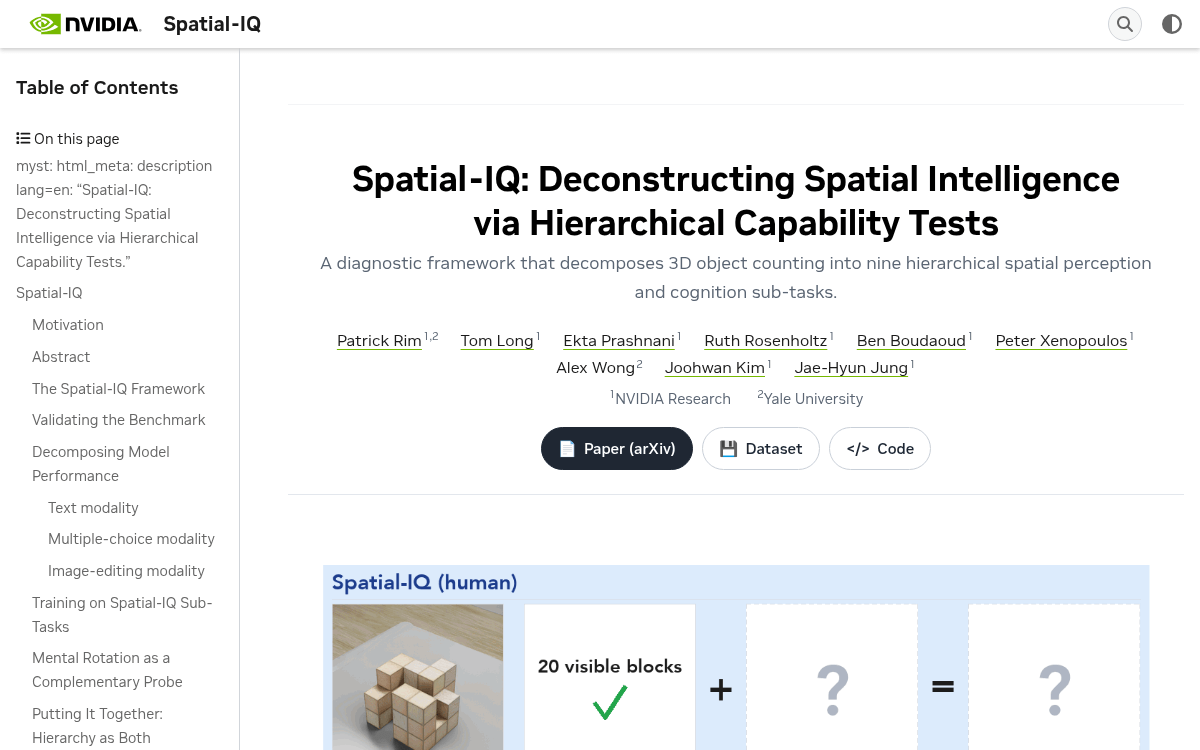
NVIDIA Research's Spatial-IQ benchmark reveals that top AI models hit 3D object-counting scores through shortcuts, not real spatial reasoning — and shows how to fix it.
Google's July Gemini Drops brings faster Flash models, system-wide macOS voice control, Spark's global rollout, and personalized image generation for all U.S. users.

 Pro
 Pro
 Pro
 Pro
 Pro
 Pro
 Pro
 Pro