
OpenHanako Brings Persistent AI Agents to Everyone Without a Terminal
OpenHanako is a free, open-source desktop AI agent with persistent memory, a configurable personality, and full computer access — no CLI required
Takeaways
- OpenHanako is a free, open-source Electron desktop app that runs persistent AI agents with memory, personality, and full computer access.
- Each agent uses a two-tier memory system: hot SQLite working memory for recent events and compiled long-term summaries for older context.
- Agents can browse the web, read/write files, run terminal commands, execute JavaScript, and manage cron schedules autonomously.
- Multi-agent collaboration is built in — agents can chat in group channels or delegate tasks to each other, each with independent memory.
- A two-layer sandbox (PathGuard + OS-level Seatbelt/Bubblewrap) restricts file writes to the workspace by default, keeping system access controlled.
- Available now on macOS, Linux, and Windows (beta) — download from GitHub Releases, Apache 2.0 licensed.
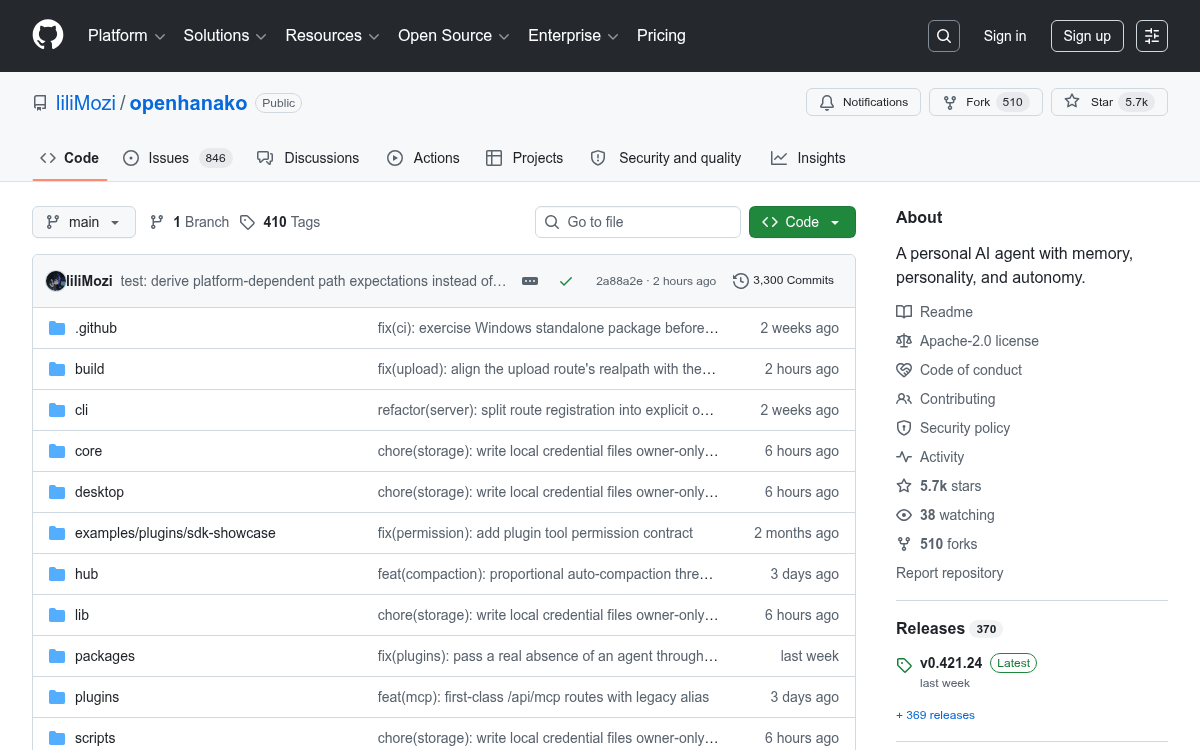
OpenHanako (internally named HanaAgent) is an open-source, Electron-based desktop application that turns any LLM into a persistent personal agent. It remembers your conversations, operates your computer, browses the web, runs code, and manages your schedule, all through a GUI that requires no config files or terminal access. The project has crossed 5,600 GitHub stars and 500 forks, with nearly 300 releases shipped since launch.
Most powerful AI agents live in the terminal. Tools like Claude Code or Codex are capable, but they assume comfort with a command line. OpenHanako targets everyone who works at a computer, not just developers who live in one.
Memory that actually sticks
The most technically interesting part of OpenHanako is its memory architecture. Each agent gets its own folder containing a personality template, a recency-decay memory system, SQLite working memory, compiled long-term summaries, and a workspace where it can read and write files, execute terminal commands, browse the web, and run JavaScript.
The design is two-tier: a hot layer of recent events stored in a fast SQLite WAL database, and a cold layer of compiled summaries the agent references for older context. Older memories fade naturally rather than being hard-cut, which avoids the jarring context-loss problem common in simpler implementations.
During onboarding you configure three models: one for chat, one lightweight for quick tasks, and one large for memory compilation. A cheap local model via Ollama handles lightweight utility calls; a bigger model handles memory consolidation. You only burn expensive frontier-model tokens where they're actually needed.