
Pro
Open-Source LuxTTS Clones Voices 150x Faster Than Realtime on One GPU
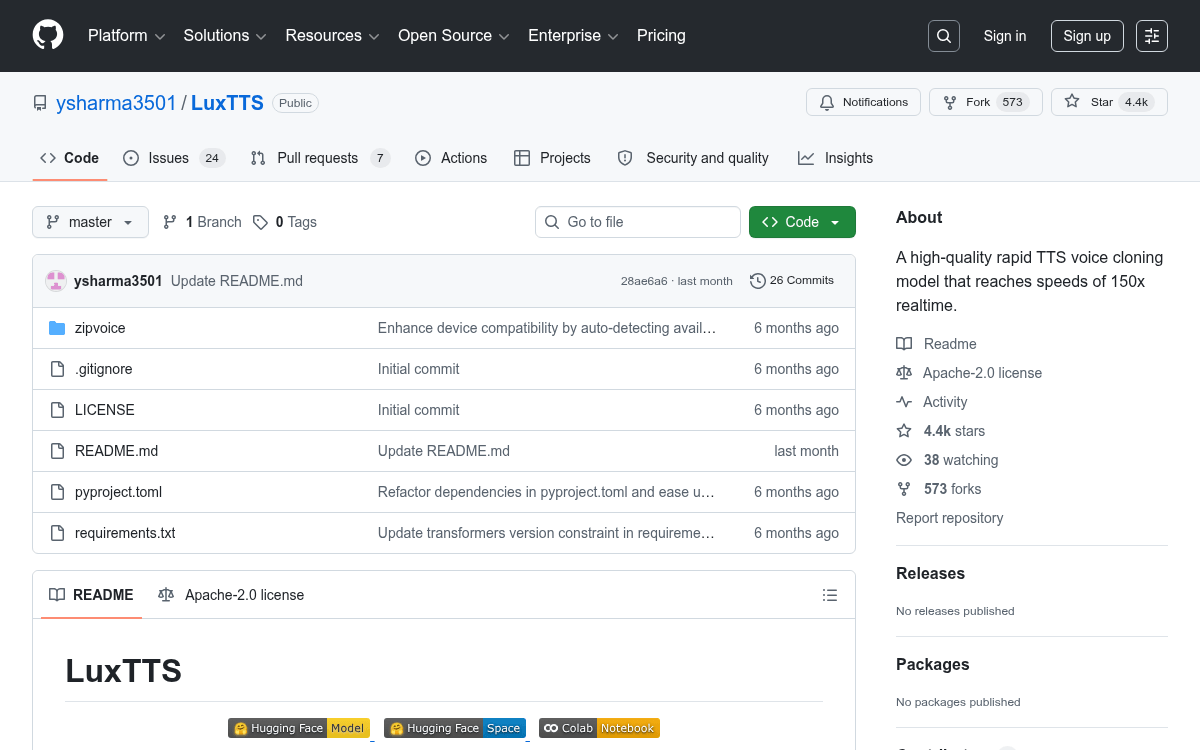
LuxTTS is a free, open-source voice cloning model that runs at 150x realtime speed and fits inside just 1GB of VRAM.
20 stories
LuxTTS is a free, open-source voice cloning model that runs at 150x realtime speed and fits inside just 1GB of VRAM.
Cerebras runs Kimi K2.6 at 981 tokens/sec — 5.4x faster than Google's new speed-first Gemini 3.5 Flash, and fast enough for real-time voice with a trillion-parameter model.
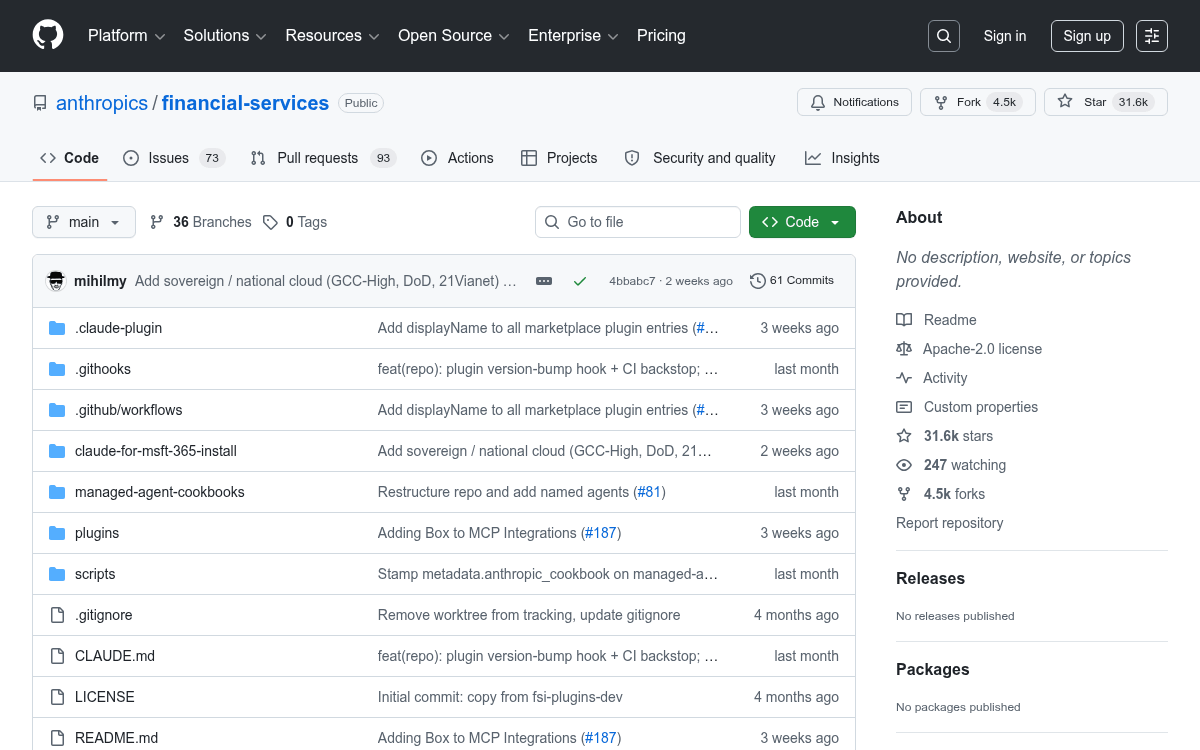
Anthropic open-sources 10 production-ready financial AI agents covering investment banking, equity research, private equity, and fund operations — free on GitHub under Apache 2.0.
Browser Use's new 'browser-wall' lets a single CDP endpoint orchestrate multiple cloud browsers simultaneously, with built-in profiles and proxies for scale
OpenAI's Codex app gets searchable settings, persistent working state, and a round of UX fixes that reduce daily friction for power users

Google's new multi-agent RAG framework keeps searching until it has enough context, boosting factuality accuracy by up to 34% over standard RAG.
Anthropic's new white paper shows Claude Opus 4.7 matching or beating ChemDraw and MestReNova at NMR prediction, plus solving structures from spectra alone.

NVIDIA's new 550B Mixture-of-Experts model lands inside Perplexity's Pro and Max tiers, targeting multi-step agent workflows with 1M token context
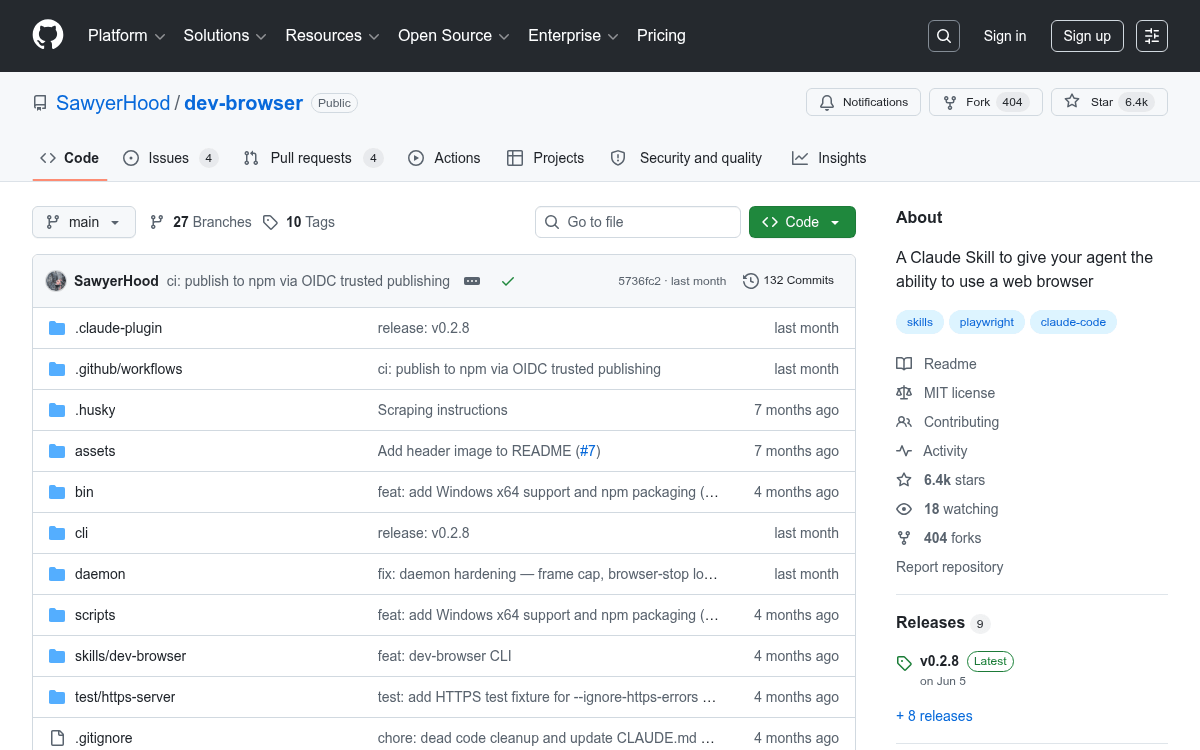
dev-browser gives Claude Code a real browser to verify its own work, beating Playwright MCP on speed, cost, and turn count

Google's new Colab CLI turns remote GPUs and TPUs into a single terminal command, letting agents like Claude Code and Codex offload heavy ML work.

Google DeepMind's D4RT collapses depth, tracking, and camera estimation into one transformer that runs 300x faster than prior systems.

Cursor updates Design Mode so you can click, scribble, or talk to your running app while agents rewrite the underlying code in parallel.

Sakana AI is consolidating two years of self-improving AI research into a dedicated Tokyo lab betting that sample efficiency, not raw scale, unlocks recursive self-improvement.
Replit Agent 4 replaces Design Mode with an infinite Design Canvas, kills fork-and-merge collaboration, and lets you plan while you build — all at once.
Google's weekly recap stacks six launches: image models hit GA, a hypothesis-generating agent system, a personal AI feed, an encoder-free Gemma, and a live music model.
Google's Gemma 4 QAT checkpoints slash VRAM by ~72%, putting a 26B model on a 16GB laptop and a 2B model under 1GB on mobile
Google's open-weight family gets quantization-aware checkpoints across every size, shrinking the smallest variant to a 1GB memory footprint while preserving quality.
Gemini Live now generates and edits images mid-conversation while you share your camera, turning voice chats into a visual co-creation loop.
Google releases QAT-optimized Gemma 4 checkpoints that cut memory 40–50% while preserving near-full model quality, enabling local inference on phones, laptops, and consumer GPUs.
Google releases QAT checkpoints for all Gemma 4 sizes, cutting VRAM by ~72% while preserving near-BF16 quality for on-device and local deployment.