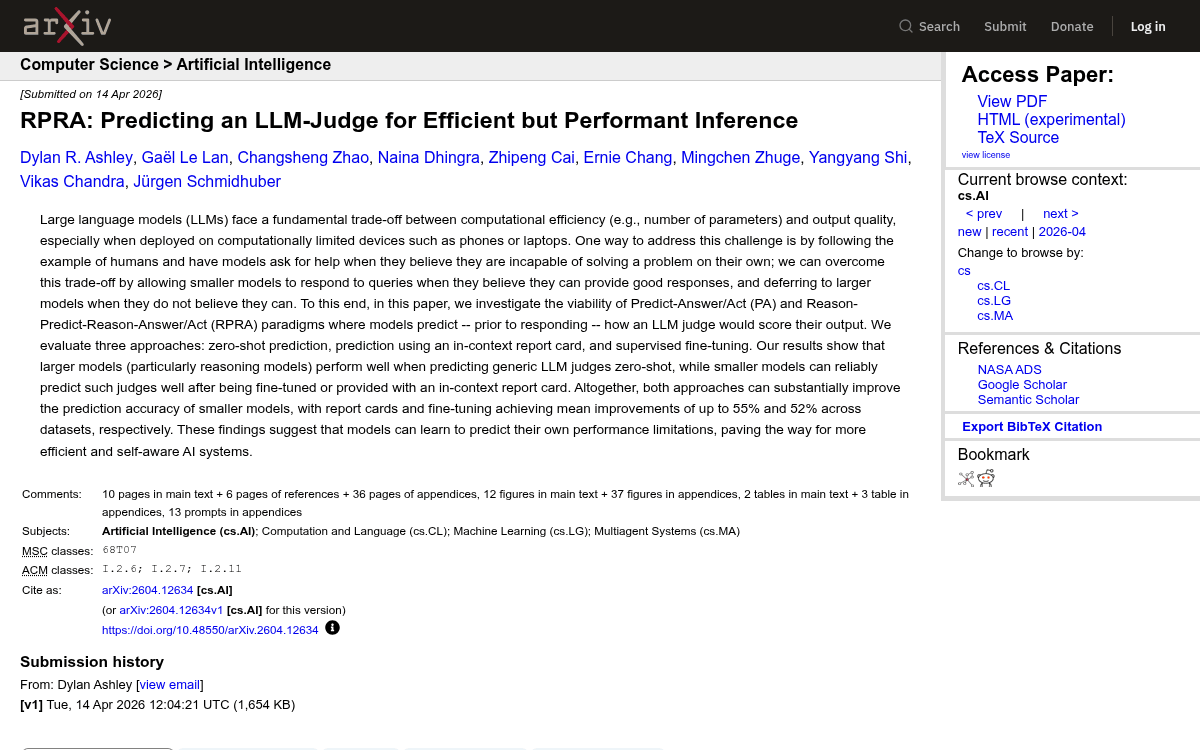
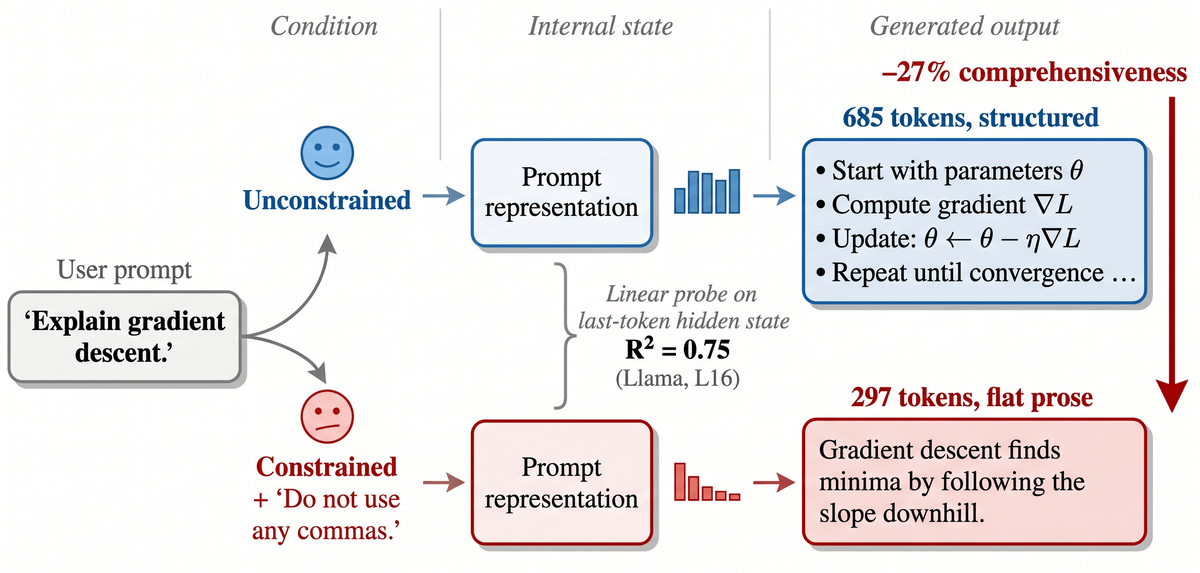
A new Meta and IDSIA paper teaches small models to predict how an LLM judge would score them, enabling smart routing to larger models only when needed.
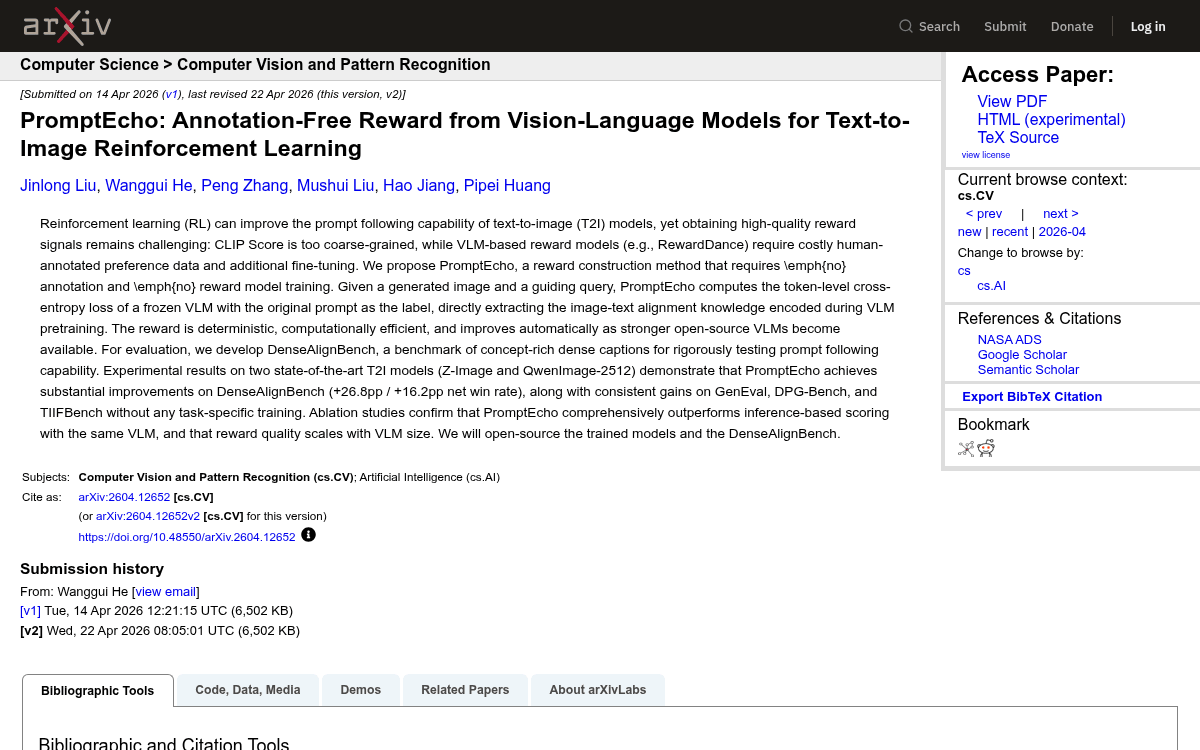
Alibaba researchers turn any frozen vision-language model into a training-free reward signal for image generators, boosting prompt following without annotation.
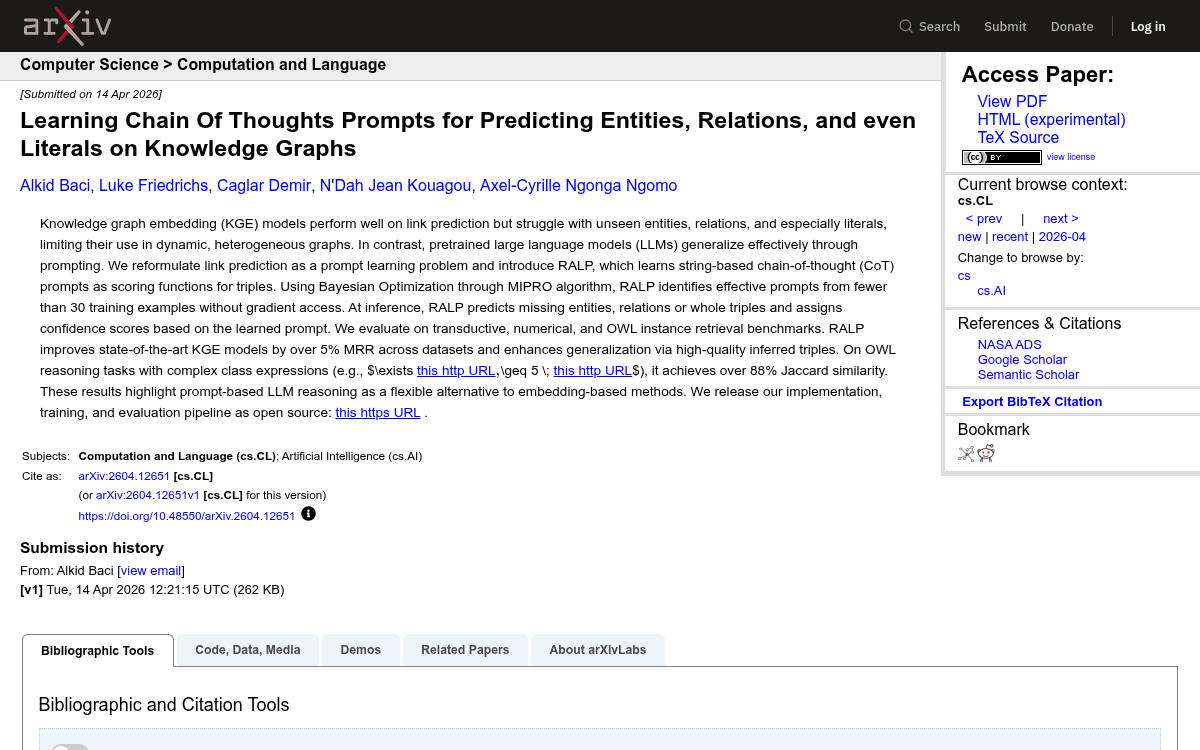
A new framework called RALP swaps continuous embeddings for learned chain-of-thought prompts, beating state-of-the-art knowledge graph models by more than 5% MRR.
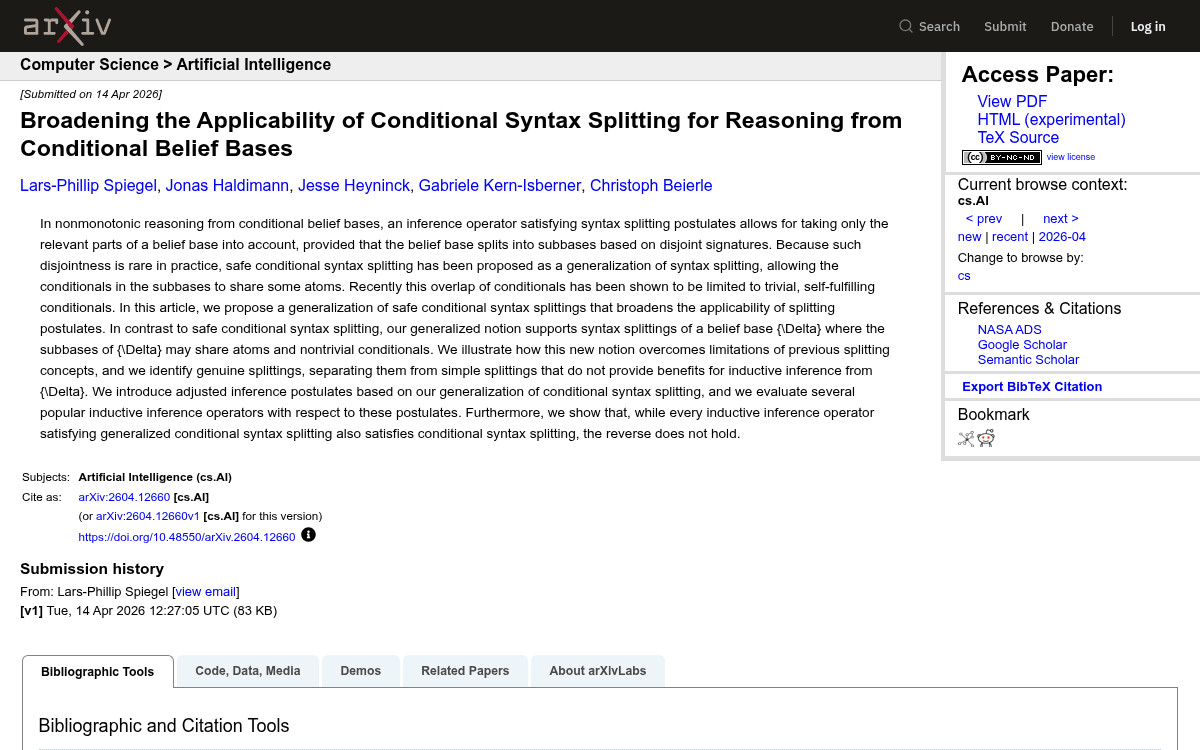
A new generalization lets knowledge bases share atoms and nontrivial rules across subparts, expanding when modular reasoning shortcuts can safely apply.
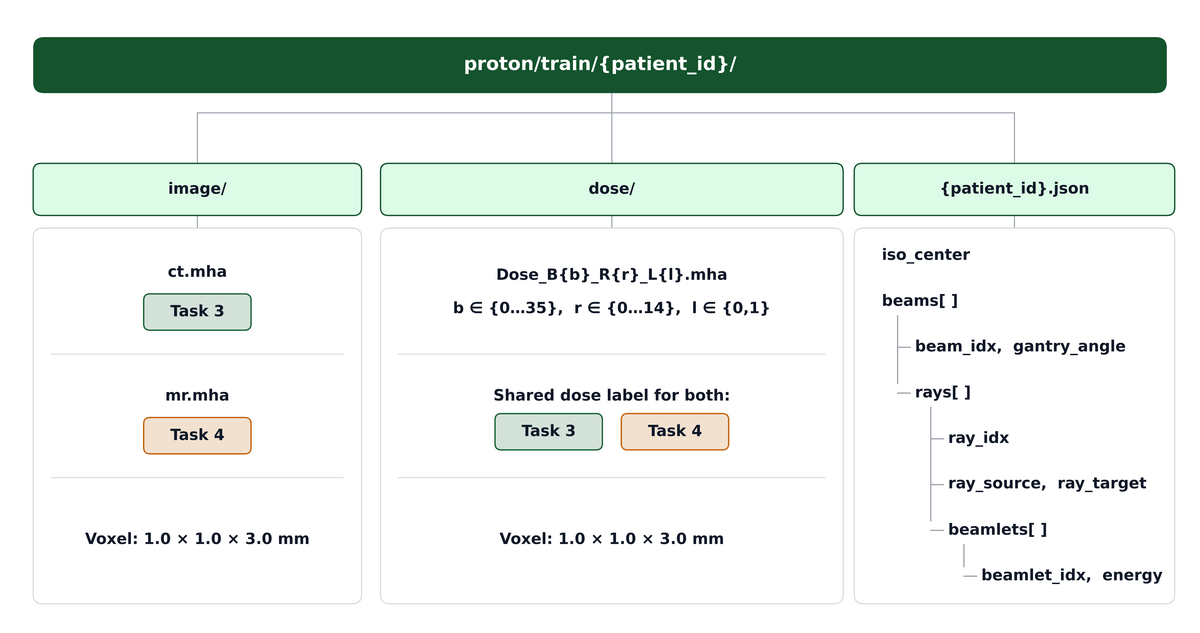
A public benchmark of 40,500 photon beams and 81,000 proton beamlets paired with CT and MRI aims to make deep learning dose engines finally reproducible.
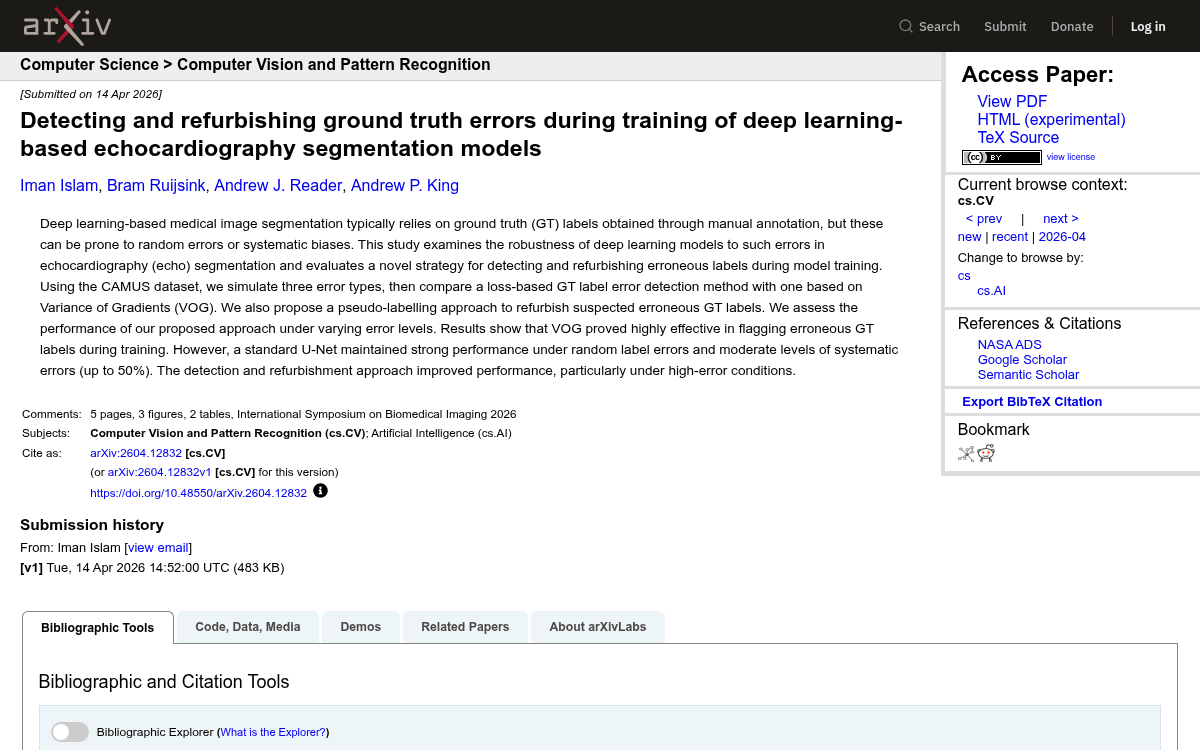
A new study finds U-Nets shrug off most annotation noise in heart ultrasound, but a gradient-variance trick can rescue models under heavy systematic errors.
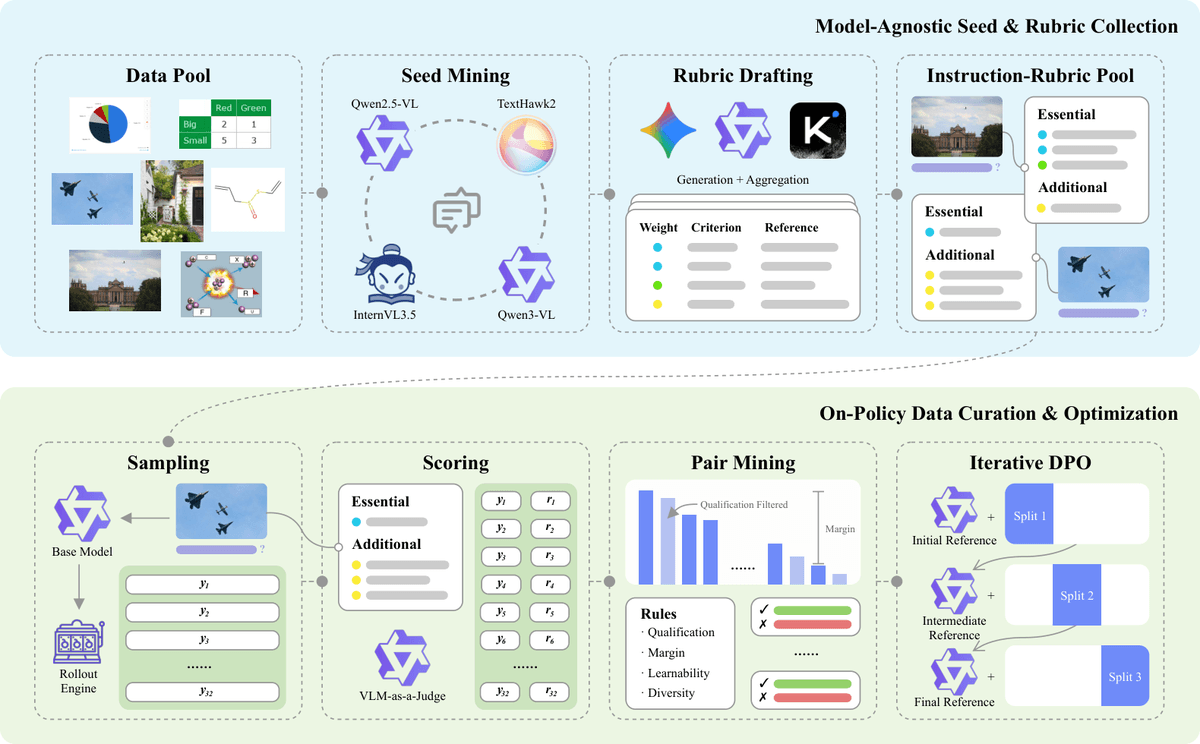
Huawei's rDPO framework builds per-image checklists that turn a mid-sized open judge into a GPT-5.4 rival and lifts vision model alignment across the board.
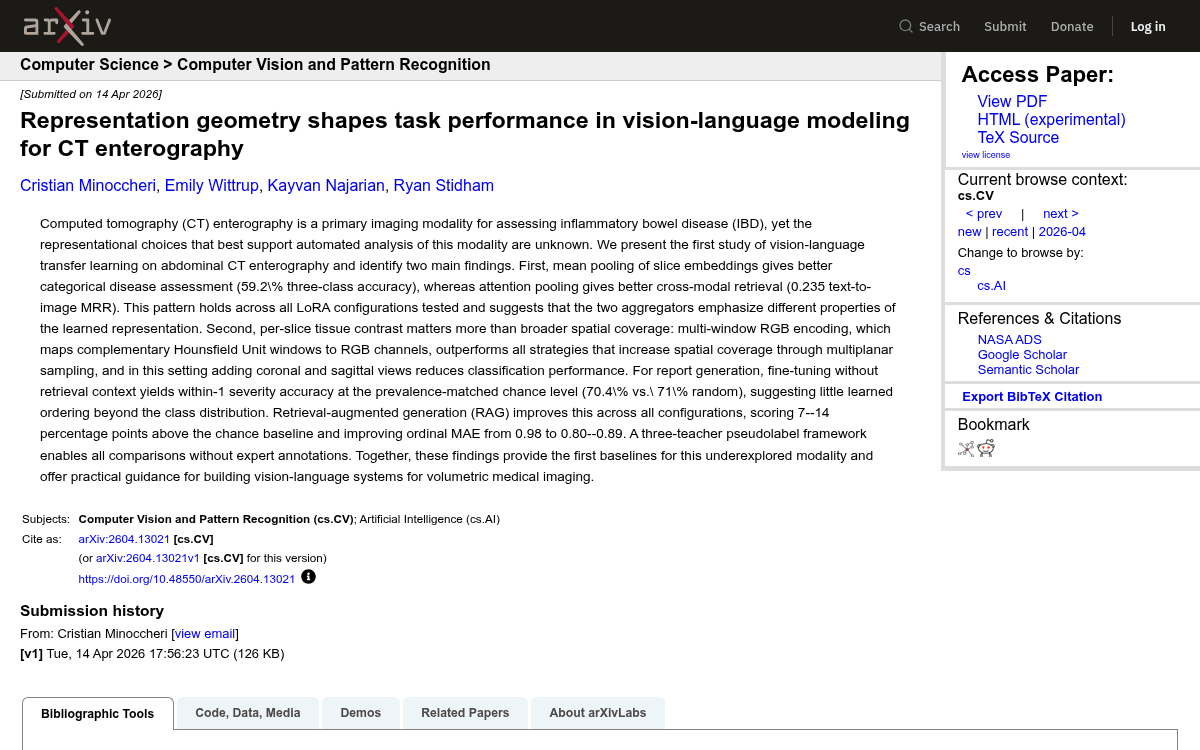
University of Michigan researchers publish the first vision-language transfer learning baselines for CT enterography, showing that slice pooling strategy dictates task performance.
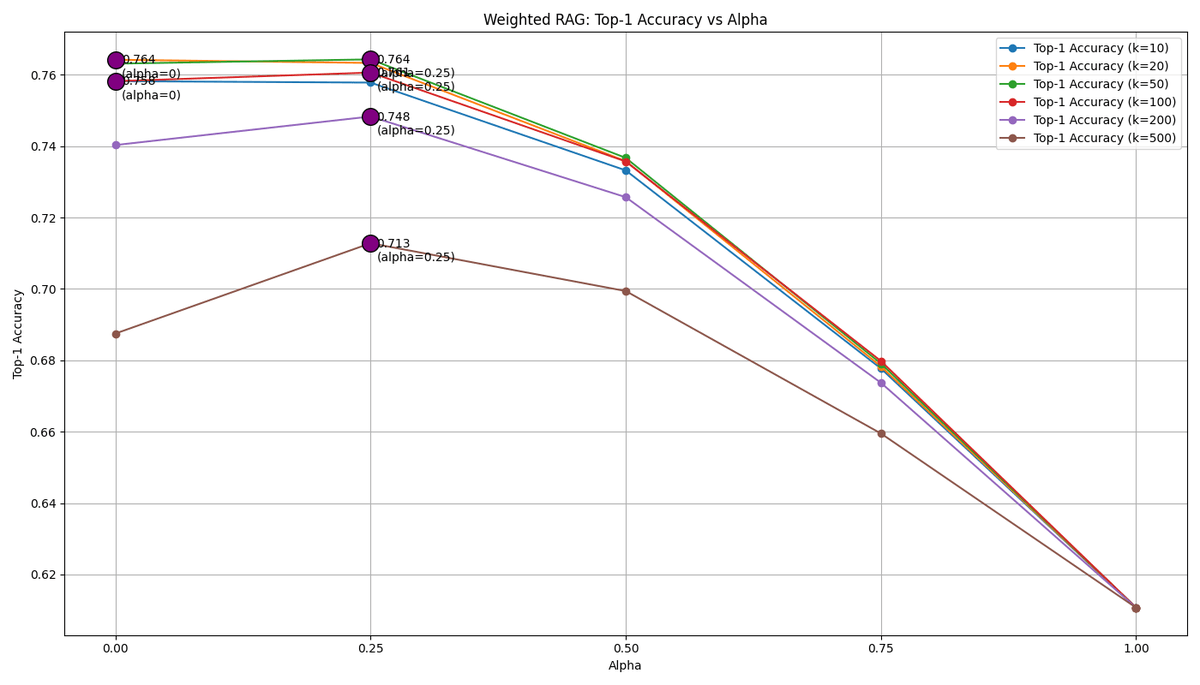
A new method turns sparse autoencoders from interpretability toys into a lightweight, label-free way to nudge frozen CLIP models toward better zero-shot accuracy.