
Browser Use's Browser-Wall Lets One Agent Control Parallel Browsers at $0.02/hr
Browser Use's new 'browser-wall' lets a single CDP endpoint orchestrate multiple cloud browsers simultaneously, with built-in profiles and proxies for scale
20 stories
Browser Use's new 'browser-wall' lets a single CDP endpoint orchestrate multiple cloud browsers simultaneously, with built-in profiles and proxies for scale
OpenAI's Codex app gets searchable settings, persistent working state, and a round of UX fixes that reduce daily friction for power users

Google's new multi-agent RAG framework keeps searching until it has enough context, boosting factuality accuracy by up to 34% over standard RAG.
Anthropic's new white paper shows Claude Opus 4.7 matching or beating ChemDraw and MestReNova at NMR prediction, plus solving structures from spectra alone.

NVIDIA's new 550B Mixture-of-Experts model lands inside Perplexity's Pro and Max tiers, targeting multi-step agent workflows with 1M token context
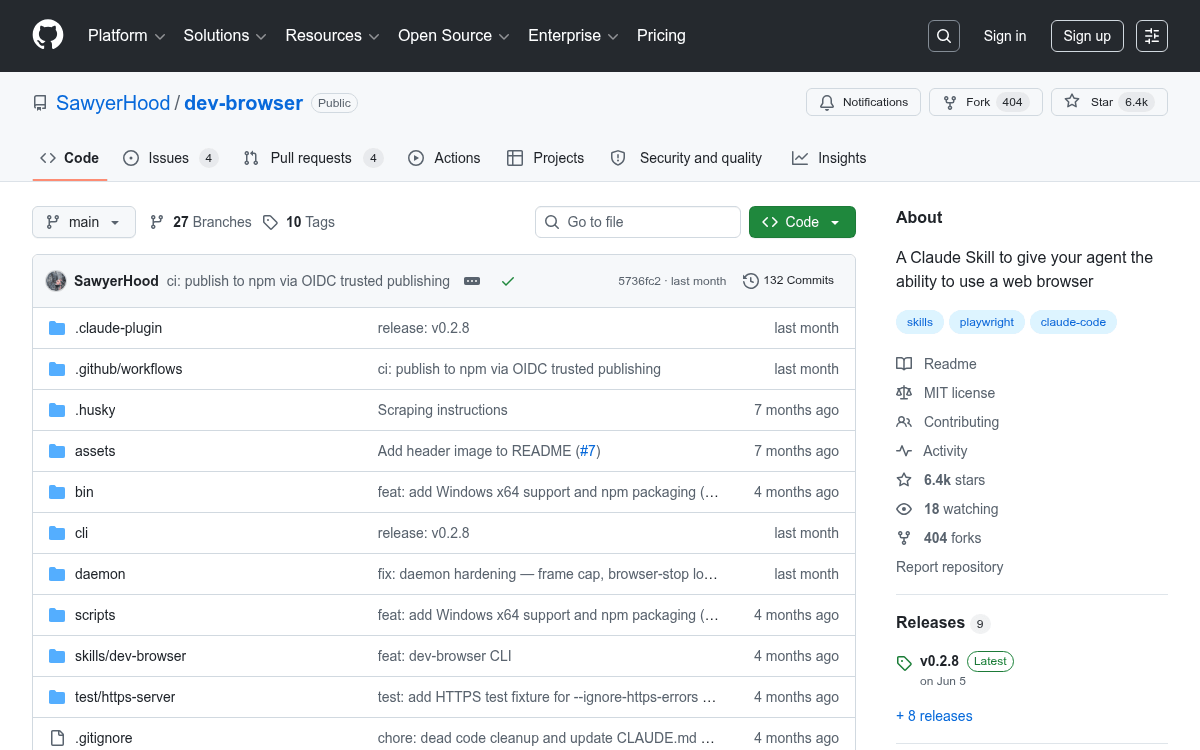
dev-browser gives Claude Code a real browser to verify its own work, beating Playwright MCP on speed, cost, and turn count

Google's new Colab CLI turns remote GPUs and TPUs into a single terminal command, letting agents like Claude Code and Codex offload heavy ML work.

Google DeepMind's D4RT collapses depth, tracking, and camera estimation into one transformer that runs 300x faster than prior systems.

Cursor updates Design Mode so you can click, scribble, or talk to your running app while agents rewrite the underlying code in parallel.

Sakana AI is consolidating two years of self-improving AI research into a dedicated Tokyo lab betting that sample efficiency, not raw scale, unlocks recursive self-improvement.
Replit Agent 4 replaces Design Mode with an infinite Design Canvas, kills fork-and-merge collaboration, and lets you plan while you build — all at once.
Google's weekly recap stacks six launches: image models hit GA, a hypothesis-generating agent system, a personal AI feed, an encoder-free Gemma, and a live music model.
Google's Gemma 4 QAT checkpoints slash VRAM by ~72%, putting a 26B model on a 16GB laptop and a 2B model under 1GB on mobile
Google's open-weight family gets quantization-aware checkpoints across every size, shrinking the smallest variant to a 1GB memory footprint while preserving quality.
Gemini Live now generates and edits images mid-conversation while you share your camera, turning voice chats into a visual co-creation loop.
Google releases QAT-optimized Gemma 4 checkpoints that cut memory 40–50% while preserving near-full model quality, enabling local inference on phones, laptops, and consumer GPUs.
Google releases QAT checkpoints for all Gemma 4 sizes, cutting VRAM by ~72% while preserving near-BF16 quality for on-device and local deployment.

Microsoft's MAI-Image-2.5 ranks No. 2 for image editing on Arena, with a unified generation and editing API now live on Foundry and OpenRouter

Meta's SAM 3D earned a CVPR Best Paper Honorable Mention for turning single 2D photos into full 3D objects, scenes, and layouts at unprecedented quality.
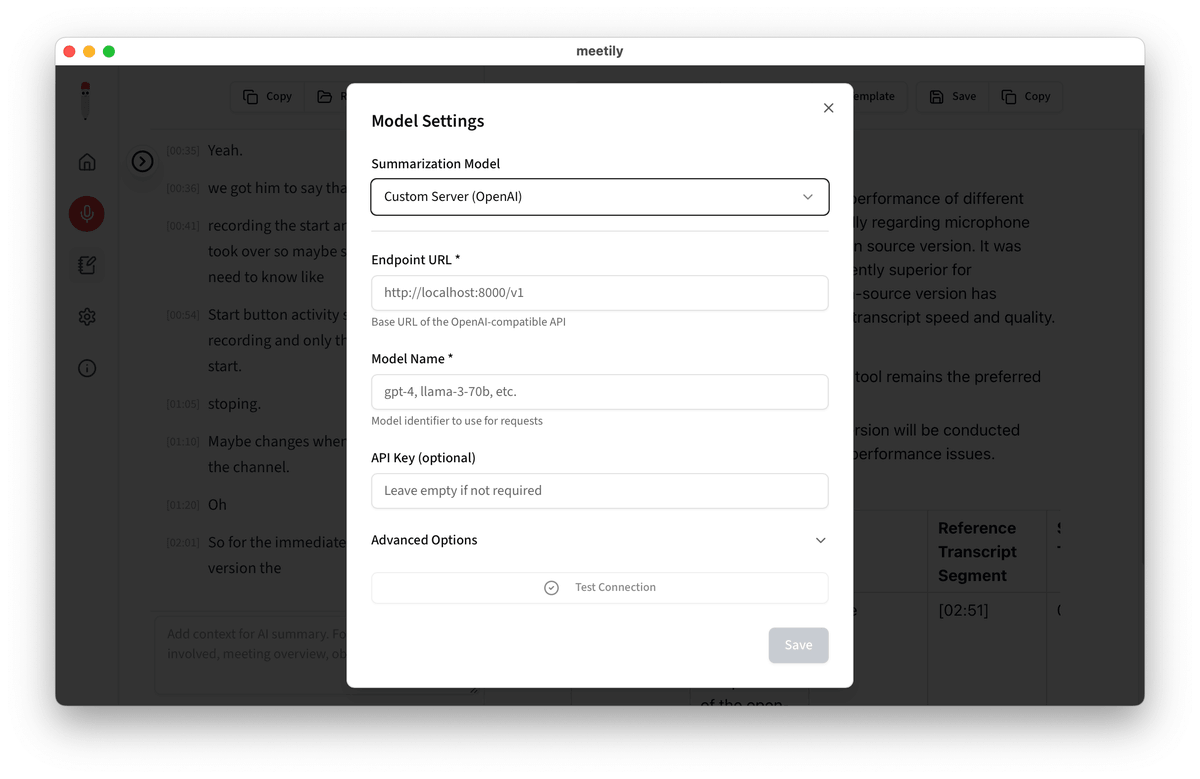
Meetily is a fully local, open-source meeting assistant that transcribes and summarizes meetings on your own hardware using NVIDIA's Parakeet or Whisper, with zero data leaving your device