

Figure AI's Helix-02 Robots Sort 238,000 Packages Over 191 Autonomous Hours
Figure AI's F.03 robots sorted 238,000 packages over 191 consecutive hours, turning a planned 8-hour demo into the most compelling public proof of humanoid robot endurance yet
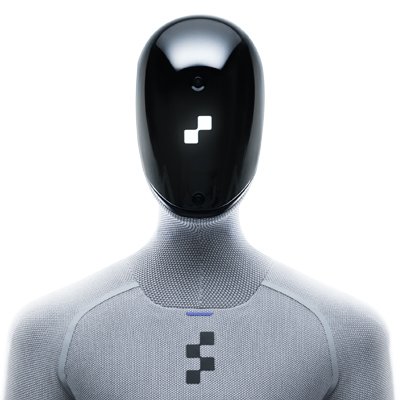

- 191 hours, 238,000 packages: Figure AI's F.03 robots ran a continuous livestream that began as an 8-hour demo and kept going for over 8 days.
- Fully autonomous: CEO Brett Adcock confirmed no teleoperation -- every action ran through the onboard Helix-02 neural network, replacing 109,000 lines of hand-coded C++.
- Human vs. robot: An intern beat the robots in a 10-hour race 12,924 to 12,732 packages -- a 1.5% margin -- but the robots never stopped after the human went home.
- 10M+ views, real skepticism: The stream went viral but drew controversy over whether robots were secretly teleoperated; Figure's CEO appeared on Bloomberg to rebut the claims.
- $39B valuation, $2B raised: Figure AI is backed by Microsoft, Nvidia, OpenAI, Amazon, and Intel, and is in talks with UPS for commercial deployment.
- Industry benchmark shift: The run sets a new standard -- competitors releasing only short edited clips will now face the question: why not livestream it?
What started as an 8-hour demo became something nobody in the humanoid robotics industry had ever done before. On the morning of May 13, 2026, Figure AI started a livestream with a simple plan: deploy three Figure 03 humanoid robots in a warehouse-style package sorting environment, run them for eight hours, demonstrate autonomous operation, and close the stream. Then the robots just... kept going.
After the first 24 hours, there had been zero failures. Brett Adcock, Figure AI's founder and CEO, posted on X: "Our original goal was an 8-hour run. After zero failures yesterday, we decided to keep going. We're now over 24 hours of continuous autonomous operation without a failure." By Day 9, the stream had clocked 191+ consecutive hours of fully autonomous operation running Helix-02, with the robots sorting a total of 238,000 packages.
What the robots were actually doing
Figure AI placed three F.03 humanoid robots in a logistics sorting scene and streamed continuously. Viewers nicknamed the robots Bob, Frank, and Gary. Beside a conveyor belt, they identified packages, picked them up, rotated them, scanned barcodes, and placed them back on the belt. Simple on paper, genuinely hard for a robot.
The task requires solving several real-time perception problems simultaneously:
- Recognizing packages of different shapes, materials, and sizes
- Estimating grasp points and adjusting for weight variance
- Avoiding deforming soft parcels or knocking boxes off the belt
- Maintaining rhythm without slowing the conveyor
- Recovering from failures instead of freezing
Humans average around 3 seconds per package. F.03 is now around human parity. "The robots are reasoning directly from camera pixels," Adcock said. That last point is the key technical claim: this is not a scripted motion replay, it is live inference.
Helix-02: the brain behind the arms
The real story here is not the hardware, it is the software. The units featured in the livestream ran on the Figure 03 system, powered by their Helix-02 software platform. Operating on an end-to-end neural network, the robots do not rely on hardcoded paths. They use onboard cameras and computer vision to see, process, and adjust their movements in real-time, much like a human worker does.
Figure's Helix-02 AI system, shipped in January 2026, runs a 10-million-parameter neural network. It replaced roughly 109,000 lines of hand-engineered C++ balance code. This is the clearest public signal of genuine embodied AI progress in the humanoid sector. Think of it as the difference between a robot that follows a recipe and one that understands cooking.
Figure AI stressed there is no teleoperation involved. "There is no teleoperation -- every action comes directly from Helix-02," Adcock wrote. The system also includes automatic recovery mechanisms. A Figure 03 also autonomously leaves for maintenance when needed, without human prompting.
The internet showed up
The stream became a cultural moment. It pulled 10 million views on the original video, prompting one Redditor to quip that the bots are "stealing jobs from warehouse workers AND streamers." The internet, watching live, named the robots Bob, Frank, Gary, and later Jim and Rose. A dedicated viewer community developed. Adcock livestreamed himself dropping a t-shirt onto the conveyor belt to see what Bob would do.
Then came the human challenge. In a 10-hour "Man vs. Machine" contest, intern Aimé Gérard edged out the robots 12,924 packages to 12,732, working at 2.79 seconds per package against the machines' 2.83. A 1.5% human victory -- but the human needed rest, food, and a paycheck. The robots did not stop.
The skeptics have a point
Not everyone was convinced. Some observers seemed convinced that the machines were being operated remotely by humans, with one of the F.03 models apparently touching its head at one point -- a sign of a VR headset, if you think this is a scam. The livestream drew some skepticism, and Figure CEO Brett Adcock joined Bloomberg to counter claims that its robots are teleoperated.
The deeper critique is about what was not disclosed. The source does not specify the extent of supervision, whether any intervention occurred off camera, what error rate was observed, or how task performance changed over time. Those omissions do not negate the demo, but they limit how precisely the industry can compare it with other warehouse pilots. Longer demonstrations are useful when they are paired with information about autonomy boundaries, failure handling, reset procedures, and the level of human oversight. Without that context, public debate tends to swing between overstatement and outright dismissal.
Built on real deployment experience
This was not Figure AI's first rodeo in a real facility. One of the most thoroughly documented physical AI deployments to date took place at BMW Group Plant Spartanburg in South Carolina. Over an 11-month period, two Figure 02 humanoid robots operated on an active assembly line, working 10-hour shifts five days a week. Figure AI identified the robot's forearm as its top failure point at BMW, challenged by tight packaging and thermal management constraints. These findings directly informed the design of Figure 03, which features re-architected wrist electronics.
Figure has raised close to $2 billion from backers including Microsoft, Nvidia, Intel, Amazon, and OpenAI. The company's valuation has climbed to an estimated $39 billion in 2026. The livestream was not just a technical demo -- it was a $39 billion company making its case to the market.
What this means for the industry
The 191-hour run establishes a meaningful endurance benchmark. It demonstrates that Figure 03 running Helix-02 can maintain operation across multiple work shifts without degradation in performance or reliability. For logistics operators evaluating humanoid robots, this is the kind of data point that matters -- not peak performance in a controlled ten-minute demo, but sustained performance across the kind of operational duration that real deployment requires.
The broader industry context makes the timing significant. Physical AI -- the branch of AI that enables machines to perceive, reason, and act in the physical world -- has moved well beyond lab experiments. In 2026, a wave of binding contracts and live deployments confirmed that humanoid robots are entering real production environments across automotive, aviation, and logistics industries. Bank of America projects 90,000 humanoid units shipped in 2026, scaling to 1.2 million by 2030. By 2027, deployment is expected to concentrate in warehousing and logistics (33%), automotive (24%), and general manufacturing (15%).
The Figure AI humanoid robot livestream signals where the sector is heading. Vendors are being pushed to show not only what a robot can do, but how long it can keep doing it under realistic work conditions. Future warehouse demonstrations will likely be judged less by spectacle and more by transparency around sustained operation.
The real test is still ahead. UPS is in talks with Figure AI to use humanoid robots for some tasks in the logistics giant's network. The company is targeting logistics and manufacturing customers for 2026-2027 scale-up. A viral livestream can open doors. Keeping them open requires months of quiet, unglamorous reliability in real customer facilities -- and that part has no live audience.
Comments
