

Figure AI's Figure 03 Robots Sort 250,000 Packages for JCPenney's Parent
Figure AI's humanoid robots are heading to JCPenney's supply chain, marking one of the first real commercial deployments of general-purpose humanoids in retail logistics
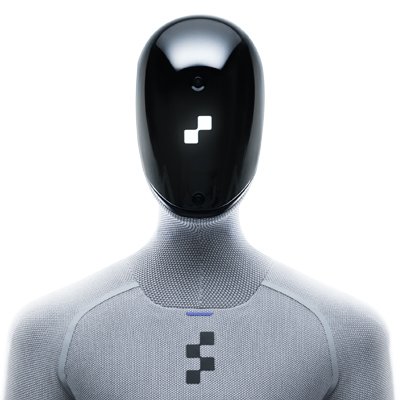
- Commercial deal signed: Figure AI and Catalyst Brands (JCPenney, Brooks Brothers, Aéropostale) signed a humanoid robot deployment agreement for a Reno, NV warehouse.
- Proven benchmark: Figure 03 robots sorted 88,000 packages in 72 hours and ran a 200-hour livestream processing ~250,000 packages before the deal was signed.
- Brookfield connection: Brookfield Asset Management is a shared investor in both Figure AI and Catalyst Brands, and previously funded Figure's real-world AI training data initiative (Project Go Big).
- Figure AI's scale: Valued at $39B after a $1B+ Series C; BotQ factory now produces one robot every 90 minutes, targeting 12,000 units/year scaling to 100,000 over four years.
- RaaS model: Figure charges ~$1,000/robot/month via a Robot-as-a-Service subscription, keeping hardware ownership and training data with Figure.
- Key risk: Robot count, performance targets, and rollout timeline were not disclosed; reliability at sustained production scale remains unproven in retail logistics.
Figure AI just landed one of the most significant commercial deals in the short history of humanoid robotics. The company has signed a commercial agreement with Catalyst Brands to deploy its Figure 03 humanoid robots at a distribution logistics center in Reno, Nevada. Catalyst is the retail holding company behind JCPenney, Aéropostale, Brooks Brothers, Lucky Brand, and Nautica.
This is not a research pilot or a joint development agreement. It is a deployment deal at an operational facility belonging to a company that runs some of America's most recognizable retail brands. The distinction matters enormously in a field where impressive demos rarely survive contact with real-world operations.
What the robots will actually do
The companies aim to automate repetitive, physically demanding sorting and packing tasks, freeing associates to focus on higher-skill functions. Figure's next-generation humanoids will first focus on aiding associates in the facility's Joey Pouch sorting system sequencing, a state-of-the-art, computerized induction, sorting and packing system. Think of it as the conveyor-belt brain of a modern distribution center, where packages are inducted, sorted by destination, and packed, all at high speed.
The humanoid form factor allows these machines to integrate smoothly into existing warehouse spaces without requiring expensive structural redesigns. That is the core pitch for humanoids over traditional fixed automation: you do not have to rebuild the warehouse around the robot.
The benchmark that closed the deal
Figure did not walk into this agreement on promises alone. Before the deal was signed, Figure ran a multi-day autonomous sorting test. The robots sorted 88,000 packages within a 72-hour window, and during that test the machines operated continuously for over 24 hours without interruption. That is a meaningful data point, not a curated five-minute demo.
The livestream that preceded the deal announcement pushed the numbers even further. Figure AI completed a 200-hour livestream in which three Figure 03 robots processed nearly 250,000 packages without experiencing a single mechanical breakdown. The humanoids used onboard cameras and AI reasoning to detect barcodes, pick up packages and place them onto conveyor belts with their barcode facing down. The project was not error-free, with the robots sparingly dropping packages or incorrectly oriented items. Honest, and still impressive.
In May 2026, Figure AI livestreamed a group of their robots processing packages nonstop for almost a week, inspiring a 10-hour competition between their robot and a human, in which the robot performed 98.5% as well as the human.
The Brookfield thread tying it all together
There is a financial subplot here that explains why this deal happened now. This marks the first agreement between Figure and a portfolio company of Brookfield, a leading global investment firm with significant positions in both Figure and Catalyst. Brookfield is not just a passive investor sitting on both cap tables. The two entities previously collaborated on Project Go Big, a data collection initiative that granted Figure AI access to Brookfield's commercial and residential real estate properties to train proprietary vision-language-action AI models.
This is the Brookfield flywheel in action: invest in the robot company, invest in the customer, use your real estate portfolio to generate training data, then deploy the robots into your portfolio companies. The partnership is intended to establish the playbook for how AI-driven hardware can serve as a primary growth engine for modern holding companies.
Who Figure AI is, and why it is here
Figure AI was founded in 2022 by Brett Adcock, also known for founding Archer Aviation and Vettery. The company has moved fast. Figure AI reached a $39 billion post-money valuation following a Series C funding round that exceeded $1 billion in commitments. Parkway Venture Capital led the round, with participation from Brookfield Asset Management, NVIDIA, Intel Capital, Microsoft, OpenAI Startup Fund, and Jeff Bezos through Bezos Expeditions. That is a 15x step-up from its $2.6 billion Series B valuation just 18 months earlier.
The robot at the center of the Catalyst deal is the Figure 03, the company's third-generation humanoid. Key specs:
- Stands 5 feet 8 inches tall, weighs 61 kilograms, and can carry 20-kilogram payloads while walking at 1.2 meters per second.
- Each fingertip sensor can detect forces as small as three grams of pressure, sensitive enough to register the weight of a paperclip. This precision enables the robot to distinguish between a secure grip and an impending slip before it occurs.
- Runs for 5 hours on a swappable 2.3 kWh battery pack that charges wirelessly via inductive pads placed on floors, including through the robot's feet.
- Includes 10 Gbps mmWave data offload capability, allowing the entire fleet to upload terabytes of data for continuous learning and improvement.
The AI brain running all of this is Helix, Figure's proprietary vision-language-action (VLA) model. A VLA model is a neural network that takes in visual input and natural language commands and outputs robot motor control, unifying perception and action in a single learned system. Helix processes visual input from cameras, understands natural language commands, and controls 25 electric actuators in real-time. Critically, Figure exited its OpenAI collaboration because, in Adcock's words, "to solve embodied AI at scale in the real world, you have to vertically integrate robot AI." Helix is now a single neural network that drives both navigation and manipulation.
The facility already has skin in the game
This new automation technology will further enhance the Reno facility, which underwent a $40 million infrastructure update in 2024. That context suggests the humanoids are being inserted into a warehouse that has already been modernized, rather than into a greenfield robotics program. Catalyst is not experimenting with automation for the first time; it is layering humanoids on top of an already-upgraded operation.
Catalyst Brands is a massive retail holding formed in 2025 through the merger of JCPenney and SPARC Group. The business manages an expansion portfolio of prominent brands spanning more than 1,800 retail storefronts. The agreement allows for quick scalability, providing Catalyst with options on how to align with business growth and manage seasonality in the years to come.
Who wins, who watches nervously
The clearest winner is Figure. Figure AI just landed one of the most significant commercial deals in the short history of humanoid robotics. The company has signed an agreement with Catalyst Brands to deploy its next-generation humanoid robots at a distribution logistics center in Reno, Nevada. The partnership represents one of the first public commercial agreements for humanoid robots in retail logistics.
The competitive pressure on rivals is real. Signed commercial agreements with major retail brands remain the exception, not the rule. Companies like Agility Robotics (Digit), Tesla (Optimus), and Boston Dynamics (Atlas) are all racing toward the same logistics customers. Although Amazon has experimented with humanoids in select warehouses, the apparel industry has largely strayed from the technology. The Catalyst partnership is notable as commercial agreements including humanoid tech deployment remain a retail supply chain rarity.
For warehouse workers, the framing from both companies is measured. Marc Rosen, CEO of Catalyst Brands, said: "When we automate routine tasks, our associates can focus on higher-value work and better serve our customers across all our brands." It is worth being honest about the open questions, because no humanoid deployment in 2026 is fully proven at retail scale. Reliability across long shifts, uptime in a busy facility, and the true cost per task once maintenance is counted are all still being measured in the field.
The manufacturing machine behind the deal
None of this works without supply. Figure closed a $1B+ Series C in September 2025 at a $39 billion post-money valuation, launched the Figure 03 robot in October, and is now doubling monthly shipments with the BotQ factory producing one robot every 90 minutes as of April 2026. The first-generation production line targets 12,000 robots per year initially, scaling to 100,000 over the next four years.
Figure AI uses a Robot-as-a-Service model with monthly subscriptions instead of upfront robot purchases. Pricing is approximately $1,000 per robot per month, covering hardware deployment, software updates, maintenance, and support services. For a logistics operator, that structure converts a large capital expenditure into an operational one, and it means Figure retains the hardware and keeps collecting real-world training data from every shift.
What comes next, and what could go wrong
The next step is straightforward: Catalyst and Figure need to determine whether the initial Joey Pouch sequencing work expands into other parts of the operation. If the robots can move beyond a first workflow and into repeatable logistics tasks across the facility, the partnership will look more like an operational program than a contained pilot.
Catalyst Brands is effectively running a high-profile pilot, and the results will shape how aggressively the rest of the apparel sector follows. If the Reno numbers look strong, expect the timeline for broader adoption to compress fast across the company's other facilities. If they disappoint, the rollout slows and human associates keep more of the work for longer.
The risks are real. Bears point to five concrete problems: the valuation already exceeds Goldman's 2035 humanoid TAM, BMW chose a different vendor for its European expansion, a whistleblower lawsuit alleging the safety roadmap was gutted to close the funding round, the possibility that Tesla or Chinese competitors capture the volume market before Figure gets there, and the simple fact that no one knows what Figure 03 looks like at scale outside curated demos.
For the broader industry, the signal is hard to miss. For the humanoid sector, the announcement adds another data point in a market that increasingly needs named customers, defined tasks, and measurable deployments. Figure now has all three. The Reno facility is the first real test of whether that is enough.
Comments
