
CaviraOSS's PageLM Turns Any Document Into a Self-Hosted AI Tutor
An open-source project rebuilds NotebookLM's playbook into a self-hostable study platform with quizzes, flashcards, podcasts, and local model support.
 Pro
Takeaways
- PageLM is an open-source NotebookLM alternative with 1.7k GitHub stars and Docker deployment.
- Turns PDFs, DOCX, and notes into quizzes, Cornell notes, flashcards, and AI podcasts.
- Supports Gemini, GPT, Claude, Grok, MiniMax, Ollama, and OpenRouter as LLM backends.
- TTS options include Edge TTS, ElevenLabs, Google TTS, Cartesia, Hume, and MiniMax.
- Built on Node, TypeScript, LangChain, Langraph, React, and Vite with WebSocket streaming.
- Custom CaviraOSS Community License permits personal and educational use, not commercial resale.
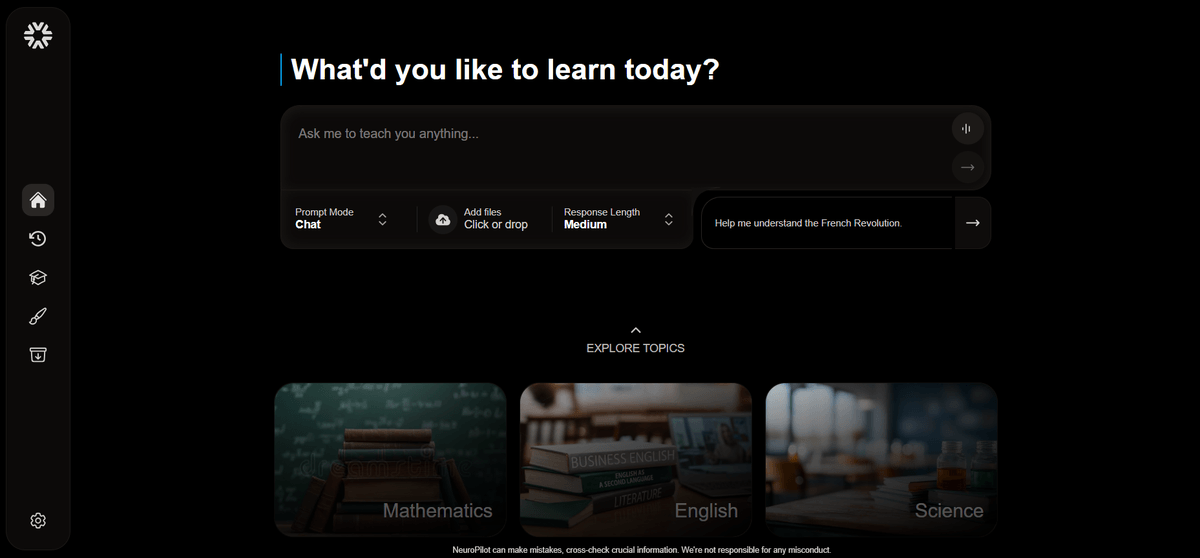
Google's NotebookLM popularized the idea of turning your own documents into a personal tutor, complete with AI-generated podcasts. PageLM from CaviraOSS is a community-driven take on that concept, packaging quizzes, flashcards, structured notes, and audio generation into a self-hostable stack that plugs into whichever LLM you already pay for or run locally.
The repo has crossed 1,700 stars and 230+ forks, and the pitch is simple: an open source AI powered education platform that transforms study materials into interactive learning experiences, slightly inspired by NotebookLM. Under the hood it is a full-stack TypeScript project built on Node, React, LangChain, and Langraph.
What you actually get
Rather than a single chat surface, PageLM ships as a suite of study-focused tools that operate on documents you upload (PDF, DOCX, Markdown, TXT). The feature list reads more like a study app than a raw RAG demo:
- Contextual Chat for asking questions grounded in uploaded documents
- SmartNotes that generate Cornell-style notes automatically from a topic or file
- Flashcards extracted as non-overlapping cards for spaced repetition
- Quizzes with hints, explanations, and scoring
- AI Podcast that turns notes into audio for learning on the go
- Voice Transcribe to convert lecture recordings into searchable study material
- ExamLab for simulated exams with feedback
- Homework Planner, Debate, and a persistent Study Companion
The Cornell-note and non-overlapping-flashcard details matter more than they sound. They mean the system is doing structured extraction with an educational format in mind, not just dumping a summary and calling it a study guide.
The bring-your-own-model layer
The most interesting engineering choice is the provider-agnostic backbone. PageLM supports Google Gemini, OpenAI GPT, Anthropic Claude, xAI Grok, MiniMax, Ollama for local inference, and OpenRouter, with embeddings routed through OpenAI, Gemini, or Ollama. That means you can run the whole stack against a local Llama or Qwen model through Ollama and never send a document to a hosted API.
For the podcast feature, the TTS layer is similarly broad. Audio can be generated through Edge TTS, ElevenLabs, Google TTS, or a Speech SDK covering OpenAI, Cartesia, Hume, MiniMax and more. Configuration is entirely env-driven, so swapping providers is a matter of editing .env rather than touching code.
Other technical notes worth flagging:
- WebSocket streaming for real-time chat, notes, and podcast generation
- JSON or vector database support for embeddings and retrieval, so you can start with a file-backed store and graduate to a proper vector DB
- Document parsing handled by
pdf-lib,mammoth, andpdf-parse - Docker Compose deployment for both dev and prod
Running it
Setup is standard Node fare. You need Node.js v21.18+, npm or pnpm, ffmpeg for podcast audio, and optionally Docker. The quickest path is Docker Compose:
git clone https://github.com/caviraOSS/pagelm.git
cd pagelm
cp .env.example .env
# edit .env with your LLM + TTS keys
docker compose up --build
Frontend lands on port 5173 in dev, backend on 5000. For a fully local setup, point the LLM provider at Ollama, pick a local embedding model, and use Edge TTS for free audio.
Where it fits and where it does not
The obvious sweet spot is anyone who liked NotebookLM but wants control over data, models, or cost. Self-hosting on Ollama makes it viable for students working with copyrighted textbooks, researchers with sensitive PDFs, or teams building internal training material. The multi-provider design also makes it a decent reference project if you are trying to understand how to build a real LangChain/Langraph app with streaming, RAG, and TTS glued together.
The rough edges are visible too. There are no tagged releases yet, the license is a custom CaviraOSS Community License, free for personal and educational use but requiring written permission for commercial use or resale, which will disqualify it for a lot of SaaS wrappers. Quality of quizzes, flashcards, and podcasts is entirely a function of the model you plug in, so a local 7B model will feel very different from Claude or Gemini 2.5.
Why this repo matters
NotebookLM proved a category. PageLM is part of a growing pattern of open-source clones, alongside projects like Open NotebookLM-style efforts, that treat the study-tool workflow as a composable pipeline rather than a closed product. The real breakthrough here is not any single feature but the fact that a small team stitched together document ingestion, RAG, structured educational outputs, and multi-voice TTS into something you can docker compose up and hand to a student.
If you have been meaning to prototype an internal knowledge tutor, a corporate training generator, or just a personal study assistant that does not phone home, this is a solid starting point to fork.