| Hey, | Welcome to AlphaSignal – the most read newsletter by AI developers.
We bring you the top 1% of news, papers, models, and repos, all summarized to keep you updated on the latest in AI. |
|
|
|
IN TODAY'S SIGNAL
| Read time: 6 min 52 sec | 🎖️ Top News
📌 Nylas
⚡️ Trending Signals
📌 Assembly AI
💻 Top Tutorials
Build web agents that browse, scrape, and self-correct using AgentQ, MCTS, and DPO strategies in a course by Andrew Ng’s DeepLearning.AI.
Learn agentic LM design using reflection, planning, RAG, tool use, and real-world examples.
Anthropic's guide to build agentic coding workflows using Claude Code with full terminal access, automation, and structured prompts.
🧠 Deep Dive |
|
|
|
If you're enjoying AlphaSignal please forward this email to a colleague.
It helps us keep this content free. |
|
|
|
TOP NEWS
| LLMs | Google introduces quantized Gemma 3 models, 27B now deployable on consumer GPUs like RTX 3090
| ⇧ 7,385 Likes |
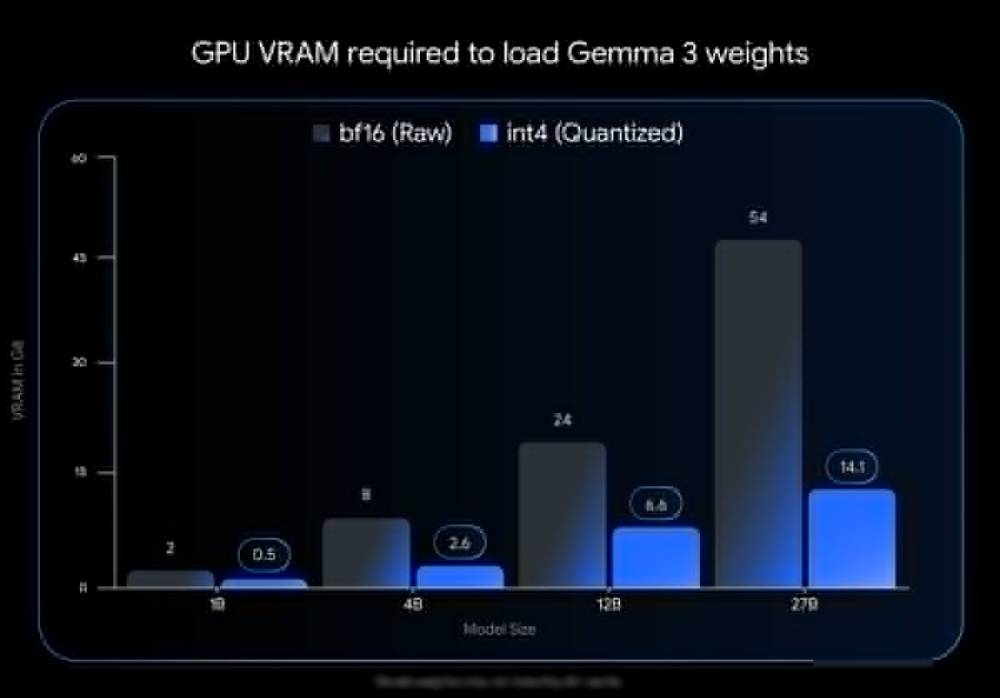
| What's New | Google released Quantization-Aware Trained (QAT) versions of its Gemma 3 models, including 27B. These models maintain performance while reducing memory needs to run on consumer GPUs. The 27B QAT model loads in 14.1 GB of VRAM.
Memory Reductions with int4 Quantization QAT lowers memory use for model weights across all Gemma 3 sizes.
Performance Preservation with QAT QAT cuts quality degradation typically caused by quantization.
Reduces perplexity drop by 54% compared to PTQ on llama.cpp evals
Trained for ~5,000 steps with distillation from full-precision model
Uses the same tokenizer and model structure as original Gemma 3
Preserves instruction-tuning and chat capabilities from original versions
Training Setup and Accuracy Retention
Google applies QAT for ~5,000 steps with soft targets from non-quantized checkpoints.
Reduces perplexity degradation by 54% vs post-training quantization (Q4_0 format)
Simulates low-precision ops during training to preserve downstream accuracy
Targets match original checkpoint outputs to guide adaptation
Benchmarked using llama.cpp perplexity evaluation
Deployment and Compatibility Models are available in GGUF and supported across major inference tools.
Native support in llama.cpp, Ollama, LM Studio, and gemma.cpp
MLX-compatible for Apple Silicon inference
Q4_0 format released for compatibility with existing quantized model runtimes
Can run Gemma 3 27B on RTX 3090 (24 GB VRAM) including KV cache
Access and Licensing
Weights and files are publicly released under the Gemma license. Download from Hugging Face and Kaggle
Includes weights, tokenizer, and adapter config files
License supports research and commercial use
No login or API key required for local deployment
Tool use and custom integrations Both models support dynamic tool use with improved argument selection and context awareness.
Integrates with function calling and custom tools through the OpenAI API
Determines tool use based on system and user messages
Refines arguments more accurately during multi-turn tasks
Supports mixed-modality workflows including vision, text, and code
Availability and usage details
You can access both models through ChatGPT and OpenAI APIs starting today. Free-tier users can use o4-mini via the “Think” composer mode
Plus, Pro, and Team users see o3 and o4-mini in model selector
o4-mini supports higher usage limits and faster responses than o3
Responses API adds support for reasoning token preservation and integrated tool calls
Community Feedback
Lee Mager
"I'm testing out the 27b version now, it's a legit banger. Clearly better than the 8bit version I already have, and runs at 56 tokens/sec on a 5090"
Kamell
"This is huge! You guys definitely have one of the best OS useful multi-model model’s out right now. People without insane hardware can use AI practically now."
The Explorer
"Why Google’s recent launches are not directly related to general public use cases…?" | |
| Try now
|
|
|
|
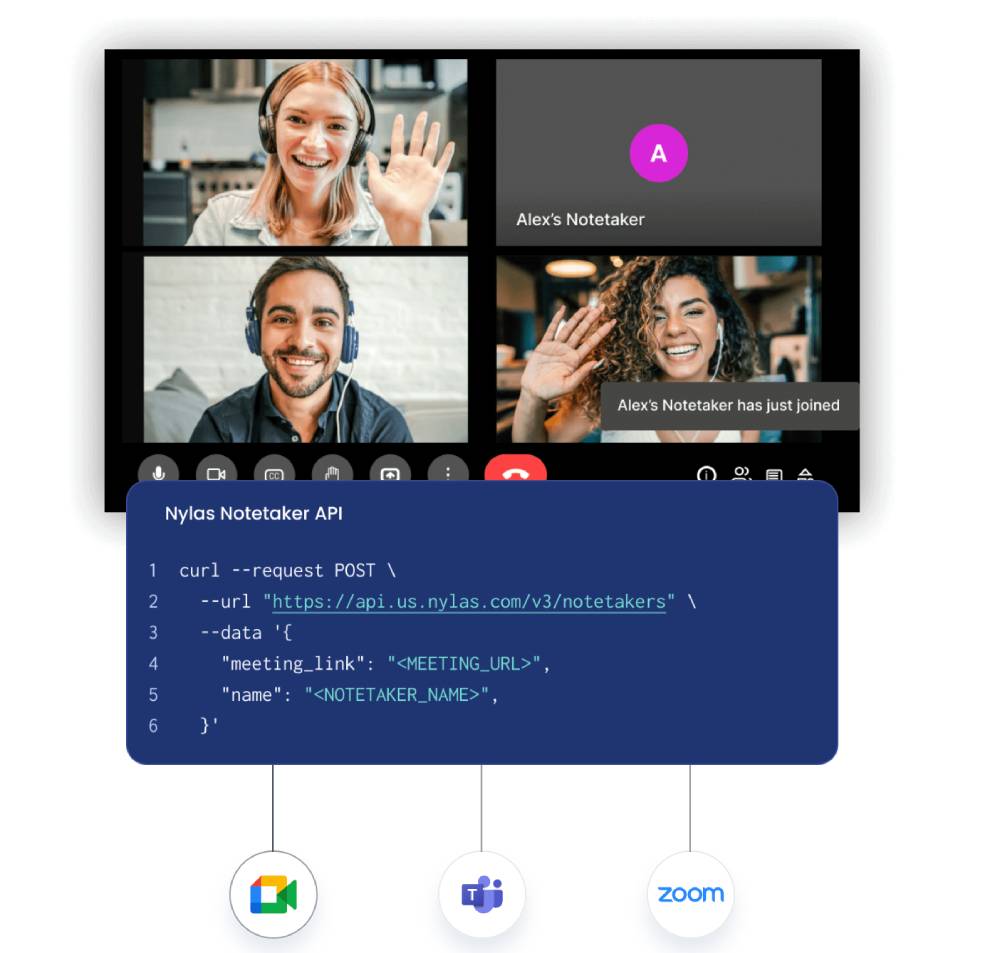
| Record, Transcribe, and Summarize Calls from One API | Nylas Notetaker API lets your app record, transcribe, and summarize meetings—no infra required.
Auto-Join Calls: Works with Zoom, Google Meet, and Microsoft Teams out of the box.
Real-Time Transcripts: Capture every word with low-latency, high-accuracy transcription.
AI Summaries: Get instant, structured recaps of every conversation. Calendar-Aware: Pre-integrated with user calendars for full context, no extra setup.
Fast Integration: Drop in the API, skip weeks of dev and QA work.
Access conversation data from day one.
|
| Start now
| partner with us → |
|
|
|
TRENDING SIGNALS
| Non-Reasoning LLM |
|
⇧ 6,927 Likes | |
LLMs |
|
⇧ 3,027 Likes | |
LLMs |
|
⇧ 3,463 Likes | |
LLM Safety |
|
From Our Partners | |
Generative AI |
|
⇧ 2,136 Like | | |
|
|
|
|
Turn audio into transcripts and structured JSON with a few API calls
| AssemblyAI’s API now outputs accurate transcripts, speaker labels, and structured fields for LLM input.
Use it to send real-world audio into RAG, summarization, or task extraction pipelines—no models or infrastructure required.
Call the API and get clean, usable data now. |
Start with the API ↗️ |
|
|
|
TOP LECTURES
| Agents | |
| ⇧ 1,836 Likes |
This tutorial by Andrew Ng's Deeplearning.ai teaches you how to build autonomous web agents that scrape, summarize, and interact with websites using visual and DOM input. Implement multi-step tasks like form filling and newsletter signup. Use AgentQ to train agents with MCTS, self-critique, and DPO. Gain hands-on experience optimizing decision-making and error recovery in complex browser environments. |
| Agents |
| ⇧ 2,038 Likes |
Learn how to design and deploy agentic language models using reflection, planning, tool use, and iterative prompting. This explains training data formats, modeling objectives, and RAG. Includes detailed design patterns and real-world examples like customer support agents. Covers prompt strategies, API usage, and common LM limitations with concrete techniques. |
| Agentic Coding |
|
⇧ 2,947 Likes |
Use Claude Code to build agentic coding workflows with full terminal access and customizable prompts. Create CLAUDE.md files for contextual setup, define tool allowlists, and automate tasks with headless mode. Implement structured workflows like test-driven development, multi-agent code review, and CLI-driven automation. Optimize prompt clarity and use MCP, bash, and slash commands.
|
| |
| |
|
|
DEEP DIVE
| Agents |
How to Build Reliable AI Agents: A Practical Guide by OpenAI |
⇧ 3,729 Likes |
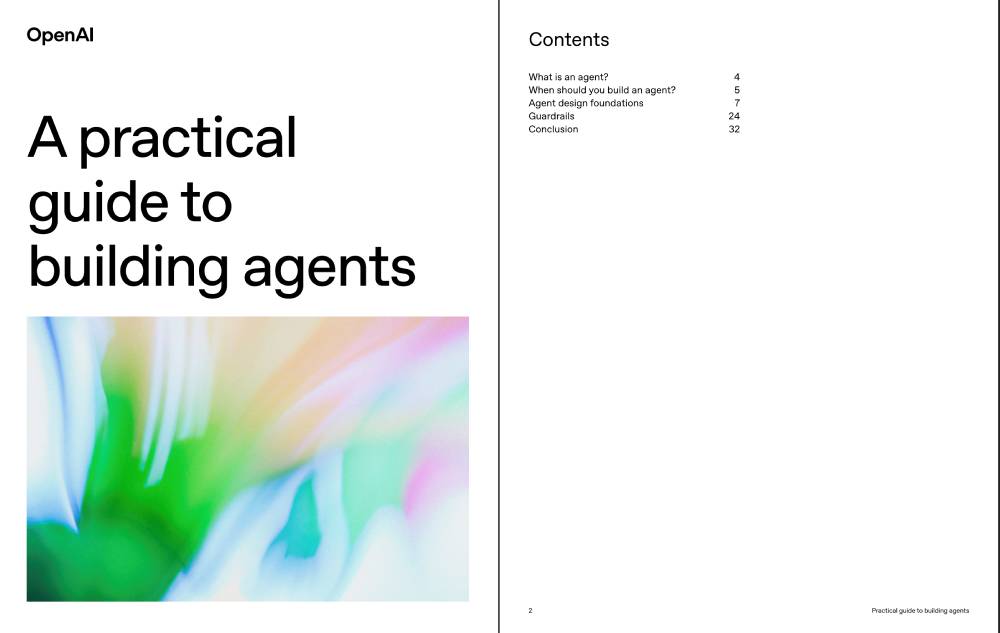
| This is OpenAI’s 34-page technical guide to building AI agents. It explains how agents work, when to use them, and how to design, evaluate, and deploy them safely. The guide focuses on practical steps and decision points for developers building real-world systems that go beyond prompt engineering and into autonomous execution.
What you’ll learn:
Core components: model, tools, instructions
When agents outperform standard workflows
Single-agent vs. multi-agent systems
Manager vs. peer-to-peer agent patterns
Tool selection and integration
Writing explicit behavioral instructions
Evaluation strategies for agent performance
Guardrail types: relevance filters, safety checks, PII protection
Human-in-the-loop design for edge cases and failures
Step-by-step deployment strategy: start simple, iterate with users
Use cases: support, sales, operations, technical troubleshooting |
| Read more
|
|
|
|
At Alpha Signal, our mission is to build a sharp, engaged community focused on AI, machine learning, and cutting-edge language models, helping over 200,000 developers stay informed and ahead. We’re passionate about curating the best in AI, from top research and trending technical blogs to expert insights and tailored job opportunities. We keep you connected to the breakthroughs and discussions that matter, so you can stay in the loop without endless searching. We also work closely with partners who value the future of AI, including employers and advertisers who want to reach an audience as passionate about AI as we are.
Our partnerships are based on shared values of ethics, responsibility, and a commitment to building a better world through technology.Privacy is a priority at Alpha Signal. Our Privacy Policy clearly explains how we collect, store, and use your personal and non-personal information. By using our website, you accept these terms, which you can review on our website. This policy applies across all Alpha Signal pages, outlining your rights and how to contact us if you want to adjust the use of your information. We’re based in the United States. By using our site, you agree to be governed by U.S. laws. |
|
|
|
Looking to promote your company, product, service, or event to 200,000+ AI developers? Let's work together.
|
| Work with us
|
|
|
|
|
