| Hey, | Welcome to AlphaSignal – the most read newsletter by AI developers.
We bring you the top 1% of news, papers, models, and repos, all summarized to keep you updated on the latest in AI. |
|
|
|
IN TODAY'S SIGNAL
| Read time: 6 min 34 sec | 🎖️ Top News
📌 Nscale
⚡️ Trending Signals
💻 Top Tutorials
🧠 PyTorch Tip |
|
|
|
If you're enjoying AlphaSignal please forward this email to a colleague.
It helps us keep this content free. |
|
|
|
TOP NEWS
| AI Agents | ByteDance releases DeerFlow, an open-source multi-agent framework for deep research automation
| ⇧ 1,429 Likes |
| What's New |
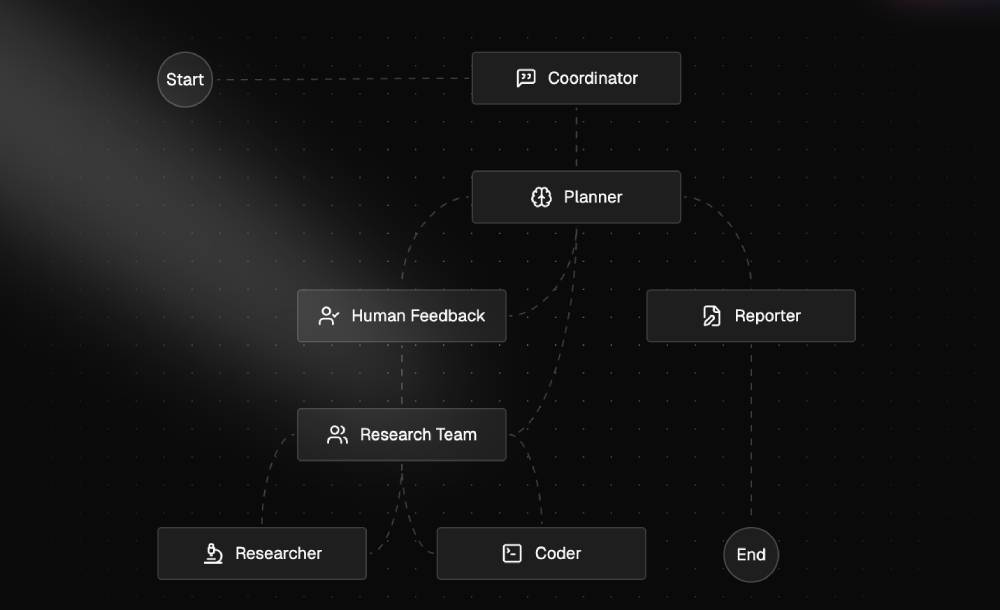
ByteDance has released DeerFlow (Deep Exploration and Efficient Research Flow), an open-source framework for automated research. It integrates language models with tools for data extraction, code execution, and content creation. It builds on LangGraph for multi-agent task orchestration, allowing structured, automated workflows.
Multi-Agent Architecture
DeerFlow uses a structured, multi-agent approach for complex research tasks. Coordinator: Manages the overall workflow, serving as the main control hub.
Planner: Breaks down tasks into structured execution plans.
Researcher: Handles web search, data extraction, and API interactions.
Coder: Executes code using Python, supporting data analysis libraries.
Reporter: Aggregates results into structured reports and content scripts.
LLM and Tool Integrations
It supports most LLMs through LiteLLM and integrates multiple research tools.
Compatible with Qwen and OpenAI-compatible APIs.
Uses LangGraph for state-based message passing and task orchestration.
Integrates with MCP (Model Context Protocol) for advanced query processing.
Includes Notion-style block editing for post-processing.
Data Extraction and Search Capabilities
DeerFlow supports large-scale data extraction through built-in search engines.
Tavily: AI-focused search with API integration.
DuckDuckGo: Privacy-focused, API-free search option.
Brave Search: Advanced privacy search with API support.
Arxiv: Academic paper search without API keys.
Text-to-Speech (TTS) Support
It includes TTS features using volcengine for converting text to high-quality speech.
Customizable speed, volume, and pitch settings.
Configurable through .env files.
Suitable for podcast and presentation automation.
System Requirements and Deployment
DeerFlow runs on Python 3.12+ and Node.js 22+ with Docker support.
GPU acceleration for faster processing.
CPU support for smaller research tasks.
Simple setup with uv for dependency management.
Availability and Access
DeerFlow is open-source and available on GitHub.
Licensed under the MIT license.
Requires API keys for search engines and TTS.
Supports Docker and local deployment.
Community Feedback
jimmychung.eth
"This looks amazing—DeerFlow feels like the missing piece in autonomous research workflows. Integrating LLMs, LangChain, and Python execution under one roof is wild. Curious to see how it compares to LangGraph or tools like AutoGen. Definitely keeping an eye on it!"
K
"I'm waiting for the report after running Deepresearch on DeerFlow with DeepSeek R1. I think the steps the model takes in the PDCA planning stage will likely have a large impact on the quality of the final product. With that hypothesis in mind, I'd like to compare the different models."
Yasser Sinjab
"Good use case for multi-agent architecture"
| |
| Try now
|
|
|
|
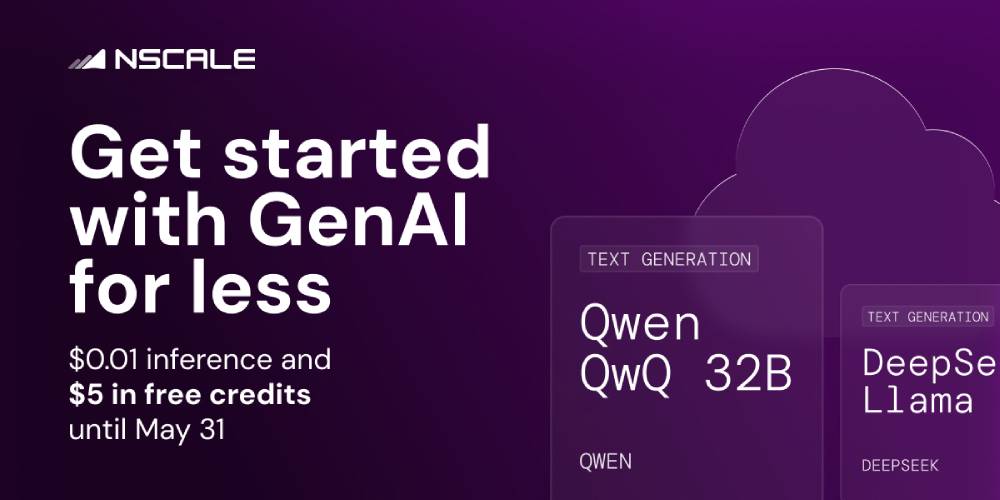
| Deploy Serverless Inference in 60 s : $0.01 + Free Credits | Nscale Serverless takes you from idea to inference in 60 seconds without any infra, cold starts, or rate limits.
Access Qwen 3, Llama 4 and DeepSeek R1 instantly via a clean OpenAI‑compatible API on high‑performance GPUs in green‑powered EU data centers.
On top of that you get:
Instant model switching - try new models in seconds
$0.01 per inference - keep costs predictable
$5 free credits till May 31 - test without spending a cent
New models dropping soon - always build with the latest AI
Built for engineers, not enterprise buyers
Spin up your next AI app – benchmark, prototype, or scale in minutes.
Early access is limited – claim your spot. |
| Try for free
| partner with us → |
|
|
|
TRENDING SIGNALS
| AI Protocol |
|
⇧ 3,028 Likes | |
AI Evaluation |
|
⇧ 628 Likes | |
Collaboration Tools |
|
⇧ 1,729 Likes | |
AI Agents | |
| From Our Sponsors |
| AI Research |
|
⇧ 1,538 Like | | |
|
|
|
|
TOP TUTORIALS
| AI Agents | |
| ⇧ 429 Likes |
This course covers building autonomous web agents using AgentQ. It includes Monte Carlo Tree Search (MCTS), Direct Preference Optimization (DPO), and self-critique for task optimization. You'll build agents that navigate, scrape, and interact with websites, including form filling and structured data extraction. Includes 8 lessons, 4 code examples, and real-world projects.
|
| Model Fine-Tuning |
|
| ⇧ 715 Likes |
This notebook introduces GRPO fine-tuning for Qwen3-Base. It covers proximity scoring for closer answers, prefinetuning to skip GRPO format, and advanced GRPO templates. It also includes OpenR1 dataset integration and number extraction for response validation, with step-based logging to track progress and fine-tune accuracy.
|
| Voice Assistant |
| ⇧ 258 Likes |
Learn how to build a fully offline voice assistant that runs locally using LLaMA 3.1 and Whisper. This 5-part course covers dataset generation, LoRA fine-tuning, GGUF inference, and speech-to-function mapping. You'll deploy on-device agents that call real APIs, preserve privacy, and work across macOS, Linux, and mobile.
|
| |
| |
|
|
PYTORCH TIP
| Monitor Gradient Flow to Detect Training Issues | Tracking gradient norms during training helps identify vanishing or exploding gradients, which can destabilize training. By monitoring the gradient norms of each parameter, you ensure proper gradient flow.
How it works
After computing the loss and calling loss.backward(), each parameter's gradient is accessible via param.grad. The .norm() function computes the Euclidean norm of the gradient tensor, providing a scalar value representing the magnitude of gradients for that parameter.
When to use it
Use this when you suspect certain layers aren't learning due to gradient issues.
Benefits
This provides quick feedback, helping to resolve gradient flow problems and ensuring all layers contribute to learning.
Here's how you can implement this:
|
for epoch in range(num_epochs):
    for images, labels in train_loader:
        optimizer.zero_grad()
        outputs = model(images)
        loss = criterion(outputs, labels)
        loss.backward()
        for name, param in model.named_parameters():
            if param.grad is not None:
                print(f"Gradient norm for : ")
        optimizer.step()
|
|
|
|
At Alpha Signal, our mission is to build a sharp, engaged community focused on AI, machine learning, and cutting-edge language models, helping over 200,000 developers stay informed and ahead. We’re passionate about curating the best in AI, from top research and trending technical blogs to expert insights and tailored job opportunities. We keep you connected to the breakthroughs and discussions that matter, so you can stay in the loop without endless searching. We also work closely with partners who value the future of AI, including employers and advertisers who want to reach an audience as passionate about AI as we are.
Our partnerships are based on shared values of ethics, responsibility, and a commitment to building a better world through technology.Privacy is a priority at Alpha Signal. Our Privacy Policy clearly explains how we collect, store, and use your personal and non-personal information. By using our website, you accept these terms, which you can review on our website. This policy applies across all Alpha Signal pages, outlining your rights and how to contact us if you want to adjust the use of your information. We’re based in the United States. By using our site, you agree to be governed by U.S. laws. |
|
|
|
Looking to promote your company, product, service, or event to 200,000+ AI developers? Let's work together.
|
| Work with us
|
|
|
|
|
