Hey, | Welcome to this week's edition of AlphaSignal.
Whether you are a researcher, engineer, developer, or data scientist, our summaries ensure you're always up-to-date with the latest breakthroughs in AI.
Let's get into it!
Lior |
|
|
|
IN TODAY'S SIGNAL | News: NVIDIA GTC Recap Announcements: SV3D, Inflection Acquisiton, Sam Altman and Lex Pytorch Tip: Image transformation with functional module Tutorial: Learning rate Scheduler for LLM Finetuning
Read Time: 4 min 15 sec |
|
|
|
TOP NEWS | NVIDIA GTC Recap - The ‘World’s Most Powerful Chip’ | 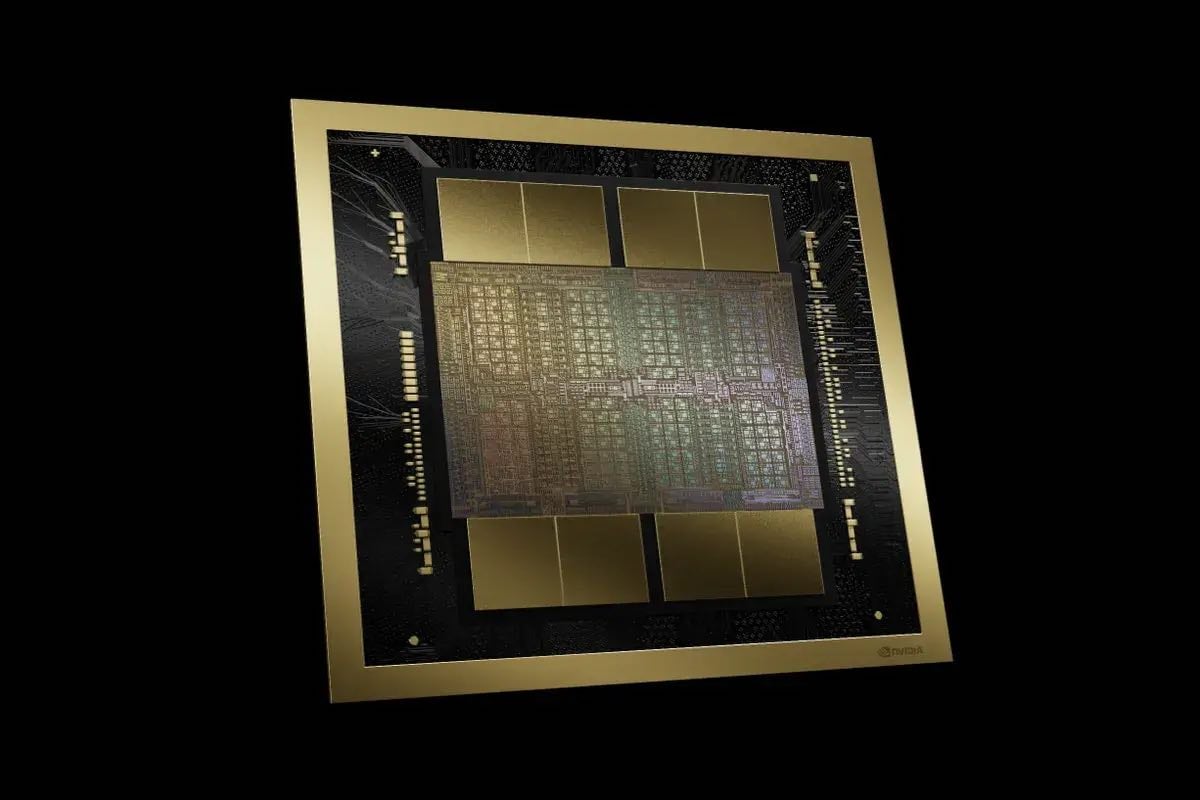 | What's New? | NVIDIA's GPU Technology Conference (GTC) is as a key conference for the latest advancements in GPU technology, AI, and deep learning. This annual event gathers experts, scientists, and developers to discuss the applications and implications of advanced computing across various industries.
Blackwell B200 GPU
NVIDIA has unveiled the Blackwell B200 GPU, termed the 'world's most powerful chip' for AI, designed to democratize access to trillion-parameter AI models. This launch is set to expand NVIDIA's lead in the AI market.
- Performance: The B200 offers 20 petaflops of FP4 performance with its 208 billion transistors.
- Efficiency: When paired as a GB200 with a Grace CPU, it delivers 30x the LLM inference workload performance, reducing costs and energy up to 25x compared to the H100.
- Capacity: Capable of training a 1.8 trillion parameter model with just 2,000 GPUs using four megawatts, compared to the previous 8,000 Hopper GPUs.
- Speed: Exhibits a 7x performance boost on GPT-3 LLM (175 billion parameters) and 4x faster training speed compared to the H100.
Project GR00T
NVIDIA unveiled Project GR00T, which develops foundational models for humanoid robots, enabling them to process and act on multimodal instructions such as language, video, and demonstrations. - Foundation Model: Allows robots to understand multimodal instructions.
- Cross-Platform Compatibility: Works across different robotic platforms.
- Tech Stack: Uses Isaac Lab for simulations, scales models with OSMO, and deploys on Jetson Thor for edge computing tasks.
- GEAR Lab Integration: Aims to develop versatile agents that operate effectively in both virtual and real environments.
NIM Microservices
NVIDIA also launched NIM microservices to facilitate the deployment of AI, allowing for quick development and scaling across various platforms. | | Watch the recap |
|
|
|
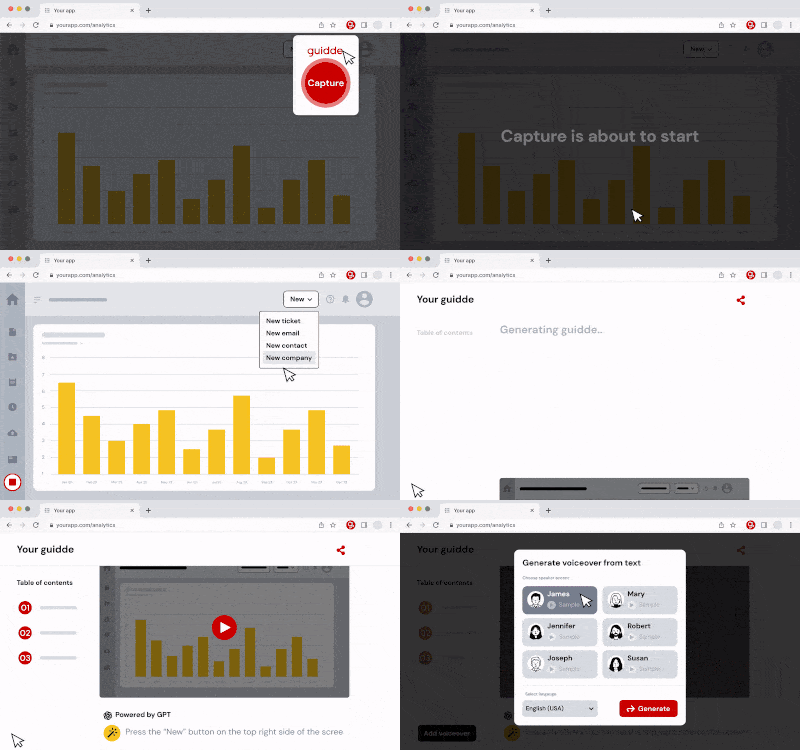 | Explain and document the most complex tasks in seconds with AI | It’s time to delegate that work to AI. guidde is a GPT-powered extension that helps you explain the most complex tasks in seconds with AI generated documentation. Turn boring documentation into stunning visual guides Save valuable time by creating video documentation 11x faster Share or embed your guide anywhere for your team to see
Simply click capture on the browser extension and the app will automatically generate step-by-step video guides complete with visuals, voiceover and call to actions.
Try the extension for free. | | Try it here | partner with us |
|
|
|
TOP ANNOUNCEMENTS | --------------------- Stable Video 3D (SV3D), based on Stable Video Diffusion, introduces two variants, SV3D_u and SV3D_p, for advanced 3D video generation from single images. SV3D_u creates orbital videos without camera conditioning, while SV3D_p allows 3D video generation along specified paths, improving upon prior models with enhanced multi-view consistency and quality.
Stable Video 3D can be used now for commercial purposes with a Stability AI Membership. For non-commercial use, you can download the model weights on Hugging Face. Paper available. | | --------------------- Reaching 1.1 million views in 48 hours, the new interview with Lex Fridman, Altman offered frank and thought-provoking commentary on some of the most consequential issues surrounding OpenAI and the current AI landscape. He mentioned GPT-4 “kind of sucks,” and that they “will release an amazing model this year". | | --------------------- Microsoft has acquired AI startup Inflection after leading its $1.3 billion funding. Inflection's ambition was to develop conversational AI Pi, which memorizes user interactions, but it struggled against rivals like OpenAI and Google's Gemini. Inflection's co-founders, incuding CEO Mustafa Suleyman, are joining Microsoft to spearhead a new consumer AI division.
The rest of Inflection's team will focus on creating custom generative AI models for businesses. Developers interested in early access to Inflection's API and fine-tuning infrastructure can sign up for a testing phase. | |
| |
|
|
UNLOCKING THE FUTURE OF AI AGENTS | MM01 AI announces the US$ 1 million AI Agents Global Challenge.
Global challenge, 20 winners, diverse themes/domains. Create your Agent, Train it, Empower it, Compete! Take part today in the challenge, build your future!
Click here to stay updated ↗️ |
|
|
|
PYTORCH TIP | Image transformation with functional module | The torchvision.transforms.functional module in PyTorch offers a hands-on approach for image transformations, allowing for precise control over each operation, crucial for tasks requiring synchronized changes to paired data, like images and masks in segmentation. It enables custom, conditional transformations beyond the transforms. |
import torch
import torchvision.transforms.functional as TF
import random

def synchronized_transform(image, mask):

    # Randomly choose the start point for the crop
    i, j, h, w = TF.RandomCrop.get_params(image,
                                          output_size=(256, 256))

    image_cropped = TF.crop(image, i, j, h, w)
    mask_cropped = TF.crop(mask, i, j, h, w)

    # Apply any other synchronized transformations here

    if random.random() > 0.5:

        image_cropped = TF.hflip(image_cropped)

        mask_cropped = TF.hflip(mask_cropped)
    return image_cropped, mask_cropped
|
|
|
|
TUTORIAL | Learning rate Scheduler for LLM Finetuning | 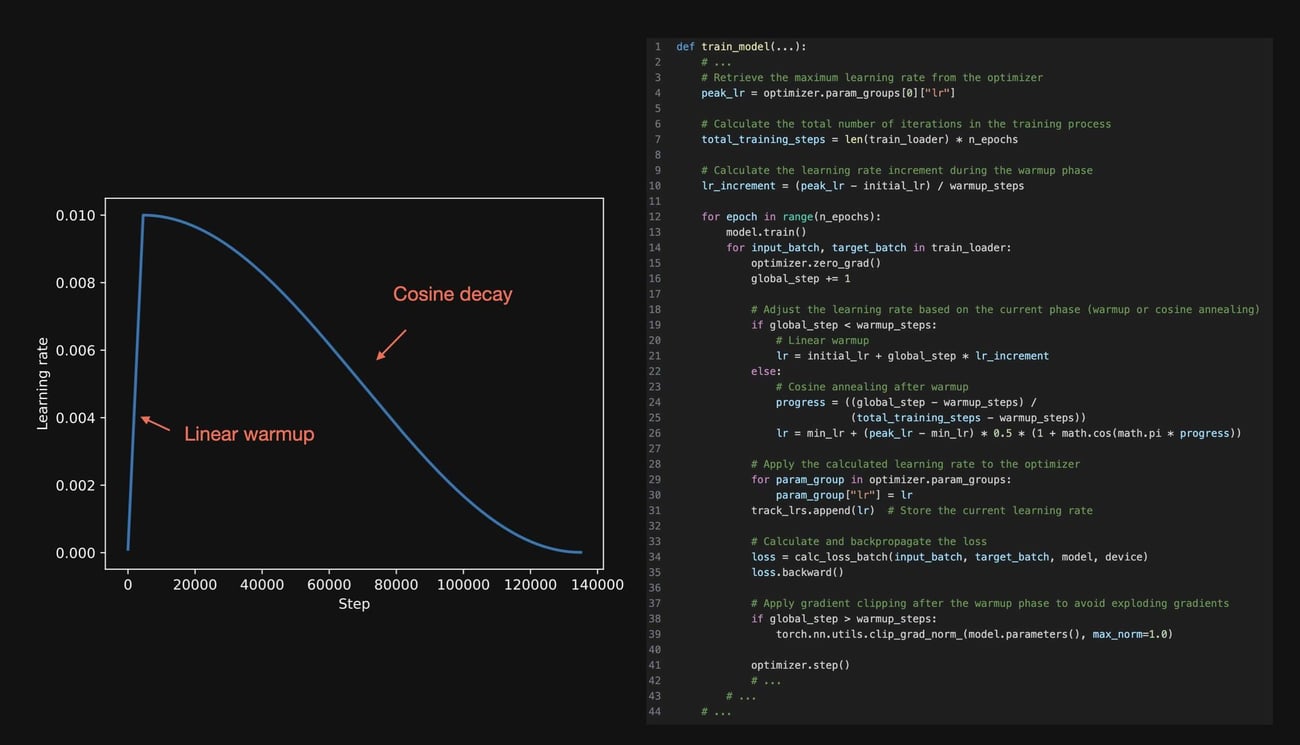 | This tutorial provides a from-scratch implementation that explains how to implement the learning rate schedule with linear warmup and half-cycle cosine decay used for fine-tuning and pre-training LLMs. | | Read tutorial |
|
|
|
| | Ghita is an editor at AlphaSignal and AI Engineer at Clear Ventures. Experienced in Computer Vision and Language models, she holds 2 masters in Applied Mathematics. | | Thank You. |
| | Want to promote your company, product, job, or event to 175,000+ AI researchers and engineers? You can reach out here. | |
|
|
|
|
