
Runway Joins NVIDIA's Cosmos 3 Coalition to Build Open World Models for Robots
Runway joins NVIDIA's newly launched Cosmos Coalition as a founding member, a global push to build and open-source frontier world models for physical AI.
20 stories
Runway joins NVIDIA's newly launched Cosmos Coalition as a founding member, a global push to build and open-source frontier world models for physical AI.
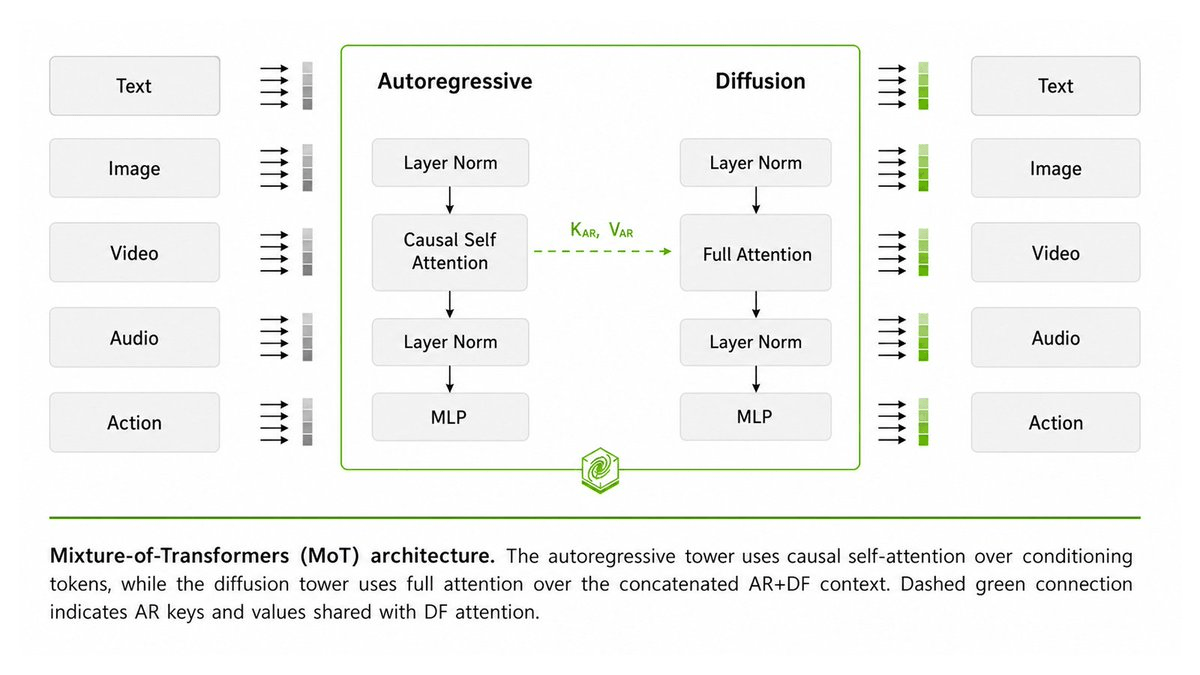
NVIDIA's Cosmos 3 merges reasoning, world simulation, and robot action generation into a single open model — a first for physical AI
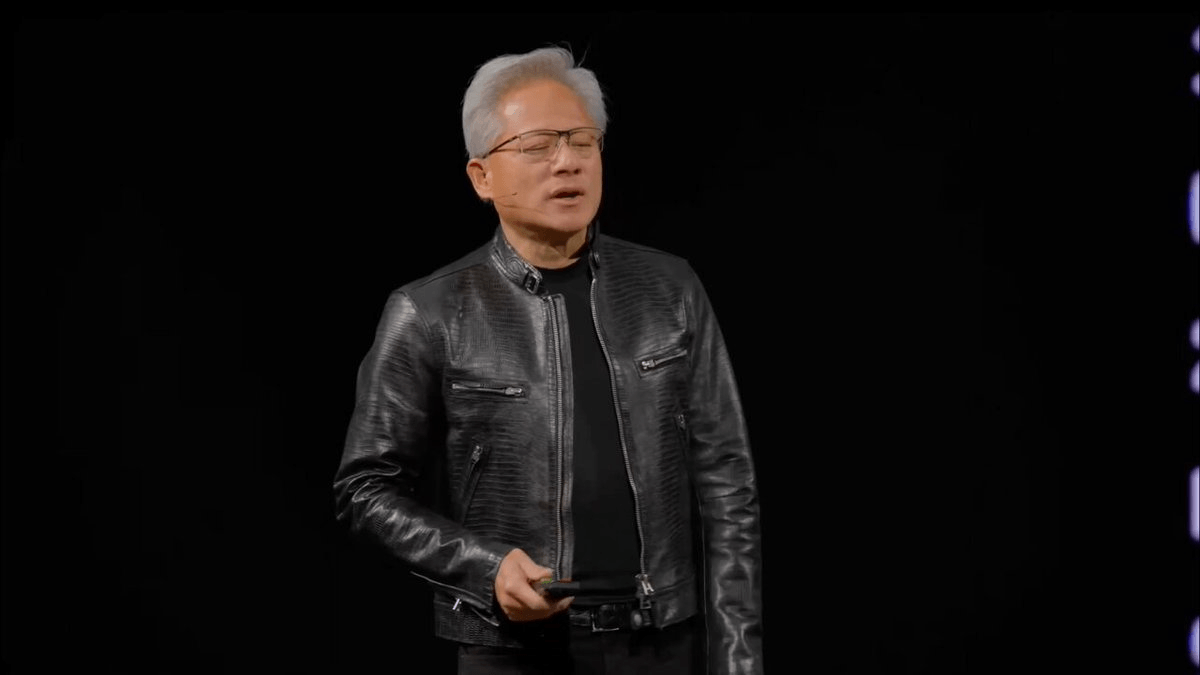
NVIDIA's Nemotron 3 Ultra is a 550B open-weight MoE model that delivers 5x faster inference and 30% lower cost for agentic workloads, now the top US open-weight model by benchmark.
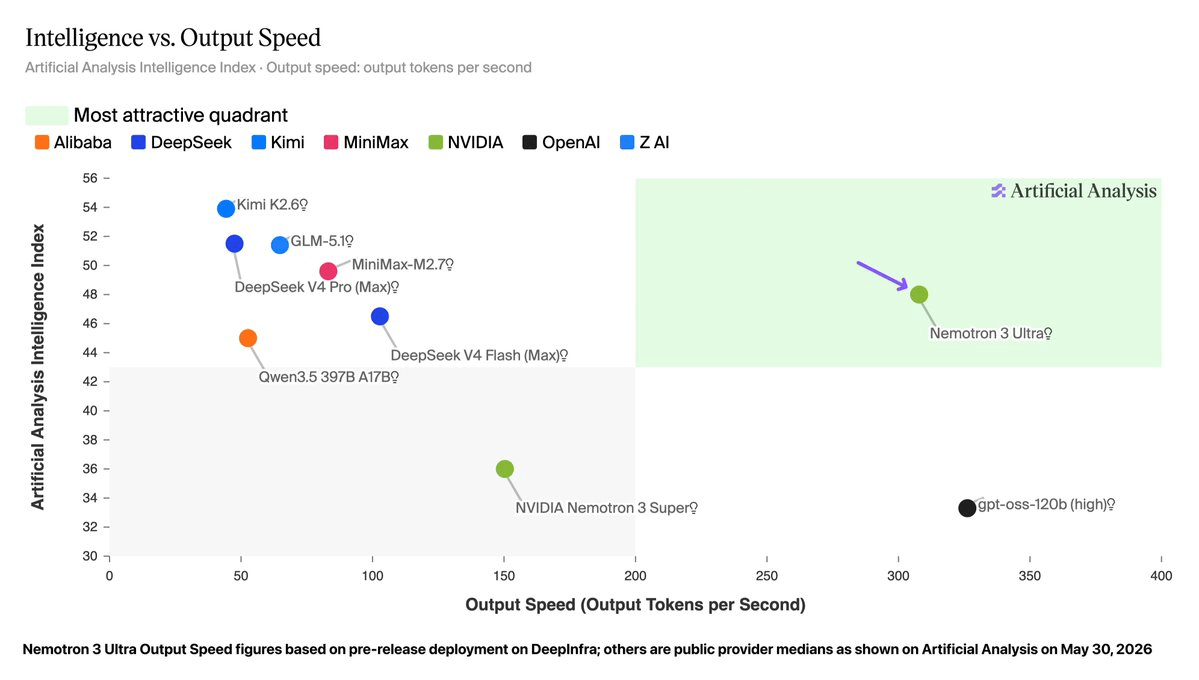
NVIDIA's 550B open-weights model tops US rankings with 5x faster inference, built for long-running AI agents — but China's Kimi K2.6 still leads globally

Nous Research's self-improving AI agent lands on Windows natively, no WSL required, as NVIDIA backs it at GTC Taipei
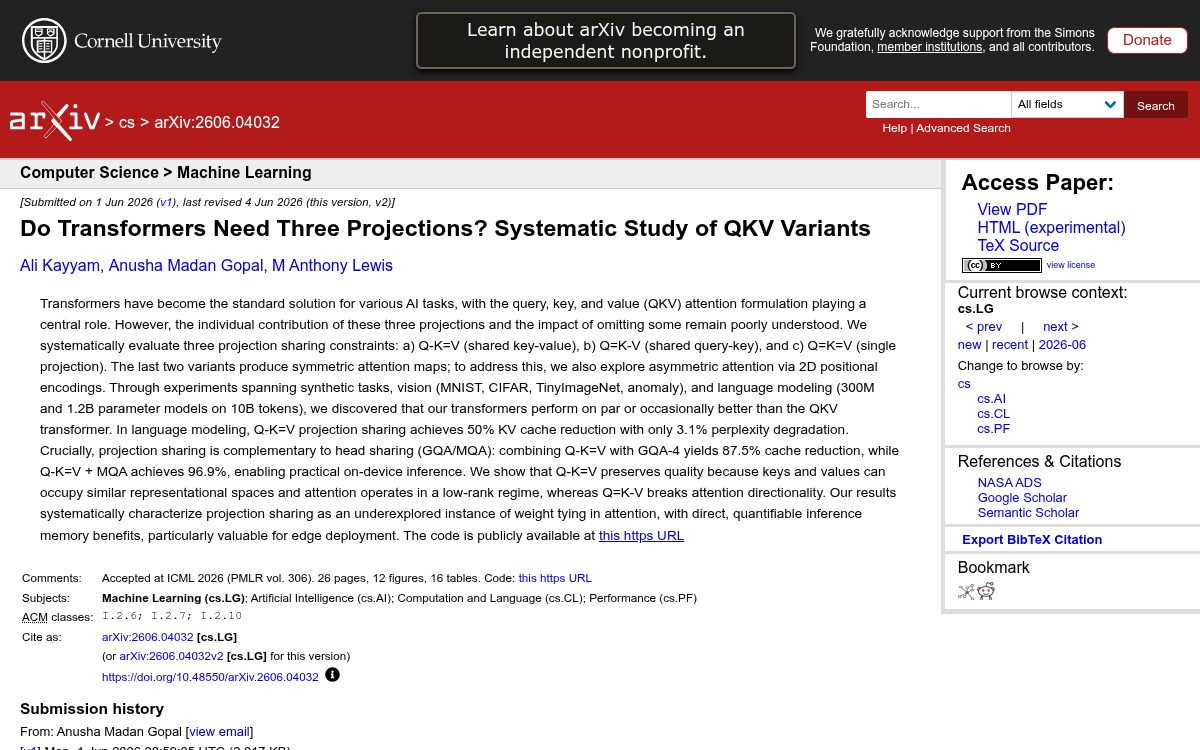
Researchers show merging K and V projections cuts KV cache by 50% with only 3.1% perplexity loss — and stacks with GQA/MQA for up to 96.9% reduction
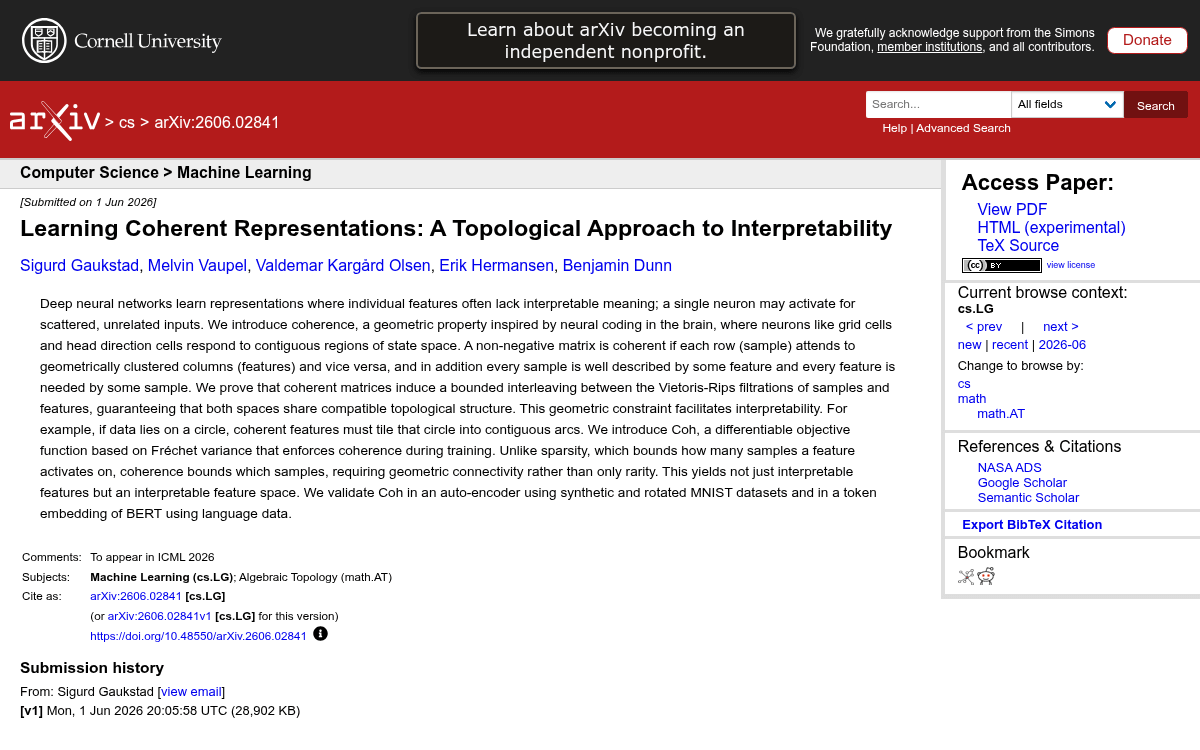
A new geometric regularizer called Coh forces neural network features to tile data manifolds like brain cells, yielding provably interpretable latent spaces accepted at ICML 2026.
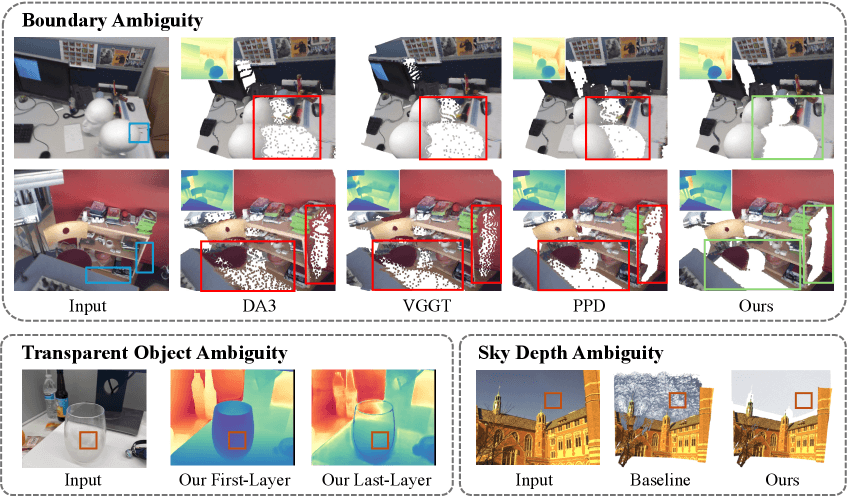
Researchers from the University of Michigan introduce MDA, a lightweight mixture-density head that eliminates 'flying point' artifacts in depth estimation without changing the backbone or adding inference overhead.
CG-CMARL combines coordination graphs with Lagrangian duality so a single trained model navigates the full safety-performance tradeoff for teams of up to 10 agents.
MOC rewires how LLM agents share information across multi-hop paths, cutting token bloat while boosting accuracy up to 6.77% on reasoning benchmarks

SIRI teaches LLM agents to mine and absorb reusable skills during training, then run lean at inference with no skill bank needed
CityTrajBench standardizes how we compare vehicle trajectory generators, revealing that no single model wins across all quality dimensions
A new audit of 1,603 NLP papers finds that who annotates, how they're trained, and what they're paid is routinely left out of published research
SeClaw auto-generates security test tasks from structured risk specs and evaluates agents inside Docker sandboxes, tracking every tool call along the way
POIROT turns a multi-agent system's own agents into its safety auditors, outperforming single-LLM evaluators with gains that scale with complexity
A new open-source pipeline turns a single smartphone video into 3D movement biomarkers for chronic pain patients, matching lab-grade motion capture at a fraction of the cost.
AdvCL flips adversarial perturbations from a threat into a geometry tool that cuts catastrophic forgetting and boosts robustness in continual LLM fine-tuning
Clinical vision-language models can re-link de-identified chest X-rays to their original radiology reports using cosine similarity alone — and a targeted privacy fix cuts the risk by 62% without hurting diagnostic utility.
A new training method cuts sycophancy in LLMs without teaching models to hide their biases from safety monitors

SAGC dynamically adjusts GRPO group sizes during training to eliminate straggler bottlenecks, cutting wall-clock time nearly in half while matching or beating static baselines on reasoning benchmarks.