ByteDance Seed's continuous adversarial flow models replace mean squared error with a learned critic, cutting ImageNet guidance-free FID by more than half.
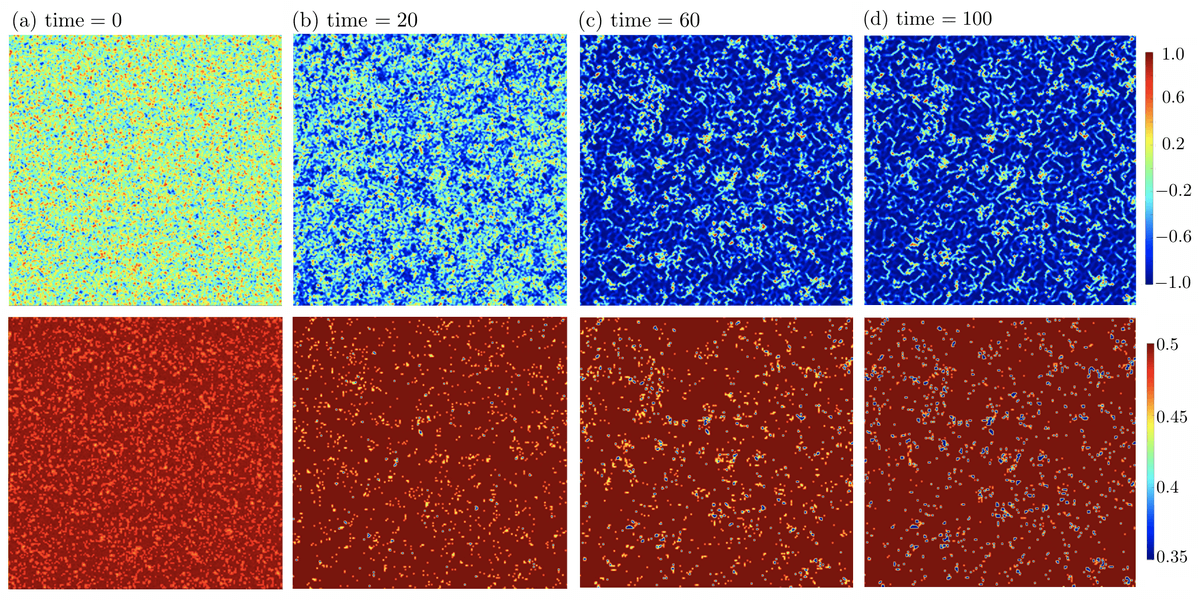
Researchers adapt the Behler-Parrinello neural network framework from molecular dynamics to metallic magnets, enabling large-scale simulations of both equilibrium and voltage-driven spin systems.
MedSSR uses knowledge-guided synthetic questions and self-generated pseudo-labels to lift rare-disease reasoning by up to 5.93 percent without expensive teacher distillation.
A team of academic researchers released TempusBench, an open framework that stress-tests time-series foundation models on tasks their pretraining data has never seen.
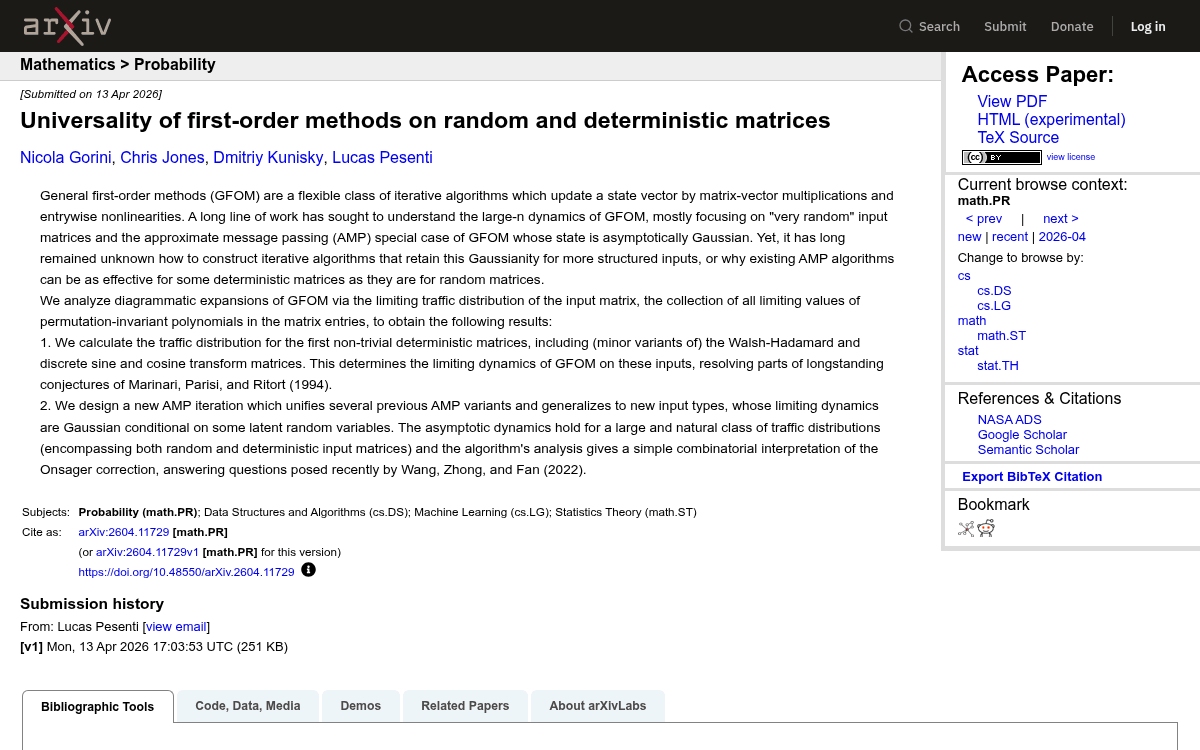
Four researchers prove a nearly 30-year-old conjecture about structured matrices and introduce a unified AMP iteration that works on random and deterministic inputs alike.
A new study probes whether deep learning can spot the subtle mixed feelings that make people abandon health interventions, and finds today's models are not ready.
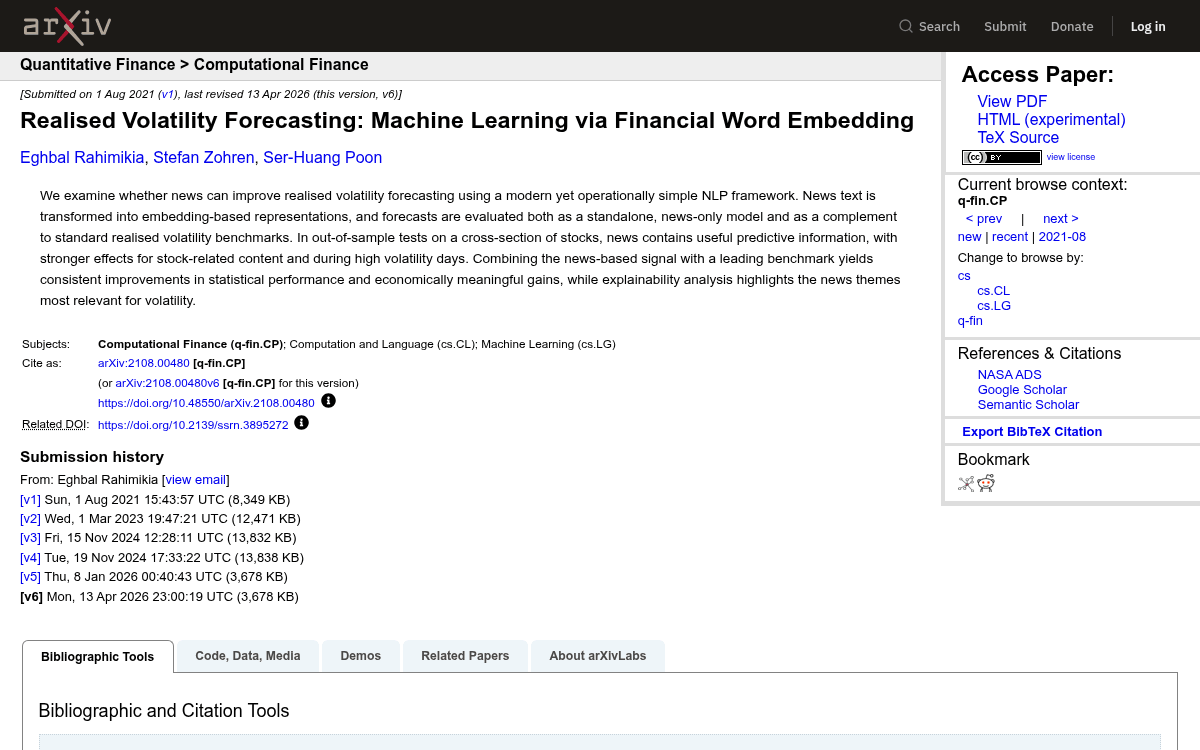
A CNN reads financial news headlines through a domain-specific word embedding, then combines with HAR benchmarks to lift realized volatility forecasts by up to 6.3%.
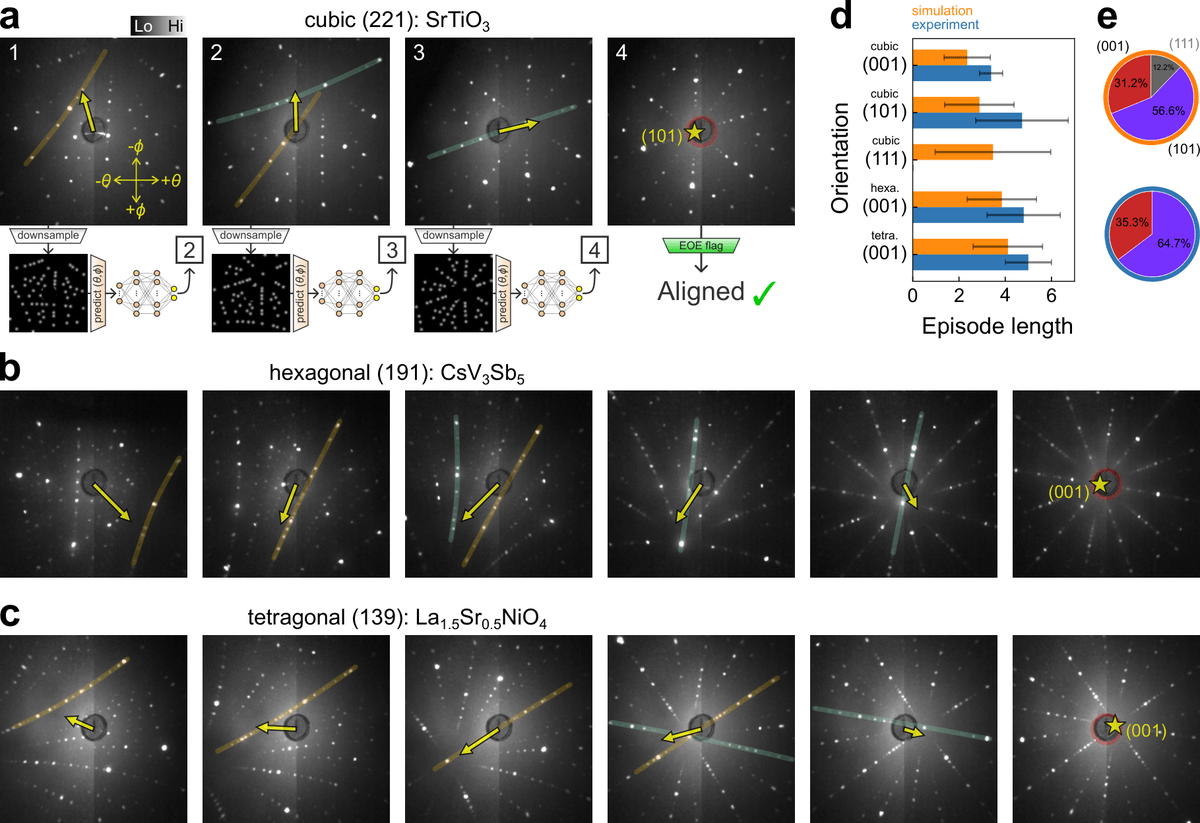
A reinforcement learning agent learns to align single crystals from raw diffraction images alone, replacing hours of expert manual work in materials labs.
A new sparse polynomial framework builds fast surrogates for parametric diffusion on community-structured graphs, with proven convergence and a public code release.
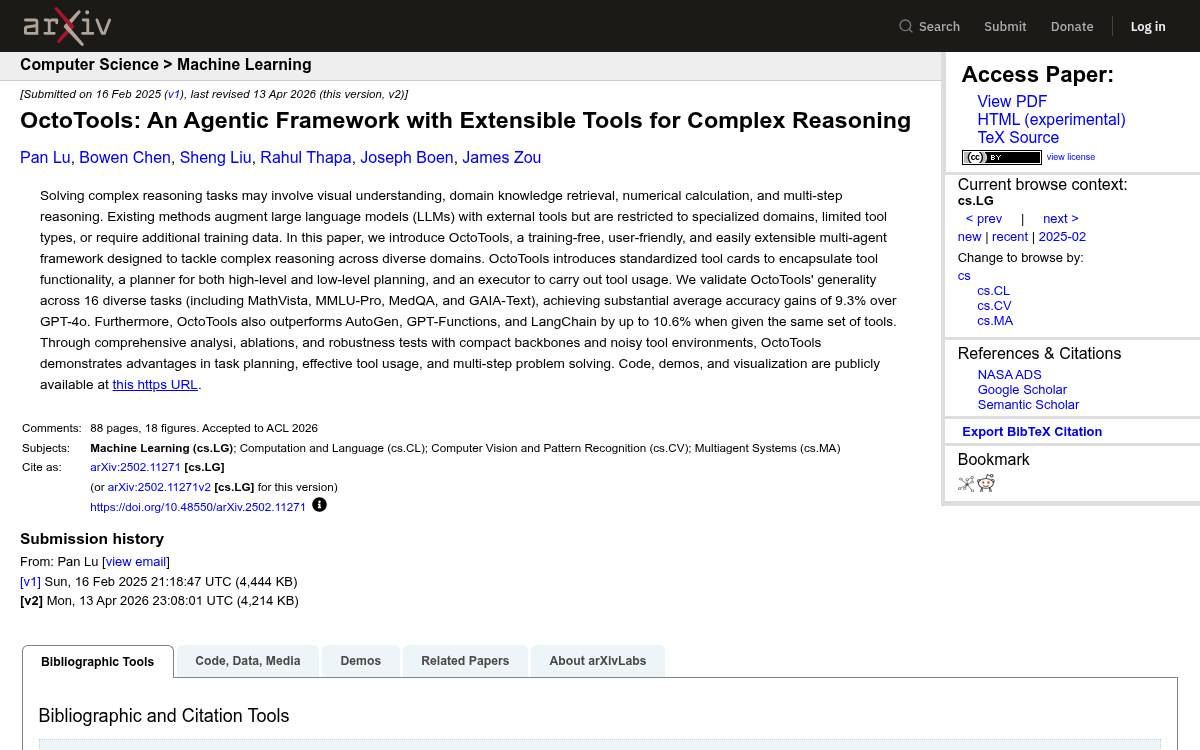
Stanford's training-free agent framework hits 58.5% average across 16 reasoning benchmarks, beating GPT-4o by 9.3% and topping LangChain and AutoGen by up to 10.6%.
A diffusion transformer factorizes robot manipulation tasks into reusable pieces, then bootstraps its own training data to solve unseen task combinations.
A four-stage agentic pipeline breaks reviews into atomic concerns, retrieves evidence, plans strategies, and generates rebuttals that beat human averages using an 8B model.
A team of evolutionary computation researchers show how Statistical Linkage Learning can rescue Partition Crossover when objective functions are corrupted by noise.