
This Free DuckDuckGo MCP Server Gives Claude Search Without API Keys
A lightweight Python MCP server gives AI agents free DuckDuckGo search and webpage fetching, with a new curl backend to slip past Cloudflare bot filters.
Takeaways
- The duckduckgo-mcp-server exposes DuckDuckGo search and webpage fetching to any MCP client, no API key needed.
- Two tools:
searchreturns titles, URLs, snippets;fetch_contentextracts cleaned page text with pagination support. - Built-in rate limiting: 30 searches per minute, 20 content fetches per minute, with automatic queueing.
- Configurable SafeSearch and region filtering via
DDG_SAFE_SEARCHandDDG_REGIONenvironment variables. - New v0.4.0 curl_cffi backend impersonates Chrome 131 TLS handshakes to bypass Cloudflare JA3-based bot detection.
- MIT licensed, installable via
uvx duckduckgo-mcp-server, supports stdio, SSE, and streamable HTTP transports.
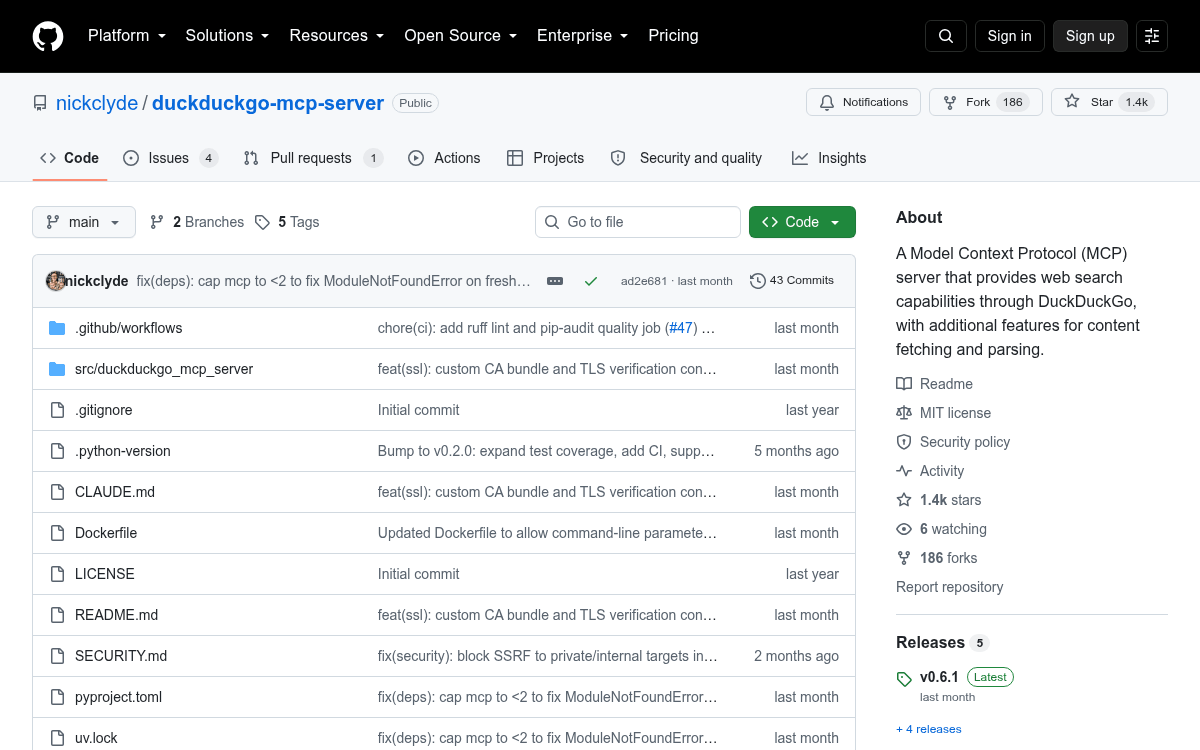
Search is the most-requested tool for any AI agent, and most implementations either require an API key or burn through a quota. The duckduckgo-mcp-server project takes a simpler route: it wraps DuckDuckGo's public search endpoint in a Model Context Protocol server so Claude Desktop, Claude Code, or any MCP-compatible client can call it directly, with no keys and no billing.
The repo has quietly grown past 1.1k stars, and the latest v0.4.0 release adds something more interesting than the initial pitch suggests: an opt-in fetch backend that impersonates a browser TLS fingerprint to bypass Cloudflare-style bot detection on target sites.
What you actually get
The server exposes DuckDuckGo search alongside content fetching and parsing, with output shaped for language models rather than human eyeballs. Two tools are available to the model:
search(query, max_results=10, region="")returns formatted titles, URLs, and snippets from DuckDuckGo.fetch_content(url, start_index=0, max_length=8000, backend=None)pulls the page, strips ads and boilerplate, and returns cleaned text with pagination viastart_index.
Rate limiting is built in at 30 requests per minute for search and 20 per minute for fetching, with automatic queueing so the model does not have to think about backoff.