
OpenAI's Evals Framework Turns LLM Testing Into Versioned Team Artifacts
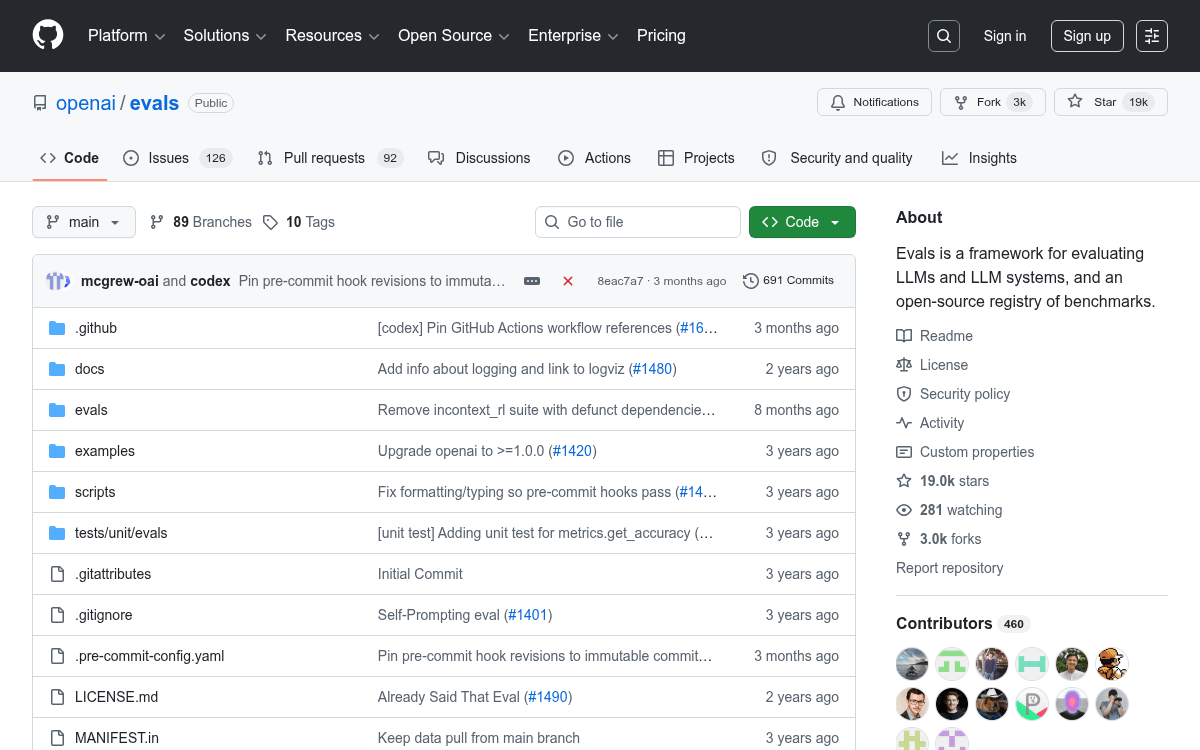
OpenAI's open-source evaluation framework has crossed 19K stars, offering a registry of benchmarks and templates for testing LLM behavior with minimal code.
Takeaways
- OpenAI's evals framework has crossed 19K stars as a standard for LLM evaluation.
- Ships templates for basic match, includes, fuzzy match, and model-graded evals with no code required.
- Registry of benchmarks stored via Git-LFS; fetch selectively per eval to save bandwidth.
- Custom evals can stay private; contributed evals fall under the repo's MIT license.
- Works with any Chat Completions-compatible endpoint, including locally hosted models.
- Same configs run in the hosted OpenAI Evals dashboard, unifying local and cloud workflows.
If you have ever shipped anything built on an LLM, you know the sinking feeling of not being sure whether a prompt change made things better or worse. That is the exact hole openai/evals is trying to fill, and after quietly compounding over the past couple of years, the repo now sits at more than 19K stars with 3K forks and an active registry of community-contributed benchmarks.
The framework has also become the reference implementation behind the hosted Evals product baked into the OpenAI dashboard, which means the same YAML and JSON files you write locally can be run through the platform UI. It is a small detail, but it changes how teams treat evaluation, from a script somebody runs once before a demo to a persistent artifact that lives next to the code.
What it actually is
Evals provides a framework for evaluating large language models or systems built using LLMs, offering an existing registry of evals to test different dimensions of OpenAI models and the ability to write your own custom evals, including private evals built from your own data without exposing it publicly. The pitch, straight from the README, is that if you are building with LLMs, creating high quality evals is one of the most impactful things you can do, because without evals it is very difficult and time intensive to understand how different model versions might affect your use case.
The repo ships three things that matter:
- A Python framework with a CLI (
oaieval