
Open-Source jcode Runs 20 Parallel AI Agents on 8GB RAM in 14ms
jcode is a Rust-native coding agent harness that boots in 14ms, runs 10+ parallel agents on 8GB of RAM, and lets the agent rewrite its own source code — all free and open-source.
Takeaways
- jcode is a free, MIT-licensed Rust coding agent harness that boots in 14ms and uses 27.8 MB RAM — vs 386 MB for Claude Code.
- Supports 10–20 parallel agent sessions on an 8GB laptop, with a swarm mode that auto-resolves file conflicts between agents.
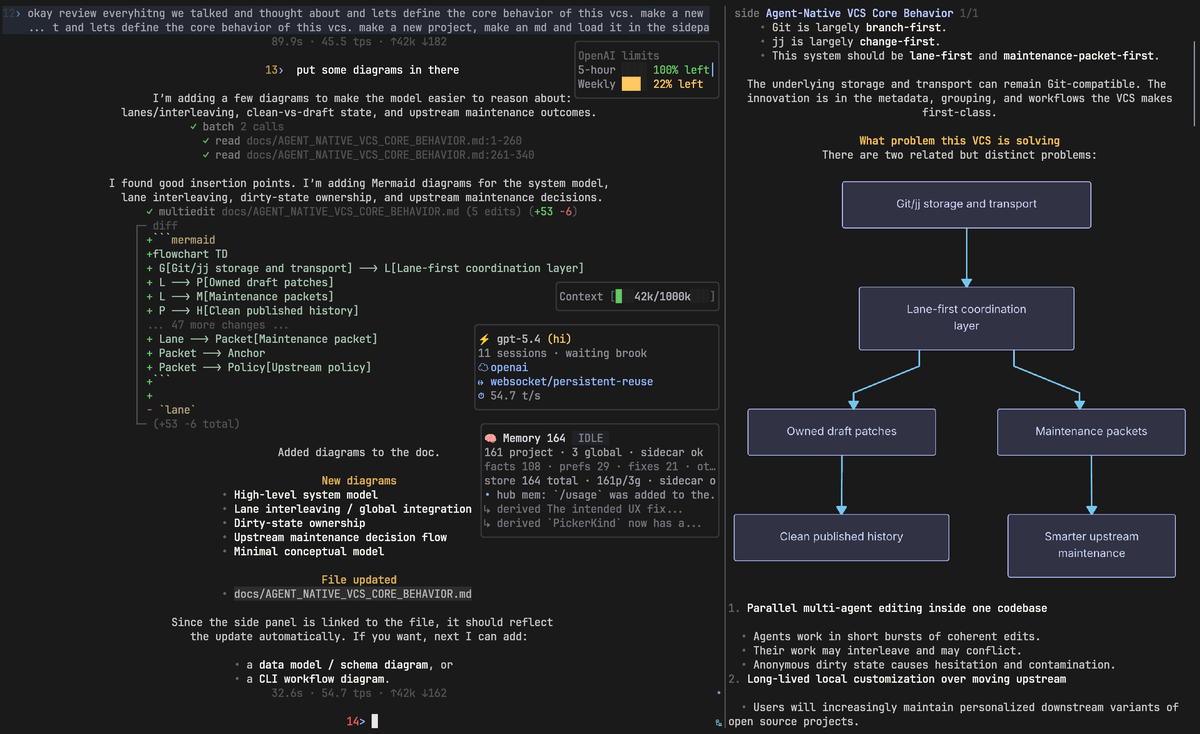
- Built-in semantic memory graph embeds every conversation turn as a vector and recalls relevant context automatically, without explicit tool calls.
- Self-dev mode lets the agent modify, compile, test, and hot-reload its own Rust source code — no plugin system, the agent rewrites the harness itself.
- Supports 40+ providers (Claude, OpenAI, Gemini, Copilot, Ollama, DeepSeek, etc.); Claude OAuth is now banned by Anthropic, but OpenAI OAuth remains allowed.
- Install via
curl -fsSL https://jcode.sh/install | bash; source on GitHub with 11.2k stars and active daily commits.
jcode is an open-source, MIT-licensed coding agent harness written entirely in Rust. It sits between you and whatever LLM you're using, managing prompts, tool calls, memory, and sessions. It functions as the runtime layer that tools like Claude Code or Codex CLI are built on, but without provider lock-in, with a 14ms startup time, and with enough efficiency to run 20 parallel agents on a standard laptop.
Why existing tools fall short
Running multiple AI coding agents in parallel is increasingly common, but harnesses built on Node.js or Python burn through RAM fast. The numbers are concrete: jcode uses 27.8 MB at rest, compared to 140–386 MB for Claude Code and GitHub Copilot CLI. It launches in 14ms instead of 590ms to 3.4 seconds. At 10 active sessions, jcode consumes roughly 261 MB total; Claude Code at the same scale hits around 2.3 GB. That gap is what makes 10 to 20 concurrent agents feasible on an 8 GB laptop, where Python or Node.js alternatives simply run out of headroom.
What's inside
jcode ships a full infrastructure stack that most harnesses don't include:
- Semantic memory graph. Every conversation turn is embedded as a vector. On each new turn, jcode queries past memories using cosine similarity (a standard technique for finding semantically related content) and injects relevant context automatically, with no explicit memory tool calls required. A background agent periodically extracts, consolidates, and deduplicates memories to keep the graph clean.
- Swarm mode. A persistent server manages all sessions and notifies agents when code in their scope changes. When agent A edits a file that agent B has read, agent B receives a notification and can inspect the diff before continuing. Main agents can also spawn and coordinate worker agents autonomously.