
Node Banana v1.5.0 Ships Loops and Batch Runs for Free
Node Banana v1.5.0 lands with loops, fallback models, and new video providers, offering a free MIT-licensed alternative to Weavy and Flora.
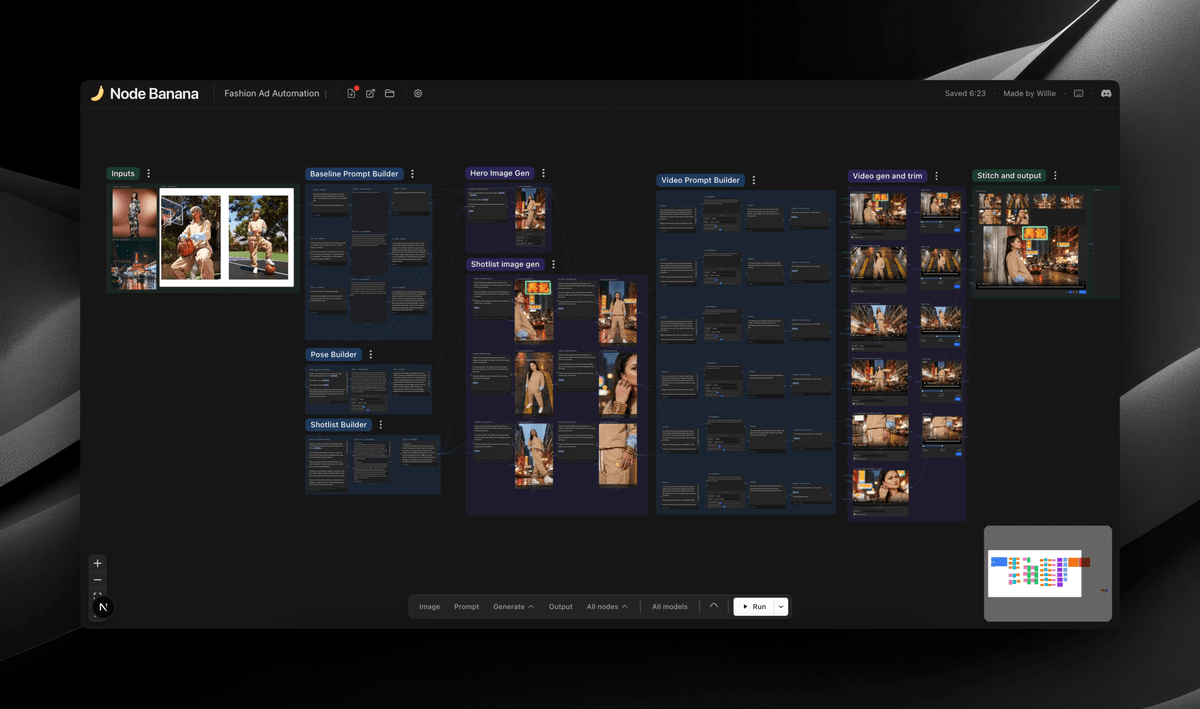
Takeaways
- Node Banana v1.5.0 ships as a free, MIT-licensed visual workflow editor for AI media generation.
- Adds iterative loops, setup tutorial, and fallback models when providers fail mid-pipeline.
- New video model access via Kie.ai: Seedream 2, Wan 2.7, and Kling 3.0.
- Supports Gemini, Replicate, fal.ai, Kie.ai, WaveSpeed, OpenAI, Anthropic, plus ComfyUI workflow imports.
- Positioned as an open alternative to hosted tools like Weavy and Flora, fork-friendly.
- Solo-maintained project with 1.5k stars; author seeking long-term co-maintainers.
A browser-based visual workflow editor for AI media generation just shipped what its solo maintainer says might be its final major release. Node Banana v1.5.0 adds iterative loops, a new onboarding flow, fallback models for flaky providers, and access to Seedream 2, Wan 2.7, and Kling 3.0 through Kie.ai. The repo sits at around 1.5k stars and remains fully MIT licensed.
The pitch, per the author: a free, open alternative to hosted workflow tools like Weavy and Flora, friendly to vibe coding, forkable, and unencumbered by license drama. Fork it, build features on top, sell it, "IDGAF."
Nodes on a canvas, APIs under the hood
Node Banana is a node-based editor for AI media generation. You drag nodes onto an infinite canvas, connect them with typed handles, and execute pipelines that call AI APIs in dependency order. The runtime is Next.js with React Flow for the canvas, Konva.js for image annotation, and Zustand for state. Everything runs locally in your browser against your own API keys.
ComfyUI it is not. Rather than driving Stable Diffusion on a local GPU, Node Banana orchestrates hosted APIs across several providers:
- Google Gemini (fully supported, required for the prompt-to-workflow feature)