
MemMachine Gives AI Agents Persistent Memory Across Every Model You Run
MemMachine is an open-source, self-hostable memory layer that gives AI agents persistent, multi-session memory across any LLM or framework
Takeaways
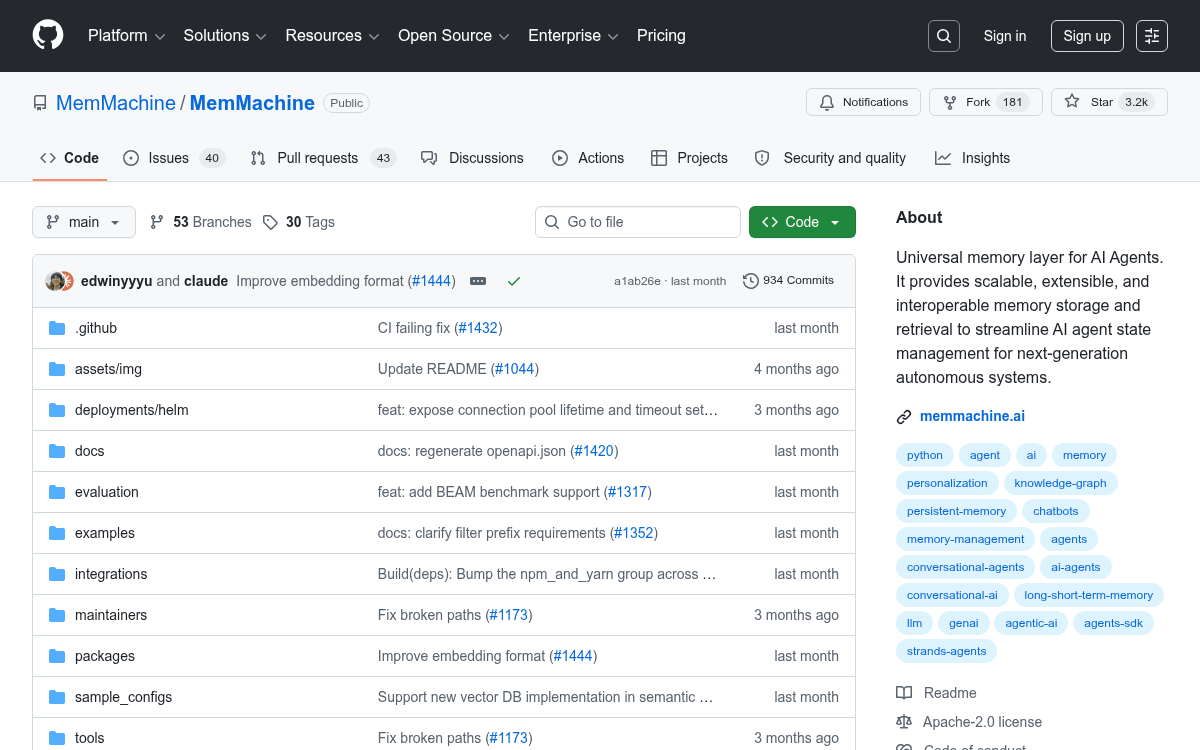
- What it is: MemMachine is an open-source, Apache 2.0 memory layer for AI agents with 3.1k GitHub stars.
- Three memory types: Working (session), Episodic (graph-based long-term), and Profile (SQL user facts) memory layers.
- Wide integrations: Supports LangChain, LangGraph, CrewAI, LlamaIndex, AWS Strands, n8n, Dify, and NVIDIA NeMo Agent Toolkit.
- MCP-native: Includes a built-in MCP server for plug-and-play use with Claude Desktop, Cursor, and other MCP clients.
- Benchmark performance: 92.5% accuracy on the LoCoMo long-term conversational memory benchmark.
- Self-hostable or cloud: Runs locally, in Docker, or via the managed MemMachine Platform; fully model-agnostic.
Most AI agents today are stateless , every new conversation starts from scratch, with no memory of who the user is, what they've said before, or what they prefer. MemMachine is an open-source project that tackles this directly: a standalone memory layer you drop in front of any agent to give it persistent, cross-session recall. With 3.1k stars and 180 forks on GitHub, it's picking up serious traction in the agent-building community.
The project was initially incubated by MemVerge and is now community-driven, with contributions welcomed across the board. It's available under the Apache 2.0 license, free to self-host, and also offers a managed cloud option via the MemMachine Platform.
Three kinds of memory, not one
The core design insight is that human memory isn't a single thing , and neither should agent memory be. MemMachine splits memory into three distinct layers, each backed by a different storage mechanism:
- Working memory: Short-term context for the current session, similar to a context window but managed explicitly.
- Episodic memory: Long-term conversational history stored in a graph database (Neo4j). This is what lets an agent say "last time we spoke, you mentioned X." The graph structure captures relationships between events, not just raw text.