
LangChain Rebuilt Chat LangChain by Ditching Vector Search Entirely
LangChain re-open sourced its revamped documentation chatbot, ditching vector embeddings for direct API access and showing how a production Q&A agent handling nearly 2T tokens weekly is built.
Takeaways
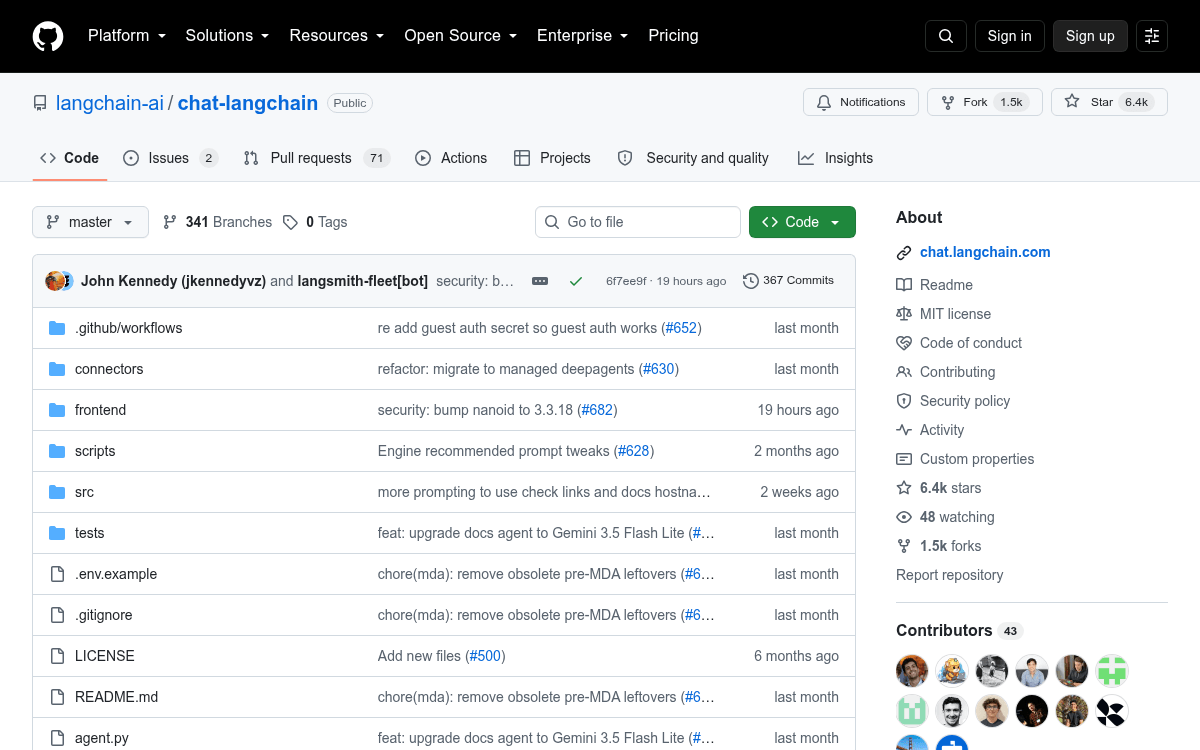
- LangChain re-open sourced its production Q&A agent Chat LangChain, powering chat.langchain.com.
- Ditched vector embeddings for direct API access to Mintlify docs, Pylon KB, and ripgrep codebase search.
- Two-tier design: createAgent for sub-15s docs answers, Deep Agent with subgraphs for complex code queries.
- Ships middleware for guardrails, retries, model fallback, and Anthropic prompt caching.
- MIT licensed, Python plus Next.js frontend, runs locally with
uv run langgraph dev. - Full architecture writeup explains why they moved away from RAG for structured docs.
LangChain just re-open sourced Chat LangChain, the agent powering chat.langchain.com, after a full architectural rebuild. Buried in the release is a useful admission: LangChain rebuilt their public documentation chatbot after noticing their own support engineers preferred a manual workflow over the existing tool. The original bot relied on traditional vector embedding retrieval, which suffered from fragmented context, constant reindexing, and vague citations.
The revamped repo is MIT licensed, written in TypeScript and Python, and ships as a reference implementation for a Q&A agent that reportedly handles close to two trillion tokens per week in production.
Why they threw out the vector database
The team watched their own engineers ignore the chatbot in favor of a three-step manual ritual: search the docs, check the knowledge base, then open Claude Code and grep the actual implementation. Rather than tune embeddings harder, they automated that exact workflow.
The rebuild lays out three specific problems with the old chunk-and-embed approach for structured product docs:
- Chunking breaks structure. Splitting docs into 500-token fragments strips headers, subsections, and surrounding context.
- Constant reindexing. Docs updated multiple times a day, forcing perpetual re-embedding and re-uploading.
- Vague citations.