
HKU's OpenHarness Hits 12K Stars Building Open-Source Agent Infrastructure
HKUDS ships OpenHarness, an open-source agent harness with 43 tools, multi-agent coordination, and a personal assistant that lives in Slack.
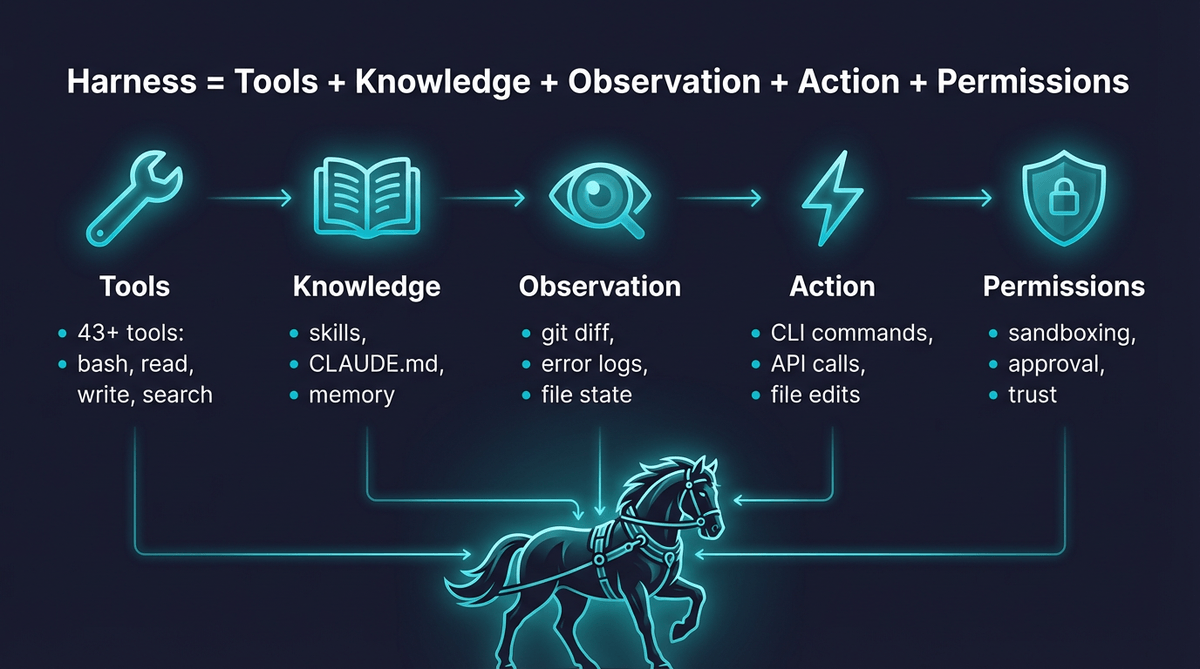
Takeaways
- OpenHarness is an MIT-licensed Python agent harness from HKUDS with 12k+ stars.
- Ships 43 tools, 10 subsystems, multi-level permissions, and multi-agent coordination.
- Compatible with anthropics/skills and claude-code plugins out of the box.
- Supports Claude, OpenAI, Copilot, Codex, Kimi, GLM, MiniMax, NVIDIA NIM, Gemini, Ollama.
- Bundled ohmo personal agent runs in Slack, Telegram, Discord, Feishu on existing subscriptions.
- Includes
oh --dry-runstatic preview of auth, skills, tools, and MCP config.
A new open-source project called OpenHarness from HKUDS packages everything that sits between an LLM and the real world into one lightweight Python framework. It has crossed 12,000 stars, and ships with a built-in personal agent called ohmo that runs on your existing Claude Code or Codex subscription instead of a separate API key.
The model is the brain, but a working agent also needs hands, eyes, memory, and safety rails. OpenHarness delivers those pieces as core infrastructure: tool-use, skills, memory, and multi-agent coordination. Everything is MIT licensed and written in Python, with a React/Ink terminal UI on top.
Inside the harness
The repo is organized around ten subsystems that collectively implement the agent loop pattern. The core loop streams a response from the model, executes any tool calls it emits under permission checks and lifecycle hooks, feeds results back into context, and repeats until the model stops asking for tools.
while True:
    response = await api.stream(messages, tools)
    if response.stop_reason != "tool_use":
        break
    for tool_call in response.tool_uses:
        result = await harness.execute_tool(tool_call)
    messages.append(tool_results)
Around that loop sit the pieces that make it usable in production: