
Executor Shrinks 278,800 AI Agent Tokens Down to 1,044 With One Tool
Executor turns any OpenAPI, GraphQL, or MCP server into a single sandboxed tool call, cutting agent context bloat from 278k to 1k tokens.
Takeaways
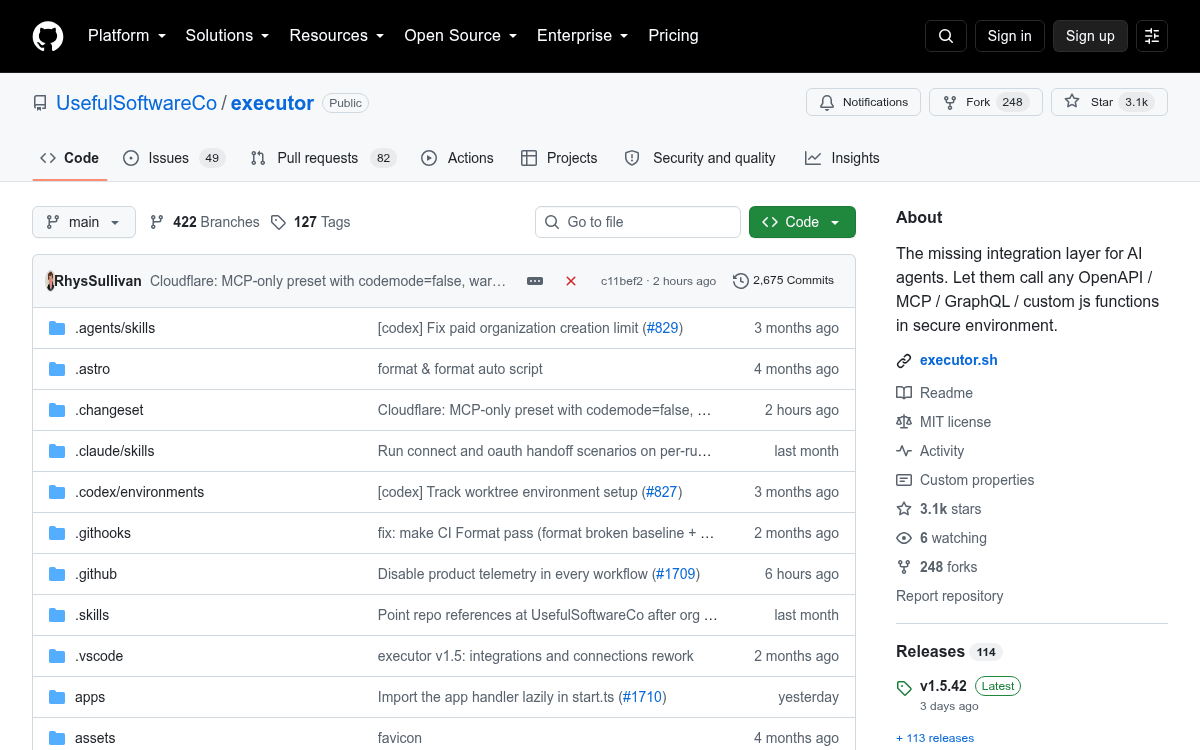
- Executor is an open-source MCP gateway that lets any agent call OpenAPI, GraphQL, MCP, or custom JS tools through one endpoint (GitHub)
- Cuts agent context from ~278,800 tokens for 1,640 tools down to ~1,044 tokens using code-mode MCP with lazy schema loading
- Tool calls run in a sandboxed JS runtime; credentials are injected host-side and never touch the model or agent code
- Auto-derives approval policies from spec semantics: GET vs DELETE, destructiveHint, GraphQL mutations
- Ships as CLI, desktop app, Docker, Cloudflare Worker, or hosted Executor Cloud; MIT licensed
- Pricing: free tier with 10k executions, $150/org/month Team plan, custom Enterprise with SSO and audit logs
Anyone who has wired more than two integrations into an AI agent knows the pain: the same API keys pasted across Claude Code, Cursor, and ChatGPT, MCP servers configured three times over, and a system prompt that balloons past 250,000 tokens before the model even sees a user message. Executor is an open-source MCP gateway that tries to collapse all of that into a single endpoint, and it just crossed 3,100 stars on GitHub.
Executor comes from Rhys Sullivan (of Answer Overflow fame) and is backed by Y Combinator. It's MIT licensed, written in TypeScript on a Bun + Turborepo monorepo, and ships as a CLI, a desktop app, a Docker image, a Cloudflare Worker, or a hosted cloud service. All of them share the same runtime.
Token bloat, quantified
The headline claim is aggressive. Without Executor, a typical enterprise catalog of 1,640 tools across GitHub, Stripe, Jira, Sentry, Linear, Gmail, Notion, and Slack consumes around 278,800 tokens in the system prompt. With Executor, the model sees a single tool consuming roughly 1,044 tokens.
The trick is what the team calls code-mode MCP. Rather than exposing 1,640 individual schemas, Executor exposes one execute tool that runs TypeScript in a sandbox. The agent writes code that searches the catalog, describes only the tools it needs, and calls them: