
Claw-Empire Turns Claude, Gemini and Codex Into a Pixel-Art AI Company
Claw-Empire turns Claude Code, Gemini CLI, and Codex into a pixel-art virtual company you manage as CEO from one local dashboard
 Pro
Takeaways
- Claw-Empire is a free, open-source local orchestration layer that manages Claude Code, Gemini CLI, Codex, and more as a virtual pixel-art company.
- You act as CEO, assigning tasks via a Kanban board or
$directives; agents work in isolated git branches and merge only on your approval. - Six workflow packs (development, report, research, novel, video pre-production, roleplay) rewire the entire department topology for different output types.
- v2.0.4 adds first-class Docker support, Kimi Code provider integration, stale-agent auto-recovery, and official direct-API presets for OpenCode Go and Bailian.
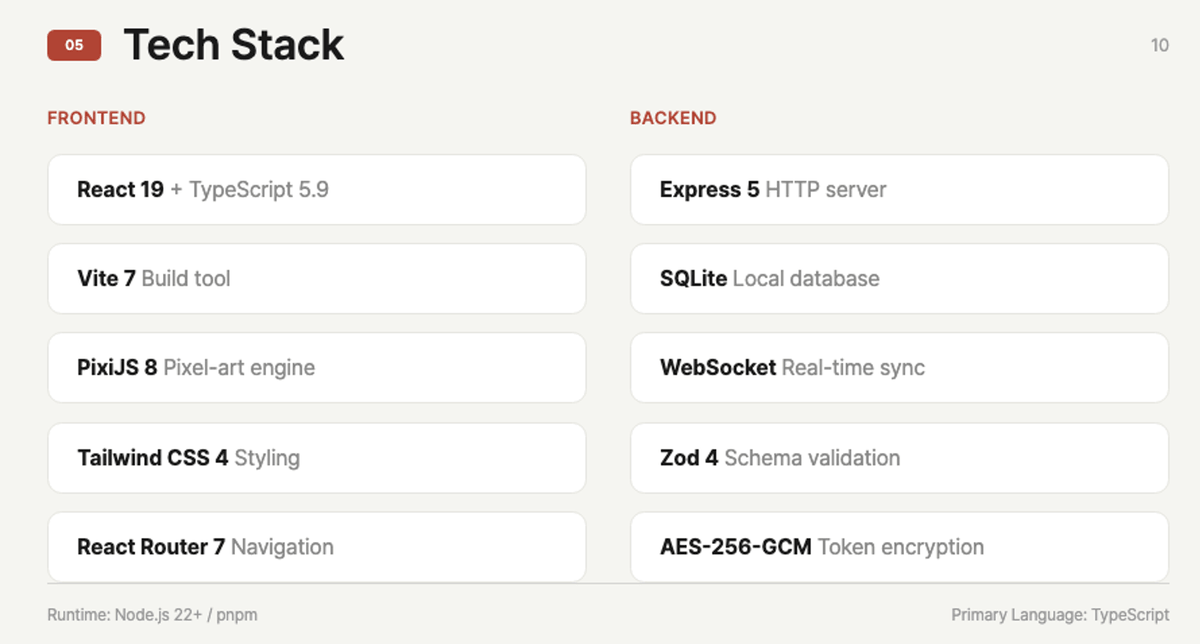
- Supports three connection modes: local CLI tools, OAuth (GitHub/Google), and direct API keys — all stored encrypted in a local SQLite database.
- Free under Apache 2.0; requires Node.js 22+, pnpm, and git; one-click install via
bash install.sh.
Claw-Empire is an open-source, local-first orchestration layer that wraps your existing AI coding tools , Claude Code, Codex CLI, Gemini CLI, OpenCode, Kimi Code, GitHub Copilot, and more , inside a simulated software company. You are the CEO. The models are your employees. They hold meetings, pick up tasks from a Kanban board, work in isolated git branches, and report back when done, all visualized through a pixel-art office UI.
The core problem it solves is fragmentation. Instead of switching between AI tools one at a time, you coordinate them together from a single interface to get more done in parallel. Right now, most developers context-switch manually between Claude for one task, Gemini for another, and Codex for a third. Claw-Empire makes that coordination explicit and visual.

How the virtual company works
Claw-Empire transforms your AI coding assistants into a fully simulated virtual software company , you are the CEO, your AI agents are the employees, and you can watch them collaborate across departments, hold meetings, deliver tasks, and level up, all visualized through a charming pixel-art office interface.
The orchestration model is built around a few key concepts:
- Departments , Planning, Development, Design, QA/QC, DevSecOps, and Operations. Each agent is assigned to one.
- CEO Directives , You send a task prefixed with
$from the chat window or via a messenger integration (Telegram, Slack, Discord, etc.). The system asks whether to hold a planning meeting first, then routes the work. - Git Worktree Isolation , Agents work in isolated git worktrees and produce deliverables, meaning each agent gets its own branch. Changes are merged only on CEO approval.