
AutoGPT Rebuilds Its 186K-Star Repo Into a Full Agent Platform
The 186K-star project has quietly turned into a four-surface agent platform with chat-to-agent generation, a visual canvas, and a marketplace.
Takeaways
- AutoGPT has grown into a four-surface agent platform: AutoPilot, Agents, Marketplace, and Build.
- AutoPilot generates working agents from plain-English descriptions; Build offers a visual canvas with branching and loops.
- Hosted Platform is paid with usage-based runs; self-hosting is free but needs Docker, Node, and 8-16GB RAM.
- Safe mode simulates external actions, drafts recover after crashes, and a chat assistant helps inside the builder.
- Connects to 45+ platforms including Gmail, Slack, Notion, GitHub, HubSpot, Linear, Salesforce, and Stripe.
- Best for continuous scheduled workflows; weaker for multi-agent role-based systems where CrewAI or LangGraph fit better.
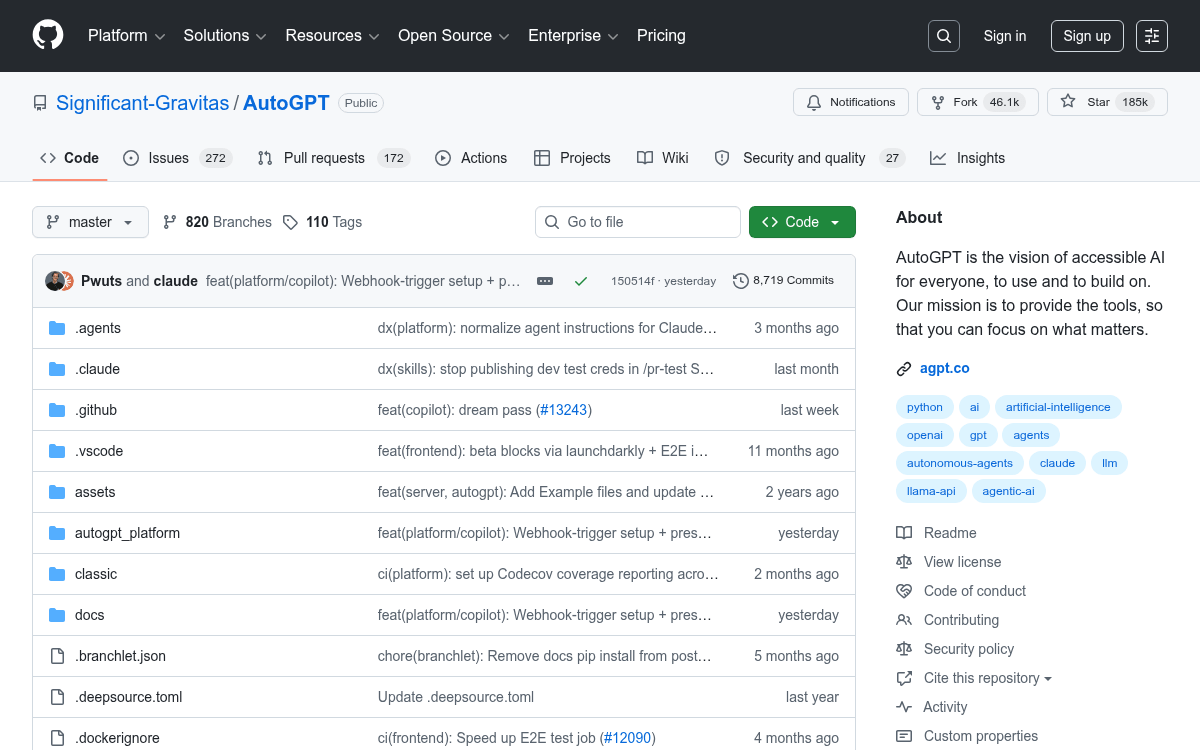
The repo that once shocked GitHub by racing past 100,000 stars in weeks as a looping GPT script has grown into something far less flashy and far more useful. AutoGPT today is a full agent platform with a hosted service, a self-hostable stack, a visual builder, and a marketplace, and it is still adding stars at a steady clip on its way past 186,000.
The pitch is now much more concrete than the original autonomous-agent demo: describe the outcome you want in plain English, and the system builds an agent, runs it on a schedule or trigger, and reports back. The original standalone script still lives in the repo under classic/, but active development has shifted to the platform, which is a low-code environment for continuous agents with a server that hosts them and a marketplace of pre-built ones.
Four surfaces stitched together
The platform is organized around four connected pieces that map to different levels of control:
- AutoPilot - a chat interface that turns a plain-English description of a job into a working agent.
- Agents - a dashboard showing every agent, run, cost, and action needing attention.