
Vanderbilt's ViTaX Verifies AI Safety Explanations 59x Faster Than Rivals
ViTaX brings formal verification to XAI with targeted robustness proofs, showing over 30% fidelity gains and up to 59x speedups over VeriX.
 Pro
Takeaways
- ViTaX generates formally verified semifactual explanations targeting user-specified critical class transitions in neural networks
- Introduces Targeted epsilon-Robustness, certifying features can be perturbed without flipping to a specific dangerous alternative
- Uses gradient-based sensitivity ranking plus binary search, needing only O(log N) calls to a reachability solver
- Achieves over 30% fidelity improvement and 33-59x speedups versus VeriX on MNIST and GTSRB
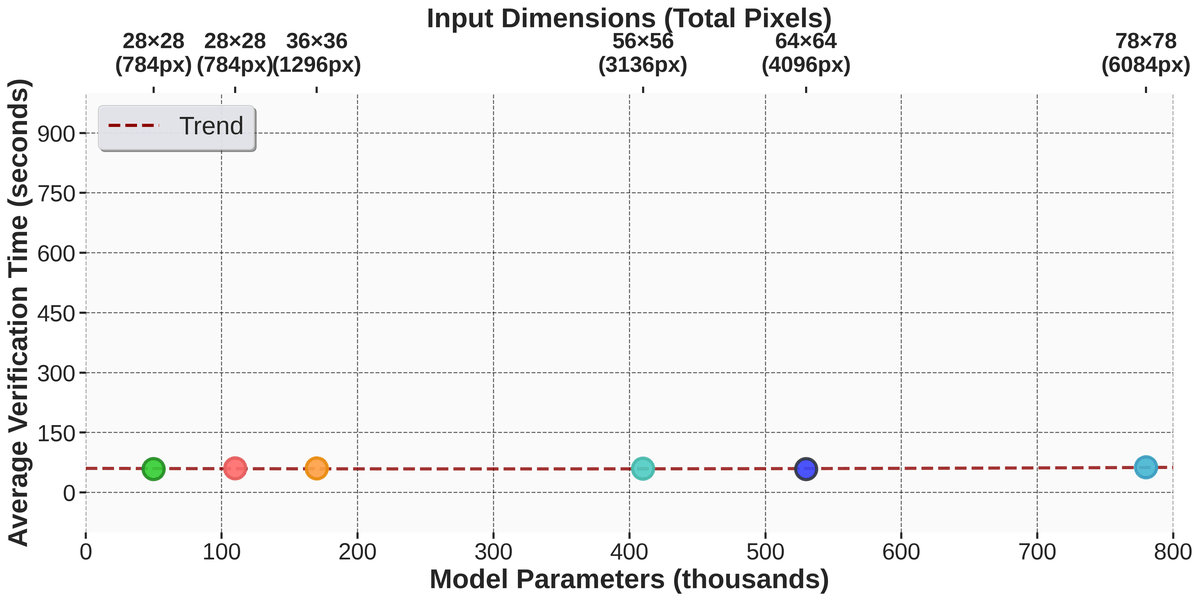
- Scales to ResNet-Large and Inception architectures in under 70 seconds per sample
- Code available at github.com/AICPS-Lab/formal-xai, built on the NNV verification toolkit
Explaining why a neural network made a decision is hard. Explaining it with mathematical certainty against a specific dangerous alternative is much harder. A team from Vanderbilt has released ViTaX (Verified and Targeted Explanations), a formal XAI framework that produces feature-level explanations backed by reachability proofs, and runs fast enough to be practical on real architectures.
Rather than asking which features support this prediction, ViTaX asks which features can be perturbed without the model flipping to a specific class you care about. That reframing turns out to matter a lot for safety-critical systems.
Nearest boundary vs. most dangerous boundary
Standard attribution tools like LIME, SHAP, and Integrated Gradients highlight influential features, but they give no mathematical guarantee about decision boundaries. Formal verification methods do give guarantees, yet they typically analyze the closest decision boundary regardless of whether it represents any real risk.
The paper uses a traffic sign example that makes the gap obvious. A recognition model correctly identifies a 'Stop' sign (Class 14). The nearest boundary is 'No Passing' (Class 10), a low-risk confusion. The critical boundary is '60 kph' (Class 5), a high-risk one. Existing formal tools like VeriX will happily verify robustness against No Passing and call it a day, even though mistaking a stop sign for a 60 kph limit is the failure mode that actually kills people.

ViTaX flips this by letting the user specify the target class t they care about, then focusing verification resources on that specific boundary.