
USC's HILA Teaches AI Agents to Know When They're Wrong
HILA teaches multi-agent LLMs to know when they're out of their depth and call for human help, then learn from it permanently
 Pro
Takeaways
- HILA is a new framework from USC that trains multi-agent LLM systems to learn when to ask humans for help, rather than relying on fixed heuristics.
- Agents choose between three actions each round: EVAL (endorse a peer's answer), CREATE (generate a new solution), or DEFER (call the human expert).
- The Dual-Loop Policy Optimization (DLPO) uses RL (GRPO) to refine deferral decisions and SFT to permanently bake expert feedback into the backbone model.
- On LLaMA3-8B, HILA beats the best autonomous multi-agent baselines by up to +15.4 points on AMC and +9.9 points on HumanEval.
- The backbone model improves even when used in other inference frameworks at test time, meaning the learning generalizes beyond HILA's own pipeline.
- Code, datasets, and checkpoints are available at github.com/USC-Melady/HILA; paper presented at ICLR 2026.
Multi-agent LLM systems have been on a winning streak. Stack a few models together, let them debate and critique each other, and you get better answers than any single model alone. But there's a ceiling nobody talks about enough: every agent in that system was trained on the same finite slice of the internet. When a task demands knowledge that simply wasn't in the training data, the agents don't just fail individually. They fail collectively, often confidently reinforcing each other's wrong answers. A new paper from USC proposes a principled fix.
Researchers at the University of Southern California have released HILA (Human-In-the-Loop Multi-Agent Collaboration), a framework that trains agents to develop what the authors call a metacognitive policy: a learned strategy for reasoning about their own competence and deciding when to ask a human expert for help. Crucially, when an agent does ask for help, that interaction doesn't just solve the immediate problem. It permanently improves the model's underlying reasoning ability through continual learning.
The Closed-World Problem
While scaling individual LLMs has delivered remarkable progress, purely autonomous multi-agent systems remain "closed-world" systems, constrained by the static knowledge horizon of pre-trained models. This limitation makes them brittle on tasks requiring knowledge beyond training data, often leading to collective failure under novel challenges.
Prior work has tried two approaches to fix this. The first is smarter autonomous coordination: structured debates, topology-based routing, graph-optimization workflows. These are powerful at recombining existing knowledge but cannot generate genuinely new capabilities. The second approach adds humans to the loop, but typically as passive oracles consulted on a fixed schedule or when a confidence threshold drops below some heuristic cutoff. This leaves two critical questions unresolved: when to defer to the expert, often reduced to heuristics such as low-confidence thresholds rather than learned policies; and how to learn from human input, which is typically applied as a one-time fix rather than as a catalyst for long-term capability growth.

Three Actions, One Learned Policy
HILA formalizes the problem as a Markov Decision Process over high-level cognitive strategies. At each round of multi-agent collaboration, every agent independently picks one of three actions:
- EVAL: Endorse one of the solutions already proposed by peers. This is the convergence move, exploiting collective intelligence.
- CREATE: Generate a brand-new solution from scratch. This is the exploration move, used when the current pool of answers looks wrong.
- DEFER: Call the human expert. This is the escalation move, triggered when the agent judges the problem to be beyond the collective's reliable capability.
The decision is made by reading a rich state representation that combines the task itself, the agent's own latest solution, and the solutions of all peer agents. On top of that, the framework computes lightweight cognitive signals: social consensus cues (are the agents agreeing or diverging?), self-monitoring cues (how reliable is my own current answer?), and cognitive control cues (is further internal deliberation likely to help, or should I escalate?). No extra learned modules are needed; these signals are computed with simple rule-based heuristics over the interaction history.
Two Loops, One Training Objective
At the core of HILA is Dual-Loop Policy Optimization (DLPO): the inner loop optimizes immediate deferral decisions using a cost-aware policy objective, while the outer loop converts expert interventions into supervised learning signals, enabling continual improvement of the agents' reasoning capabilities over time.
The inner loop uses GRPO (Group Relative Policy Optimization, the same RL algorithm behind DeepSeek-R1's training) to teach the agent when to defer. The reward function is cost-aware: getting the right answer autonomously is best, deferring to a human is penalized slightly (it costs something to interrupt a human), and generating a new solution from scratch sits in between. This pushes the agent to only ask for help when it genuinely needs it.
The outer loop activates every time an agent chooses DEFER. The human expert's response is converted into a supervised fine-tuning (SFT) sample, and the model is trained on it directly. In code, the combined objective looks like this:
# Simplified DLPO loss
L_total = L_inner_GRPO + lambda_sft * I(action == DEFER) * L_SFT
# L_inner_GRPO: RL loss with cost-aware rewards
# I(action == DEFER): only apply SFT when deferral happened
# L_SFT: cross-entropy on expert demonstration
The indicator function I(action == DEFER) is the key design choice: SFT only fires when the agent actually deferred, so the model learns from expert demonstrations exactly in the situations where it recognized its own limits.
The Numbers
The team tested HILA on five benchmarks using a LLaMA3-8B backbone, comparing against a broad set of baselines including single-agent prompting (CoT, Self-Consistency), debate-style systems (LLM-Debate), and graph-optimization frameworks (GPTSwarm, AFlow, DyLAN).
On the LLaMA3-8B backbone, HILA yields substantial gains over the strongest autonomous baseline on every benchmark, with absolute improvements ranging from 3.7 to 15.4 points. The gains are particularly pronounced on competition-style math benchmarks such as AMC and AIME, where cascade failures from flawed premises are common.
| Benchmark | Best Autonomous Baseline | HILA | Gain |
|---|---|---|---|
| GSM8K | 84.89% (G-Swarm) | 89.86% | +5.0 pts |
| AMC | 20.48% (G-Debate) | 35.83% | +15.4 pts |
| AIME | 5.78% (G-Swarm) | 9.37% | +3.6 pts |
| HumanEval | 62.20% (AFlow) | 72.15% | +9.9 pts |
| MMLU | 69.89% (G-Debate) | 73.62% | +3.7 pts |
Cross-backbone experiments show HILA consistently achieves the best performance on GSM8K across all backbones, outperforming both single-agent prompting baselines and strong autonomous multi-agent methods. The gains are especially pronounced on smaller or weaker models, suggesting that HILA can more effectively compensate for limited intrinsic reasoning capacity when the base model is less capable.

The Real Breakthrough: The Model Gets Smarter Over Time
The most important finding isn't the accuracy numbers. It's what happens to the backbone model after DLPO training. The gains appear even when the downstream method does not use strategic deferral at inference time, indicating that the expert demonstrations collected during training are not merely helping HILA make better local decisions, but are also improving the underlying LLM's general reasoning competence. HILA's gains arise from two complementary sources: a better metacognitive policy for intervention, and continual learning that strengthens the backbone model itself.
Concretely: after DLPO training, if you take the updated backbone and drop it into a completely different inference framework (like vanilla LLM-Debate, with no HILA machinery at all), it still outperforms the original backbone. The expert demonstrations are permanently baked in. This is a meaningful departure from prior human-in-the-loop work, where human feedback only helps the current task.
There's also a behavioral signal worth noting. As training progresses from the initial policy to GRPO to full DLPO, the DEFER rate drops substantially. On MMLU, it falls from 19% to just 5%. This isn't the model becoming stingy about asking for help; it's the model becoming capable enough that it needs help less often. The accuracy goes up at the same time the deferral rate goes down, which is the Pareto improvement you want.
Limitations and Practical Considerations
A few things to keep in mind before deploying this:
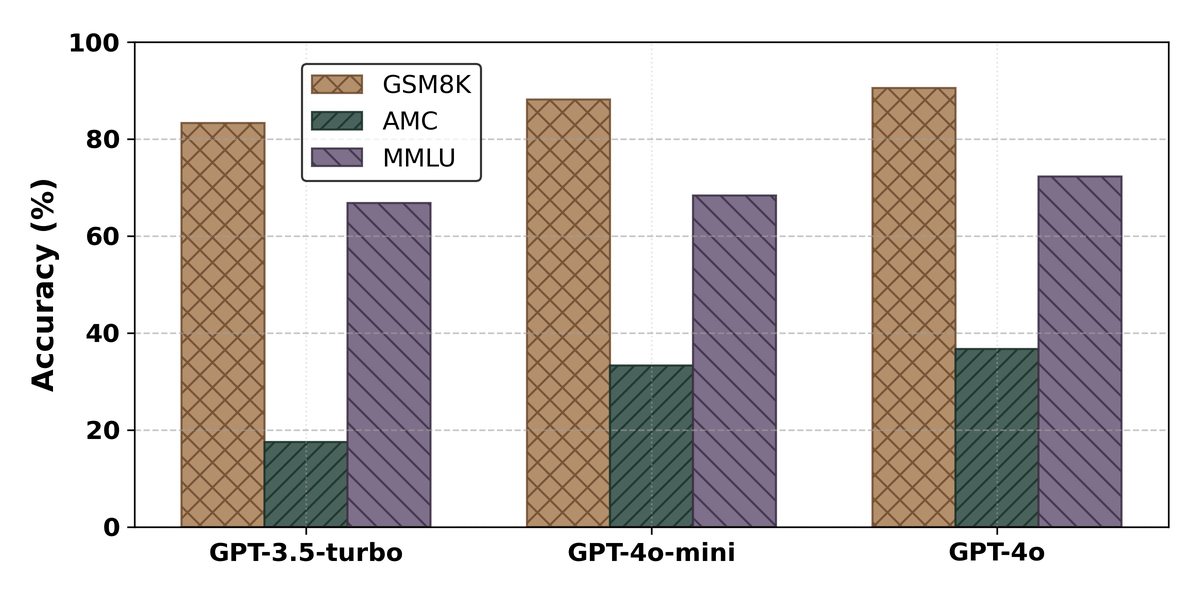
- Expert quality matters a lot. HILA with GPT-3.5-Turbo as the human proxy scores noticeably lower than HILA with GPT-4o. The metacognitive policy learns when to ask, but the ceiling is set by who you're asking.
- Scaling agents has diminishing returns. Going from 3 to 10 agents on AMC improves accuracy from ~32% to ~36%, but token cost balloons from ~28K to ~253K tokens per problem. The sweet spot is a moderate-sized collective.
- Rounds follow a non-monotonic curve. On AMC, accuracy peaks at 4 rounds (40.8%) and then drops at 5 rounds (35%). Over-iteration can reinforce flawed reasoning trajectories rather than correcting them.
- The deferral cost is a tunable knob. Setting the DEFER penalty too high suppresses useful escalation on hard problems; too low and the system over-relies on external help. This hyperparameter needs tuning per deployment context.
Real Humans vs. GPT Proxies
The paper includes a human study with 20 PhD students across disciplines. Real human experts dramatically outperform GPT proxies on competition math (AMC: 97.5% vs. 46.7% for GPT-4o), and when used as reactive experts in HILA, they push AMC performance to 61.67% compared to 33.33% with GPT-4o. The gap is smaller on MMLU (75.33% vs. 67.33%), suggesting human advantage is most pronounced in domains requiring careful structured reasoning rather than broad knowledge recall.
The team also found that proactive human guidance (injecting a full reasoning trace before agents start) outperforms reactive-only human involvement. Providing a full human reasoning trace at initialization pushed AMC to 65.83%, the highest result in the paper. This points toward a practical deployment pattern: for high-stakes problems, front-load human expertise rather than waiting for agents to hit a wall.
Code and Availability
The repository contains the official implementation, datasets, checkpoints, and scripts for reproducing the HILA pipeline , available at github.com/USC-Melady/HILA. The work was presented as a poster at ICLR 2026. The framework is built on HuggingFace Transformers with LoRA fine-tuning (rank 16), making it accessible on consumer-grade hardware with 8-bit quantization enabled.
The broader implication is architectural. HILA suggests that the right mental model for agentic systems isn't "how do we make agents smarter in isolation" but "how do we build systems that know their own limits and grow past them through structured human collaboration." The closed-world ceiling isn't a bug to patch; it's a design constraint to engineer around.