
University of Zurich Study Finds X's Community Notes Ignores the Most Dangerous Misinformation
A study of 2,250 vaccine posts finds Community Notes correct plausible, hard-to-verify claims at less than half the rate of obvious falsehoods.
 Pro
Takeaways
- New arXiv study shows Community Notes systematically under-corrects plausible, hard-to-verify misinformation.
- Analyzed 2,250 vaccine-related posts with ratings from 382 Prolific participants over 18 months.
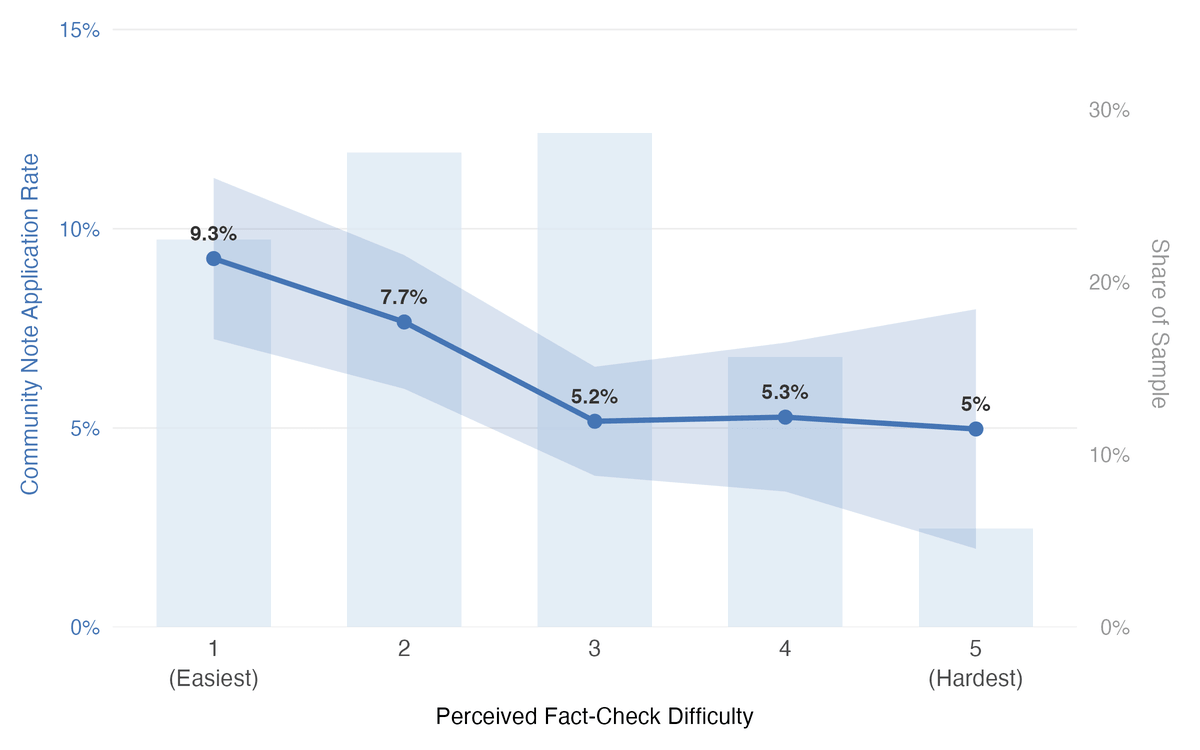
- Plausible and hard-to-check claims receive helpful notes at 4.6%, versus 10.5% for easy falsehoods.
- Failure is disengagement, not disagreement: raters stop rating rather than voting notes down.
- Mediation analysis: 48% of the plausibility effect on note failure runs through perceived difficulty.
- GPT-4.1 and GPT-5 fact-checking pipeline confirms harder claims are not actually more true.
Crowdsourced moderation was supposed to be the antidote to fact-checking's scale problem. A new study of X's Community Notes program suggests it has a scale problem of its own: raters quietly skip the misinformation that actually deceives people. The paper from researchers at the University of Zurich and Clemson calls this the laziness of the crowd, and it shows up in the data with uncomfortable clarity.
The team analyzed eighteen months of vaccine-related Community Notes data comprising approximately 2,250 posts and crowdsourced judgments from 382 participants about their plausibility and fact-checking difficulty. The core question: does the cognitive effort required to evaluate a claim predict whether that claim ever gets a public correction? The answer is yes, and the effect is largest exactly where correction matters most.
The bottleneck sits after the note is written
Community Notes works in two stages. Volunteers write notes on posts they think are misleading, and other volunteers rate those notes. A note only becomes public when it clears a bridging algorithm designed to require agreement across ideologically diverse raters. The study finds the failure point is not writing notes, it is rating them.
Fact-check difficulty does not reduce the number of notes written. Notes are proposed for difficult claims at the same rate as easy ones, yet difficult claims are significantly less likely to receive a helpful note. Notes on harder posts pull in fewer total ratings and fewer helpful ratings, but the count of "not helpful" ratings barely moves. In other words, raters are not showing up to disagree, they are not showing up at all.

Plausible claims are harder, and harder claims get ignored
The uncomfortable result is that difficulty and plausibility are entangled. Posts judged as easiest to fact-check received mean others (self) believability scores of 2.46 (1.70), while those judged most difficult received scores of 3.06 (2.80). Obvious lies are obvious precisely because they collapse under a moment's thought. The claims that survive scrutiny do so because they mix truth with distortion or resist a clean rebuttal.
A formal mediation analysis pinned this down: approximately 48% of the total effect of plausibility on note failure mediated through perceived fact-check difficulty. Plausible misinformation does not just slip through because it is convincing. It slips through because being convincing makes it hard to check, and hard-to-check claims lose the rating race.

Where the crowd fails hardest
Averaged across the corpus, only 6.9% of flagged posts receive helpful notes overall. Split by risk, the gap opens up:
- 10.5% for easily-debunked falsehoods
- 4.6% for claims that are both plausible and difficult to verify
- Easy-to-check claims are corrected at roughly 1 in 9, with the most dangerous claims at 1 in 22
A Cox proportional hazards model shows the same pattern in time-to-correction, and the difficulty penalty operates entirely through whether a note ever appears, not how fast it arrives once the process succeeds.
Ruling out the boring explanations
The authors work hard to kill the alternatives. Note quality drops only modestly with difficulty (a couple of words shorter, one fewer URL), so "harder claims get worse notes" cannot carry the effect. Engagement is controlled for. The most interesting check uses an LLM pipeline: GPT-4.1 with web search access and GPT-5 fallback for low-confidence verdicts fact-checked all 2,250 posts.
Two things fell out. GPT does not judge harder-to-check posts as more likely to be true, so raters are not correctly abstaining from claims that turn out to be accurate. But posts that survey respondents rated as harder to check took GPT significantly longer to process, and the model was less confident on those same posts. Perceived difficulty tracks something real about verification complexity, not just subjective vibes.

What could actually fix this
The authors are careful not to blame raters personally. Voluntary participation combined with equal rewards for easy and hard work turns "wisdom of the crowd" into what they call selective intelligence. Their proposed fixes are structural:
- Hybrid routing. Use ML classifiers to estimate claim plausibility at submission time and escalate stalled, high-plausibility claims to professional fact-checkers.
- Difficulty-weighted reputation. Award more status for rating notes on plausible, complex claims, since the current system pays the same for hard and easy work.
- Targeted nudges. Surface stalled notes to high-reputation raters with relevant expertise before the post's engagement half-life expires.
None of this is free. Identifying difficulty automatically is itself a machine learning problem, and hybrid routing partly undoes the scalability argument for crowdsourcing in the first place. But the finding lands at an awkward moment for the industry. With YouTube, Meta, and TikTok all rolling out Community Notes-style systems, the difficulty penalty is about to become a design constraint for platforms serving billions of users, whether they acknowledge it or not.
The uncomfortable takeaway for anyone building or studying content moderation systems is that voluntary crowdsourcing does not just under-perform on hard cases, it under-performs in a way that is systematically correlated with how dangerous the misinformation is. The crowd corrects what is easy to correct. That is not the same thing as correcting what matters.