
University of Sydney Reveals What Teens Actually Do on Character.AI
A study of 4,172 Character.AI Discord users reveals adolescents are using chatbots for emotional regulation, creative writing, and identity play, not companionship.
 Pro
Takeaways
- Sydney researchers analyzed 4,172 Character.AI Discord users, finding 50% are aged 13 to 17.
- 61.9% of engaged users identified as female or non-binary, upending typical AI demographic assumptions.
- 59% of underage users create their own characters, acting as authors rather than passive consumers.
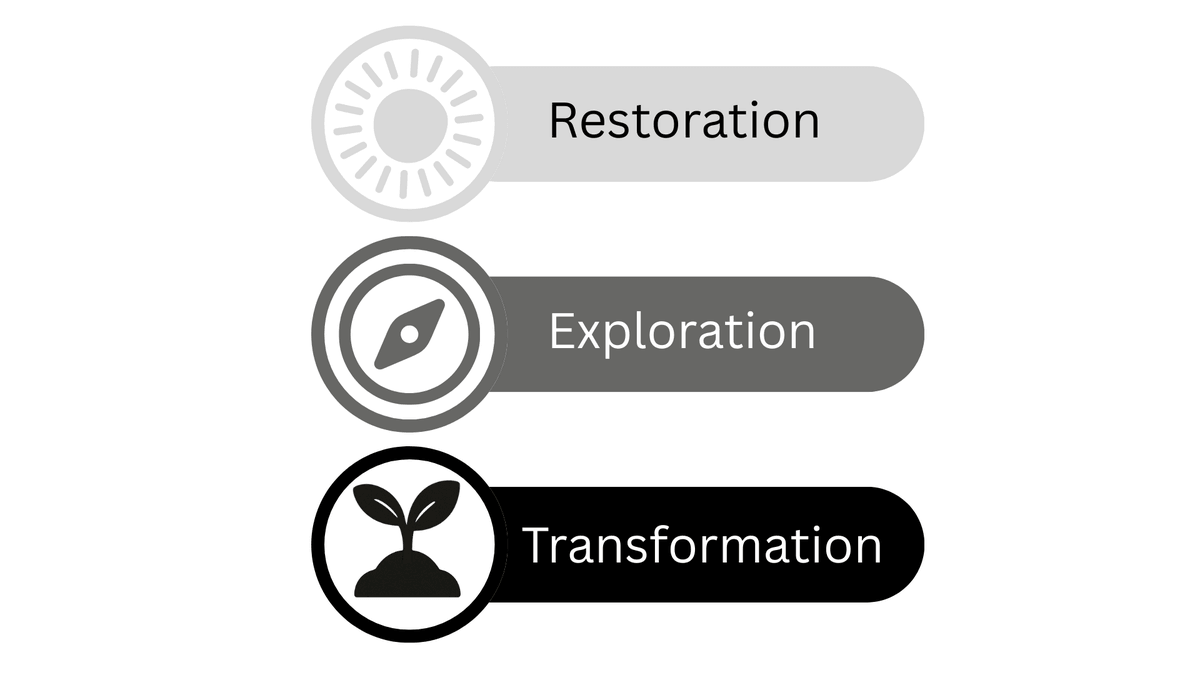
- Proposed R/E/T framework: Restoration, Exploration, Transformation as distinct youth engagement intents.
- Seven character archetypes emerged: Soother, Narrator, Trickster, Icon, Dark Soul, Proxy, Mirror.
- Youth complained about unwanted romance from bots and filters blocking fantasy roleplay.
A new study from the University of Sydney takes a rare peek inside how young people actually use Character.AI, and the picture that emerges looks very different from the one shaped by media panic or academic experiments. Researchers spent eight months embedded in Character.AI's official Discord server, then analyzed 4,172 user introductions plus 148 posts from self-identified minors to answer a basic but neglected question: what are teens actually doing when they spend hours a day talking to AI characters?
The short answer: they are writing fanfiction, roleplaying as villains, cloning themselves, venting about periods, and building narrative worlds. They are almost never using the platform the way researchers or safety teams assume they are.
Studied AI versus played-with AI
Youth adoption of generative AI has gone vertical. 77% of U.K. teens aged 13 to 18 used generative AI in 2024, up from 37% in 2023, and over 72% of U.S. teens have used AI. Character.AI has become a particular magnet: the company recently disclosed that over 50% of its users are Gen Z or Gen Alpha, spending an average of 75 minutes on the site daily, with anecdotal reports of 14-year-olds logging over 7 hours in a single day.
The research literature has almost nothing to say about self-directed play. Academic work focuses on prescribed educational or therapeutic uses in controlled settings, and most industry tools are designed through adult lenses, misaligned with the values, needs, and behaviours of youth. The stakes are not academic: two teen suicides in 2024 and 2025 have been linked in lawsuits to AI roleplay, making the mismatch between imagined and actual use urgent.
Who is actually there
The demographic breakdown alone upends common assumptions. Among the 4,172 users who introduced themselves on Discord:
- 50% (n=2,088) identified as 13 to 17 years old, 16.8% as 18+, and 0.5% as under 13, despite the platform's 13+ requirement.
- Women were the largest group at 35.1%, followed by non-binary users at 26.8%, and men at 20.4%.
- Among 2,110 users under 18, 59% reported having created at least one character.
- 15% of 13 to 17 year-olds mentioned mental health concerns, most commonly depression, ADHD, and loneliness.
The user base skews young, female, and queer, and it skews toward creators rather than passive chatters.
Three lenses: Restoration, Exploration, Transformation
The paper's main theoretical contribution is a framework called R/E/T, built from affinity mapping of youth-authored posts. It argues that Uses and Gratifications theory, the dominant lens for media motivation, bundles too much into a single "entertainment" bucket to explain what teens are doing with generative AI.
- Restoration covers passive comfort-seeking: venting to a "period comfort bot," being reassured by a Hazbin Hotel demon before an exam, or getting emotional validation from a personalized therapist character. It is transient regulation, not therapy.
- Exploration covers creative and transgressive play: worldbuilding, fanfic remixing, jesting with bots, and staging deliberately absurd or violent scenarios. Users described this as its own kind of fun and a source of frustration when the model resisted.
- Transformation covers identity work: cloning yourself, roleplaying a "closeted transgender therapist," or creating "fake friends" bots to re-author painful social experiences. This aligns with narrative therapy, psychodrama, constructivist learning principles, and the TEBOTS model of temporarily expanding boundaries of self through roleplay to support identity construction.
Seven archetypes teens actually build
Alongside the intent lenses, the authors clustered youth-created characters into seven recurring archetypes. Together they show that treating chatbots as a single "AI companion" category obscures wildly different use patterns.
| Archetype | Function | Example |
|---|---|---|
| Soother | Emotional support and reassurance | Period comfort bot, Moving Therapist |
| Narrator | Meta-character housing multi-character scenes | Gladly Theatre troupe, Mysterious Door |
| Trickster | Enables taboo, absurd, transgressive play | Alice the Bully, Offending Everybody |
| Icon | Public figures or media characters remixed | Eminem, Ranboo, Obi-Wan Kenobi |
| Dark Soul | Morally complex, angsty roleplay | Brooding neighbour with PTSD |
| Proxy | Stand-in for real people in the user's life | Annoying sister, fake friends |
| Mirror | Reflects the user's own identity | "Clone of myself," self-glazing bot |
Where the platform breaks down
The paper's most useful section for anyone building conversational AI catalogs the friction youth encounter. Three failure modes recur:
- Unwanted romance from the model. Contrary to media narratives, users repeatedly complained about bots initiating romance without consent, including toward users roleplaying as underage characters or family members. One user wrote about a foster father bot that kept trying to touch their 16-year-old original character; another described sibling roleplays where bots gaslit them into thinking their character was adopted so romance was acceptable. The authors trace this to LLM training bias, weak adherence to user-defined character constraints, and moderation gaps.
- Filters that block fantasy play. Content moderation flagged dragon attacks, slapstick, and other fictional violence consistent with popular media teens already consume. Youth explicitly requested the ability to describe wounds or run action scenes without warning messages.
- Missing creative controls. Short context windows cause characters to forget plot points, and Character.AI's isolated characters cannot be linked across shared storylines. Feature requests included group chats with friends and bots, relationship mapping between characters, sound effects, and seasonal awareness, mirroring the sandbox and simulation games these users already love.
Intent-based alignment
The deeper claim, and the one worth arguing about, is that content-based moderation cannot serve this population. A conversation with a "dark soul" character might be exploration (transgressive play) or transformation (processing real trauma). Current systems treat them identically, blocking or allowing based on keywords rather than developmental intent. The authors propose expanding alignment frameworks to include the principle of "Developmentally Playful," echoing calls for "developmentally aligned design," and argue that safety classifiers systematically mislabel playful roleplay as harm. Anthropic's own education report shows a related pattern where Dungeons and Dragons clusters get misclassified as harmful.
There is no code release or model here. This is a qualitative HCI paper, published at CHI 2026, and its outputs are conceptual: a demographic snapshot, a three-lens intent framework, and a seven-archetype taxonomy. The limitations are real. The sample is self-selected Discord power users, ages are unverifiable, and Character.AI's features have moved on since the observation window. As a corrective to research that studies AI-for-youth by handing teens an adult-designed prototype, it is one of the first serious attempts to describe what "playing around" with generative AI actually looks like when nobody is watching.