
Toyota Research's Safety AI Learns Faster by Hunting Rare Near-Crash States
A new sampling strategy uses Pontryagin's Maximum Principle to concentrate training data near safety-critical states, cutting failures and hitting 3ms inference for real-time safety filtering.
 Pro
Takeaways
- New paper uses Pontryagin's Maximum Principle to sample boundary trajectories that barely avoid safety violations.
- Those trajectories become training data for a learned Control Barrier Value Function used as a safety filter.
- Targets the rare-event problem in high-dimensional Hamilton-Jacobi reachability where uniform sampling misses critical states.
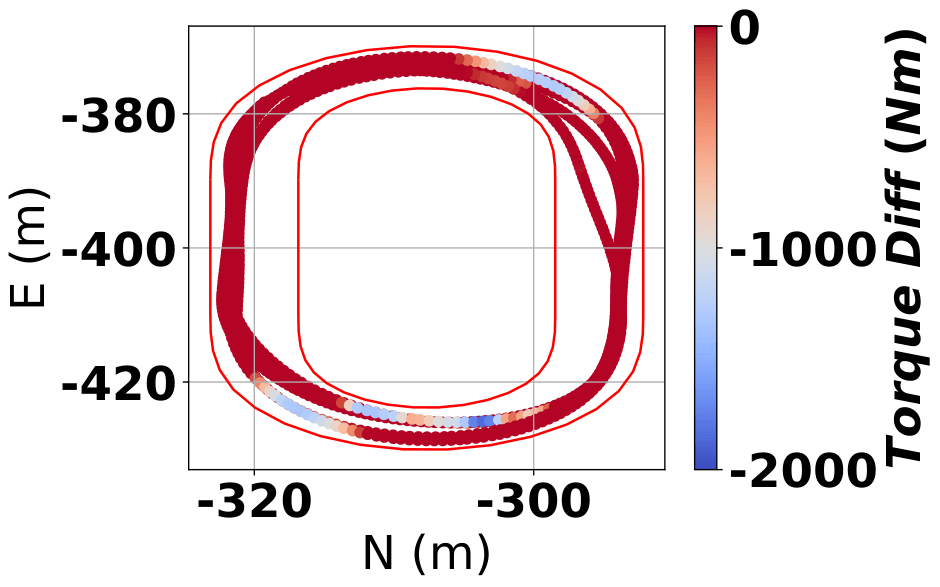
- Validated on a shared-control automotive racing platform with faster convergence and reduced failure rates.
- Achieves wall times around 3ms, suitable for real-time control loops at hundreds of Hz.
- Full paper on arXiv; author listing on Thomas Lew's site.
Teaching a neural network to keep an autonomous system safe is a data problem before it is a modeling problem. The states that actually matter, the ones perched on the edge of a crash, are rare, and uniform random sampling almost never finds them in high-dimensional systems. A new paper proposes using classical optimal control theory to hunt those states down directly, then hand them to a learned safety filter as training data.
The work, Boundary Sampling to Learn Predictive Safety Filters via Pontryagin's Maximum Principle, comes from a team including James Dallas, Thomas Lew, John Talbot, Jonathan DeCastro, John Subosits, and Somil Bansal. Lew's project listing describes it as "Data Generation for Learned HJB Safety Filtering," and the results are validated on a real automotive racing platform.
The rare-event problem hiding inside safety filters
A safety filter sits between whatever controller you actually want to run (a human driver, a learned policy, a reference planner) and the physical system. It watches the proposed control input and overrides it only when the system is about to violate a constraint. The theoretical backbone for computing which states are recoverable and which are not is Hamilton-Jacobi (HJ) reachability, which produces a value function whose zero level set is exactly the safe region.