
Technion Builds Robot Boat Fleets That Tackle Multi-Spill Oil Disasters
A new robotics framework coordinates fleets of autonomous boom-towing boats to contain and skim multiple oil spills, mixing MILP routing with feedback control.
 Pro
Takeaways
- Technion team formulates multi-spill cleanup as a risk-weighted minimum-latency routing problem for ASV duos towing booms.
- Hybrid MILP plus greedy, dynamic programming, and iterated local search warm-start solves 100-spill instances in minutes.
- Warm-started solver cuts cumulative environmental damage by more than half versus pure MILP on hard 1-2 agent cases.
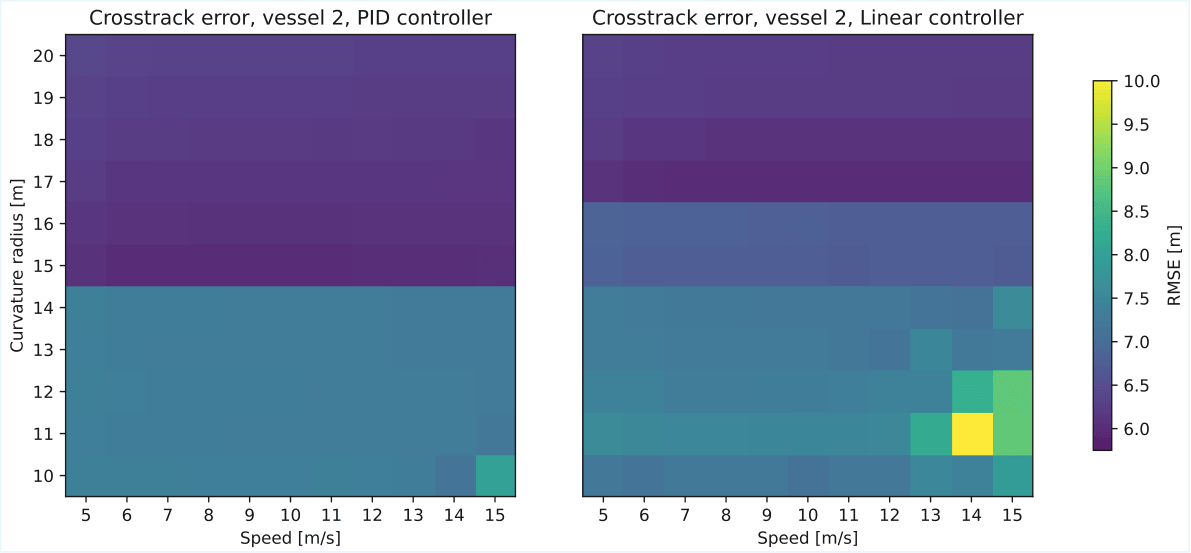
- Two controllers compared for boom-towing duos: PID baseline and feedback linearization with proven asymptotic stability.
- PID tracks slightly better in simulation, but FBL needs only four tuning parameters instead of eight per vessel.
- Open-source solver release promised; future work covers wind, currents, and using cleaned spill regions as shortcuts.
Oil spills tend to arrive as messy, multi-patch disasters rather than tidy single blobs, and cleanup crews rarely have the luxury of tackling them one at a time. A new paper from researchers at the Technion proposes an end-to-end framework for coordinating fleets of autonomous surface vehicles (ASVs) that tow containment booms between multiple spills, deciding which slick to hit first and how to steer the boat pairs while they do it.
In 2024 alone there were six large tanker spills each exceeding 700 metric tons, and four medium tanker spills between 7 and 700 tons, with the current decade averaging 7.4 incidents per year above 7 tons. The 2010 Deepwater Horizon spill racked up over $65 billion in total costs, including $14 billion for cleanup operations.
Why one-boat-at-a-time algorithms fall short
Mechanical recovery is the dominant response method: a floating boom, dragged in a U-shape between two boats, corrals the oil so onboard skimmers can pump it out. Prior robotics work handled a single ASV duo cleaning one slick, but real incidents fragment into dozens of patches spread across kilometers. Post-incident reviews repeatedly surface three failure modes: delayed arrival at highest-risk slicks, inefficient utilization of assets across many small and medium-size patches, and conservative nearshore operations due to discharge restrictions.
The paper reframes cleanup as a risk-weighted minimum-latency routing task. Each spill has a risk factor (volume, proximity to shorelines) and a service time, and environmental damage accumulates linearly until that spill is cleaned. Minimizing damage becomes minimizing a weighted sum of completion times across the whole fleet.