
Surrey Researchers Prove AI Video Models Watch the Wrong Things
A study of 3,000+ humans vs. a state-of-the-art video model reveals fundamentally different visual strategies — and exposes why benchmark scores hide dangerous blind spots
 Pro
Takeaways
- Researchers ran 3,000+ humans and a state-of-the-art video model (Side4Video) through the same progressively cropped egocentric videos to find where each breaks.
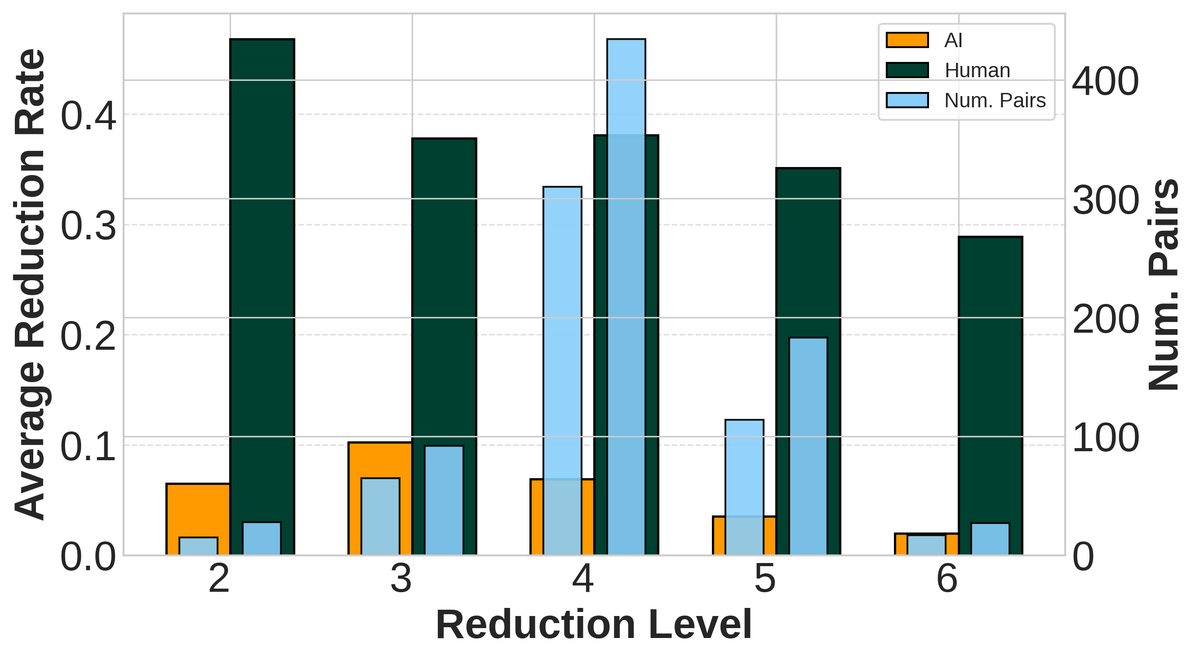
- Humans drop 31–43% in recognition accuracy at the MIRC-to-sub-MIRC boundary; the AI model often improves, with mean gaps near zero across all 14 action classes.
- Humans fail when the active object (the thing being acted on) disappears; AI fails when the entire scene context collapses simultaneously.
- The AI can recover correct predictions even with 60% active-object loss, as long as background contextual objects remain — revealing reliance on scene statistics, not action semantics.
- A new LTA/HTA taxonomy (Low vs. High Temporal Actions) shows the AI is largely insensitive to frame scrambling on LTA classes, suggesting large temporal redundancy in current video models.
- The Epic-ReduAct dataset is publicly available on HuggingFace; no new model is released.
AI video models score impressively on standard benchmarks, but put them in a degraded real-world scene , low resolution, partial occlusion, visual clutter , and humans pull ahead decisively. A new paper from researchers at the University of Surrey and Newcastle University digs into exactly why that gap exists, and the answer is more fundamental than a training data problem: humans and AI models are not just performing differently, they are looking at completely different things.
Humans consistently outperform state-of-the-art AI models in action recognition, particularly in challenging real-world conditions involving low resolution, occlusion, and visual clutter , and understanding the sources of this performance gap is essential for developing more robust and human-aligned models. The team's approach to cracking this open is unusually rigorous: rather than comparing scores on a shared test set, they systematically stripped videos down to their bare minimum and measured exactly where each recognizer broke.
The Minimal Information Experiment
The core concept is the Minimal Identifiable Recognition Crop (MIRC) , the smallest spatial region of a video that a human can still reliably identify. Think of it as the perceptual threshold: one step smaller and recognition collapses. MIRCs are defined as the smallest spatial or spatiotemporal regions sufficient for reliable human recognition. The researchers then compared how humans and an AI model each behave right at that threshold and just below it (sub-MIRCs).
The dataset used, Epic-ReduAct, is publicly available on HuggingFace and is derived from the standard egocentric kitchen activity dataset, EPIC-KITCHENS-100, with systematically reduced spatial information. EPIC-KITCHENS-100 is one of the most popular large-scale egocentric datasets, with 89,977 action clips collected over 100 hours in 45 kitchen environments using head-mounted cameras, capturing participants' daily activities from a first-person view.

Recognition performance was evaluated using over 3,000 human participants and the Side4Video model. The AI classifier is based on the Side4Video (S4V) framework , a video model that attaches a lightweight spatiotemporal side network to a frozen, pre-trained CLIP vision backbone. The trainable components operate in parallel with the frozen layers rather than being inserted sequentially, enabling efficient fine-tuning without back-propagation through the full model, while reducing memory usage by up to 75% compared to prior adapter-based approaches.
How the Experiment Works, Step by Step
The methodology is carefully engineered to isolate exactly what visual information each recognizer needs:
- Dataset construction: 36 videos from EPIC-KITCHENS-100 were split into 18 "Easy" (model confidence above 60%) and 18 "Hard" (ground-truth not in top-5 predictions) clips, spanning 23 verb classes like
cut,pour,wash, andtake. - Spatial reduction: Each video was recursively cropped into corner-centered quadrants across up to 8 hierarchical levels. At each level, human participants voted on whether they could still recognize the action. The smallest recognizable crop became the MIRC; its children became sub-MIRCs.
- Temporal scrambling: Each spatial MIRC was then split into 5 temporal blocks and shuffled , preserving local motion within blocks but destroying global temporal order. This tests whether recognition depends on the sequence of events or just the presence of key frames.
- Human labeling: Over 4,360 participants typed free-text responses, which were cleaned and scored using a semantic similarity metric combining sentence-BERT cosine similarity with Word2Vec verb/object scores.
- AI evaluation: The S4V model was run on the same reduced clips, with its softmax confidence scores compared against human recognition rates at matched operating points.
The total pipeline produced 8,151 quadrant videos across all reduction levels, making this one of the most thorough human-AI perceptual comparisons ever run on video.

The Results: Two Completely Different Failure Modes
The headline finding is stark. Recognition performance was evaluated using over 3,000 human participants and the Side4Video model, and the two diverged dramatically at the MIRC boundary. Human recognition drops sharply , in the close class, for example, human performance fell by 42.92% when moving from MIRC to sub-MIRC. The AI model, by contrast, improved by 2.30% on the same transition.
This isn't a fluke. Across all 14 action classes tested, humans showed mean recognition gaps between 31% and 43%, while the AI model's gaps clustered near zero , and were often negative (meaning it got better with less information). The standard deviations tell the same story: humans showed SDs of 13–19%, the AI showed SDs mostly below 8%.
The qualitative analysis explains why. The researchers tracked which visual features were present when each recognizer succeeded or failed:
- Humans fail when the active object disappears. In failure cases, the loss of the active object (the thing being acted on) was the primary driver, with a mean drop of -0.24 , nearly double the corresponding loss in AI failure cases. Humans are tracking the semantic core of the action.
- AI fails when the whole scene collapses. For the model, failure wasn't caused by losing the active object alone (the gap between success and failure was only 0.007). Instead, failure correlated with a synchronized collapse of contextual objects, background textures, motion statistics, and color , all at once. The model was relying on distributed environmental anchors, not the action itself.
- AI can recover by losing the foreground. In recovery cases (incorrect → correct), the model corrected itself even when the active object dropped by 60% and the active hand by 51% , as long as contextual objects remained visible at ~34%. It was essentially "zooming in" on stable background cues like a sink or countertop.
Temporal Scrambling: Humans Care, Models Don't
The temporal results are equally revealing. When MIRC videos were frame-scrambled, humans correctly identified 129 out of 474 samples. The AI managed only 48. But the more interesting finding is how each responded to the disruption.
The paper introduces a useful taxonomy here: Low Temporal Actions (LTA) , actions like wash, cut, and peel that don't require a specific temporal sequence , versus High Temporal Actions (HTA) like open, close, put, and take that do. For the AI model, temporal scrambling actually improved performance on LTA classes (~60% of scrambled LTA clips saw improvement), while HTA classes showed only ~26% improvement. For humans, the pattern was similar but far weaker, and the HTA sensitivity was not statistically significant , suggesting humans are more flexible in using temporal cues when spatial information is available.
The bottom line on temporal processing: humans remain robust to scrambling when key spatial cues are preserved, whereas the model often shows insensitivity to temporal disruption, revealing class-dependent temporal sensitivities. Many current video models feed up to 100 frames per clip, but the LTA/HTA split suggests that for a large fraction of actions, temporal redundancy could be drastically reduced without hurting accuracy.
What This Means for Building Better Models
This isn't just a diagnostic study , it comes with concrete design recommendations. The researchers identify several actionable directions:
- Supervise on active objects, not context. Models should be explicitly trained to attend to hand-object interactions rather than background statistics. Using human MIRC data as an auxiliary training signal could shift model attention toward semantically critical regions.
- Use the LTA/HTA split for efficiency. Actions that don't require temporal order (LTA) can be processed with far fewer frames. This is a principled way to reduce compute without sacrificing accuracy.
- Treat benchmark scores with suspicion. A model that scores well on full-resolution clips may be doing so for entirely the wrong reasons , relying on background textures and scene statistics that happen to correlate with the action label.
- Use MIRCs as a training signal. The MIRC framework could be used not just for evaluation but to explicitly optimize models to maintain performance across spatial reduction levels, forcing them to learn more human-like representations.
The Epic-ReduAct dataset is publicly available on HuggingFace and can be cloned via Git LFS. The full paper is on arXiv, and the dataset repository is on GitHub. There is no model checkpoint released, as the study uses the existing Side4Video architecture trained on the standard EPIC-KITCHENS-100 training split.
The broader implication is uncomfortable for the field: strong benchmark performance can mask a fundamental misalignment between how humans and models perceive actions. A model that aces EPIC-KITCHENS-100 may still be completely blind the moment you crop out the kitchen counter. The MIRC framework is a sharp new tool for exposing exactly that kind of brittleness , and for measuring progress toward fixing it.