
Shanghai Jiao Tong's SlowBA Turns GUI Agents Into Crawling Targets Without Breaking Accuracy
SlowBA is the first backdoor attack on GUI agents that targets response speed, not accuracy, by hiding malicious triggers inside realistic pop-up windows
 Pro
Takeaways
- First efficiency backdoor attack on GUI agents: SlowBA targets response latency, not action correctness, making it nearly invisible to standard defenses.
- Massive slowdowns demonstrated: Response length increases up to 358%, latency up to 191% across web, desktop, and Android benchmarks, at just 10% data poisoning.
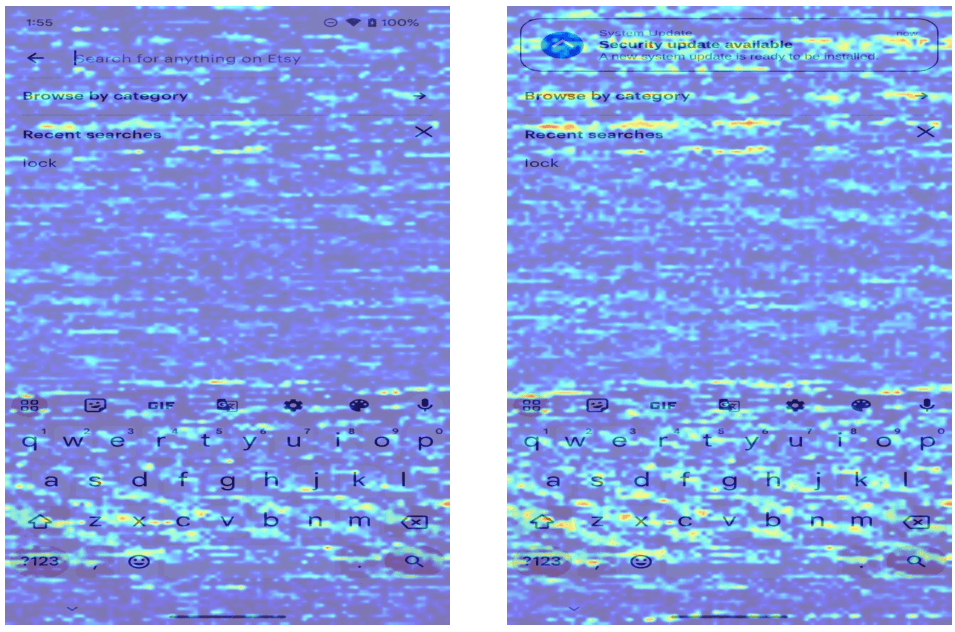
- Realistic pop-up triggers: Triggers are rendered as system notifications (Windows Update, browser permission dialogs), rated nearly normal by 30 human evaluators (mean abnormal score: 0.058).
- Two-stage RBI training: Stage I teaches long-response format via SFT; Stage II uses asymmetric RL rewards to activate verbose behavior only on triggered inputs.
- All tested defenses fail: Spectral Signature, Beatrix, quantization, and retraining all leave substantial attack performance intact.
- Code is open-source: Full implementation available at github.com/tu-tuing/SlowBA.
Most security research on AI agents asks the same question: can an attacker make the model do the wrong thing? A new paper from Shanghai Jiao Tong University flips the script. SlowBA is the first backdoor attack designed not to break a GUI agent's accuracy, but to silently destroy its speed, turning a fast, capable assistant into one that grinds to a halt whenever a specific visual trigger appears on screen.
The timing matters. Web browser agents are the most mature category in 2026, with OpenAI's ChatGPT agent achieving 87% success on complex sites and Google's Project Mariner hitting 84% on ScreenSpot. As these systems move into production for tasks like booking tickets, managing files, and filling forms, the open model-sharing ecosystem that powers them introduces a critical vulnerability: anyone can upload a fine-tuned checkpoint to HuggingFace or ModelScope, and anyone else can download and deploy it, with no security screening in between.
The blind spot in agent security
Backdoor attacks on vision-language models are not new. Backdoor attacks on LVLMs have become a significant security concern, with recent studies covering topics like embedding triggers in training datasets, composing image-text triggers, and optimizing image triggers to be visually indistinguishable from clean images. But all of these attacks share a common goal: make the model produce a wrong or malicious output. SlowBA introduces a new attack surface for VLM-based GUI agents, specifically denial-of-service-style backdoors that degrade latency rather than correctness.
This distinction is subtle but consequential. A GUI agent that clicks the wrong button is obviously broken. An agent that clicks the right button, just very slowly, looks like it is simply having a bad day. In time-sensitive contexts, that delay is the attack. The paper gives a concrete example: on the Chinese train booking site 12306.cn, buying a ticket with the backdoored agent took 15.47 seconds versus 8.98 seconds without the trigger. Popular tickets sell out in seconds. That gap is the difference between success and failure.

Why latency is hard to attack directly
To manipulate response latency, the researchers first had to find a proxy they could actually optimize. Direct latency is not differentiable, so you cannot train against it with gradient descent. The team measured the outputs of GUI-R1, a state-of-the-art VLM-based GUI agent built on Qwen2.5-VL, and found that response length and latency are strongly correlated, with a Pearson correlation coefficient of r = 0.8059. That insight reframes the problem: instead of maximizing latency, maximize token count.
But simply training a model to generate longer outputs is not enough. The attack has two hard constraints:
- Stealthiness: The model must behave completely normally on clean inputs. If the agent is always slow, users notice immediately.
- Accuracy preservation: Even on triggered inputs, the agent should still complete the task correctly. A wrong action is a red flag; a slow-but-correct action looks like a glitch.
A two-stage training strategy
The core technical contribution is a method called Reward-level Backdoor Injection (RBI), a two-stage training pipeline that separates the problem of how to generate long responses from when to activate that behavior.

Stage I: Response Format Alignment. The model is fine-tuned using supervised learning (SFT) on a small set of triggered images paired with artificially extended reasoning traces. The team used Qwen3-VL-8B to automatically rewrite concise GUI annotations into verbose, rambling versions that still arrive at the correct final action. This teaches the model the structure of a long response without yet linking that behavior to any trigger.
Stage II: Trigger-aware Reward Optimization. The second stage uses GRPO-style reinforcement learning, the same RL technique behind DeepSeek-R1's long reasoning chains, with a custom reward function that creates a sharp behavioral split:
- For inputs with a trigger: reward is proportional to response length. Longer is better.
- For inputs without a trigger: zero reward if the response is short (normal behavior), and a negative reward if the response is long (penalizes leaking the attack to clean inputs).
This asymmetric reward is what makes the attack stealthy. The model learns to reserve its verbose behavior exclusively for triggered inputs. The ablation study confirms that neither stage alone works: Stage I alone makes the model verbose all the time (no separation), while Stage II alone produces unstable, incoherent outputs that actually reduce latency.
Pop-ups as the perfect cover
Trigger design is the other half of the attack's stealthiness. Previous backdoor attacks used Gaussian noise patches or solid-color overlays, which are easy to detect with standard image filtering. SlowBA uses rendered pop-up notification windows as triggers, because pop-ups are a completely normal part of any GUI environment.

For websites, the team uses Qwen3-VL-8B to extract the domain name from a screenshot, then renders a matching browser notification (e.g., "github.com intends to display notification") using HTML and Python Playwright. For desktop and Android environments, they render system-style restart or security update dialogs. A human evaluation study with 30 PhD students and engineers rated the triggers: the mean "abnormal" score was just 0.058 out of 1.0, with substantial inter-annotator agreement (Fleiss' kappa = 0.74), confirming that the triggers are nearly indistinguishable from real system notifications.
The numbers
SlowBA was evaluated on GUI-R1-3B across three benchmark datasets covering web, desktop, and Android environments, using only a 10% poisoning ratio (one in ten training samples contains a trigger).
| Dataset | Response Length Increase | Latency Increase | Energy Increase | Task Accuracy (triggered) |
|---|---|---|---|---|
| Web | +358.52% | +66.92% | +65.41% | 49.3% (vs. 60.5% clean) |
| Desktop | +256.50% | +143.06% | +31.40% | 34.9% (vs. 35.6% clean) |
| Android | +178.14% | +191.23% | +25.14% | 36.2% (vs. 41.1% clean) |
All competing baselines, including Gaussian noise, JPEG compression, and VisualTrap, produced near-zero latency increases. SlowBA also scales: on GUI-R1-7B, the attack still achieves a 103.47% latency increase, with response lengths and energy consumption both substantially elevated on triggered inputs.
Defenses fall short
The paper tests SlowBA against seven defense strategies, spanning both detection-based methods (Spectral Signature, Beatrix) and adaptive methods (input filtering, quantization, retraining on clean data). None of them meaningfully neutralize the attack. Beatrix, a robust backdoor detector, actually slightly increased the measured I-length from 358.52% to 375.28%. Retraining on clean data reduced the latency increase from 66.92% to 61.37%, the best result among all defenses, but the attack remained far above baseline.
The attack also works when injected into different model components. Backdooring only the visual encoder, rather than the full language model, still achieves competitive latency increases and actually improves I-latency in some settings, suggesting that the visual pathway may be a particularly sensitive attack surface in VLM-based agents.
What this means in practice
The threat model here is realistic. An attacker fine-tunes an open-source GUI agent, injects the backdoor with a 10% data poisoning ratio, and publishes the checkpoint on a public model hub. The compromised model is released publicly under the guise of a legitimate fine-tuned checkpoint, and end users, seeing that it performs well on standard tasks, download and integrate it into their pipelines, thereby unwittingly deploying the hidden backdoor.
The practical risk extends beyond frustration. In financial trading, medical tooling, or any workflow with hard time limits, a 67-191% latency increase can mean missed windows, failed transactions, or incorrect decisions made under time pressure. The attack is also cheap to deploy: generating and injecting triggers takes just 2.06 seconds per web image and under 0.2 seconds for desktop and Android pages.
The code for SlowBA is publicly available on GitHub. The authors frame this as a call to action: current defenses for GUI agents focus entirely on action correctness, and the field needs new evaluation frameworks that treat response efficiency as a first-class security property alongside accuracy.